
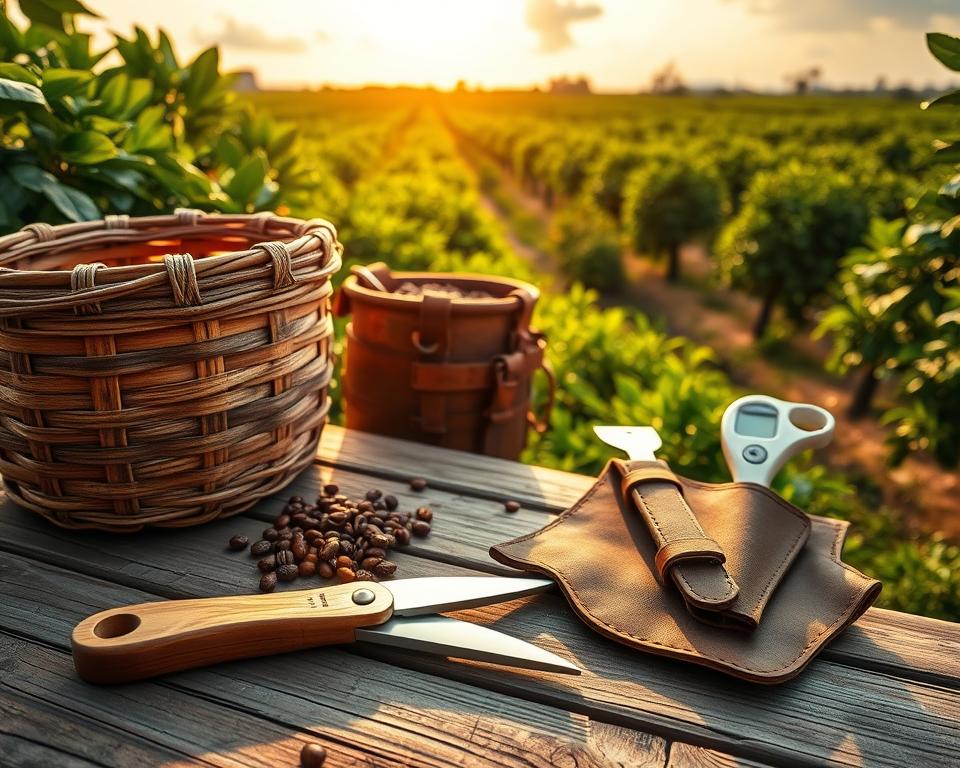
Small coffee producers in Guatemala face tough terrain and climate. They need the right tools for a good harvest.
Using the right tools boosts productivity and supports sustainable farming. This is key for small producers aiming for quality and less environmental harm.
Investing in key equipment helps small producers grow more and manage their farms better. This benefits their lives and the community around them.
The Guatemalan Coffee Farming Landscape
Guatemala’s coffee farms are known for their rich soil and varied climates. This mix allows for many coffee types to grow in different places.
Most coffee in Guatemala comes from small farms. These farms often use old ways of farming. But, more farms are starting to use new tools to make their coffee better.
The geography of Guatemala shapes its coffee farms. Places like Antigua, Huehuetenango, and Atitlán are key for coffee. Farmers in these areas need the right tools to handle the tough terrain and weather.
| Region | Climate | Coffee Variety |
|---|---|---|
| Antigua | Volcanic soil, mild climate | Arabica |
| Huehuetenango | High altitude, cooler temperatures | Bourbon, Caturra |
| Atitlán | Lake region, rich soil | Maragogype, Pacamara |
More Guatemalan coffee farmers are using new equipment. This helps them make better coffee beans.
Essential Coffee Farming Tools Every Producer Needs
Guatemalan coffee producers need the right tools for their work. Coffee farming is hard work that needs many tools to care for the plants well.
Machetes and Knives
Machetes and knives are key for coffee farming. They help clear land, prune plants, and cut weeds. It’s best to use high-quality machetes with sharp, durable blades.
Shovels and Spades
Shovels and spades are crucial for planting, fertilizing, and soil care. Shovels are for digging holes for new plants. Spades mix and apply fertilizers. Tools with strong handles help avoid getting tired.
Good tools make a big difference in coffee quality and yield. For example, the right coffee processing machines make farming more efficient.
| Tool | Use | Benefit |
|---|---|---|
| Machetes | Clearing land, pruning | Effective land management |
| Knives | Pruning, harvesting | Precision and reduced damage |
| Shovels | Digging, soil preparation | Efficient planting and fertilization |
| Spades | Mixing fertilizers, compost | Improved soil quality |
Using these tools, Guatemalan coffee producers can do better farming. This leads to higher quality and more coffee.
Land Preparation Equipment for Coffee Farms
Land preparation is key in coffee farming. It involves using special tools to prepare the soil. This ensures coffee plants grow well in good soil and conditions.
Leveling the land is important for even drainage and soil. Mechanization in coffee farming shows manual levels and inclinometers improve this process. Manual levels check the land’s slope and elevation. Inclinometers measure the slope angle, helping farmers plan terracing and soil conservation.
Manual Levels and Inclinometers
These tools are vital for a well-planned coffee farm. Proper grading prevents soil erosion and keeps water in the soil. This is crucial in rainy areas to avoid soil loss.
Barriers and Retention Materials
Barriers and retention materials also play a big role. They stop soil erosion and keep moisture in. Cover crops, geotextiles, and physical barriers are used. These methods keep soil healthy and reduce the need for fertilizers and pesticides, making coffee farming more sustainable.
Investing in the right land preparation equipment boosts farm productivity and sustainability. This benefits farmers and helps the environment, making coffee farming more eco-friendly.
Essential Planting Tools for Coffee Seedlings
The journey to producing high-quality Guatemalan coffee starts with the right tools. Coffee farmers in Guatemala know the importance of starting with healthy seedlings. The right equipment is key.
Seed Selection Tools
Choosing the right seeds is crucial in coffee farming. Guatemalan coffee producers use tools like sieves and sorting trays. These help separate good seeds from bad ones.
Germination Containers
After picking the seeds, they need to germinate. Germination containers, like nursery bags or seed trays, help seeds sprout. They keep moisture in and let water drain, helping seedlings grow well.
Using the right tools for seed selection and germination boosts coffee seedling growth. This leads to better coffee crops.
Guatemalan coffee farmers who invest in good planting tools see better yields. This helps keep Guatemalan coffee quality high.
Cultivation and Maintenance Equipment
Farmers use many tools to keep coffee plants healthy and productive. Good cultivation practices help plants grow well and produce more.
Cultivation and maintenance tools are key in coffee farming. They help control weeds, prune, and keep plants healthy.
Secateurs and Pruning Shears, Saws for Larger Branches
Secateurs and pruning shears are crucial for pruning coffee plants. They remove sick or damaged branches, keeping plants healthy and productive. For bigger branches, saws make clean cuts without harming the plant.
- Secateurs are perfect for precise pruning of smaller branches and stems.
- Pruning shears are used for thicker branches that require more force.
- Saws are necessary for cutting larger branches, ensuring minimal damage to the plant.
Using the right tools improves coffee plant health and farm efficiency. Quality tools like secateurs, pruning shears, and saws help farmers increase yields. This supports sustainable coffee farming.
Pest and Disease Management Tools
Guatemalan coffee farmers must manage pests and diseases well to keep their crops healthy and productive. Pests and diseases can harm coffee yields a lot. So, it’s key to have the right tools for managing them.
Guatemalan coffee farms deal with pests like coffee berry borer and diseases like coffee leaf rust. Farmers use many tools to fight these problems.
Backpack Sprayers, Dusters and Applicators
Backpack sprayers, dusters, and applicators are crucial for applying pesticides, fungicides, and fertilizers to coffee plants. These tools help cover large areas well. They are great for managing pests and diseases in dense coffee plantations.
- Backpack sprayers help apply chemicals precisely, cutting down waste and harm to the environment.
- Dusters are good for controlling pests like the coffee berry borer by using powdered insecticides.
- Applicators are versatile for applying different treatments, from fertilizers to pest control agents.
Guatemalan coffee farmers use these tools to protect their crops better. This helps in sustainable coffee farming. Using these tools is key to keeping coffee farms healthy and productive.
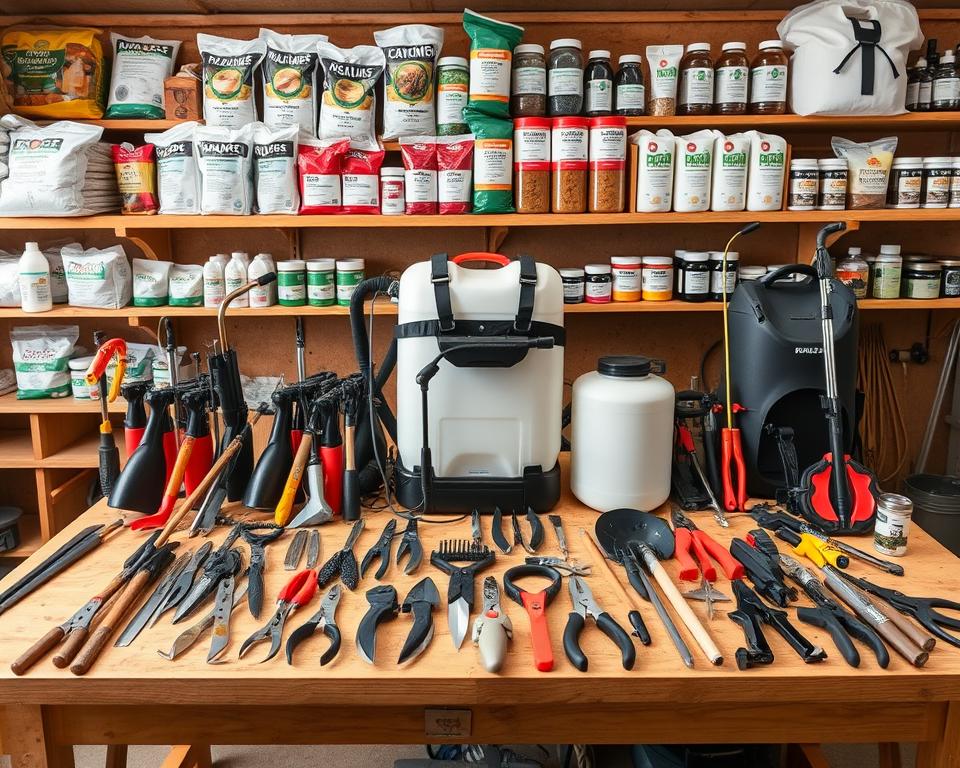
Coffee Harvesting Tools and Techniques
The art of coffee harvesting uses many tools and methods. These tools greatly affect the quality of the coffee beans. Harvesting coffee is hard work that needs careful planning and execution for the best results.
Coffee farmers in Guatemala and worldwide use different tools for harvesting. One key tool is the picking basket, used to gather ripe coffee cherries.
Picking Baskets and Containers
Picking baskets are made to be light and comfy for farmers. They let farmers move easily through the coffee fields. These baskets are made from strong materials like wicker or plastic and come in various sizes.
Selective Harvesting Tools
Selective harvesting picks only the ripest coffee cherries. This ensures the best quality beans are chosen. Farmers use hand-picked baskets and manual clippers for this.
Using the right tools and techniques is key for high-quality coffee. The right tools and methods help farmers work more efficiently. This leads to a better final coffee product.
- Picking baskets and containers are essential for collecting and transporting coffee cherries.
- Selective harvesting tools enable farmers to choose the ripest cherries, improving coffee quality.
- Effective harvesting techniques and tools contribute to the overall success of the coffee farming operation.
Essential Coffee Processing Equipment
Guatemalan coffee farmers use top-notch equipment after harvesting. This equipment helps turn the coffee cherries into green beans. These beans are then ready for export.
Drying is a key part of this process. Farmers use patios and raised beds for drying. Patios are flat areas where beans dry in the sun. Raised beds help with air flow, ensuring even drying.
Drying Patios and Raised Beds
Drying patios and raised beds are vital. They control the drying process. This prevents beans from drying too much or too little, which can ruin the flavor.
- Drying patios provide a large surface area for spreading out coffee beans.
- Raised beds offer improved air circulation, reducing the risk of mold and mildew.
- Both methods allow for manual raking and turning of the beans, ensuring even drying.
Moisture Protection Materials
Keeping coffee dry is also crucial. Tarps, plastic sheets, and drying covers protect it from rain or too much moisture. These materials keep the coffee quality high by stopping mold and spoilage.
Guatemalan farmers need the right equipment for coffee processing. This includes drying patios, raised beds, and moisture protection. It boosts coffee quality and supports sustainable farming.
By choosing the best equipment, farmers can increase their yields. They also reduce losses and make high-quality coffee. This meets the global market’s needs.
Quality Control Tools for Coffee Farmers
Coffee farmers use many tools to keep their coffee top-notch. These tools help check the quality of coffee beans. They make sure the beans meet the high standards needed.
Grinders and Brewing Equipment
Grinders and brewing gear are key for quality control. Grinders help find the coffee’s flavor. Brewing equipment lets farmers taste and smell the coffee.
There are different grinders like burr and blade grinders. Burr grinders are best because they grind evenly and finely.
Sensory Evaluation Tools
Tools for tasting, smelling, and judging coffee quality are vital. Farmers use cupping tables, spoons, and scorecards for this.
| Tool | Description | Use |
|---|---|---|
| Burr Grinder | A grinder that uses abrasive surfaces to grind coffee beans | Assessing flavor profile |
| Cupping Table | A table designed for sensory evaluation of coffee | Sensory evaluation |
| Scorecard | A card used to score the quality of coffee | Evaluating quality |
With these tools, coffee farmers can make sure their coffee is the best. They meet the highest standards.
Budget-Friendly Coffee Farming Tools for Sustainability
Guatemalan coffee farmers are using affordable tools to make their farms more sustainable. This way, they save money and help the environment.
Digital and Paper-Based Systems
Farmers are using both digital and paper tools to manage their farms better. Digital apps help track planting, harvesting, and sales. Paper systems are a cheap way to keep records.
Some digital tools include:
- Farm management software
- Mobile apps for tracking yields
- Online platforms for selling coffee
Community Tool-Sharing Programs
Sharing tools in the community is another smart move. It cuts costs and brings farmers together.
| Tool-Sharing Program Benefits | Cost Savings | Community Impact |
|---|---|---|
| Reduced individual costs | Up to 30% savings | Increased community cohesion |
| Access to a variety of tools | Better resource allocation | Enhanced collaboration |
Guatemalan coffee farmers are making their farms more sustainable and affordable. They’re using smart tools and strategies.
Conclusion: Building Your Essential Coffee Farming Toolkit
Coffee farming in Guatemala needs the right tools for a good harvest. Investing in key tools boosts productivity and sustainability. A good toolkit is vital for every step, from preparing the land to harvesting and processing.
Using new tools can make farming easier, cut down on costs, and improve quality. With the right tools and methods, farmers in Guatemala can grow more and help the coffee industry thrive.
Creating a good toolkit takes time and money, but it’s key to success. By focusing on the best tools, farmers can set themselves up for long-term success. They can become part of Guatemala’s top coffee producers.