
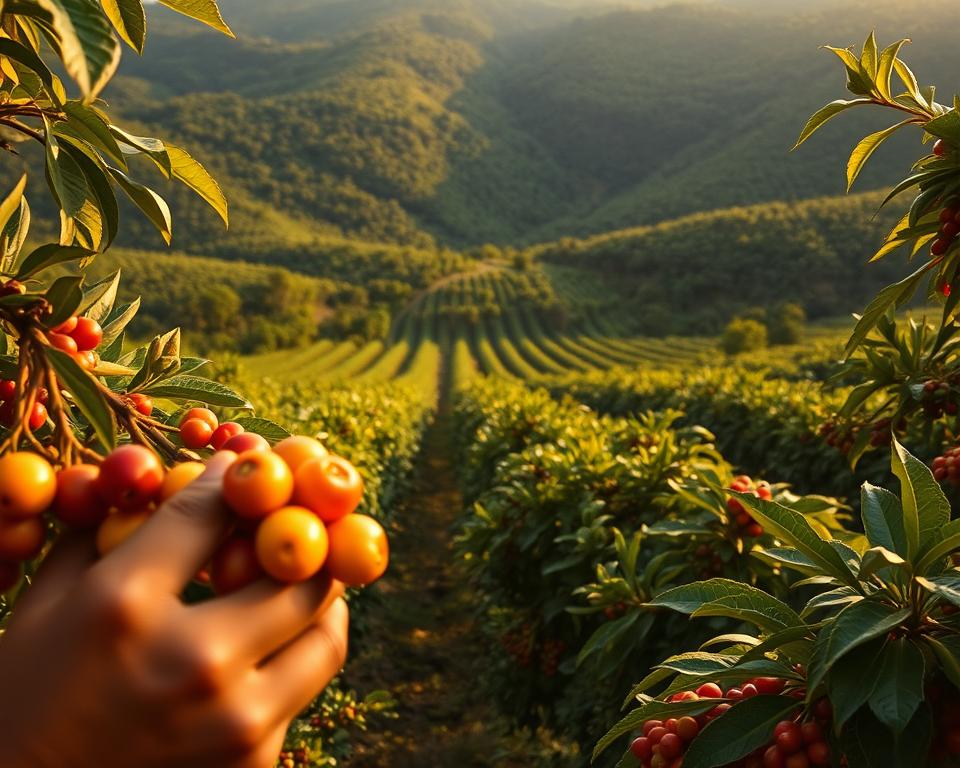
Guatemala is famous for its top-notch coffee. Finding the perfect time to harvest is key to this quality. The brightness of coffee cherries shows if they are ripe. This affects the taste and quality of the coffee.
For farmers and coffee lovers, knowing when to pick cherries is essential. Looking at the fruit’s brightness helps farmers find the best time to harvest.
Finding the right harvest time is vital for the best flavor and quality. This introduction explains why coffee ripeness matters. It shows how it impacts Guatemala’s coffee quality.
Understanding Coffee Cherry Development
Knowing how coffee cherries grow is key for the best harvest. They go through stages from flowering to being ripe. This is all because of things like weather, soil, and the coffee type.
The growth of coffee cherries has a few main steps:
- Flowering: The first step where coffee trees bloom.
- Fruit set: After blooming, the cherries start to grow.
- Maturation: Cherries get ripe and change color, showing they’re ready to pick.
The ripeness of coffee cherries depends a lot on the environment. Things like temperature and rain can make them ripen faster or slower. Knowing this helps farmers plan their harvest better.
Ripe coffee cherries show bright colors, like yellow, orange, or red. The color tells us how ripe they are. This is important for the quality of the coffee beans.
Farmers who know about coffee cherry growth can pick the best time to harvest. This ensures the coffee beans are at their best. Knowing this is crucial for making great coffee.
Coffee Harvest Ripeness: Why Brightness Matters
The brightness of coffee cherries shows if they’re ripe, which affects coffee quality. Brightness isn’t just about looks; it shows the cherry’s sugar and flavor levels. Farmers and roasters know how crucial brightness is for picking the right time.
During the harvest season coffee, farmers watch the cherries’ brightness to know when to pick. Brighter cherries are riper and have a more vibrant color. This color isn’t just pretty; it means the cherry is ready to be picked.
Brightness and ripeness are linked in several ways. Sugar in the cherries grows as they ripen, making them look brighter. Also, flavor compounds that grow during ripening add to the brightness. Knowing these helps farmers pick cherries at the perfect time.
Brightness and Ripeness Correlation
| Brightness Level | Ripeness Stage | Flavor Profile |
|---|---|---|
| Low | Unripe | Sour, underdeveloped |
| Medium | Partially Ripe | Balanced, slightly sweet |
| High | Fully Ripe | Rich, complex, sweet |
Understanding brightness and ripeness helps farmers decide when to harvest. This knowledge improves coffee quality and makes harvesting more efficient. As the coffee world grows, the role of brightness in ripeness remains key for top-quality coffee.
The Color Spectrum of Coffee Cherries
Coffee cherries change color as they grow, influenced by altitude and type. In Guatemala, farmers watch these changes to know when to pick the coffee.
The colors of coffee cherries range from green to yellow, orange, and red or purple. Knowing these colors is key to finding ripe coffee beans.
Altitude affects how coffee cherries grow. At higher altitudes, they grow slower, leading to more complex flavors.
| Altitude | Cherry Development | Typical Color at Ripeness |
|---|---|---|
| Low (Below 1,200 meters) | Faster maturation | Red/Pink |
| Medium (1,200-1,800 meters) | Moderate maturation | Orange/Red |
| High (Above 1,800 meters) | Slower maturation | Deep Red/Purple |
Varietal-Specific Color Indicators
Each coffee type shows its own color as it ripens. For instance, some Guatemalan types turn deep red, while others may go yellow or orange.
- Caturra: Typically turns red when ripe.
- Gesha: Often turns yellow or pink.
- Bourbon: Can turn red or purple.
Guatemalan farmers use these color clues to pick their coffee at the perfect time. This ensures their coffee is ripe and ready to be picked.
How to Assess Cherry Brightness in the Field
The brightness of coffee cherries shows if they are ripe. Coffee farmers need to know how to check this in the field. This skill helps improve the quality of their harvest. The time of day and light can affect this check, so it’s important to be consistent.
Morning vs. Afternoon Assessment Techniques
The time of day changes how we see cherry brightness. Morning light is soft, making it easier to see color changes. But, the strong sun in the afternoon can make cherries look more vibrant. It can also cause glare, making it harder to judge.
Farmers should try checking brightness at different times to find what works best. Weather also plays a part. On cloudy days, the light is more even, which can help with judging brightness.
Creating Reference Standards for Your Farm
To be consistent in checking cherry brightness, create standards for your farm. Choose cherries at various ripeness levels and note their brightness. This helps in knowing when to pick the best cherries.
| Ripeness Stage | Brightness Description | Action |
|---|---|---|
| Unripe | Dull, greenish | Leave on tree |
| Ripe | Bright, vibrant | Harvest |
| Overripe | Dull, slightly shriveled | Harvest immediately or remove from tree |
Using these standards helps farmers pick cherries at the right time. Regularly check and update these standards to keep things consistent.
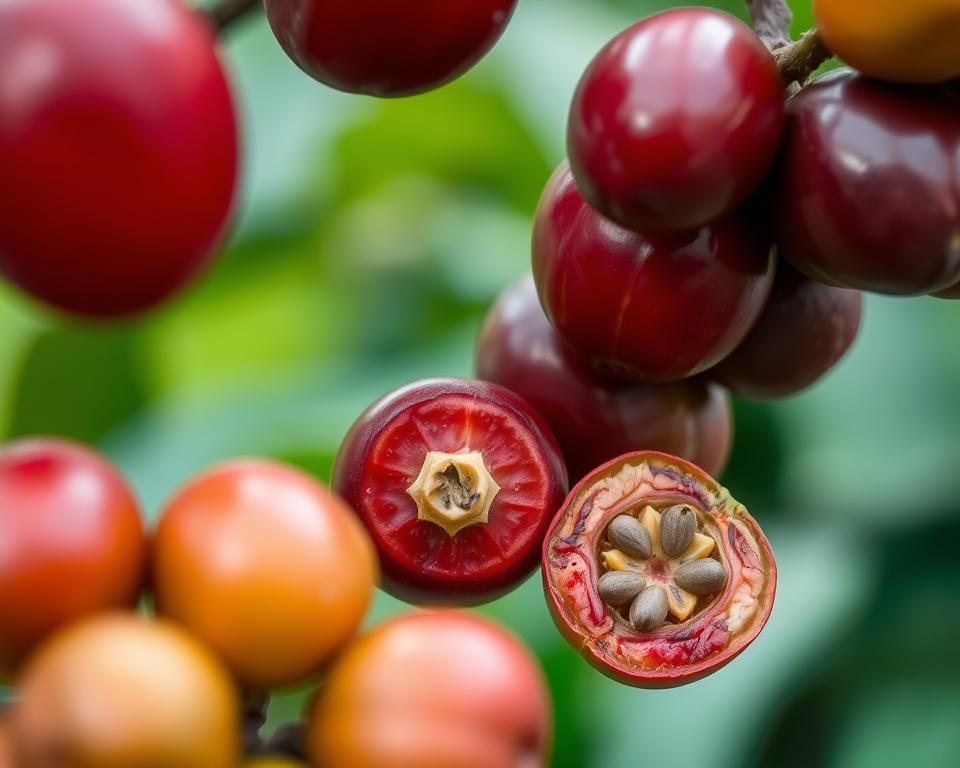
Being consistent is crucial when checking coffee cherry ripeness. By knowing what affects brightness and using standards, farmers can pick better. This leads to higher quality coffee.
Complementary Ripeness Indicators
Checking coffee cherry ripeness is more than just looking at brightness. Other signs like texture, size, and how easily the stem comes off are key. These help farmers know when to pick the cherries.
Texture is a big clue. Ripe cherries feel slightly soft, while unripe ones are hard. Overripe cherries get too soft or mushy. This makes it easier to tell if they’re ready to pick.
Size also matters. Ripe cherries are usually at their biggest. But, size can change based on the coffee type. So, looking at size with other signs helps figure out ripeness better.
Stem detachment is very important. Ripe cherries come off the branch easily. If it takes a lot of force, they’re not ripe yet. A study shows that how easy it is to remove the stem is linked to the best time to pick coffee.
By looking at all these signs together, farmers can pick their coffee at the best time. This way, they get higher quality coffee.
Regional Variations Across Guatemala’s Coffee Landscape
Guatemala’s coffee-growing regions have different conditions that affect coffee cherry ripeness. The country’s coffee landscape is varied. Each region has its own climate, soil, and altitude.
Places like Antigua, Huehuetenango, and Atitlán have unique environmental conditions. For example, Huehuetenango’s high altitude means cooler temperatures. This leads to a more complex flavor in the coffee.
On the other hand, lower-altitude areas may ripen faster. This can change the best time to harvest. Knowing these differences is key for farmers to pick the right time to harvest.
The climate in each region also affects coffee cherry ripeness. Areas with wet and dry seasons may have different harvest times. This is different from places with steady weather all year.
- Antigua: Known for its balanced coffee, with a ripening process influenced by its volcanic soil.
- Huehuetenango: High-altitude region with a slower ripening process, contributing to complex flavors.
- Atitlán: Region with a unique microclimate that affects the ripening and flavor profile of coffee cherries.
By understanding and adapting to these regional differences, Guatemala’s coffee farmers can improve their harvests. They can produce high-quality, ripe coffee cherries.
Implementing a Brightness-Based Harvest Strategy
The secret to a great coffee harvest is knowing how to use a brightness-based method. This approach focuses on the color and brightness of coffee cherries. It helps farmers get better quality and more coffee.
This method means watching how coffee cherries change color and brightness. It takes a keen eye and knowledge of how cherries grow.
Multiple Passes vs. Strip Picking Considerations
Farmers have to choose between multiple passes and strip picking for their harvest. Multiple passes mean picking cherries at different times. Strip picking means taking all cherries off the tree at once.
- Multiple passes let farmers pick only ripe cherries, improving quality.
- Strip picking is quicker but might mix ripe and unripe cherries.
| Harvesting Method | Labor Intensity | Quality Control |
|---|---|---|
| Multiple Passes | High | Excellent |
| Strip Picking | Low | Variable |
Equipment and Tools for Precision Harvesting
To use a brightness-based harvest, farmers need the right tools. These include ways to check cherry ripeness and tools for picking.
Some important tools are:
- Color charts for checking cherry ripeness
- Hand-picking tools for picking the right cherries
- Mechanical harvesters for bigger farms
With the right tools and a good plan, farmers can boost their coffee’s quality and amount. Keeping an eye on cherry brightness and adjusting the harvest plan is crucial for the best results.
Overcoming Challenges in Ripeness Assessment
Checking if coffee cherries are ripe is hard because of many factors. In Guatemala, farmers deal with changing weather, not enough workers, and diseases. These issues make it tough to tell when to pick the cherries.
Weather changes a lot, affecting how coffee cherries ripen. Too much rain or not enough can mess up the timing. This makes it hard for farmers to know when to pick the best cherries.
Not having enough workers is another big problem. With fewer hands, farmers might miss the perfect time to pick. This could lower the quality of the coffee.
Diseases like coffee leaf rust can also mess with ripening and how much coffee is made. It’s key to fight diseases to keep plants healthy and ripe.
| Challenge | Impact on Ripeness Assessment | Potential Solution |
|---|---|---|
| Variable Weather Conditions | Unpredictable ripening timeline | Implement weather monitoring systems |
| Labor Shortages | Difficulty in timely harvesting | Invest in mechanized harvesting equipment |
| Disease Outbreaks | Reduced coffee quality and yield | Regular disease monitoring and management |
By tackling these challenges, farmers can get better at knowing when to pick. This helps make their coffee even better.
Conclusion: Perfecting Your Coffee Harvest Through Brightness Mastery
Coffee farmers in Guatemala can greatly improve their harvest by mastering cherry brightness. Knowing the best time to pick coffee is key for top quality.
By using what they learn about cherry brightness, farmers can pick at the perfect time. This leads to better flavors and higher quality coffee. Getting the coffee ripe is very important for this.
Using a brightness-based harvest strategy helps farmers make better coffee. This leads to more coffee and happier customers. As the coffee world changes, using new methods like brightness assessment is crucial.
Guatemalan coffee farmers can make high-quality coffee by focusing on ripeness and picking time. Brightness mastery is a key tool for this goal.