
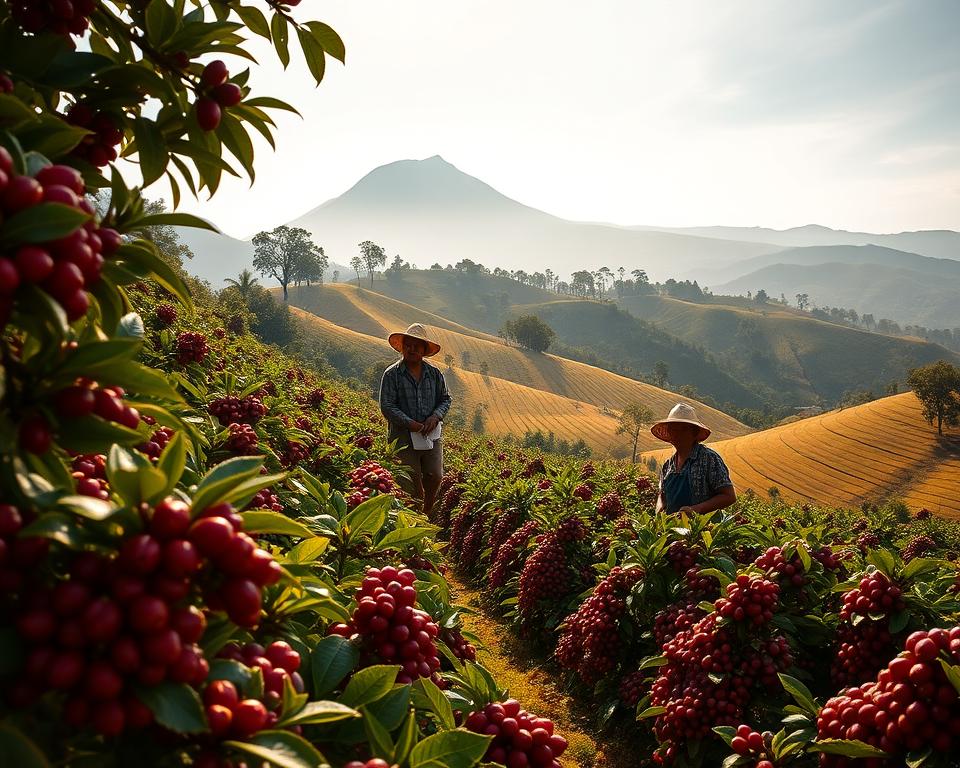
The Guatemalan coffee industry is key to the country’s economy. Coffee is a big part of its exports. Guatemala is among the top coffee producers worldwide, impacting its economic stability a lot.
Coffee production creates jobs and brings in foreign money for Guatemala. It’s not just about money; coffee is also a big part of Guatemala’s culture and history.
Coffee is vital to Guatemala’s economy, helping it grow and develop. Looking into coffee’s role in Guatemala’s exports shows it’s a big part of the country’s economic health.
The Historical Significance of Coffee in Guatemala
The history of coffee in Guatemala is fascinating. It shows how a single crop can change a nation’s economy and culture. Coffee was introduced in the 18th century. It quickly became important because of Guatemala’s rich soil and good climate.
Over time, coffee production in Guatemala grew a lot. It became a key part of the country’s economy. The coffee trade was shaped by big events, like the start of coffee plantations in the late 19th century.
| Period | Event | Impact on Coffee Trade |
|---|---|---|
| 18th Century | Coffee Introduction | Initial growth of coffee production |
| Late 19th Century | Establishment of Coffee Plantations | Significant increase in coffee exports |
Today, Guatemala is famous for its top-notch coffee. Coffee is still very important to the country’s economy and culture.
Understanding Guatemala’s Coffee Regions and Varieties
Guatemala is famous for its coffee, thanks to its diverse regions. Each area has its own taste and features. The country’s volcanic highlands are perfect for growing coffee.
The main coffee spots in Guatemala are Antigua, Huehuetenango, and Atitlán. Antigua’s coffee is balanced, with hints of chocolate and spice. Huehuetenango’s coffee is bright and acidic, with citrus and berry flavors. Atitlán’s coffee is complex, thanks to its rich volcanic soil.
Guatemalan coffee suppliers offer many varieties like Bourbon, Caturra, and Gesha. The coffee market is shaped by climate change, global demand, and local costs. Knowing these trends helps suppliers and buyers.
| Region | Flavor Profile | Varieties |
|---|---|---|
| Antigua | Balanced, chocolate, spice | Bourbon, Caturra |
| Huehuetenango | Bright, acidic, citrus, berries | Gesha, Bourbon |
| Atitlán | Complex, nuanced | Caturra, Gesha |
Guatemala’s coffee scene is always changing, with a focus on quality and sustainability. As specialty coffee demand rises, Guatemalan suppliers are ready with their top-notch products.
Coffee Exports in Guatemala: An Economic Overview
Coffee exports are key to Guatemala’s economy, adding a lot to its GDP. The coffee industry has been vital for decades, offering jobs and bringing in foreign money.
Recent Guatemala coffee export statistics show the country ships out a lot of coffee every year. This shows how big the industry is and how it can be affected by world market changes.
The impact of coffee exports on Guatemala’s economy is wide-ranging. It boosts the GDP, creates jobs in rural areas, and brings in foreign currency. But, the industry faces issues like changing coffee prices and strict export rules.
It’s important for those in the coffee export business to understand these points. By looking at Guatemala’s coffee export numbers and its economic role, they can make better choices. This helps them deal with challenges and take advantage of chances in the global coffee market.
How to Understand the Guatemalan Coffee Value Chain
To grasp the Guatemalan coffee value chain, we must look at its main players. It’s a complex system, with many roles from farmers to exporters.
Smallholder Farmers
Smallholder farmers are key to Guatemala’s coffee. They produce a big part of the country’s coffee. These farmers have small lands and use family help to grow and pick their coffee.
Cooperatives and associations help these farmers a lot. They offer training, tools, and ways to sell their coffee. This helps farmers grow better coffee. Many top coffee exporters in Guatemala are these groups, working with farmers.
Knowing about smallholder farmers and cooperatives helps us see the challenges and chances in exporting coffee from Guatemala.
Step-by-Step Guide to Starting a Coffee Export Business in Guatemala
The Guatemalan coffee industry is famous for its top-notch coffee. This makes it a great place for exporters. To do well, you need a clear plan to start your coffee export business.
First, do deep market research. Learn what people want from Guatemalan coffee in your target markets. Look at what they like, trends, and who else is selling.
After finding your market, get the right licenses and certifications. In Guatemala, you must register with the Ministry of Economy. You also need to follow the Guatemalan Coffee Association’s rules.
Creating a strong supply chain is key. You need to connect with local farmers or cooperatives. Make sure they meet quality and sustainability standards.
Key Considerations for Your Coffee Export Business
| Aspect | Description | Importance Level |
|---|---|---|
| Market Research | Understanding demand and consumer preferences | High |
| Licenses and Certifications | Compliance with Guatemalan regulations | High |
| Supply Chain | Reliable sourcing of high-quality coffee | High |
| Quality Control | Ensuring coffee meets export standards | Medium |
| Marketing Strategy | Promoting your coffee in target markets | Medium |
By following these steps and focusing on the important points, you can start a thriving coffee export business in Guatemala. This way, you can take advantage of the country’s excellent coffee reputation.
How to Navigate Export Regulations for Guatemalan Coffee
Exporting coffee from Guatemala is a complex task. It requires following many rules that can be hard to understand. Businesses need to know the laws and rules for exporting coffee.
The rules for exporting Guatemalan coffee are detailed. They involve many government agencies and international standards. Exporters must follow rules about quality, packaging, and labeling. They also need to meet standards of the countries they export to.

Understanding the rules is a crucial step. This includes knowing the documents needed, like export permits and certificates of origin.
- Ensure compliance with quality standards set by the International Coffee Organization.
- Adhere to packaging and labeling regulations in the destination country.
- Obtain necessary export permits and certificates.
Guatemala’s coffee export numbers show a rising demand for quality coffee. By following the rules well, exporters can meet this demand. This can help them grow their business in new markets.
To stay on top, exporters should keep up with the rules. They should know about changes in trade agreements and coffee standards.
Quality Standards and Certifications: A Practical Guide
To stay ahead in the global coffee market, Guatemalan suppliers must follow strict quality standards. They should also think about getting the right certifications. These certifications show excellence and can make Guatemalan coffee more appealing to buyers.
Organic Certification Process
The Organic certification process has a few key steps:
- Application and Inspection
- Record Keeping and Compliance
- Annual Renewal
This certification means the coffee is grown without harmful chemicals. It attracts buyers who care about the environment.
Fair Trade Certification Steps
Fair Trade certification requires:
- Meeting Fair Trade standards for price, labor, and direct trade practices
- Audit and Certification by a recognized body
- Continuous monitoring and compliance
Fair Trade certification shows that producers get fair prices and work under ethical conditions.
These certifications can greatly help Guatemalan coffee suppliers. They open up new markets and can lead to higher prices.
| Certification | Key Benefits | Market Impact |
|---|---|---|
| Organic | Environmentally friendly practices, appeals to eco-conscious consumers | Premium pricing, access to niche markets |
| Fair Trade | Fair prices for producers, ethical labor practices | Increased market access, consumer trust |
By getting these quality certifications, Guatemalan coffee suppliers can improve their position in the market. They can also reach more customers.
How to Identify and Access Target Markets for Guatemalan Coffee
To increase Coffee Exports in Guatemala, finding and reaching target markets is key. Knowing what the world wants in specialty coffee and who’s competing is vital. This helps Guatemalan coffee sellers stand out.
Doing market research is a big step in finding where to sell. It means looking at what people like, what’s trending, and who else is selling. By using trade deals and knowing the rules of other countries, Guatemalan coffee can get ahead.
- Developing a strong online presence to reach global consumers
- Participating in international trade shows and coffee exhibitions
- Building relationships with importers and distributors in target markets
- Tailoring marketing campaigns to appeal to specific consumer segments
| Target Market | Consumer Preferences | Market Trends |
|---|---|---|
| North America | High demand for specialty coffee, emphasis on quality and sustainability | Growing demand for online coffee sales |
| Europe | Appreciation for diverse coffee flavors, strong focus on sustainability and fair trade | Increasing popularity of coffee shops and cafes |
| Asia | Growing coffee culture, interest in premium and specialty coffee | Rising demand for coffee in countries like China and India |
By getting these market details and adjusting their plans, Top coffee exporters in Guatemala can find and reach their markets. This will help increase Coffee Exports in Guatemala.
Overcoming Challenges in the Coffee Export Process
Guatemalan coffee exporters face many challenges. These include logistical issues and regulatory compliance. The journey of coffee from farm to global market is complex.
Logistical issues are a big challenge. This includes transportation and storage. It’s crucial to handle and store coffee beans properly to keep their quality.
Regulatory compliance is another hurdle. Exporters must follow both local and international rules. Understanding and following these rules is key for successful export.
Market fluctuations also pose a challenge. The global coffee market is volatile. Prices can change quickly. Exporters need to keep up with market trends to make good decisions.
| Challenge | Description | Mitigation Strategy |
|---|---|---|
| Logistical Issues | Transportation and storage problems | Invest in proper storage facilities and reliable transportation |
| Regulatory Compliance | Adhering to local and international regulations | Stay updated on regulatory changes and ensure compliance |
| Market Fluctuations | Volatility in global coffee prices | Monitor market trends and adjust pricing strategies accordingly |
By understanding these challenges and finding ways to overcome them, Guatemalan coffee exporters can improve their global market position. Exporting coffee from Guatemala requires high-quality beans and a deep understanding of the export process.
Implementing Sustainable Practices in Your Coffee Export Business
It’s key to use sustainable practices for Guatemala’s coffee to thrive. This means being green, responsible, and making money. It’s all about being good to the planet, treating people right, and making a profit.
Being green means using less water, organic fertilizers, and growing coffee under shade. These steps help the environment and make the coffee taste better.
Being responsible also means treating workers fairly and improving their work places. Helping local communities is part of this too. Happy workers stay longer, which is good for business.
To stay profitable, diversify your products, make your supply chain better, and find new markets. These steps help your business grow and stay strong.
By using these green and responsible methods, Guatemalan coffee can shine globally. It’s good for the planet, people, and business.
Leveraging Technology to Enhance Coffee Export Operations
Using technology is key for better coffee exports in Guatemala. The coffee trade in Guatemala can get a big boost from digital tools. These tools make operations more efficient and competitive.
Technology can change how coffee is marketed. Digital platforms help Guatemalan coffee makers reach more people. They can show off their unique coffee and connect with buyers directly. This boosts Guatemalan coffee’s visibility and helps producers understand market trends.
Technology also makes supply chain management better. It allows for tracking coffee shipments in real-time. This makes logistics smoother and cuts down on delays or losses.
Also, technology helps with quality control. Digital systems monitor coffee quality from the farm to export. This means only the best coffee beans are sent out, improving Guatemala’s global coffee reputation.
By using technology, Guatemalan coffee producers can get better at what they do. This makes them stronger in the global coffee market.
Conclusion: The Future of Guatemala’s Coffee in the Global Economy
The Guatemalan coffee industry is set to grow even more in the global market. This is thanks to its top-notch coffee and the variety of regions it covers. Coffee exports from Guatemala are crucial for the country’s economy. They help thousands of farmers and their families make a living.
With more people wanting specialty coffee, Guatemala is in a great spot. The country’s coffee industry will likely see more investments in green practices and new tech. This will make coffee production better and more efficient.
Guatemala’s coffee future depends on how it adapts to new market trends and what people want. With its deep coffee culture and focus on quality, Guatemala’s coffee will likely stay important worldwide.