
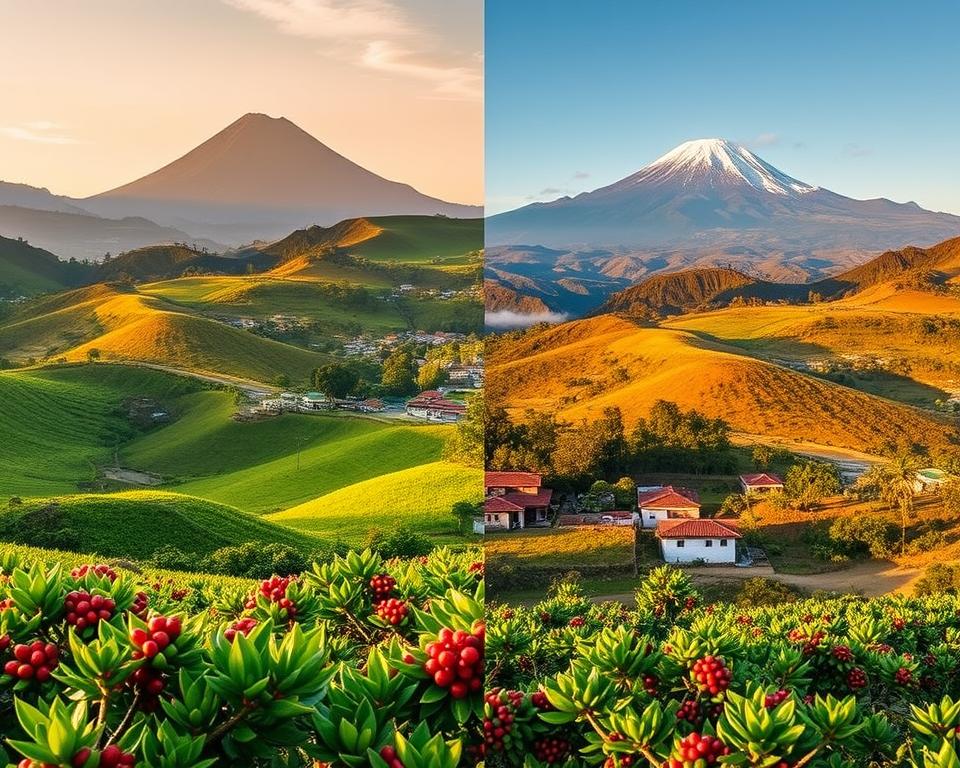
Guatemala is famous for its coffee, with different areas offering unique tastes. Antigua and Huehuetenango are two of the most well-known coffee spots.
Many coffee fans wonder which place makes the best coffee. Knowing the differences between these areas can make enjoying Guatemalan coffee even better.
The special soil and weather of each place add to their coffee’s unique flavor. This comparison aims to highlight these differences. It’s to help coffee lovers find their perfect cup.
The Rich Heritage of Guatemalan Coffee
Guatemala is a paradise for coffee, thanks to its diverse climate and volcanic soil. This makes it a haven for coffee production. The country’s coffee regions are known for their unique flavors, shaped by altitude, soil, and climate.
Guatemalan coffee’s history is closely tied to its culture. Coffee is a big part of the country’s economy and identity. The Antigua and Huehuetenango regions are famous for their high-quality coffee, each with its own taste.
Guatemalan coffee farmers use rich volcanic soil, enough rain, and a good climate to make some of the world’s best coffee. This has made Guatemalan coffee famous worldwide. Coffee lovers enjoy its complex flavors and rich aroma.
Understanding Antigua: The Classic Coffee Region
Antigua is known for its perfect climate and volcanic soil. These factors make it a top spot for growing coffee. They also add to the coffee’s unique taste.
The weather in Antigua is mild with clear wet and dry seasons. This slow growth of coffee cherries makes the coffee taste more complex.
Antigua’s soil is full of nutrients, which helps the coffee plants grow well. The soil and farming methods in the area are key to the coffee’s flavor.
| Characteristics | Impact on Flavor |
|---|---|
| Climate | Slower maturation enhances complexity |
| Volcanic Soil | Rich in nutrients, contributing to distinct flavor profiles |
| Cultivation Techniques | Careful processing methods preserve flavor nuances |
Knowing about these factors helps us understand why Antigua coffee is so good. The way coffee is grown and processed in Antigua adds to its famous taste.
Exploring Huehuetenango: The Highland Coffee Giant
Huehuetenango is in the highlands of Guatemala. It’s famous for its top-notch coffee beans. The high altitude and unique geography shape the coffee’s flavor.
The coffee from Huehuetenango is known for its bright acidity and complex flavors. You might taste hints of citrus and floral notes. The rugged terrain and high elevations are perfect for growing coffee, with many farms over 2,000 meters high.
| Region | Altitude (meters) | Flavor Profile |
|---|---|---|
| Huehuetenango | 1,800 – 2,200 | Bright acidity, citrus, floral |
| Antigua | 1,500 – 1,800 | Balanced, chocolate, spice |
For more info on Guatemalan coffee, check out Guate Adventure’s page on Guatemalan coffee. Huehuetenango’s coffee is special because of its high altitude, rich soil, and good climate. It’s a big player in Guatemala’s coffee world.
Antigua vs. Huehuetenango: Direct Flavor Profile Comparison
Looking at the flavors of Antigua and Huehuetenango coffee shows how varied Guatemalan coffee can be. Both areas are famous for their high-quality Arabica beans. But, they taste different because of the climate, soil, and how they’re processed.
Antigua coffee is known for its balanced taste. It has notes of chocolate, caramel, and a hint of citrus. This comes from the volcanic soil and mild climate, making it smooth and refined.
Huehuetenango coffee, on the other hand, is bold and complex. It can taste fruity to spicy. The high altitude and cooler temperatures make the coffee’s acidity and flavor deeper.
Antigua coffee is sweeter and more balanced in acidity. Huehuetenango coffee is more vibrant and dynamic. It has a brighter acidity and a wider range of flavors.
Choosing between Antigua and Huehuetenango coffee depends on what you like. If you prefer a smoother, more balanced taste, go for Antigua. If you like a bolder, more complex flavor, Huehuetenango might be for you.
Coffee Cultivation Techniques in Antigua
Antigua’s unique terroir and climate have led to the development of distinct coffee cultivation techniques. The region’s coffee farmers employ traditional farming practices that have been refined over generations.
The coffee cultivation process in Antigua involves meticulous attention to detail, from planting to harvesting and processing. The region’s farmers use a combination of modern and traditional techniques to produce high-quality specialty coffee.
| Cultivation Technique | Description | Impact on Coffee Quality |
|---|---|---|
| Farming Practices | Traditional methods with shade-grown coffee | Complex flavor profile |
| Processing Methods | Washed processing with careful cherry selection | Bright acidity and clean taste |
| Drying Techniques | Patios and raised beds for even drying | Balanced flavor and aroma |
These techniques combined have made Antigua a renowned region for specialty coffee. Its coffee is prized for its distinct flavor profile and high quality.
Coffee Cultivation Techniques in Huehuetenango
Coffee farmers in Huehuetenango use both old and new ways to grow top-notch coffee. The area’s tough terrain and weather have made them come up with special growing methods.
They often grow coffee under a canopy of native trees. This method protects the coffee from too much sun and helps keep the area diverse.
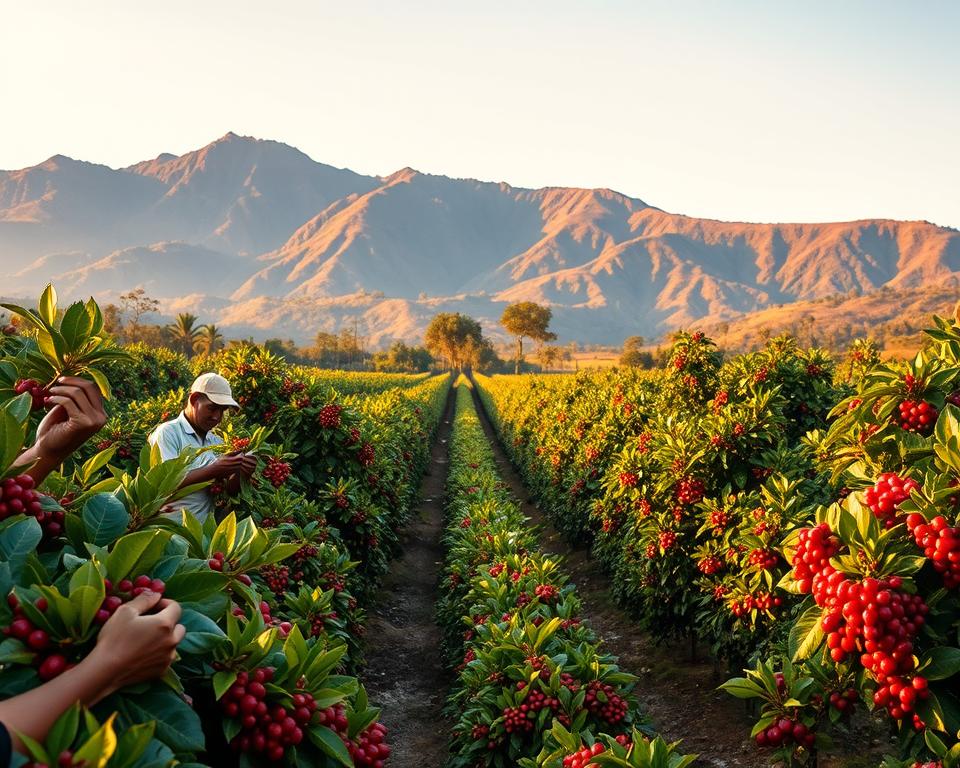
The high altitude in Huehuetenango makes coffee cherries ripen slower. This slow process helps the coffee taste more complex. The rich soil and enough rain also make it perfect for growing coffee.
Thanks to these conditions, Huehuetenango is known for some of Guatemala’s best coffee. Its coffee beans are famous for their unique tastes and quality.
How to Identify Authentic Beans from Each Region
To truly enjoy Guatemalan coffee, knowing how to spot authentic beans is key. Authenticity means you get the quality and taste these regions are famous for.
Several factors can help identify authentic coffee beans from these regions. First, check the packaging: look for bags with a one-way valve to keep the beans fresh. The label should tell you about the region, farm, and how the beans were processed.
Here’s a comparison of key characteristics to look for in authentic beans from Antigua and Huehuetenango:
| Characteristics | Antigua | Huehuetenango |
|---|---|---|
| Flavor Profile | Balanced, chocolate notes | Fruity, floral notes |
| Altitude | 1,500 – 1,700 meters | 1,700 – 2,000 meters |
| Processing Method | Typically washed | Variety of methods, including washed and natural |
By focusing on these details, you can buy authentic coffee beans from Antigua or Huehuetenango. This way, you can enjoy the special flavors these regions offer.
How to Brew Antigua Coffee for Optimal Flavor
Antigua coffee is known for its unique taste. To get the best flavor, you need to pay close attention to how you brew it.
Grind Size Recommendations
The size of your coffee beans’ grind matters a lot. For pour-over and drip brewing, a medium-coarse grind is best.
Temperature and Extraction Time
The perfect brewing temperature for Antigua coffee is between 195°F and 205°F. Aim for an extraction time of 3-4 minutes for pour-over and drip brewing. Tinkering with these settings can really bring out the coffee’s special flavors.
By sticking to these tips, you can make your Antigua coffee even better. Trying different coffee-making techniques and learning about flavor profiles can also improve your skills.
How to Brew Huehuetenango Coffee to Highlight Its Unique Characteristics
Huehuetenango coffee is known for its bright acidity and complex flavors. To get the most out of it, you need to know the best brewing method. Understanding the right brewing parameters is key.
Ratio and Steeping Time
The coffee-to-water ratio and steeping time are very important. A ratio of 1:15 to 1:17 is best. This allows for a balanced extraction that brings out the coffee’s flavors.
The steeping time depends on the brewing method. For example, pour-over or drip brewing works well with a specific steeping time. This ensures a clean and balanced extraction.
Filtration Methods
The filtration method you choose can greatly affect the flavor of Huehuetenango coffee. Paper filters make the coffee’s acidity and clarity stand out. On the other hand, metal filters let more oils through, adding to the coffee’s body and complexity.
Trying different filtration methods can help you find the best way to brew Huehuetenango coffee. This way, you can enjoy its unique characteristics in every cup.
By adjusting the brewing parameters and filtration methods, coffee lovers can fully enjoy Huehuetenango coffee. They will experience its unique qualities in every cup.
How to Conduct Your Own Comparative Tasting
Learn the differences between Antigua and Huehuetenango coffee with a simple tasting. This guide will show you the unique tastes of these Guatemalan coffee areas.
To start your tasting, you’ll need:
- Coffee samples from Antigua and Huehuetenango
- A brewing method (e.g., pour-over, French press)
- Water at the optimal temperature
- A tasting sheet to record your observations
Follow these steps for a detailed comparison:
- Brew both coffees using the same method and parameters.
- Pour the coffee into identical cups to eliminate any visual bias.
- Smell the aromas of both coffees and note the differences.
- Taste the coffees, paying attention to the flavor profiles, acidity, and body.
- Record your observations on the tasting sheet, comparing the Antigua and Huehuetenango coffees.
By following these steps, you’ll understand the unique qualities of Antigua and Huehuetenango coffee. This tasting will deepen your love for Guatemalan coffee. It will also help you choose which taste you prefer.
How to Choose Between Antigua and Huehuetenango Based on Your Preferences
Choosing between Antigua and Huehuetenango coffee depends on what you like in your coffee. Think about what you want in a cup of coffee.
If you like a smooth coffee with chocolate and caramel notes, Antigua might be for you. Huehuetenango is great if you prefer a coffee with bright acidity and fruity flavors.
| Coffee Characteristics | Antigua | Huehuetenango |
|---|---|---|
| Flavor Profile | Balanced, chocolate, caramel | Bright acidity, fruity |
| Cultivation Techniques | Traditional methods, shade-grown | Modern techniques, high-altitude |
| Best Brewing Method | Pour-over, French press | Cold brew, pour-over |
For more details on Antigua and Huehuetenango coffee, check out our comparative analysis.
The best coffee for you is the one that fits your taste and brewing style. Try both Antigua and Huehuetenango to find your favorite.
Conclusion: Making Your Choice Between Antigua and Huehuetenango
Guatemala is known for its diverse coffee regions. Antigua and Huehuetenango are two standout areas. Antigua is famous for its balanced acidity and rich chocolate flavors. Huehuetenango, on the other hand, offers bright acidity and fruity notes.
When picking between Antigua and Huehuetenango coffee, think about what you like. If you prefer a smooth, balanced taste, Antigua might be for you. Huehuetenango is great for those who enjoy a brighter, more complex flavor.
Choosing between these regions is all about personal taste. Trying both Antigua and Huehuetenango can be a fun adventure. It lets you explore the unique flavors of each area. Whether you’re a coffee expert or new to the world of coffee, comparing these regions is sure to please.