
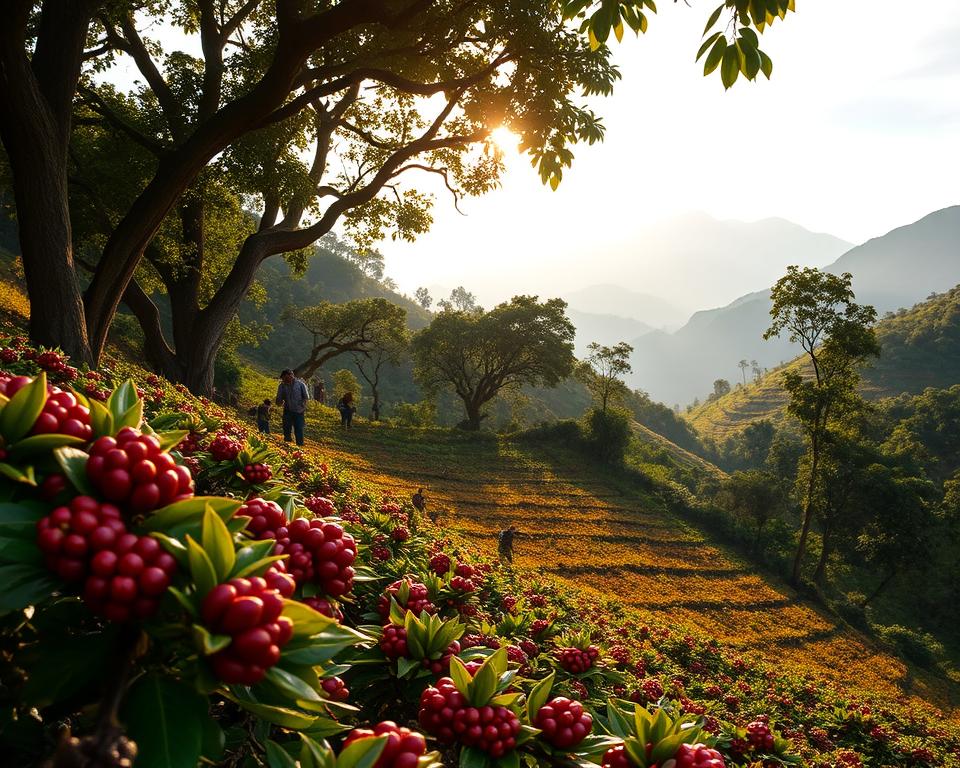
Guatemala’s geography and climate make it perfect for growing coffee. The rich volcanic soil, high altitudes, and unique microclimates are ideal. This creates a perfect blend for high-quality coffee.
The regions of Antigua, Huehuetenango, and Atitlán are famous for their coffee. The coffee industry in Guatemala is deeply connected to the country’s culture and economy.
Guatemalan coffee is now a big player in the global market. It’s known for its unique flavors and high-quality beans.
The Origins of Coffee in Guatemala
The story of Guatemalan coffee starts in the 18th century. This was when coffee plants first arrived in the area. It was the start of a new chapter in Guatemala’s farming history, with coffee becoming a key crop and a big part of the economy.
Jesuit priests brought coffee plants to Guatemala. They came from other parts of the world. The first coffee farms were set up in places with the right climate and soil, mainly in the highlands.
Coffee’s growth had a big effect on Guatemala’s economy and culture. It became a major farm product and changed social structures. Coffee farms created jobs and shaped local communities.
Early Expansion of Coffee Production
Guatemala’s geography helped coffee grow. The volcanic highlands were perfect for coffee. Different areas focused on coffee, making Guatemala known for its quality coffee.
| Region | Year Coffee Introduced | Current Production Level |
|---|---|---|
| Antigua | 1750 | High |
| Huehuetenango | 1800 | Medium |
| Atitlán | 1820 | High |
The table shows how coffee spread in Guatemala. It shows how the coffee industry grew over time.
The early days of coffee in Guatemala set the stage for its future as a top coffee producer. Coffee changed the farming scene and had a lasting impact on the economy and communities.
Geographic Influences on Coffee Production
Guatemala’s unique geography makes its coffee special. The country’s varied landscapes, including volcanic highlands and fertile valleys, shape its coffee’s taste. The climate also plays a big role.
Places like Antigua, Huehuetenango, and Atitlán are famous for their coffee. Antigua’s coffee is known for its balanced acidity and rich taste. Huehuetenango’s coffee is bright and complex.
Climate and Soil Conditions
The climate and soil in Guatemala are key to its coffee. The subtropical climate with wet and dry seasons helps coffee cherries mature slowly. This makes the coffee taste better.
The volcanic soil in many areas adds to the coffee’s flavor. Coffee from volcanic regions has a heavier body and richer taste. This is different from coffee grown in other soils.
Guatemalan coffee farms are often at high altitudes. This slow maturation of coffee cherries leads to complex flavors. The combination of high altitude, rich soil, and climate makes Guatemalan coffee famous worldwide.
- The high altitudes in regions like Huehuetenango and Atitlán contribute to coffee with bright acidity.
- The volcanic soil in Antigua and other regions adds depth and richness to the coffee.
- The distinct wet and dry seasons in Guatemala allow for a slower coffee cherry maturation process.
In conclusion, Guatemala’s geography, including climate and soil, greatly affects its coffee. The country’s diverse landscapes and climate make it perfect for growing coffee.
Coffee Cultivation Techniques
Guatemala is known for its specialty coffee, thanks to careful cultivation methods. Coffee makers in Guatemala use a mix of old and new ways to grow top-notch coffee.
Shade-grown coffee is a key method used. It means coffee plants grow under trees. This method keeps the environment healthy, slows down coffee growth, and makes the coffee taste richer.
Organic farming is also common in Guatemalan coffee making. It avoids harmful chemicals, keeping the soil and water clean. This way, coffee tastes cleaner and is better for the planet.
Technology plays a big role in modern coffee farming. Tools like precision agriculture help farmers grow better coffee. They use data to manage water, nutrients, and pests, making coffee more consistent and flavorful.
| Cultivation Technique | Benefits | Impact on Flavor |
|---|---|---|
| Shade-Grown | Preserves biodiversity, reduces soil erosion | Complex flavor profile due to slower maturation |
| Organic Farming | Maintains soil health, conserves water | Cleaner, more natural coffee product |
| Precision Agriculture | Improves yields, optimizes resource use | Consistent quality, enhanced flavor profiles |
These methods help make Guatemalan coffee special. By blending old wisdom with new tech, farmers create coffee that’s both sustainable and of the highest quality.
The Role of Coffee in Guatemalan Economy
Coffee is very important to Guatemala’s economy. It helps the country’s GDP and creates jobs. Coffee is a key crop in Guatemala, affecting the national economy a lot.
Coffee exports bring in a lot of money for Guatemala. This money helps keep the national currency stable. It also supports the country’s economic stability.
Many Guatemalans work in the coffee industry. This includes farmers, farmworkers, processors, and exporters. The coffee supply chain is a big source of income for families.
The coffee industry in Guatemala has seen ups and downs. Global prices, weather, and pests have affected it. But coffee is still crucial to Guatemala’s economy.
Now, there are efforts to make the coffee industry better. Programs focus on sustainable farming, improving quality, and getting coffee to market. These efforts aim to make the industry stronger for the future.
The Evolution of Guatemalan Coffee Varietals
The story of Guatemalan coffee varietals is one of innovation and resilience. Producers have adapted to improve quality and fight disease. This history is rich and ongoing.
Guatemala is famous for its coffee, with Bourbon, Caturra, and Gesha being top choices. These varietals have been perfected to grow well in Guatemala’s climate. This has made Guatemalan coffee known worldwide for its unique taste and quality.
New varietals are created to resist disease and climate changes. Producers aim to grow coffee that’s not only tough but also meets the demand for specialty coffee.
Climate change, soil quality, and the quest for quality drive the evolution of Guatemalan coffee. Farmers are trying new ways to grow coffee. They want to boost yields and enhance flavors.
| Coffee Varietal | Characteristics | Regions |
|---|---|---|
| Bourbon | Known for its balanced acidity and sweet flavor | Antigua, Huehuetenango |
| Caturra | High yields, bright acidity | Atitlán, San Marcos |
| Gesha | Distinct floral and citrus notes | Huehuetenango, Quetzaltenango |
The future of Guatemalan coffee is bright. There’s a focus on creating new varietals and better growing methods. As specialty coffee demand rises, Guatemalan producers are ready to supply high-quality coffee.
Cultural Significance of Coffee
In Guatemala, coffee is more than a drink; it’s a symbol of tradition and identity. It’s deeply rooted in the country’s history and daily life.
Coffee has shaped Guatemalan traditions and customs. It’s a key part of social gatherings, where families and friends share stories and enjoy coffee. This tradition is about the moments and memories made around it.
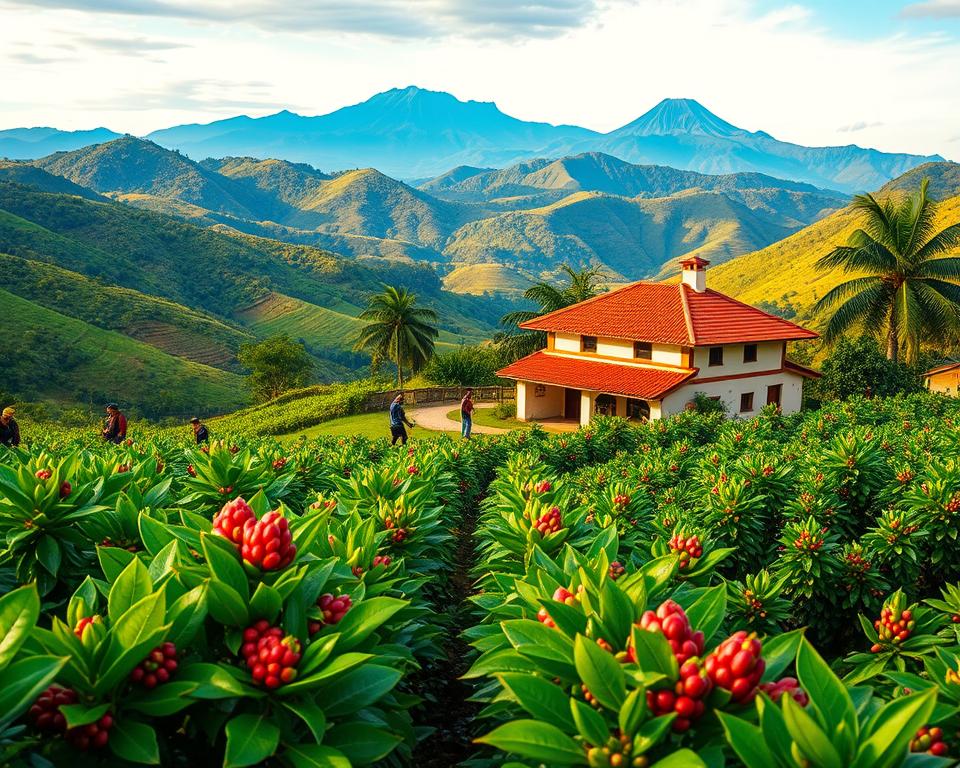
Coffee’s influence goes beyond social gatherings to art and literature. Guatemalan artists and writers often find inspiration in coffee culture. They depict coffee plantations, harvests, and farmers’ daily lives. This shows coffee’s importance in Guatemalan culture and the country’s rich coffee history.
Guatemalan coffee farms are more than just farms; they’re guardians of cultural heritage. They provide jobs and support local economies. The tradition of coffee farming is passed down through generations, with stories and techniques shared within families.
The cultural importance of coffee is seen in Guatemalan festivals and celebrations. Coffee is central in harvest festivals and traditional coffee-making ceremonies. It’s a key part of Guatemalan identity.
In conclusion, coffee’s cultural significance in Guatemala is vast. It influences daily life, traditions, art, and literature. The rich history and cultural heritage of Guatemalan coffee farms continue to shape the country’s identity and traditions.
Challenges Faced by Producers
Guatemalan coffee producers face many challenges that affect their work and the coffee industry. Coffee is a big part of Guatemala’s economy. But, it’s hit hard by environmental and market issues.
Weather changes are a big problem for coffee. Climate change brings unpredictable weather, hurting coffee quality and amount. Higher temperatures and changing rain patterns let pests and diseases harm coffee crops more.
- Coffee leaf rust, a disease that can significantly reduce coffee yields.
- Pests such as the coffee berry borer, which can damage coffee beans.
- Unpredictable weather patterns, including droughts and excessive rainfall.
Guatemalan coffee producers also deal with market issues. Coffee prices can change a lot, making it hard to know how much money they’ll make. This makes planning for the future tough.
Other market challenges include:
- Increased competition from other coffee-producing countries.
- Fluctuations in global demand for specialty coffee.
- Difficulties in accessing international markets due to stringent quality and certification requirements.
To tackle these problems, Guatemalan coffee producers are trying new things. They’re using sustainable farming, finding other ways to make money, and getting certifications. This helps them sell their coffee for more money.
| Challenge | Description | Impact |
|---|---|---|
| Climate Change | Unpredictable weather patterns | Affects coffee yields and quality |
| Pests and Diseases | Coffee leaf rust and coffee berry borer | Damages coffee crops and reduces yields |
| Price Volatility | Fluctuations in global coffee prices | Makes it difficult for producers to predict income |
The Coffee Supply Chain
Guatemala’s coffee supply chain is complex. It involves many stages and players. From the farms to the global market, it’s a long journey.
Coffee cherries are harvested first. Guatemalan farms grow high-quality Arabica coffee. The rich volcanic soil and climate help.
Then, the cherries are processed. This removes the outer skin and pulp. Different methods like washed, natural, and honey processing change the coffee’s taste.
The beans are dried next. They need to be around 11% moisture. Sun drying or machines are used for this.
After drying, the beans are hulled. This removes the parchment layer, leaving green coffee beans. These are sorted and graded by size and quality.
Key Stakeholders in the Supply Chain
- Farmers: Coffee farmers are the backbone of the supply chain, responsible for cultivating and harvesting coffee.
- Cooperatives: Many farmers are part of cooperatives, which provide support in processing, marketing, and exporting coffee.
- Exporters: Exporters play a crucial role in preparing coffee for the global market, ensuring it meets international standards.
- Importers: Importers are responsible for bringing Guatemalan coffee into other countries, working with roasters and retailers.
The supply chain faces challenges like climate change and market fluctuations. Yet, the industry thrives. It focuses on quality and sustainability.
Guatemala’s coffee history is rich and diverse. Coffee is a big part of the culture and economy. The supply chain connects farmers to global markets and consumers.
Global Recognition of Guatemalan Coffee
Guatemalan coffee is loved worldwide for its rich flavor. The country’s coffee is grown in volcanic soil and has many microclimates. This makes it a top choice for coffee lovers.
Guatemalan coffee is known for its quality and care for the environment. It has earned Fair Trade and Rainforest Alliance certifications. These show the coffee’s high standards and the producers’ commitment to ethics and sustainability. For more on Guatemalan coffee, visit Arabic Trade.
Guatemalan coffee’s fame has boosted its market and appeal. As people look for better coffee, demand for Guatemalan coffee goes up. This trend is likely to keep growing as more people learn about its unique taste and making process.
The specialty coffee scene in Guatemala is always getting better. Producers keep working to make their coffee even better and more sustainable. This hard work has made Guatemalan coffee a top name in the world of specialty coffee.
The Impact of Tourism on Coffee
The mix of coffee and tourism in Guatemala is opening up new chances and hurdles for coffee makers. Travelers looking for real experiences are finding Guatemalan coffee farms a prime spot for agritourism.
Coffee tourism lets visitors see coffee farms, learn how coffee is made, and see the hard work behind the world’s top coffee. This makes the trip better and gives farmers more money.
Local communities gain a lot economically. By welcoming tourists, farmers can earn more, not just from coffee. It also helps keep traditional coffee-making alive.
But, there are downsides too. More tourists can strain local resources and infrastructure. There’s also a chance that tourism might take away from coffee making.
To get the most out of tourism and keep coffee quality high, the Guatemalan coffee world needs to find a balance. This balance is key to success.
Future Trends in Guatemalan Coffee Industry
Sustainability and new tech are changing Guatemalan coffee. The world wants more eco-friendly, top-notch coffee. Guatemalan farmers are ready to deliver.
Using green methods is key in Guatemalan coffee now. This means organic farming, less water use, and solar power in processing. Some farms even use solar to cut down on carbon.
New ideas are also driving Guatemalan coffee forward. Tech in farming and processing makes coffee better and more efficient. Precision farming, with GPS and data, is helping some farms grow more with less waste.
| Trend | Description | Impact |
|---|---|---|
| Sustainable Farming | Adoption of organic and environmentally friendly farming practices | Reduced environmental impact, improved coffee quality |
| Technological Advancements | Use of precision agriculture and modern processing techniques | Increased efficiency, better quality control |
| Specialty Coffee | Focus on producing high-quality, unique coffee varieties | Higher market value, increased consumer interest |
For more insights on Guatemalan coffee’s future, check out Royal Coffee’s article. It dives deep into the trends and what they mean for everyone.
The future of Guatemalan coffee is bright. It’s all about being green, innovative, and top-quality. As things change, Guatemalan coffee will keep winning hearts around the world.
Conclusion: The Legacy of Guatemalan Coffee
The history of Guatemalan coffee is filled with the country’s unique geography and culture. It shows the dedication to quality in every cup. From the mountains to the world, Guatemalan coffee has grown a lot.
Guatemalan coffee is famous for its high-quality Arabica beans. These beans are grown in volcanic regions. The history of Guatemalan coffee is marked by a strong commitment to sustainability and innovation.
The Guatemalan coffee industry keeps growing, even with new challenges. Its legacy as a top coffee producer is strong. With a focus on quality and sustainability, Guatemalan coffee will keep delighting coffee lovers everywhere.