
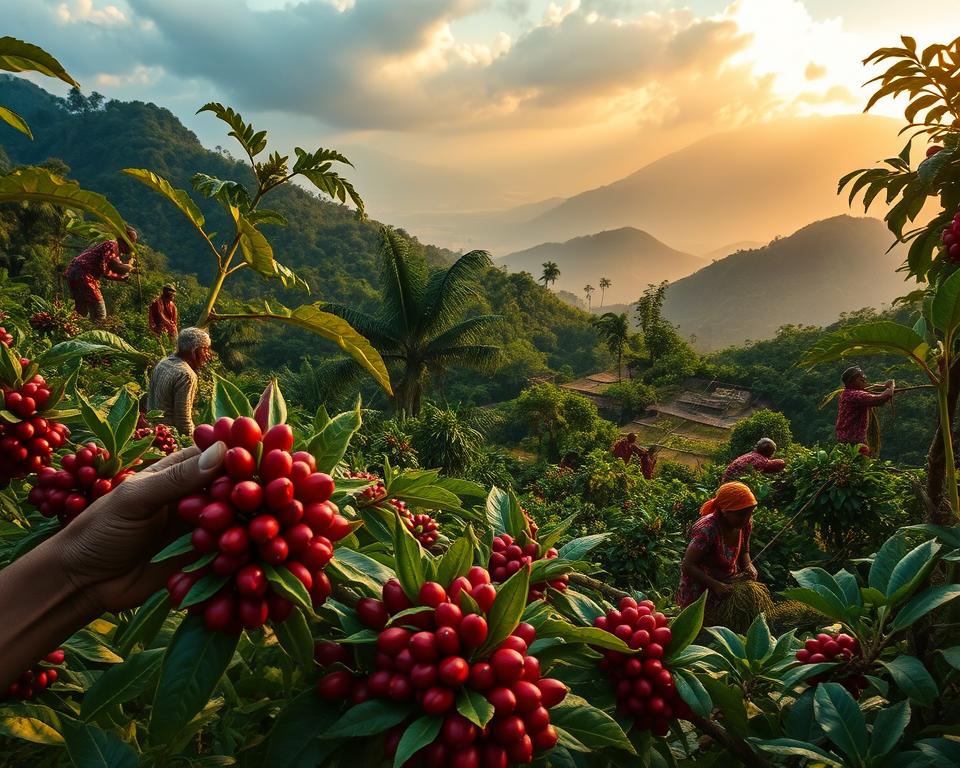
Guatemalan society has a deep connection with coffee. This bond goes beyond its role as a major crop. Introduced by Jesuit missionaries in the 18th century, coffee became a key export by the late 19th century. It replaced indigo and cochineal.
Coffee farming supports over 125,000 families. Most live in rural, indigenous communities. These include Antigua, Huehuetenango, Atitlán, and Cobán. For more on coffee farming in Guatemala, check out the details of this important industry.
This rich heritage is seen in annual harvest festivals. It also shows in multigenerational farming traditions. Coffee plays a key role in shaping Guatemalan identity.
The Historical Journey of Guatemalan Coffee
Coffee production in Guatemala started in the 18th century. It has become a key part of the country’s economy. Jesuit priests introduced coffee plants to the region.
The journey of Guatemalan coffee has seen important events. By the late 19th century, coffee was a big export. Large coffee farms, called fincas, were set up in the highlands.
Coffee has greatly impacted Guatemala’s economy. It has created jobs for thousands and boosted the country’s GDP.
| Year | Coffee Production (tons) | Economic Impact |
|---|---|---|
| 1850 | 1000 | Initial export |
| 1900 | 5000 | Major export crop |
| 2000 | 20000 | Significant economic contributor |
Today, Guatemalan coffee is known for its quality. Coffee farms in Guatemala are crucial for the economy and culture.
How to Understand Coffee Culture in Guatemala
To grasp Guatemalan coffee culture, you need to explore their daily lives and coffee’s role. Coffee deeply influences their social interactions, economy, and cultural practices.
In Guatemala, coffee is more than a drink; it’s a sign of welcome and community. When you visit a Guatemalan home, expect a cup of coffee. This shows how coffee strengthens social bonds and fosters a sense of belonging.
The specialty coffee scene in Guatemala has grown a lot lately. Its unique flavors and high-quality beans make Guatemalan coffee a hit globally. Facts about Guatemalan coffee culture show the country’s dedication to sustainable farming and preserving traditional coffee methods.
Key Aspects of Guatemalan Coffee Culture
- Coffee as a central element in social gatherings and daily routines
- The significance of traditional coffee-making methods
- The growing popularity of specialty coffee in Guatemala
Specialty coffee in Guatemala is more than just a product. It’s about the people, their traditions, and the land. Understanding these aspects lets you truly value Guatemalan coffee culture.
Exploring Guatemala’s Coffee Growing Regions
Guatemala’s diverse geography leads to several coffee-growing regions. Each has its own flavor profiles. The main areas are Antigua, Huehuetenango, and Atitlán, known for their rich soil and good climates.
Antigua, a historic city, is famous for its coffee. It has balanced acidity and rich flavors, with hints of chocolate and caramel. Huehuetenango, in the highlands, is known for bright acidity and fruit notes.
The Atitlán region, around Lake Atitlán, is famous for its coffee. The lake’s microclimate adds to the coffee’s complex flavors. Other areas like Fraijanes Plateau and Nuevo Oriente also contribute to Guatemala’s top-notch coffee.
| Coffee Region | Notable Flavor Profiles | Altitude |
|---|---|---|
| Antigua | Chocolate, caramel, balanced acidity | 1,500 – 1,700 meters |
| Huehuetenango | Fruit notes, bright acidity | 1,500 – 2,000 meters |
| Atitlán | Complex, floral, fruit notes | 1,500 – 1,800 meters |
Guatemala’s coffee regions are key for their coffee and cultural heritage. Visiting these places gives a deep look into the country’s coffee culture and the hard work of its farmers.
Learning Traditional Coffee Cultivation Methods
Guatemala’s coffee traditions show the country’s deep cultural roots. For years, farmers have used family methods and mixed old knowledge with new farming ways.
Shade-grown coffee is a big part of Guatemalan coffee making. Coffee plants grow under trees, which keeps them cool and helps the soil and plants around.
Traditional coffee making is hard work. Farmers plant, prune, and pick coffee by hand. They use old tools that have been passed down through generations.
Key Steps in Traditional Coffee Cultivation
| Step | Description | Significance |
|---|---|---|
| Planting | Coffee seeds are planted in nurseries and then transplanted to fields. | Ensures healthy start for coffee plants. |
| Pruning | Regular pruning to maintain plant health and promote yield. | Improves coffee quality and quantity. |
| Harvesting | Coffee cherries are hand-picked at the peak of ripeness. | Ensures optimal flavor and quality. |
These old ways are key to making great coffee. They also show the heart of Guatemalan coffee culture. The hard work and love for the land are part of the country’s coffee story.
Learning about these methods helps us see Guatemala’s rich history. It shows why we must keep these traditions alive for the future.
How to Identify Authentic Guatemalan Coffee
Many coffee lovers are curious about authentic Guatemalan coffee. To buy real Guatemalan coffee, you need to know about region labels and quality signs.
Understanding Region-Specific Labels
Region labels tell you where the coffee comes from. Look for labels that say the coffee is from places like Antigua or Atitlán. These labels mean the coffee is real and of high quality.
| Region | Characteristics |
|---|---|
| Antigua | Known for its balanced acidity and rich flavor |
| Atitlán | Characterized by its bright acidity and fruity notes |
| Huehuetenango | Recognized for its bold flavor and wine-like notes |
Recognizing Quality Indicators
Quality signs are key to knowing if Guatemalan coffee is real. Look for “Specialty Coffee Guatemala” or “Café de Guatemala” labels. These labels mean the coffee meets high standards.
In short, finding authentic Guatemalan coffee needs you to know about region labels and quality signs. By understanding these, you can choose the best Guatemalan coffee.
Participating in Coffee Ceremonies and Traditions
Joining a traditional Guatemalan coffee ceremony is like diving into the heart of the country’s culture. It’s not just about drinking coffee; it’s a lively way to show community and heritage. In Guatemala, coffee is seen as a sign of welcome and respect.
In a traditional coffee ceremony, people come together around a special table. Here, green coffee beans are roasted, ground, and brewed in a “cafetera” or “gullah.” The smell of fresh coffee fills the room, offering a calming yet energizing experience. For more on coffee making, check out the Huehuetenango coffee region, famous for its top-notch coffee beans.
These ceremonies are a big part of Guatemalan coffee traditions. They help bring communities closer together. They celebrate the country’s coffee culture and the effort that goes into making some of the world’s best coffee. By taking part in a coffee ceremony, you learn how important coffee is in Guatemalan life and how it strengthens social bonds.
How to Prepare Guatemalan Coffee Like a Local
Preparing Guatemalan coffee is an art that shows the country’s deep coffee roots. To make coffee like a local, you need to know the traditional ways and the cultural importance of it.
Preparing Guatemalan coffee starts with grinding the coffee beans.
Grinding Techniques
Guatemalans grind their coffee beans by hand just before they brew. This keeps the coffee’s taste and smell fresh.
Water Temperature and Timing
The best water temperature for Guatemalan coffee is between 195°F and 205°F. The brewing time can change based on the method, but it’s usually 3-5 minutes.
Serving Suggestions
Guatemalan coffee is served in small cups. It’s common to add a bit of sugar. The coffee is usually black, so you can fully enjoy its rich flavors.
| Preparation Step | Description | Tips |
|---|---|---|
| Grinding | Use a manual grinder to grind beans just before brewing. | Adjust grind size based on brewing method. |
| Brewing | Brew at 195°F – 205°F for 3-5 minutes. | Use filtered water to prevent impurities. |
| Serving | Serve in small cups with sugar to taste. | Enjoy black to appreciate the full flavor. |
By following these steps and tips, you can enjoy Guatemalan coffee like a local. You’ll appreciate the rich cultural heritage and flavors this coffee offers.
Planning Your Visit to Guatemala’s Coffee Farms
For coffee lovers, visiting Guatemala’s coffee farms is a special journey. It takes you into the heart of the country’s coffee culture. Guatemala is famous for its high-quality Arabica beans. Touring a coffee farm gives you a unique look into how they’re made.
Think about the best times to visit the coffee farms. The coffee harvest season is from November to March. This is when you can see the coffee cherries being picked and processed. But, visiting off-season can also be great. You’ll see the farms differently and might get to talk more with the farmers.
- Research local coffee farms and their tour offerings.
- Understand the farm’s practices and what they offer during tours.
- Plan your visit according to the coffee harvest season if you want to see the coffee production process.
- Be prepared for variable weather conditions, as coffee farms are often located in mountainous regions.
Visiting Guatemala’s coffee farms helps you understand the country’s coffee history. It also supports local communities. Many farms now focus on sustainable and eco-friendly practices. Your visit helps promote environmentally conscious tourism.
By diving into Guatemala’s coffee culture, you’ll appreciate the skill and hard work behind the world’s finest coffee.
Navigating Modern Challenges in Guatemalan Coffee Production
Climate change, market ups and downs, and sustainability worries are big hurdles for Guatemalan coffee makers. The weather changes are really affecting coffee crops and quality. This is because of warmer temperatures and unpredictable rain.
Guatemalan coffee traditions are a big part of the culture. The specialty coffee world is trying to keep these traditions alive. They’re also finding ways to deal with the changing weather. Many farms are now using eco-friendly methods to grow coffee.
The specialty coffee in Guatemala is also tackling these challenges. By making high-quality coffee, they can get better prices. This helps them invest in sustainable farming and ways to fight climate change.
Helping small farmers is key to overcoming these challenges. Training and support help farmers grow better coffee. It also helps them deal with the effects of climate change.
In summary, Guatemalan coffee faces big challenges today. But the industry is working hard to solve these problems. With sustainable farming, a focus on specialty coffee, and support for small farmers, Guatemalan coffee’s future looks bright.
Conclusion: Coffee as Guatemala’s Cultural Ambassador
Coffee is a big part of Guatemalan identity. It shows the nation’s rich heritage and cultural values. The Coffee Culture in Guatemala is a sign of the country’s history, traditions, and community spirit.
Guatemalan coffee culture facts show a deep love for coffee. It’s more than just drinking it. It brings people together, creating social bonds and a sense of community. From traditional coffee ceremonies to modern coffee shops, coffee shapes the country’s culture.
Guatemalan coffee stands as the nation’s cultural ambassador. It shows the country’s dedication to quality, sustainability, and innovation. The coffee industry is known worldwide. Many farms and cooperatives use eco-friendly practices and help local communities.
In conclusion, coffee’s role in Guatemalan culture is huge. It’s a symbol of the nation’s identity and values. It’s a source of pride for its people. As the world keeps exploring Guatemalan coffee, it’s clear coffee will stay a key part of the country’s culture for many years.