

Guatemala’s coffee is famous for its quality Arabica beans. But, it’s hard to know if they’re real and where they come from. Blockchain technology helps by making the coffee’s journey clear and safe.
Blockchain lets the coffee world track its products in real time. This way, everyone can see where the coffee comes from and how it moves. This tech is changing many fields, including supply chains, as seen in blockchain development.
Blockchain builds trust and makes sure everyone is honest. This is good for both those who grow coffee and those who drink it in Guatemala.
The Current State of Guatemala’s Coffee Industry
Guatemala’s coffee industry is rich and diverse. It stands out globally because of its high-quality coffee. This quality comes from the unique growing regions in the country.
Unique Characteristics of Guatemalan Coffee Regions
Guatemala has several coffee-growing regions. These include Antigua, Atitlán, and Huehuetenango. Each region has its own flavor profile, shaped by climate and soil.
Export Volume and Economic Impact
Coffee is a big deal for Guatemala’s economy. It’s a major export. But, the volume has changed over time. This is due to climate change and global trends.
| Region | Export Volume (tons) | Economic Contribution (%) |
|---|---|---|
| Antigua | 10,000 | 20 |
| Atitlán | 8,000 | 15 |
| Huehuetenango | 12,000 | 25 |
Price Volatility and Market Access Issues
The coffee industry faces challenges like price swings and market access problems. Using blockchain technology could help. It could make supply chains more transparent and efficient.
Traditional Documentation Limitations
Old ways of documenting coffee can be slow and unclear. Blockchain technology can change this. It can make tracing coffee origins easier and more efficient.
Understanding Blockchain Technology Basics
It’s important to know the basics of blockchain technology. This is key to seeing its benefits in Guatemala’s coffee industry. Blockchain is a digital ledger that records transactions on a network of computers. It ensures everything is transparent and secure.
Distributed Ledger Fundamentals
A distributed ledger is at the heart of blockchain. It lets many parties record and verify transactions without needing a central authority. This is great for the coffee supply chain, where many stakeholders are involved.
- Decentralized data storage
- Multi-party verification
- Immutable transaction records
Smart Contracts and Their Applications
Smart contracts are like self-executing contracts. Their terms are written in code. They make processes automatic and ensure transactions happen as planned. This boosts efficiency in the coffee supply chain.
Immutability and Security Benefits
Blockchain’s immutability means once a transaction is recorded, it can’t be changed. This high level of security cuts down fraud and errors in the coffee supply chain.
Transparency and Consensus Mechanisms
Blockchain works on a consensus mechanism. Transactions are verified by many nodes on the network. This builds trust and transparency among all stakeholders, from farmers to consumers.
Understanding these basics helps stakeholders in Guatemala’s coffee industry. They see how blockchain can improve traceability, security, and transparency. This benefits both producers and consumers.
The Problem of Traceability in Coffee Supply Chains
Coffee supply chains have big traceability problems. These issues affect the coffee’s authenticity and quality. They come from complex global networks and poor record-keeping.
Documentation Gaps and Information Loss
There’s a big problem with missing documentation at different supply chain stages. This leads to lost information. It’s hard to track where coffee beans come from.
Verification Challenges in Multi-tier Supply Chains
Supply chains with many stakeholders make it tough to verify coffee’s origin and quality. Each level can cause problems or contamination. This makes tracing coffee harder.
Traceability problems also hurt coffee producers. They don’t get fair pay for their high-quality beans. This is because the system lacks transparency.
Authentication of Premium Guatemalan Varieties
It’s key to prove that premium Guatemalan coffee is real. But, today’s systems often can’t do this. This might lead to fake coffee being sold.
Using blockchain solutions for coffee traceability can help a lot. Blockchain technology makes the supply chain more open and honest. It helps solve traceability problems. This way, the coffee industry can become more fair and open for everyone, improving coffee transparency through blockchain.
Blockchain Coffee Traceability: A Revolutionary Approach
Blockchain is making the coffee supply chain more open and reliable. This is especially true for Guatemala’s coffee, known for its quality.
Digital Fingerprinting of Coffee Lots
Digital fingerprinting gives each coffee lot a unique ID. This lets it be tracked from start to finish. It also keeps the coffee safe from tampering.
Connecting Physical Products to Digital Records
Linking coffee products to their digital records lets everyone see where it came from. They can also check its quality and how it moved.
Timestamping records transactions as they happen. Verification checks the data’s truthfulness on the blockchain.
Multi-stakeholder Data Validation
Farmers, processors, and exporters all check the data. This makes sure it’s correct and trustworthy.
Key Features of Blockchain Coffee Traceability
- Enhanced transparency through digital records
- Improved security via unique digital fingerprinting
- Real-time tracking and verification
- Multi-stakeholder validation for data accuracy
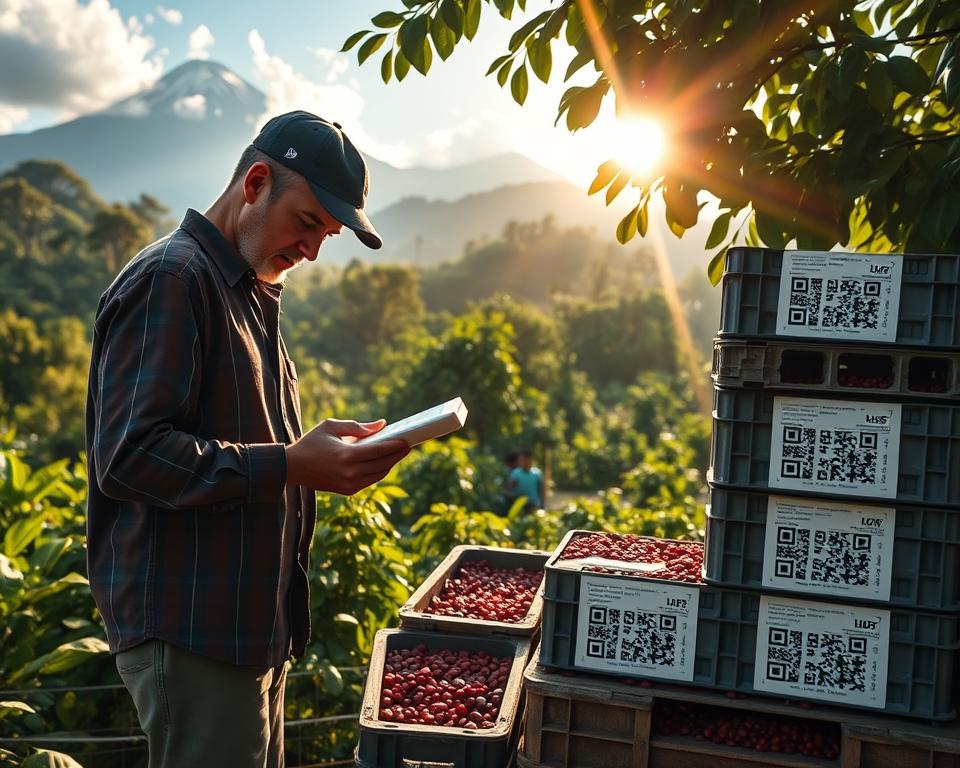
- Consumer access to product history via QR codes
Mobile apps and QR codes make tracking and seeing coffee history easier. This helps Guatemala’s coffee supply chain a lot.
Step-by-Step Guide to Implementing Blockchain in Guatemala’s Coffee Farms
Blockchain technology is changing Guatemala’s coffee farms for the better. It makes tracking coffee easier. To make it work, we need a clear plan.
Mapping Existing Documentation Workflows
The first step is to look at how coffee farms document things now. We need to see how data is gathered, stored, and shared.
Identifying Key Traceability Data Points
Then, we must figure out what data is most important to track. This includes where the coffee comes from, its quality, and how it moves through the supply chain.
Guatemalan coffee farms have to choose between public and private blockchain options. Public blockchains are open and fair, while private ones give more control over data access.
Compatibility with Coffee Industry Standards
It’s important that the blockchain fits with current coffee industry standards. This makes it easier to use and more accepted by everyone.
Developing User-friendly Data Entry Systems
Having a system that’s easy for farmers and others to use is key. They need to be able to add and check data without trouble.
Building Local Technical Capacity
It’s crucial to train local people to handle the blockchain system. This ensures it works well over time.
Connecting with Certification Platforms
Linking the blockchain to certification platforms adds value. This includes things like Fairtrade or Organic certifications.
Ensuring Offline Functionality for Remote Areas
Finally, the blockchain system must work without the internet. This is important for farms in remote areas with no internet.
By taking these steps, Guatemala’s coffee farms can use blockchain technology well. This improves how they track and share information in their supply chains.
How to Track Coffee from Guatemalan Highlands to Global Markets
Blockchain technology helps track Guatemalan coffee from farm to cup. It gives consumers detailed info on its origin and processing. This involves capturing key data at different stages of the coffee supply chain.
Capturing Altitude, Variety, and Harvest Dates
The first step is to record important info like altitude, coffee variety, and harvest dates. This info is key to understanding the coffee’s quality and characteristics.
Documenting Sustainable Farming Practices
Blockchain also tracks sustainable farming practices, like shade-grown or organic coffee. This info is great for those who care about the environment.
Tracking Washing, Drying, and Fermentation Methods
- Washing methods
- Drying techniques
- Fermentation processes
These steps greatly affect the coffee’s flavor. By tracking them, producers can ensure quality and consistency.
Recording Cupping Scores and Quality Assessments
Cupping scores and quality assessments are vital for coffee taste and quality. This info is recorded on the blockchain, creating a permanent quality record.
Customs Documentation and Regulatory Compliance
Blockchain makes customs documentation and regulatory compliance easier. It helps export coffee to global markets.
Verifying the coffee’s chain of custody is crucial. It ensures the coffee wasn’t tampered with or contaminated. Blockchain tracks coffee transportation.
Scanning Products for Origin Information
Consumers can scan products with their smartphones. They get info on origin, processing, and transportation. This builds trust and loyalty.
Connecting with Producer Stories and Profiles
Blockchain also connects consumers with coffee producers’ stories and profiles. This personal connection deepens appreciation for the coffee and its producers.
Benefits of Blockchain for Guatemala’s Coffee Producers
Blockchain technology is changing the coffee game in Guatemala. It brings many benefits to farmers. They can work better and get ahead in the market.
Verifying Specialty Coffee Attributes
Blockchain helps prove that coffee is top-notch. This builds trust with buyers. It also makes specialty coffee more valuable.
Eliminating Intermediaries Through Direct Sales
Guatemalan farmers can now sell directly to buyers. This cuts out middlemen and boosts profits. They also get fairer prices for their coffee.
Blockchain-based marketplaces let Guatemalan farmers show off their coffee worldwide. This opens up new markets and boosts sales.
| Benefits | Description | Impact |
|---|---|---|
| Verifying Specialty Coffee Attributes | Accurate representation of high-quality coffee | Increased consumer trust |
| Eliminating Intermediaries | Direct sales to buyers | Higher profit margins for farmers |
| Digital Marketplaces | Global visibility for Guatemalan coffee | Expanded customer base and sales |
Facilitating Long-term Purchasing Agreements
Blockchain makes smart contracts for long-term deals. This brings stability and predictability to both sides.
Protecting Guatemala’s Regional Coffee Designations
Blockchain helps keep Guatemalan coffee’s reputation strong. It ensures beans are labeled correctly and traced back to their source.
Verifying Organic and Fair Trade Claims
Blockchain checks if coffee is organic or fair trade. This builds trust and helps buyers make smart choices.
Tracing Quality Issues to Specific Production Stages
Blockchain helps find and fix quality problems. This leads to better coffee overall.
Implementing Data-driven Improvements
Blockchain gives farmers useful data. They can use this to improve their work and get more efficient.
How to Overcome Blockchain Implementation Challenges
Blockchain technology can greatly improve transparency and traceability in Guatemala’s coffee industry. However, several obstacles need to be overcome for successful integration.
Low-tech Solutions for Connectivity Issues
In places with poor internet, using SMS for data collection is a good solution. It ensures data is captured and sent out effectively.
Community Technology Centers and Shared Resources
Setting up community tech centers is a great idea. These centers provide computers and internet for farmers to use, helping to close the tech gap.
| Solution | Description | Benefit |
|---|---|---|
| Cooperative Implementation Models | Collaborative approach among stakeholders | Shared resources and expertise |
| Grant Funding and Development Partnerships | Financial support from grants and partnerships | Reduced financial burden on farmers |
| Training Programs for Local Blockchain Specialists | Capacity building through training | Local expertise in blockchain technology |
Creating User-friendly Interfaces for Farmers
It’s important to make blockchain technology easy for farmers to use. This means making data entry simple and providing clear instructions.
Creating industry consortiums and standards is key. It ensures that different blockchain platforms work well together.
Public-Private Partnerships in Guatemala
Working together, the public and private sectors can help implement blockchain technology. They provide the needed infrastructure and support.
By tackling these challenges and finding specific solutions, Guatemala’s coffee industry can use blockchain to enhance transparency and traceability.
Success Stories: Blockchain Coffee Projects in Guatemala
Blockchain coffee projects in Guatemala have shown promising results. They enhance traceability and transparency through blockchain applications in coffee supply chain.
Project Structure and Stakeholder Involvement
Successful blockchain projects in Guatemala involve a collaborative approach. Farmers, cooperatives, exporters, and consumers work together. This ensures that the benefits of blockchain technology are shared fairly.
Technical Implementation Details
The technical implementation of blockchain in Guatemala’s coffee industry uses distributed ledger technology. It records transactions, providing a permanent and transparent record of the coffee’s journey.
Blockchain projects have helped Guatemalan coffee producers get better prices. This is because consumers are willing to pay more for high-quality, traceable coffee.
Social and Environmental Benefits
Blockchain technology promotes sustainable farming practices and fair labor conditions. It enhances the overall sustainability of Guatemala’s coffee industry.
Marketing Premium Guatemalan Coffee with Blockchain
Understanding blockchain’s role in coffee sourcing is key. It helps market premium Guatemalan coffee by providing a transparent and trustworthy supply chain.
Consumer Willingness to Pay for Transparency
Consumers are more willing to pay for coffee that is traceable and sustainably sourced. Blockchain technology provides the necessary transparency. This supports the premium pricing of Guatemalan coffee.
Conclusion: The Future of Blockchain in Guatemala’s Coffee Industry
Guatemala’s coffee industry is on the verge of a big change with blockchain technology. This tech will help ensure the coffee’s quality and authenticity. It will make sure the beans are good from the highlands to the world.
Blockchain brings many benefits to coffee. It makes the supply chain clearer, improves management, and builds trust with buyers. As the industry grows, blockchain will be key to its success.
Guatemala’s coffee makers are excited for a better future with blockchain. They can make their coffee more sustainable and profitable. Keeping up with blockchain tech is crucial for staying competitive and meeting the demand for quality coffee.