
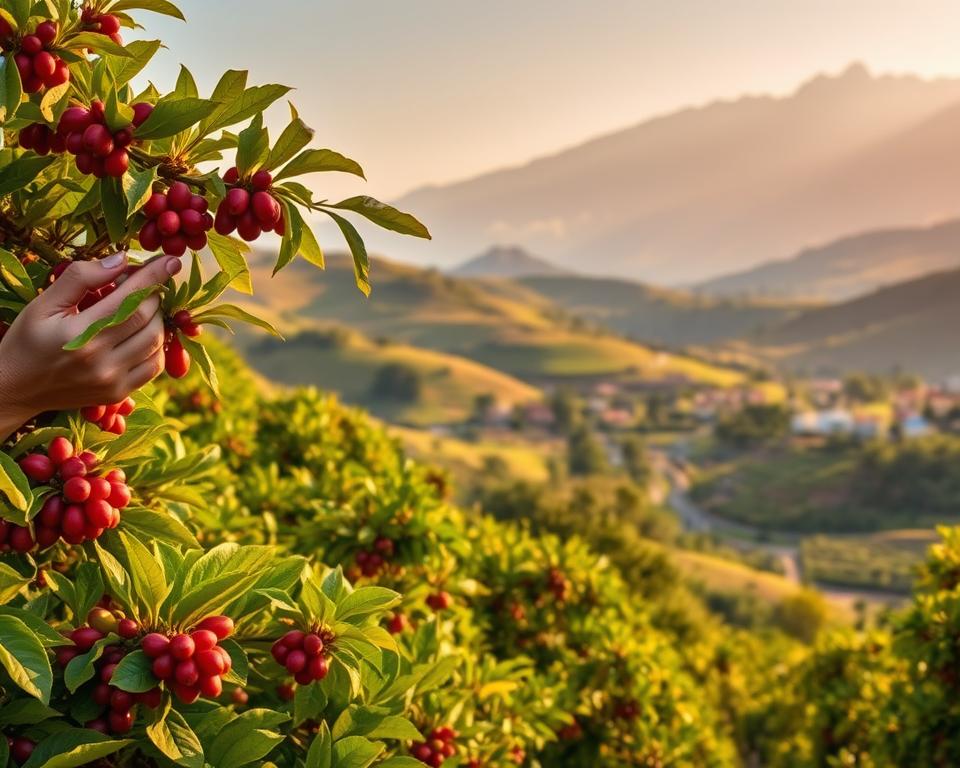
Guatemala’s rich volcanic soil and climate are perfect for growing top-notch coffee. The country’s coffee industry is a big deal for rural areas. Many communities count on coffee to make a living.
The rise in specialty coffee demand has brought more money into rural areas. This has opened up new chances for farmers and local shops. So, coffee’s impact is spreading, helping rural communities grow.
Looking into how specialty coffee affects Guatemala’s rural economy helps us understand more. We see how coffee, local economies, and global trends are connected.
Guatemala’s Specialty Coffee Heritage and Economic Importance
Guatemala’s specialty coffee has a rich history and big economic role. It’s famous for its top-notch coffee, grown in eight different areas. Each area gives its coffee a unique taste.
Eight Distinct Coffee-Growing Regions
Guatemala’s coffee is grown in eight regions: Antigua, Atitlán, Huehuetenango, Fraijanes Plateau, Oriente, Cobán, Nueva Santa Rosa, and San Marcos. Each region’s soil and weather make its coffee special.
- Antigua: Known for its balanced acidity and rich flavor.
- Atitlán: Produces coffee with bright acidity and fruit notes.
- Huehuetenango: Characterized by its high altitude and complex flavor profiles.
Altitude and Flavor Profiles
Altitude is key in Guatemalan coffee’s taste. Coffee grown at higher altitudes matures slower. This makes its flavor more complex.
Specialty coffee is very important to Guatemala’s economy. It creates jobs and income for many farmers and their families. It also helps the rural economy grow. Plus, it supports sustainable farming, which improves coffee quality and protects the environment.
How Specialty Coffee Drives the Rural Economy in Guatemala
Guatemala’s rural areas are seeing big changes thanks to specialty coffee. This growth has opened up new chances for small coffee farmers. They can now earn more through fair trade and direct trade.
Case Study: San Miguel Escobar Cooperative
The San Miguel Escobar Cooperative shows how specialty coffee boosts rural economies. By using fair trade, the cooperative gets better prices. This helps its members financially.
- Improved income for farmers through fair trade
- Enhanced economic stability for rural communities
- Increased focus on quality coffee production
Case Study: Huehuetenango Farmers Association
The Huehuetenango Farmers Association benefits from direct trade. Its members sell top-quality coffee straight to buyers abroad. This direct sale boosts their earnings and promotes eco-friendly farming.
These stories highlight the good effects of specialty coffee on Guatemala’s countryside. Supporting small farmers and fair trade helps the industry grow. It benefits farmers and local communities greatly.
Steps to Assess Your Farm’s Specialty Coffee Potential
Specialty coffee needs a detailed check of your farm’s setup. This ensures it meets quality and sustainability standards. You must look at factors that affect coffee quality and how much you can grow.
Soil Testing and Analysis
Soil testing is key to see if your farm is good for specialty coffee. It shows the soil’s nutrient levels, pH, and health. For organic coffee, soil health is crucial because it affects the coffee’s taste and quality.
| Soil Characteristic | Ideal Range for Specialty Coffee | Impact on Coffee Quality |
|---|---|---|
| pH Level | 5.5 – 6.5 | Affects nutrient availability and flavor |
| Nitrogen Content | Moderate to High | Influences plant growth and yield |
| Potassium Content | Moderate | Essential for overall plant health |
Microclimate Assessment
Knowing your farm’s microclimate is just as important. It affects how your coffee plants grow. Things like altitude, temperature, and rain patterns shape your coffee’s quality and taste. Sustainable farming considers these to improve coffee production.
By checking your farm’s soil and microclimate, you can see if you can grow top-notch specialty coffee. This step is vital for using sustainable methods. It boosts your coffee’s quality and helps your farm be more sustainable.
How to Transition from Conventional to Specialty Coffee Production
Switching to specialty coffee production is a big step. It focuses on quality and sustainability. This move is key for farmers wanting to enter the specialty coffee market. There, they can earn more for their high-quality beans.
One important step is using selective harvesting techniques. This means picking coffee cherries when they’re perfectly ripe. This boosts the flavor and quality of the beans. Though it’s hard work, it leads to a better product that can sell for more.
Selective Harvesting Techniques
To use selective harvesting, farmers need to train their pickers. They should pick only the ripest cherries. This method not only makes the coffee better but also helps the farm by reducing waste and improving yields.
Proper Fertilization Methods
Choosing the right fertilization methods is also crucial. Farmers should use organic fertilizers to keep the soil healthy and diverse. Organic farming is good for the planet and makes the coffee taste cleaner and more distinct. This is what specialty coffee buyers look for.
| Fertilization Method | Benefits | Impact on Coffee Quality |
|---|---|---|
| Organic Fertilizers | Promotes soil health, biodiversity | Enhances flavor profile, cleaner production |
| Chemical Fertilizers | Quick nutrient supply | Potential for environmental harm, flavor contamination |
| Compost | Rich in nutrients, improves soil structure | Contributes to complex flavor profiles |
By focusing on selective harvesting and the right fertilizers, farmers can make their coffee much better. This move not only helps them financially but also makes coffee farming more sustainable.
Building Direct Trade Relationships to Maximize Profits
In the world of specialty coffee, direct trade is key for farmers to boost their earnings. By connecting directly with buyers, farmers can get better prices. This helps them make more money.
Price Structures and Premium Calculations
Direct trade lets farmers grasp the pricing and premium systems used by buyers. For example, a farmer in Guatemala might get a higher price for their coffee. This is based on the coffee’s quality, like its taste or if it’s sustainably grown.
| Coffee Quality Attribute | Premium Percentage | Price per Pound |
|---|---|---|
| High Flavor Profile | 10% | $2.50 |
| Sustainability Certification | 15% | $2.75 |
| Both Attributes | 25% | $3.12 |
Contract Terms to Insist Upon
When in direct trade, farmers must fight for good contract terms. They should make sure payments are on time and understand the buyer’s quality expectations. They should also aim for prices that truly reflect the coffee’s value.
For instance, a cooperative in Guatemala got a deal with a U.S. roaster. They agreed on a 20% premium for top-quality Arabica beans. The payment was made 30 days after the coffee was received.
By building strong direct trade ties, coffee farmers can increase their profits. They also help make the coffee market fairer and more open.
Implementing Sustainable Farming for Long-term Economic Benefits
Coffee farmers in Guatemala can gain long-term economic benefits by using sustainable farming. Sustainable coffee farming makes coffee production better for the environment. It also makes farms more economically stable.
Tree Species Selection and Management
Choosing and managing tree species is key in sustainable coffee farming. Shade-grown coffee systems, where coffee grows under tree canopies, are very beneficial. The type of tree used greatly affects the farm’s biodiversity and health.
- Native tree species are often preferred for their adaptability and minimal maintenance requirements.
- Tree species that provide additional income streams, such as fruit or timber trees, can enhance the economic benefits.
- Proper management of tree density is crucial to balance shade provision with the needs of coffee plants.
Economic Benefits of Shade-grown Systems
Shade-grown coffee systems have many economic benefits. They can improve coffee quality, lower production costs, and offer extra income from timber or fruits.
Also, shade-grown coffee is often seen as organic and sustainable. This can lead to higher prices in the market. This can greatly increase coffee farmers’ income.
By using sustainable farming practices like shade-grown coffee systems, farmers can make their coffee production more economically stable. This approach benefits farmers and helps make Guatemala’s coffee industry more sustainable.
How to Access Certification Programs and Boost Your Specialty Coffee Rural Economy
Certification programs can lead to higher earnings and sustainability for specialty coffee producers. These programs, like Fair Trade and Organic certifications, improve your coffee’s quality and marketability. They also help grow the rural economy.
Step-by-Step Application Process
To get into these certification programs, follow a clear process:
- Research the certification bodies and their needs.
- Get your farm ready to meet the standards.
- Apply, including all the needed farm details.
- Pass an inspection or audit by the certification body.
- Get your certification and keep it up with regular checks.
For more info on coffee certifications, check out this guide.
Cost-Benefit Analysis of Certification
Getting certified costs money upfront, but the long-term gains are worth it. Here’s a comparison:
| Benefits | Costs |
|---|---|
| More market access and better prices for certified coffee | First application and inspection fees |
| Better farm practices and sustainability | Costs for ongoing compliance and upkeep |
| Better brand reputation and consumer trust | Costs for farmer training and building capacity |
Certification boosts the rural economy by raising farmers’ incomes. It also promotes sustainable farming, helping the environment and community.
Forming Producer Cooperatives to Strengthen Market Position
Guatemalan coffee farmers are now forming producer cooperatives. This move helps them negotiate better prices in the global market. By working together, they can share resources and knowledge.
One big plus of cooperatives is equipment sharing. This lets farmers use expensive machinery without the full cost. For example, La Voz in Guatemala shares equipment. This has made their coffee processing better and their quality higher.
Equipment Sharing Programs
- Reduces individual costs for farmers by sharing expensive machinery.
- Increases efficiency by making equipment available to more farmers.
- Enhances the quality of coffee by using professional processing equipment.
Knowledge Transfer Systems
Cooperatives also help farmers learn from each other. They hold training sessions on coffee production. This includes sustainable farming and quality control.
In Guatemala, many cooperatives are doing well. They’ve improved their members’ market position. They also have direct trade relationships, getting better prices and stable income.
By joining cooperatives, Guatemalan farmers can compete better in the global market. They’ll also improve their economic stability. And they’ll help their communities grow sustainably.
Leveraging Technology for Rural Coffee Business Growth
Technology is changing how rural coffee farms work. It opens new ways for growth. With digital tools, farmers can do better, reach more markets, and make more money.
Building a Farm Website
A good website lets coffee farms show off their products and tell their story. It helps them connect straight with buyers. This can lead to stronger, more profitable partnerships.
Social Media Marketing Strategies
Social media helps farmers reach more people, share news about their products, and talk to customers. Good social media plans can make a brand more visible and increase sales.
| Digital Tool | Benefit |
|---|---|
| Farm Website | Direct consumer connection |
| Social Media | Increased brand visibility |
Using these technologies, rural coffee businesses can keep up in a fast-changing market.
Diversifying Income Through Coffee Tourism and Value-Added Products
Coffee tourism and value-added products are great ways for rural Guatemala to make more money. By using the country’s rich coffee history, farmers can find new ways to earn money. This can help them make more from their coffee sales.
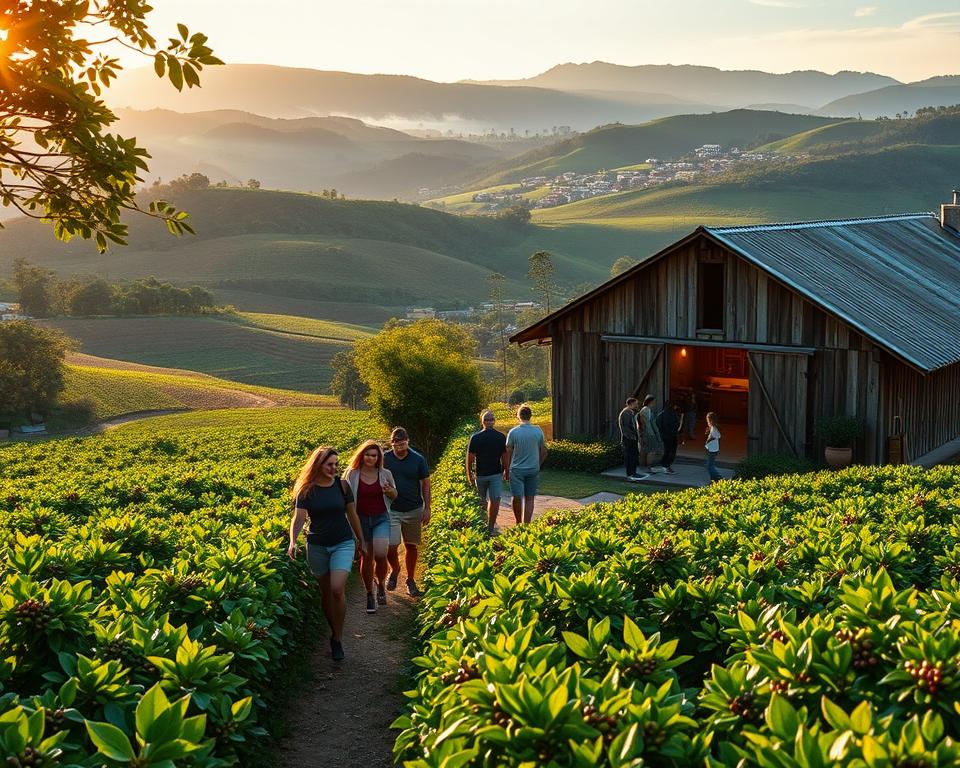
One good way to make money from coffee tourism is by creating fun tour programs.
Tour Program Design
These tours should mix learning with fun activities. This could include farm tours, coffee tastings, and workshops on how to farm coffee sustainably. For example, a study onfair trade coffee initiativesshows how coffee tourism can help local economies.
Marketing to International Visitors
Marketing to visitors from abroad is key for coffee tourism success. Good marketing can include working with travel agencies, using social media, and joining international coffee festivals. By showing off Guatemalan coffee culture, farmers can draw in people who care about sustainable and fair trade coffee.
Also, selling value-added products like special coffee blends, coffee-infused foods, and handmade crafts can bring in more money. By offering different products and services, Guatemalan coffee farmers can not rely on just one source of income. This helps build a stronger rural economy.
Conclusion: The Future of Guatemala’s Specialty Coffee and Its Rural Economic Impact
Guatemala’s specialty coffee is key to its rural economy. It gives farmers and their communities a steady income. Sustainable farming, direct trade, and coffee tourism help the economy grow.
The outlook for Guatemala’s specialty coffee is bright. Farmers can use technology to boost their earnings. With more people wanting specialty coffee, Guatemalan farmers are set to play a big role in the country’s growth.
Coffee farming does more than just help farmers. It creates jobs and boosts local economies. As Guatemala’s coffee industry grows, it will keep supporting rural areas and helping people thrive.