
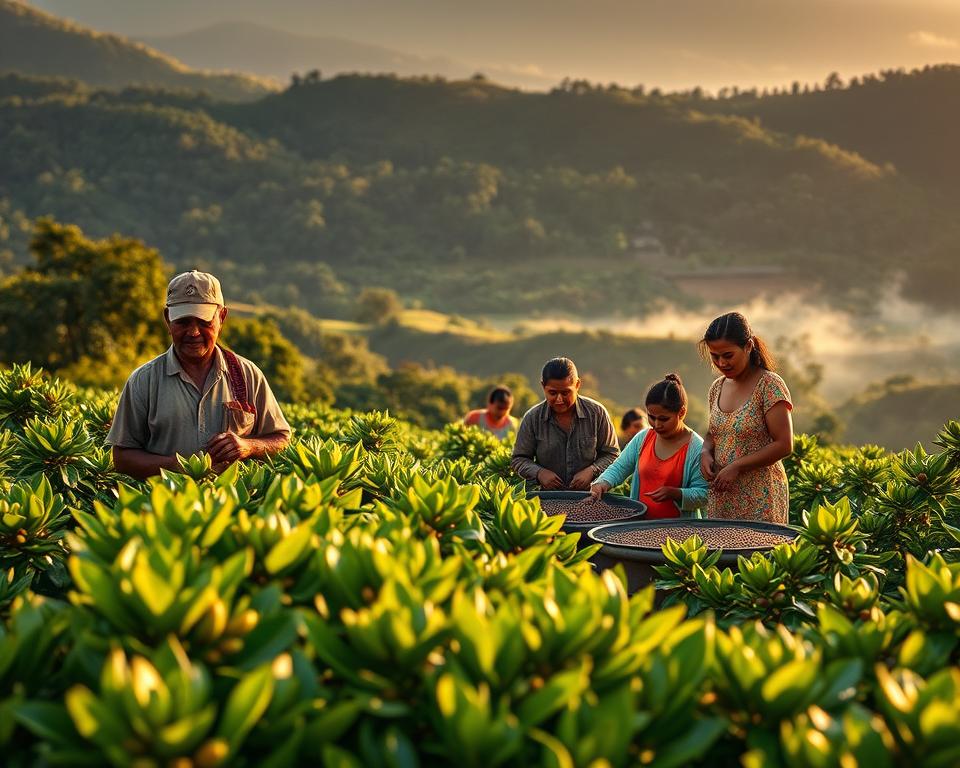
Guatemala is famous for its top-notch coffee. Many smallholder farmers help make the country’s coffee industry rich. The area’s unique soil and climate are perfect for growing coffee.
Coffee cooperatives are key in helping these farmers. They give farmers the tools and knowledge they need to grow more coffee and improve their lives. By joining forces, farmers can get better prices, have more power in negotiations, and live better.
This article will look at how cooperatives have helped coffee farmers in Guatemala. We’ll see what strategies have made them successful.
The Guatemalan Coffee Landscape
Guatemala is known for its unique terroir and climate, making it a key player in the global coffee market. The country’s coffee industry offers a wide range of flavors. This is thanks to regions like Antigua, Huehuetenango, and Atitlán, each with its own taste.
Most coffee in Guatemala is made by smallholder farmers. They face challenges like climate change, pests, and diseases. But, using sustainable farming practices helps them improve their crops and quality.
Sustainable farming is good for the environment and helps farmers’ lives. Practices like shade-grown coffee and organic farming help farmers deal with climate change. They also make Guatemalan coffee more competitive worldwide.
The Guatemalan coffee industry is known for its quality and sustainability. This has helped it keep its reputation for high-quality Arabica coffee beans. As more people want sustainable and quality coffee, Guatemala is ready to meet this demand.
Successful Coffee Cooperatives Guatemala: Key Models and Principles
The success of Guatemalan coffee cooperatives comes from balancing money and social good. They use certain models and principles to stand out in a tough market.
Cooperative governance is key. They have a board of directors chosen by members. This makes sure decisions are fair and reflect what members want. It helps them meet their members’ needs and stay competitive.
Getting members involved is also important. They offer training and education. This helps members make better coffee. It also helps the whole coffee-growing community grow.
Improving coffee quality and getting it to market are big goals. Many use organic and sustainable farming. This makes their coffee better and helps the environment. They also sell directly to buyers abroad. This boosts their income and market reach.
| Key Models/Principles | Description | Benefits |
|---|---|---|
| Cooperative Governance | Democratic decision-making through elected boards | Responsive to member needs, effective decision-making |
| Member Engagement | Training and education programs for members | Improved coffee quality, community development |
| Organic/Sustainable Practices | Adoption of environmentally friendly farming practices | Improved coffee quality, environmental conservation |
| Direct Trade Relationships | Establishing direct relationships with international buyers | Enhanced market access, improved economic viability |
By using these models and principles, Guatemalan coffee cooperatives have done well. They help their communities grow in a sustainable way.
Case Study: La Voz Cooperative
La Voz Cooperative has a rich history and a strong structure. It’s a model for coffee producers in Guatemala. It aims to improve the lives of its members.
The cooperative started in the local community. It supports coffee producers with training, resources, and market access. La Voz Cooperative makes sure all members have a say in decisions.
La Voz Cooperative promotes sustainable farming. This improves coffee quality and helps the environment.
| Strategy | Impact |
|---|---|
| Sustainable Farming Practices | Improved coffee quality and environmental conservation |
| Training and Resources | Enhanced capacity of coffee producers in Guatemala |
| Market Access | Better prices for members through direct trade |
Supporting cooperatives like La Voz is key for Guatemala’s coffee sector. They give members a strong voice. This helps them get better prices and conditions.
In conclusion, La Voz Cooperative is a success story. It shows how cooperatives can help coffee producers in Guatemala. With a focus on sustainability and member support, La Voz Cooperative keeps growing and helping the local economy.
Case Study: FEDECOVERA
In Guatemala’s coffee heartland, FEDECOVERA shines as a cooperative success story. This Federation of Cooperatives for the Development of Guatemala leads in fair trade. It helps its member cooperatives adopt fair trade practices.
FEDECOVERA aims to empower coffee growers. It gives them tools, training, and market access. This way, it boosts their livelihoods and supports community development.
FEDECOVERA cuts out middlemen by connecting growers directly with buyers. This move benefits small farmers greatly. It helps them reach global markets more easily.
| Benefits | Description | Impact |
|---|---|---|
| Fair Trade Practices | Promoting equitable prices and direct trade | Increased revenue for growers |
| Technical Assistance | Providing training on sustainable farming practices | Improved coffee quality and environmental sustainability |
| Market Access | Connecting growers with international buyers | Expanded market opportunities for members |
FEDECOVERA shows how cooperatives can achieve fair trade and empower growers in Guatemala. Its success is a lesson for others in the coffee world.
Sustainable Farming Practices in Guatemalan Cooperatives
Guatemalan coffee cooperatives lead in sustainable farming. They protect the environment and boost farmers’ lives.
They use organic farming and grow coffee under trees. Organic farming cuts down on chemical use. Shade-grown coffee keeps biodiversity and stops soil erosion.
These methods help the planet and farmers. They save water, reduce deforestation, and protect wildlife. Farmers get better crops, higher quality coffee, and more money for their work.
Impact of Sustainable Practices on Coffee Yield and Farmer Income
Sustainable farming changes coffee yield and farmer income a lot. Here’s a look at how Guatemalan cooperatives compare:
| Farming Practice | Average Coffee Yield (kg/ha) | Average Farmer Income ($/year) |
|---|---|---|
| Conventional | 1,200 | 2,500 |
| Organic | 1,500 | 3,500 |
| Shade-Grown | 1,800 | 4,000 |
Guatemalan cooperatives’ sustainable farming helps the planet and farmers. These methods are key for the coffee industry’s future.
Fair Trade and Ethical Sourcing of Guatemalan Coffee
The fair trade and ethical sourcing movement is changing the Guatemalan coffee world. More people want to know how their coffee is made. They look for coffee that is both fair and ethically sourced.
Fair trade means coffee farmers get a fair price for their beans. This helps them afford sustainable farming and support their communities. It also means cooperatives make decisions together and are open about their work.
Fair trade has simple rules: fair prices, good working conditions, direct trade, and more. Guatemalan cooperatives follow these to help their members and communities.
Ethical sourcing is closely tied to fair trade. It respects farmers’ rights and supports sustainable farming. Companies that source ethically work with farmers to improve their farming skills.
Benefits of fair trade and ethical sourcing include:
- Improved lives for coffee farmers and their families
- More transparency and accountability in the supply chain
- Support for sustainable farming that protects nature
- Help for community projects like education and healthcare
For more info, check out the Starbucks Cafe Practices Report. It shows how sustainable coffee sourcing helps.
By choosing fair trade and ethically sourced Guatemalan coffee, we help make the coffee industry better.
Steps to Establish a Successful Coffee Cooperative
Starting a coffee cooperative needs careful planning, quality focus, and empowering members. First, you must understand the market and what local growers need.
Start with a feasibility study to see if the cooperative can work. Look at how many growers might join, the coffee quality, and the market situation.
After the study, create a business plan. It should cover the cooperative’s mission, goals, and how it will achieve them.
Setting Quality Standards
Quality is key for a coffee cooperative’s success. You need clear rules for making, processing, and checking coffee quality.
Training Members in Quality Assurance
Teaching members about quality is vital. They need to know how to make sure their coffee meets standards. Offer regular training and workshops on coffee production and processing.
The table below shows the main steps and activities for starting a coffee cooperative:
| Step | Activity | Objective |
|---|---|---|
| 1 | Conduct feasibility study | Assess viability of cooperative |
| 2 | Develop business plan | Outline mission, goals, and strategies |
| 3 | Set quality standards | Ensure high-quality coffee production |
| 4 | Train members in quality assurance | Empower members to meet quality standards |
By taking these steps and focusing on quality and member empowerment, a coffee cooperative can thrive. It can also improve the lives of its members.
Empowering Coffee Growers Through Technology and Innovation
The Guatemalan coffee industry is on the verge of a big change. New technologies are helping coffee growers more than ever before. Coffee cooperatives in Guatemala are now more efficient and profitable thanks to these innovations.
Mobile apps are a big help for coffee growers. They let farmers connect with buyers, get better prices, and get paid on time. For example, cooperatives use apps that give real-time market data. This helps farmers make smart choices about their crops.
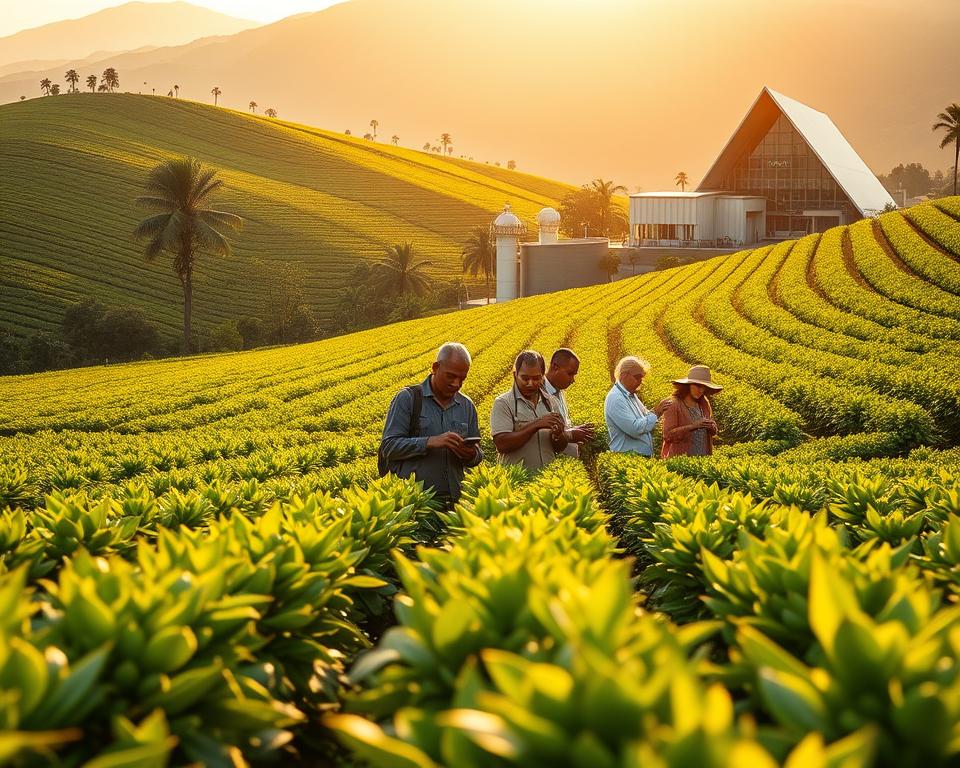
Technology is also changing how coffee is grown. Tools like drones, satellite images, and sensors help farmers check on their crops. This way, they can fix problems early and grow more coffee with less harm to the environment.
Some key innovations in Guatemalan coffee cooperatives include:
- Digital platforms for market access and price transparency
- Precision agriculture techniques for improved crop management
- Mobile banking and financial services for secure transactions
- Data analytics for informed decision-making
To learn more about technology in agriculture, check out IDRC. They have resources on different projects and their effects.
By using technology and innovation, Guatemalan coffee cooperatives are improving their members’ lives. They are also making the coffee industry more sustainable.
Conclusion: Lessons from Guatemala’s Successful Coffee Cooperatives
Guatemala’s coffee industry has grown thanks to cooperative models. These models focus on sustainable practices and fair trade. La Voz Cooperative and FEDECOVERA are great examples of how community efforts can make a big difference.
These cooperatives show that working together can lead to better economic outcomes. Coffee growers improve their lives and help the environment. Supporting these cooperatives is key to fair trade and sustainability in coffee.
Coffee cooperatives in Guatemala stand out by using sustainable farming and fair trade. This approach helps them succeed in the global market. As more people want sustainable coffee, Guatemala’s cooperatives offer valuable lessons for others.
The success of these cooperatives shows the power of community efforts. They prove that working together can lead to sustainability and fairness. By supporting these cooperatives, we can help make the coffee industry better for everyone.