
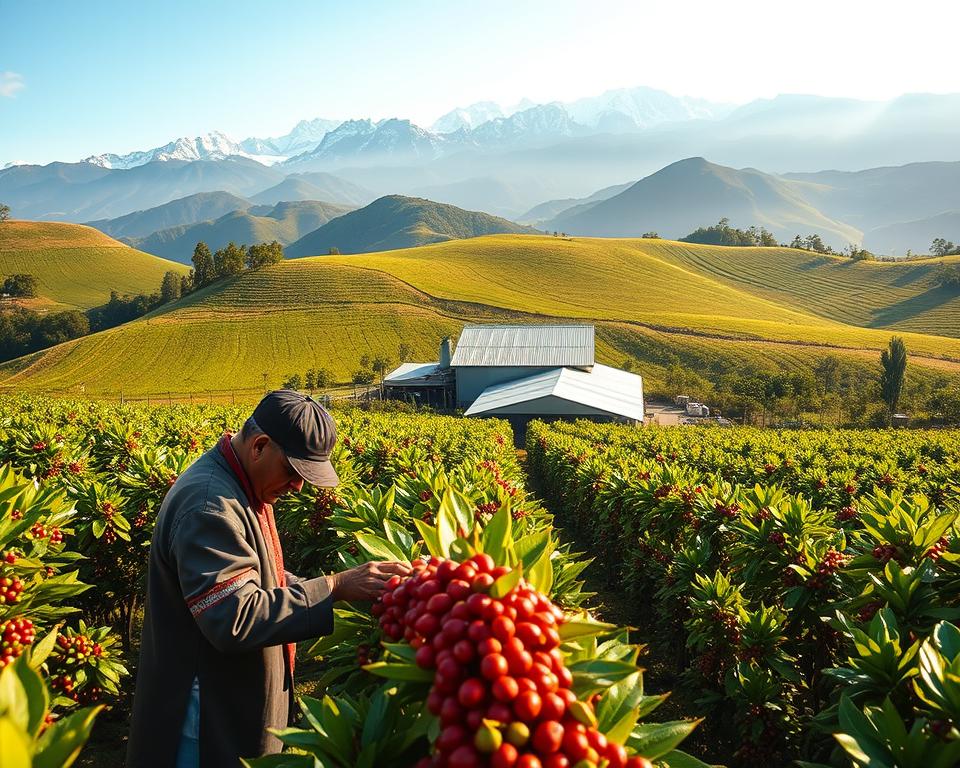
Guatemala’s coffee is known worldwide for its quality and unique taste. This has made Guatemala’s coffee industry a big player globally. For coffee farmers in Guatemala, becoming official exporters is key to growing their business and finding new customers.
Being an exporter boosts a coffee farm’s reputation. It also opens doors to international markets and buyers. This is vital for farmers wanting to reach more customers and make more money.
By becoming recognized exporters, Guatemalan coffee farms can meet the increasing demand for top-notch coffee. This can help the local economy grow and develop.
The Guatemalan Coffee Export Landscape
The coffee export industry in Guatemala is famous for its rich flavors and unique regional tastes. Guatemala’s coffee is loved worldwide for its high quality, especially its Arabica beans.
Coffee is very important for Guatemala, helping the economy a lot. It also gives jobs to many farmers and workers, helping rural areas grow.
Guatemala’s coffee export scene is varied, with different areas offering distinct flavors. The main coffee spots are Antigua, Atitlán, and Huehuetenango.
| Region | Flavor Profile | Export Volume |
|---|---|---|
| Antigua | Balanced acidity, chocolate notes | 30% |
| Atitlán | Fruity, floral notes | 25% |
| Huehuetenango | Bright acidity, citrus notes | 20% |
To export coffee, farms must follow Guatemalan rules and global standards. They need to register with the right authorities and get the right permits.
Exporting coffee means following strict quality rules. These rules are set by the National Coffee Association (ANACAFÉ) and other groups.
Understanding Coffee Export Regulations in Guatemala
For coffee exporters in Guatemala, knowing the rules is key. The country has laws to keep its coffee quality high. ANACAFÉ, the main body, oversees the coffee trade.
Guatemala’s coffee rules cover quality, certification, and labels. Exporters must follow these to avoid fines and meet global standards. They need to get the right permits and licenses.
To learn more about Guatemala’s coffee export rules, check out the USDA Exporter Guide. It has all the details on exporting coffee from Guatemala.
Exporters also need to follow global coffee rules. They must meet standards from international coffee groups and the rules of the country they’re sending to.
In short, knowing and following coffee export rules is vital for Guatemala’s coffee exporters. By understanding the rules and meeting the standards, they can ensure their coffee is ready for international trade.
Prerequisites for Coffee Farm Export Registration
To register as a coffee exporter in Guatemala, farms must follow certain rules. They need to meet specific conditions to be allowed to export coffee.
Farms must have a certain size and produce a minimum amount of coffee. This is to ensure they can handle export demands.
Quality is also key. Farms must follow strict quality control. This includes how they harvest, process, and store their coffee.
| Prerequisite | Description | Regulatory Reference |
|---|---|---|
| Farm Size | Minimum area dedicated to coffee cultivation | Guatemalan Coffee Export Regulation |
| Coffee Quality Standards | Adherence to quality control measures | ANACAFÉ Quality Standards |
| Production Volume | Minimum production volume thresholds | Guatemalan Coffee Export Regulation |
By meeting these requirements, coffee farms in Guatemala can register as exporters. They can then join the global coffee market.
Essential Documentation for Registration
Exporting coffee from Guatemala starts with a few key steps. Farms must gather the right documents to become official coffee exporters. They need to submit several important papers to the authorities.
The documents needed can change based on the farm’s legal setup. Farms usually have to show their ID, proof they are legally in business, and other important papers.
Corporate Registration Forms
Companies have to fill out corporate forms to register. These forms ask for:
- Company name and registration number
- Address and contact info
- Details of who runs the company
Companies also might have to share their articles of association, a list of who owns the company, and other documents about how they are run.
Sole Proprietorship Requirements
Sole proprietors have different needs. They must show their personal ID and proof they are in business. This includes:
- National ID
- Tax ID number
- Proof of business name
It’s important for both companies and sole proprietors to make sure their documents are correct and meet Guatemalan rules for exporting coffee.
After getting all the documents ready, farms can start the registration process. Having all the paperwork right helps get the coffee export license and finish the coffee farm export registration.
How to Register Coffee Farm Exporters: Step-by-Step Process
Guatemalan coffee farmers can grow their market by registering as exporters. This process is easy and clear. It’s key for farms wanting to export their coffee.
To register as a coffee exporter, you need to follow a few important steps.
- Gather needed documents, like farm registration and coffee quality certificates.
- Decide how to apply, online or in person.
- Send in your application and documents.
- Pay the fees for registration.
- Wait for your application to be reviewed and approved.
Online Application Options
The online application is easy to use. It lets farmers register from their farms. This saves time and avoids the need for office visits.
Online application benefits include:
- Less paperwork
- Quicker processing
- Can track your application status online
In-Person Application Procedures
If you prefer or need to apply in person, you can visit the registration office. This way, you can talk directly with officials.
The in-person steps are:
- Go to the office with all your documents.
- Submit your application and documents.
- Get a receipt and details on what to do next.
By following these steps, Guatemalan coffee farmers can register as exporters. This opens up new chances for their coffee worldwide.
Being a registered coffee exporter helps farmers reach more markets. It also boosts Guatemalan coffee’s reputation globally.
Navigating ANACAFÉ Registration Requirements
ANACAFÉ registration is key for coffee exporters in Guatemala. It makes sure they follow national coffee trade rules. This step is vital for farms and exporters to legally sell coffee worldwide.
The registration process with ANACAFÉ has several important steps. First, farms and exporters need to meet ANACAFÉ’s basic requirements. This includes having a valid tax ID and being an ANACAFÉ member.
To register, you must provide certain documents. These usually include:
- Proof of coffee farm or export business registration
- Details of coffee production and export volumes
- Certification of coffee quality and compliance with ANACAFÉ’s quality standards
- Payment of registration fees
After applying, ANACAFÉ checks the information. They make sure everything meets coffee trade rules. These checks are important to keep Guatemalan coffee quality high.
If your application is approved, you get a registration certificate. This is needed to export coffee. The certificate is good for a certain time, then you need to renew it.
By following ANACAFÉ’s registration steps, Guatemalan coffee exporters stay legal. They also get ready to do well in the global coffee market.
Obtaining Coffee Export Permits and Licenses
Exporting coffee from Guatemala needs following many rules. First, you must get the right permits and licenses. This is key for farmers and exporters to sell coffee abroad legally.
The Ministry of Agriculture, Livestock, and Food (MAGA) is in charge of coffee export permits in Guatemala. Farmers must apply with details about their coffee, how it’s made, and plans for export.
- Registering with MAGA
- Submitting needed documents, like proof of farm registration and quality control certificates
- Pay the permit fees
- Having MAGA officials check the coffee farm and processing places
Here’s what you might pay and how long it takes to get coffee export permits:
| Permit Type | Cost (GTQ) | Processing Time (Days) |
|---|---|---|
| Coffee Export Permit | 500 | 30 |
| Quality Control Certificate | 200 | 15 |
| Farm Registration | 300 | 20 |
Exporting coffee also means following rules of the country you’re sending it to. You might need extra certifications, like organic or fair trade. These can help you sell more and get better prices.
By following these rules, Guatemalan coffee farmers can export their coffee. This helps the country’s economy and their own lives.
Compliance with International Coffee Trade Regulations
Guatemalan coffee exporters must follow international trade rules to stay competitive. The global coffee market has standards for quality, safety, and fair trade.
Exporters in Guatemala need to follow several key rules. These include quality standards from the International Coffee Organization (ICO). These standards outline what makes coffee beans export-worthy.
- Labeling and packaging rules to show the coffee’s origin, quality, and how it was made.
- Following environmental and social standards is key for top markets.
- Meeting import rules of other countries, like tariffs and taxes.
To get a coffee export license, Guatemalan exporters must register with the right authorities. They must follow all rules. Knowing how to register as a coffee exporter is vital. It involves submitting needed documents and meeting certain criteria.
Following these international rules helps Guatemalan coffee exporters avoid legal trouble. It also boosts their reputation and competitiveness worldwide.
Financial Considerations for Coffee Exporters
Coffee exporters in Guatemala face many financial challenges. They must deal with costs like registration fees and following international rules. Knowing these financial details is key to their success.
Registering as a coffee exporter comes with several expenses. These include fees for registration and costs for permits and licenses. The exact amount depends on Guatemalan laws and global trade rules.
Here’s a table showing typical costs for coffee export registration:
| Expense Category | Estimated Cost (GTQ) | Description |
|---|---|---|
| Registration Fees | 1,000 – 5,000 | Fees associated with registering as a coffee exporter |
| Export Permits | 500 – 2,000 | Costs of obtaining permits required for coffee export |
| Compliance Costs | 1,500 – 3,000 | Expenses related to ensuring compliance with international regulations |
Coffee exporters also have financial benefits and ways to make money. It’s important to understand these to stay profitable in the coffee market.
To start as a coffee exporter, you need a solid financial plan. This includes setting a budget for costs like registration, permits, and following rules. Also, look for financial help available to exporters.
Post-Registration Operations and Compliance
After a coffee farm is registered to export, it must follow Guatemalan trade rules. This means more than just the first step of registration. It involves sticking to ongoing rules and regulations.
Exporters have to do several things after they’re registered. They need to keep detailed records of their coffee exports. They also have to follow quality control steps and pass inspections from authorities.
Important parts of following these rules include:
- Regularly reporting to ANACAFÉ and other groups about how much coffee they export and its quality.
- Keeping the coffee quality high, as required by Guatemalan rules.
- Working with inspectors during audits and checks to show they’re following the rules.
By following these rules, coffee farm exporters can keep their operations running smoothly. They also make sure they can keep their export licenses. It’s key for Guatemalan coffee’s good name in the world market.
It’s important for exporters to keep learning and stay up-to-date on trade rules. This helps them deal with the challenges of exporting coffee from Guatemala well.
Conclusion: Launching Your Guatemala Coffee Export Business
To start exporting coffee from Guatemala, you need to know the rules and get the right papers. This includes understanding export laws and getting the needed permits. By following the steps in this article, farmers can easily register their farms and get export permits.
Registering your coffee farm for export is key to growing your business. With the right help, Guatemalan farmers can make the most of their coffee’s reputation. They can sell their coffee worldwide. For more details and help, farmers should talk to organizations like ANACAFÉ. This ensures they follow all the rules.