
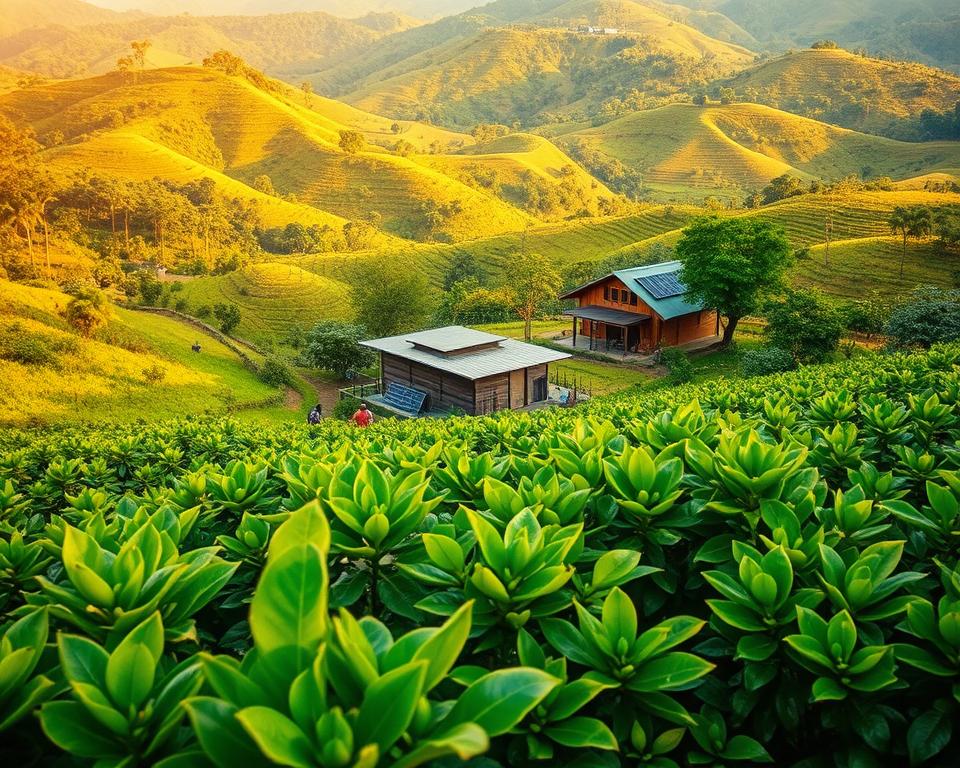
The coffee industry is changing, moving towards eco-friendly practices. Countries like Guatemala, known for their coffee, are leading this change.
More people want to buy coffee that’s good for the planet. This means looking for sustainable coffee production methods. These methods help the environment and support fair labor and better lives for local people.
Guatemala is a key player in this shift. It’s using organic and eco-friendly coffee farming. This is good for the planet and helps the coffee industry stay strong for years to come.
The Rich Heritage of Guatemalan Coffee
Guatemalan coffee has a long history, starting in the 18th century. It has become a symbol of the country’s rich culture. The traditional ways of growing coffee in Guatemala are closely tied to its history and identity.
Guatemalan coffee farmers have always been environmentally conscious. They use the country’s diverse ecosystems to grow high-quality coffee. This method not only protects the environment but also gives Guatemalan coffee its unique taste.
Ethical coffee growing is also a big part of Guatemala’s coffee tradition. Many farms follow fair trade practices. This ensures that farmers get fair pay for their work. For more on why Guatemalan coffee is considered a best choice, visit this page.
| Region | Coffee Characteristics | Farming Practices |
|---|---|---|
| Antigua | Balanced acidity, chocolate notes | Shade-grown, organic |
| Huehuetenango | Fruity, floral notes | Sustainable, fair trade |
| Atitlán | Bright acidity, citrus notes | Environmentally conscious |
Why Sustainable Coffee Farms Are Transforming Guatemala
Sustainable coffee farming is changing Guatemala’s environment and local communities. Guatemalan coffee farmers are improving their coffee quality. They are also helping to keep the country’s biodiversity rich.
The move to responsible coffee production brings many benefits. These include:
- Enhanced environmental conservation through organic farming and shade-grown coffee.
- Improved livelihoods for local farmers and their families through fair-trade practices.
- Increased community development through initiatives supported by sustainable coffee farms.
This change is driven by a deep commitment to sustainability. Organizations like Good Coffee Farms are at the forefront. They aim to positively impact the environment, communities, and the coffee industry.
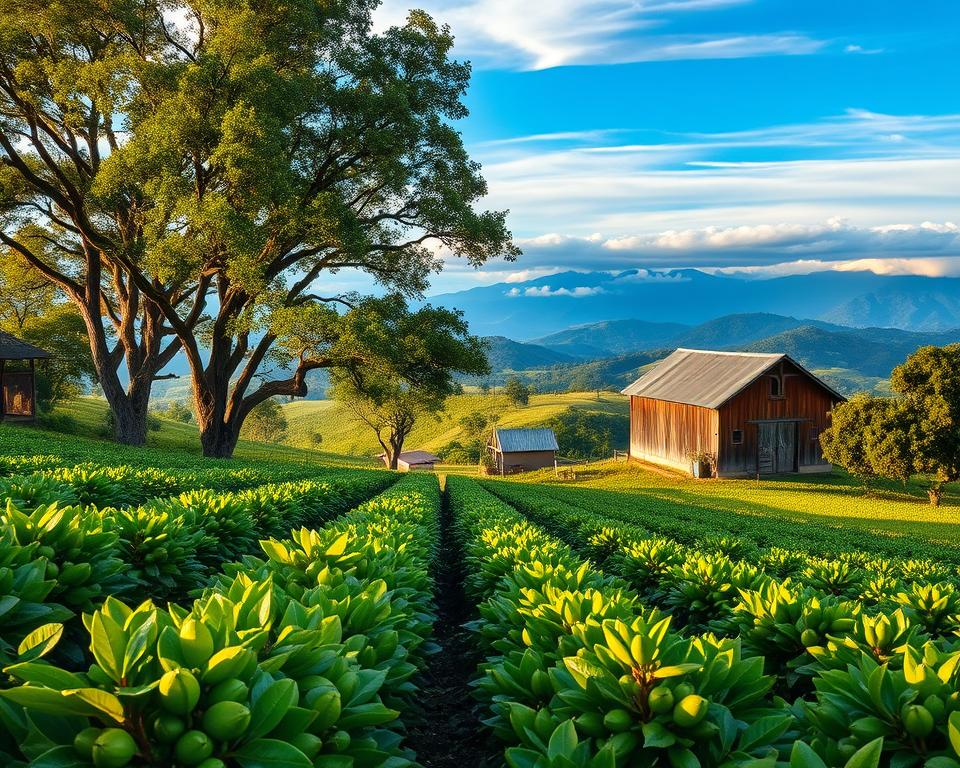
The future of Guatemala’s coffee industry is bright. Sustainable coffee farms are leading the way. They are making coffee production more environmentally friendly and socially responsible.
Essential Elements of Sustainable Coffee Farming
Guatemalan coffee is moving towards sustainability, with a focus on shade-grown coffee. Sustainable farming not only cuts down on environmental harm but also boosts farmers’ lives. It uses eco-friendly methods that help biodiversity and soil health.
Key parts of sustainable coffee farming include shade-grown coffee, organic farming, and smart water use. Shade-grown coffee is especially good because it helps many plants and animals, improves soil, and can make coffee taste better.
Starting shade-grown coffee needs careful planning. Farmers first check their land to find the best spots for shade-grown coffee. They look at the trees already there and the local weather.
Then, they plant coffee under native trees or new ones that help coffee grow. It’s important to have a mix of trees to get the most benefits from the ecosystem.
| Technique | Benefits | Challenges |
|---|---|---|
| Shade-Grown Coffee | Improved biodiversity, higher quality coffee | Initial investment in tree planting, potential yield reduction |
| Organic Farming | Reduced chemical use, improved soil health | Higher labor costs, potential yield reduction |
| Efficient Water Use | Conservation of water resources, reduced environmental impact | Initial investment in irrigation systems |
For Highland Regions
In highland areas, shade-grown coffee is very helpful because of the cooler weather. Farmers should plant coffee under native trees that give enough shade and make the soil better.
For Lower Elevations
In lower areas, managing shade is key to avoid too much shade, which can cause diseases. Farmers need to watch the tree cover and trim trees when needed to keep a good balance of shade and sun.
Implementing Sustainable Coffee Practices
Guatemalan coffee production is moving towards sustainability. Farmers are now using eco-friendly methods. This helps improve coffee quality and supports conservation.
Practical Steps to Sustainability
Coffee farmers are using organic fertilizers and efficient water management. They also practice integrated pest management. These steps improve soil health, cut down on chemicals, and boost biodiversity.
Labor Practices and Market Access
Fair labor practices are key. Farmers make sure workers have safe conditions, fair pay, and community programs. Certifications like Fairtrade and Organic help farmers get better prices in international markets.
Future of Guatemalan Coffee
By adopting sustainable practices, Guatemalan coffee farmers are ready for the future. They can meet the demand for eco-friendly products. This ensures a sustainable income for them.