
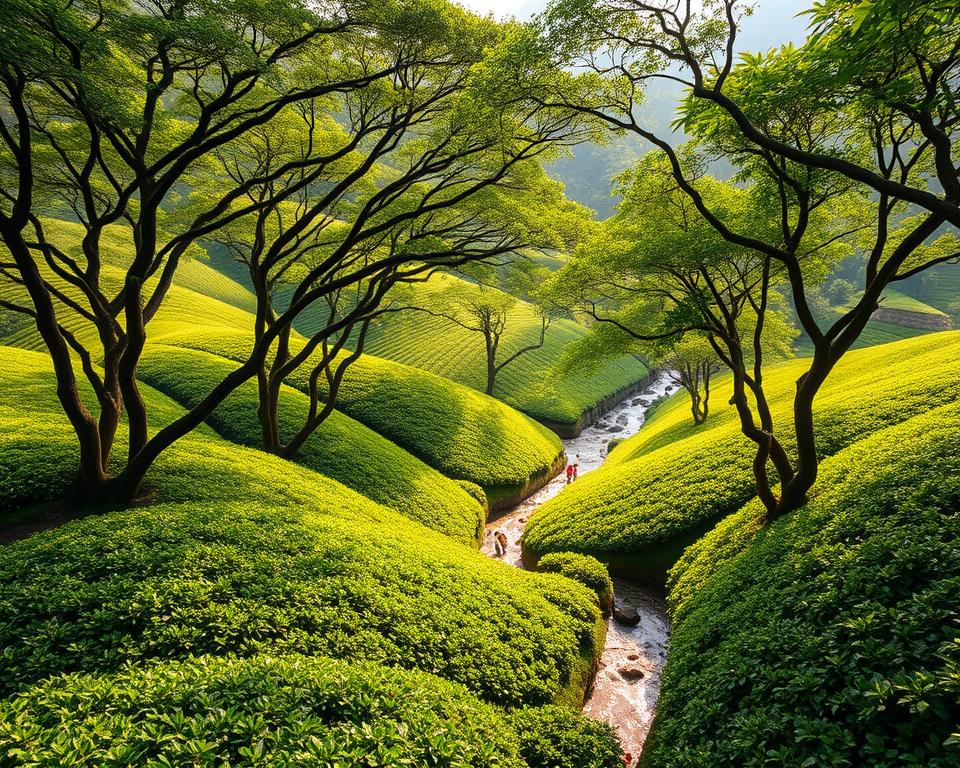
Guatemala’s coffee is famous worldwide, but it struggles with climate change and environmental damage. A key solution is agroforestry. This method involves replanting trees to safeguard coffee crops.
It protects coffee plants from harsh weather and boosts biodiversity and soil health. By adding trees to coffee farms, farmers make their ecosystem stronger. This supports their work and the planet.
It’s vital for Guatemala’s coffee to keep using these green practices. This ensures the industry can thrive for years to come.
The Vital Relationship Between Trees and Coffee in Guatemala
In Guatemala, growing coffee in an eco-friendly way depends a lot on tree conservation. The country’s coffee is known for its high quality. This is thanks to the special bond between coffee plants and trees.
Trees give shade, which is key for coffee plants. It makes the coffee beans better and lets farmers pick coffee for longer. Trees also keep the soil healthy, stop erosion, and help many different species live together.
Adding trees to coffee farms has many benefits. Here are some important ones:
| Benefits | Description | Impact on Coffee Production |
|---|---|---|
| Shade Provision | Trees provide shade, reducing direct sunlight on coffee plants. | Improves coffee quality and prolongs harvesting season. |
| Soil Conservation | Tree roots hold soil in place, reducing erosion. | Maintains soil health, supporting sustainable coffee production. |
| Biodiversity Support | Trees support a variety of flora and fauna. | Enhances ecosystem services, contributing to eco-friendly coffee cultivation. |
In conclusion, trees and coffee in Guatemala are closely linked for sustainable coffee making. Saving trees is crucial for keeping this balance. It ensures Guatemala’s coffee industry can keep thriving for years to come.
Understanding Deforestation’s Impact on Coffee Production
Deforestation is a big problem for coffee production around the world, especially in places like Guatemala. Losing forests hurts biodiversity and directly affects coffee quality and yield.
Coffee needs forests to grow well. Without them, soil erodes, water quality drops, and temperatures rise. These changes harm coffee crops.
Deforestation hurts coffee in many ways. It reduces yields, harms biodiversity, and makes water worse. To fix this, we need to plant more trees.
| Impact | Description | Consequence |
|---|---|---|
| Soil Erosion | Loss of forest cover leads to soil degradation | Reduced coffee yields |
| Biodiversity Loss | Destruction of habitats for various species | Ecosystem imbalance |
| Water Quality | Increased sediment and pollutant runoff | Affects coffee processing and quality |
By planting more trees, we can protect coffee crops and make farming sustainable. This helps the environment and keeps coffee farming alive in Guatemala for the future.
The Science Behind Replanting Trees for Coffee Protection
Replanting trees is key to saving coffee crops through green farming. This method is vital for protecting coffee and supporting eco-friendly farming. By replanting, farmers in Guatemala can make their coffee farms stronger and more varied.
Replanting trees offers many benefits:
- Shade provision: Trees give shade, which is essential for coffee plants. It helps them grow better and taste better.
- Soil conservation: Tree roots keep the soil in place. This stops erosion and keeps the soil moist.
- Biodiversity: Trees add to biodiversity by giving homes to many species. This makes the ecosystem healthier.
Studies on shade-grown coffee show it’s good for the environment and the coffee itself.
| Benefits of Replanting Trees | Impact on Coffee Production |
|---|---|
| Increased shade | Improved coffee quality |
| Soil conservation | Reduced erosion and retained moisture |
| Biodiversity enhancement | Healthier ecosystem supporting coffee plants |
By using green farming like replanting trees, coffee farmers protect their crops and help the environment. This method keeps coffee farming going strong and supports the ecosystem’s health.
Selecting the Right Trees for Coffee Farm Reforestation
Choosing the right trees for reforestation is key for coffee farms. It helps keep the environment balanced and makes the farm more sustainable. This choice is good for both the planet and the farm’s wallet.
When picking trees for reforestation, several things matter. The main goal is to find trees that work well with coffee and add to the variety of life. We look at fruit-bearing trees and those with timber value.
Fruit-Bearing Options
Fruit trees can bring in extra money for farmers. They also attract animals, making the farm more lively. Citrus and avocado trees are great examples. They’re good for the environment and give farmers a valuable crop.
Timber Value Considerations
Timber trees can bring in money in the future. They can be cut down in a way that’s good for the planet. Trees like cedar and mahogany are valuable and grow well with coffee.
| Tree Type | Economic Benefits | Ecological Benefits |
|---|---|---|
| Fruit-bearing Trees | Additional income through fruit sales | Enhanced biodiversity, attracts wildlife |
| Timber Trees | Long-term income through sustainable timber harvesting | Shade provision, soil conservation |
| Native Trees | Supports local ecosystem services | Promotes ecological balance, supports native wildlife |
By picking the right trees, coffee farms can be better for the planet and their pockets. This is a big part of making coffee farming more eco-friendly.
Step-by-Step Guide to Replanting Trees on Coffee Farms
Replanting trees on coffee farms is a key step towards sustainability. This guide will show you how to replant trees on your farm.
Setting Clear Objectives, Creating a Timeline
First, set clear goals for replanting trees. Decide what you want to achieve, like improving biodiversity or soil health. Having specific goals helps focus your efforts.
Next, make a timeline for replanting. Reforestation is an ongoing process. Break it down into tasks like soil preparation, tree selection, planting, and care. This makes it easier to manage.
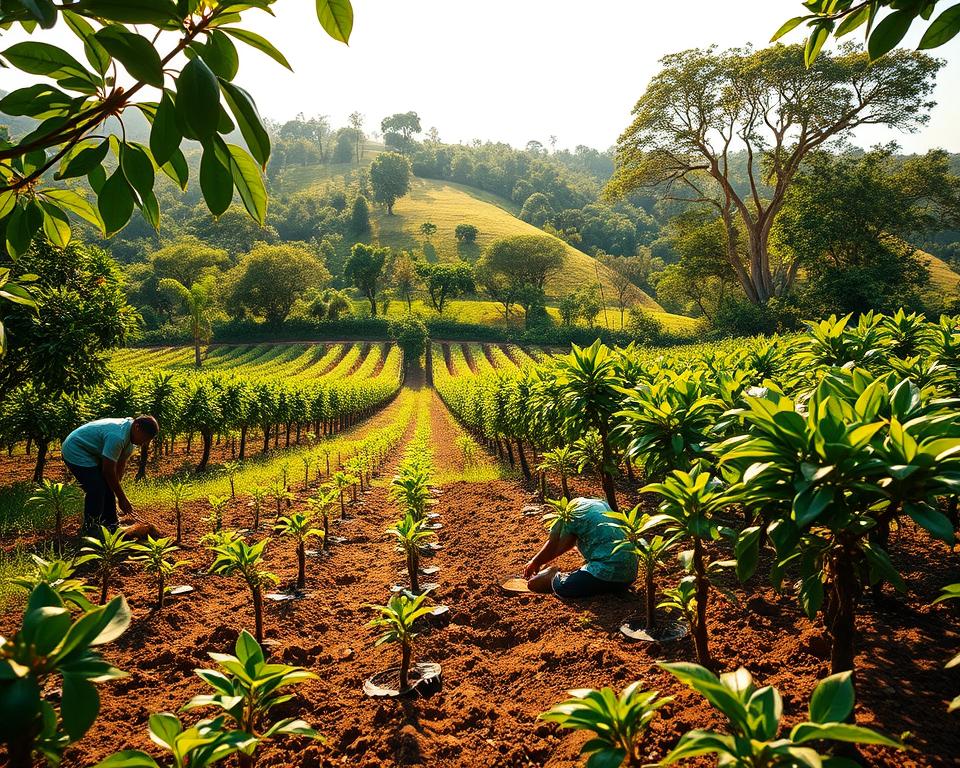
- Assess your farm’s ecosystem to find areas for improvement.
- Pick tree species that help coffee production and the environment.
- Get the soil ready for the new trees.
- Plant trees as planned, spacing them correctly.
- Watch the trees’ health and adjust your plan if needed.
By following these steps and staying committed to sustainability, coffee farms can greatly benefit. This not only makes the farm more environmentally friendly but also helps coffee production in the long run.
Reforestation is a key part of sustainability on coffee farms. It protects crops from harsh weather, improves soil, and boosts biodiversity.
Replanting Trees Coffee Protection: Success Stories from Guatemala
In Guatemala, coffee and tree conservation are working hand in hand. The country’s coffee industry has always been connected to nature. Now, replanting trees is showing great benefits for coffee.
In the Atitlán region, farmers are working together. They’re planting native trees alongside their coffee. This has not only increased biodiversity but also made their coffee better.
Studies show the positive effects of these efforts. Farms with replanted trees saw a 25% boost in coffee production. This is compared to farms without trees.
| Region | Coffee Yield Increase | Biodiversity Enhancement |
|---|---|---|
| Atitlán | 25% | Significant |
| Antigua | 20% | Moderate |
| Huehuetenango | 30% | High |
These stories show how tree conservation can change Guatemala’s coffee industry. By supporting these efforts, farmers can look forward to a better future.
Implementing Sustainable Farming Methods Through Reforestation
Reforestation is key in making farming in Guatemala’s coffee farms better. It adds trees to farms, which helps the soil, biodiversity, and ecosystem. This makes farming more sustainable.
One big plus of reforestation is better soil health. Tree roots keep the soil in place, stopping erosion and holding more water. This helps the trees, coffee plants, and keeps water clean.
Reforestation also helps save biodiversity. By planting different trees with coffee, farmers create homes for many plants and animals. This balance is important for healthy ecosystems, pollinators, and pest control in coffee farming.
Studies, like those onhttps://pmc.ncbi.nlm.nih.gov/articles/PMC12498518/, show agroforestry (including reforestation) makes coffee farms better.
To use reforestation well, farmers need a good plan. They must pick the right trees that work with coffee, not against it. They also need training and tools to add trees to their farms.
By using reforestation, Guatemala’s coffee farmers can make their farms more sustainable. This helps the environment and keeps coffee farming going strong. It’s good for farmers and the coffee industry too.
Measuring Success and Monitoring Tree Conservation Initiatives
To ensure environmental responsibility in coffee farming, it’s key to measure tree conservation success. A strong monitoring system is needed to track tree health and growth on coffee farms in Guatemala.
Several important metrics help evaluate tree conservation success. These include tree survival rates, biodiversity increases, and soil health improvements. Regularly checking these metrics helps farmers and conservationists see what needs work and make changes.
Field assessments are a main way to monitor tree conservation. Trained people do surveys to count trees, check their health, and look for disease or pests. This data is vital for seeing how conservation efforts are doing.
It’s also crucial to involve local communities in monitoring. When farmers and locals help with tree conservation, it builds a sense of ownership. This leads to better, more sustainable results.
In summary, measuring tree conservation success is complex. It needs careful planning, ongoing monitoring, and a real commitment to the environment. With a detailed approach to conservation, Guatemala’s coffee industry can grow while protecting nature.
Economic Benefits of Environmental Responsibility in Coffee Production
Coffee production in Guatemala can greatly benefit from using eco-friendly methods like replanting trees. This practice improves both the environment and the economy. By adding trees to coffee farms, farmers boost biodiversity, soil health, and their farms’ resilience to climate change.
Replanting trees is more than just good for the environment; it’s also smart for the wallet. Trees offer shade, which can make coffee taste better and sell for more. Also, farms with trees use fewer chemicals, saving money. A study found that sustainable farming can bring big economic gains to farmers through better yields and market access.
The economic perks of eco-friendly coffee farming are many. For example, farms with agroforestry can sell timber and other forest products, adding to their income. Also, eco-friendly coffee can fetch higher prices globally, as more people are willing to pay for it.
In summary, replanting trees and using eco-friendly methods in coffee farming can lead to big economic wins. These methods improve biodiversity, coffee quality, and cut costs. This way, coffee farmers in Guatemala can do better and help make the coffee industry more sustainable.
Conclusion: The Future of Tree-Protected Coffee in Guatemala
Guatemala’s coffee industry is set for a green future. This is thanks to eco-friendly farming methods. Replanting trees on farms is key to protecting crops and boosting biodiversity.
Coffee farmers in Guatemala are now focusing on sustainability. This move helps them grow more crops and lessen their environmental footprint. Success stories from these farms show how reforestation can lead to positive changes.
The world’s love for coffee is growing, making sustainable coffee even more crucial. By choosing eco-friendly farming and protecting trees, Guatemala’s coffee can flourish. This way, the country’s natural beauty will be preserved for years to come.