
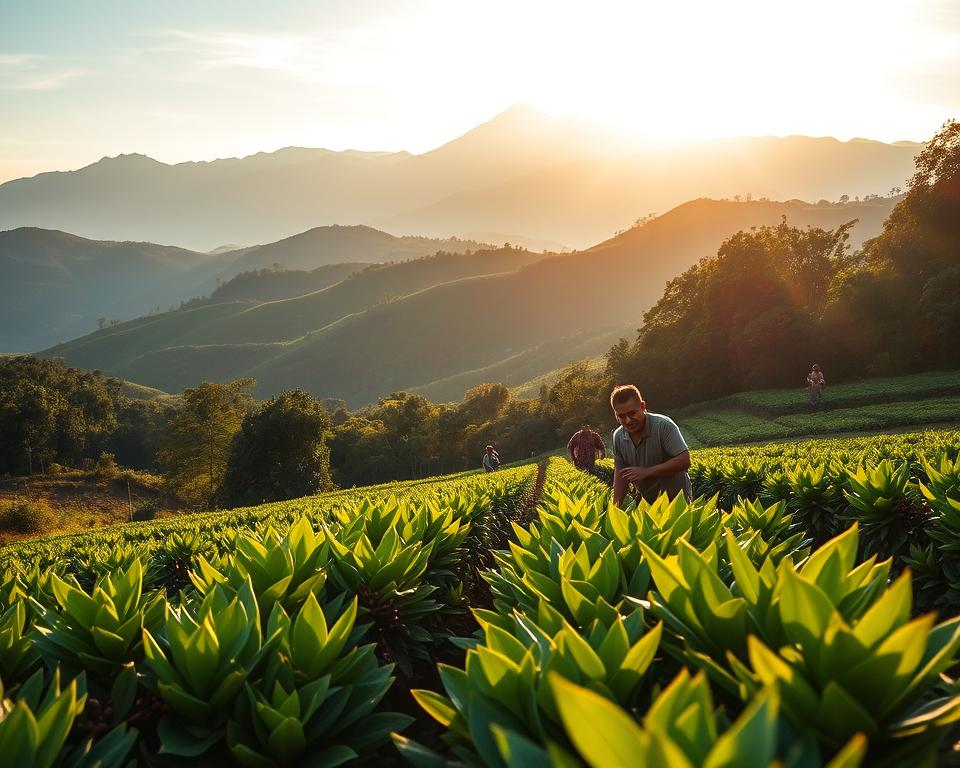
Guatemala is famous for its top-notch coffee, grown in many parts of the country. Coffee farming greatly affects local communities, shaping their economy and social life.
Coffee making is more than just a job; it’s a big part of community life. Helping local coffee farmers can really improve people’s lives and grow communities.
Looking into community coffee projects helps us see how they bring positive changes to Guatemala.
Guatemala’s Coffee Heritage and Its Importance
Guatemala’s coffee heritage is deeply rooted in its history, culture, and geography. For centuries, coffee has shaped the country’s identity and economy.
The coffee industry in Guatemala has a long history, starting in the 18th century. The country’s volcanic highlands and rich soil make it perfect for coffee. Places like Antigua, Huehuetenango, and Atitlán are famous for their high-quality coffee beans.
Antigua, Huehuetenango, and Other Key Growing Regions
Antigua is known for its historic beauty and coffee production. Huehuetenango, in the northwestern highlands, is celebrated for its unique coffee flavors.
| Region | Coffee Characteristics | Significance |
|---|---|---|
| Antigua | Balanced acidity, chocolate notes | Historic significance, high-quality beans |
| Huehuetenango | Fruity, floral notes | Distinct coffee profiles, high altitude |
| Atitlán | Bright acidity, citrus notes | Volcanic soil, scenic beauty |
These regions are key to Guatemala’s coffee industry. They focus on sustainable farming and improving the industry. Guatemala is a leader in quality and sustainability in the global coffee market.
The Transformative Power of Community Coffee Projects Impact
Community coffee projects in Guatemala are changing lives. They bring farmers, cooperatives, and support groups together. These efforts improve coffee quality and help communities thrive.
These projects are making a big difference. They use sustainable farming methods. This reduces the environmental impact of coffee initiatives. It also boosts biodiversity and farmer incomes.
Roles of Farmers, Cooperatives, and Support Organizations
Farmers are key to these projects. They do the hard work of growing coffee. Cooperatives help farmers by getting them better prices and access to markets. Support groups offer training and resources to help projects grow.
| Stakeholder | Role | Impact |
|---|---|---|
| Farmers | Coffee production, labor, and expertise | Improved livelihoods, increased income |
| Cooperatives | Market access, price negotiation, organization | Better market prices, improved infrastructure |
| Support Organizations | Technical assistance, training, resources | Enhanced project sustainability, capacity building |
Working together is what makes these projects succeed. Farmers, cooperatives, and support groups achieve more together. They make a positive change in the environment, economy, and society.
How to Assess Community Needs for Coffee Project Development
To make coffee projects truly impactful, it’s key to understand what the local community needs and wants. This step is crucial. It makes sure coffee projects meet the area’s specific needs, boosting their success and lasting impact.
There are a few important steps to follow. First, you need to find out what challenges the community faces today. Then, learn about their dreams and goals. Next, figure out how coffee projects can help solve these problems. This might involve surveys, community gatherings, and working with local leaders.
It’s also vital to see how coffee projects can help empower the community and grow the economy. This way, coffee projects can be a big help in improving the community’s social and economic health.
| Assessment Criteria | Description | Impact on Coffee Projects |
|---|---|---|
| Community Engagement | Level of participation in project planning | Higher engagement leads to more sustainable projects |
| Economic Needs | Identification of economic challenges faced by the community | Projects tailored to address specific economic needs |
| Social Aspirations | Understanding the community’s social goals and aspirations | Projects aligned with community aspirations, enhancing social cohesion |
By carefully looking at community needs, coffee projects can be made to boost the economy and empower the community. This makes the community stronger and more sustainable.
Step-by-Step Guide to Launching a Community Coffee Project
Community coffee projects in Guatemala can change lives. They help grow coffee in a green way and help local people. To start a project, follow this guide.
First, find out what the community needs. Talk to farmers, leaders, and those who will benefit. Studies show knowing what they need is key.
Then, make a detailed plan. It should have goals, how to reach them, and a budget. Work with the community to make sure it works for everyone.
Local and International Funding Sources for Guatemalan Projects
Finding money is a big step. There are many places to get help in Guatemala.
- Local government grants
- International development agency funding
- Private sector investments
- Crowdfunding campaigns
Here’s a look at different ways to get money:
| Funding Source | Benefits | Challenges |
|---|---|---|
| Local Government Grants | Matches local goals | Hard to get |
| International Development Agency Funding | Big money and help | Must report a lot |
| Private Sector Investments | Big money possible | May focus on making money |
By taking these steps and looking at different funding options, you can start a community coffee project in Guatemala. It will help the local community and support green coffee growing.
Implementing Sustainable Coffee Farming Initiatives
Sustainable coffee farming is changing the way coffee is grown in Guatemala. It helps the environment and improves farmers’ lives. By using green practices, farmers can grow more coffee, harm the environment less, and help everyone.
Soil Conservation and Improvement Techniques
Soil health is key in coffee farming. It affects how good the coffee tastes and how much is grown. Mulching, cover crops, and planting in curves help keep the soil in place and make it better.
These methods also help other living things by creating homes for insects and tiny animals.
| Technique | Benefits | Impact |
|---|---|---|
| Mulching | Reduces soil erosion, retains moisture | Improved soil health |
| Cover Cropping | Enhances soil fertility, suppresses weeds | Increased biodiversity |
| Contour Planting | Reduces soil erosion, improves water retention | Better crop yields |
Water Management and Conservation Systems
Good water use is vital for coffee farming. Using rainwater and drip irrigation saves water and cuts down on waste. These methods help farmers deal with drought and climate change.
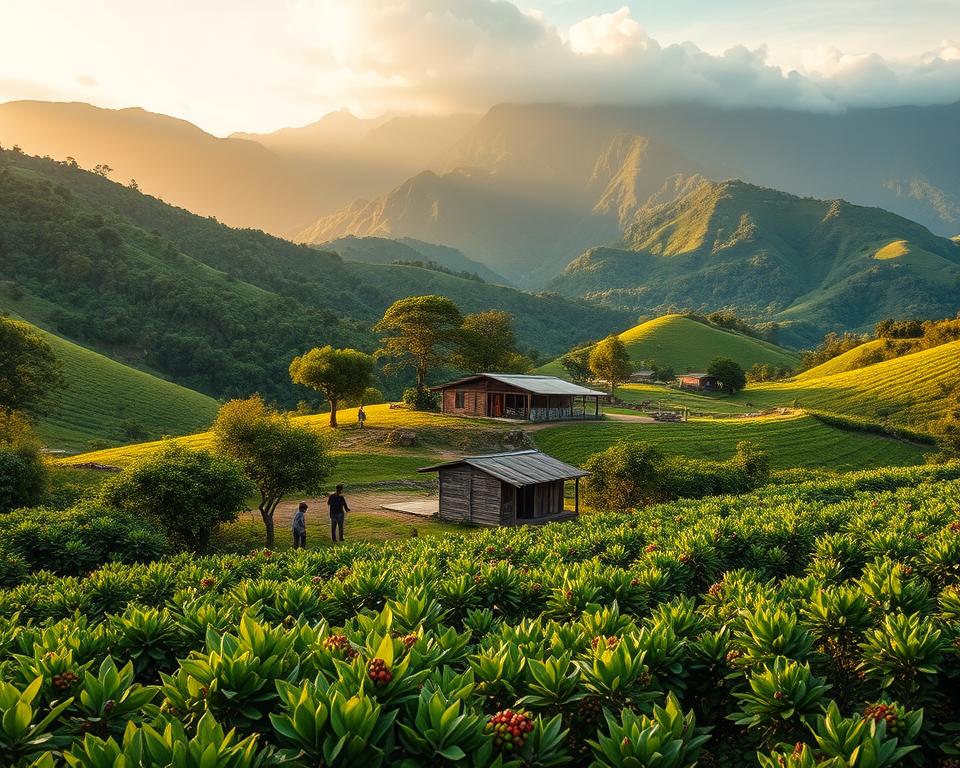
By using sustainable farming, Guatemala’s coffee can grow and protect the environment. This helps farmers and the community. These green practices are important for coffee’s future and the planet’s health.
How to Establish Fair Trade Relationships and Market Access
To make sure coffee farming lasts, fair trade is key. Fair trade helps coffee farmers and boosts community coffee projects.
Fair trade means better prices and safer work for farmers. It lets them grow their farms and help their communities. This helps the coffee industry grow.
To start fair trade, farmers and cooperatives need to find fair trade certifiers or partners. They must follow fair trade rules. This includes clear prices, safe work, and caring for the environment.
Getting into markets is also important for coffee projects. Fair trade helps farmers sell their coffee to the world. This gives them steady and good income.
In Guatemala, fair trade has made a big difference. It helps coffee farmers and their communities grow economically and socially.
Measuring the Economic Growth Through Coffee Projects
Community coffee projects in Guatemala have made a big difference in local economies. They help grow and develop the area. These efforts improve the lives of coffee farmers and boost the community’s economy.
The benefits of coffee projects are many. Farmers earn more, jobs are created, and local economies get a boost. Plus, these projects often fund important community needs like schools and healthcare.
These projects also have a positive environmental effect. They promote farming that’s good for the planet. This helps keep Guatemala’s natural beauty safe for future generations.
Empowering local communities is key to these projects’ success. It lets them control their coffee business. This way, everyone gets a fair share of the benefits. It also builds pride and teamwork in the community.
The signs of economic growth from coffee projects are clear:
- Increase in farmers’ income
- Job creation in rural areas
- Investment in community infrastructure
- Adoption of sustainable farming practices
Looking at these signs, it’s clear that coffee projects are crucial for Guatemala’s growth. They help the economy and support social and environmental health.
Community Coffee Empowerment Initiatives for Social Development
Community-led coffee empowerment initiatives are driving social development in coffee-growing areas. These efforts improve the lives of coffee farmers and their families. They also boost the economy through coffee projects. Coffee cooperatives empower local communities, creating a space for both social and economic growth.
Women’s involvement in coffee production is a key driver of social development. Women-led coffee initiatives have brought positive change and promoted sustainability. For more on sustainable practices, check out coffee sustainability impact studies.
Success Stories of Women-Led Coffee Initiatives in Guatemala
Guatemala has seen many success stories from women-led coffee initiatives. These efforts have not only helped women but also their communities. Women are leading coffee cooperatives, driving social change and economic stability.
- Women’s coffee cooperatives have increased the bargaining power of female farmers.
- Training programs have enhanced the skills of women in coffee production and management.
- Market access has been improved, allowing women-led cooperatives to reach a wider customer base.
These success stories show the power of community coffee empowerment initiatives. As they grow, they will likely have a lasting impact. They will promote economic growth through coffee projects and make the coffee industry more sustainable.
How to Overcome Challenges in Coffee Sustainability Impact Studies
Effective coffee sustainability impact studies need a detailed approach. They must assess both environmental and social impacts. Yet, they face many hurdles, like collecting data, engaging stakeholders, and managing resources.
Ensuring data accuracy is a big challenge. To tackle this, using strong data collection methods and technology is key. Tools like satellite imaging and farm management software can help.
Engaging stakeholders is another hurdle. This includes farmers, traders, and consumers. Building strong relationships and promoting transparency and cooperation is essential.
Community solidarity is crucial for coffee-producing communities. By working together, farmers can share knowledge and resources. This makes them more resilient against challenges like climate change.
Initiatives like cooperative farming and mutual support networks boost sustainability. They help coffee production become more sustainable.
Creating a sense of community and cooperation is vital. It helps coffee-producing communities face sustainability challenges. This way, they can build a more resilient and sustainable coffee industry.
Conclusion: The Future of Community Coffee Projects in Guatemala
Guatemala’s coffee industry has changed a lot in the last 20 years. Community-driven coffee programs have been key to these changes. They will keep having a big social impact on coffee cultivation and local communities.
Guatemala has about 100,000 coffee farmers and 250 cooperatives. These programs can help the economy grow and improve people’s lives. Fair trade, sustainable farming, and empowering communities are important steps forward.
Groups like El Café Guatemalteco (ECG) show how community coffee projects can make a difference. They work with small farmers to create jobs. As these projects grow, they will be vital for Guatemala’s coffee industry and its people’s well-being.