
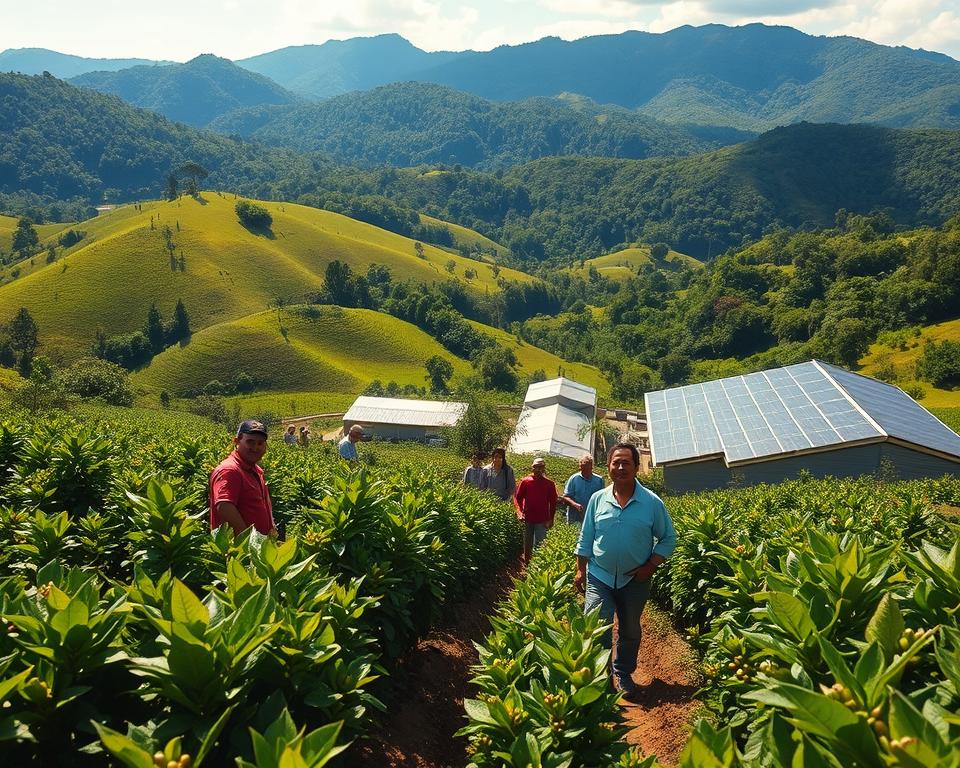
Guatemala is known for its rich biodiversity and natural resources. This makes it perfect for sustainable development. Coffee cooperatives are key players in this effort.
Coffee cooperatives in Guatemala do more than just make great coffee. They also work on projects that help the environment and local communities. By using sustainable practices, they help protect natural resources.
This guide will explore how these cooperatives support environmental projects. It will show their important role in sustainable development.
The Critical Role of Environmental Stewardship in Guatemala’s Coffee Industry
Coffee cooperatives in Guatemala are at the forefront of environmental care. They use sustainable practices and eco-friendly farming. This helps keep Guatemala’s biodiversity and natural resources safe.
These cooperatives work on many fronts. They plant trees, protect soil, and use water wisely. They also teach farmers how to farm sustainably.
Guatemala’s coffee farming aims to lessen environmental harm while helping farmers. Sustainable farming practices protect ecosystems. This ensures a bright future for coffee farming in Guatemala.
Guatemala’s coffee cooperatives’ dedication to the environment boosts coffee quality. This makes Guatemalan coffee stand out in the global market.
Understanding Coffee Cooperatives in Guatemala
In Guatemala, coffee cooperatives are more than just businesses. They are key players in community growth. Farmers come together to get better prices, share knowledge, and strengthen their bargaining power.
These cooperatives offer many benefits to their members. They provide technical help, market access, and social services. They also push for sustainable farming and care for the environment.
Case Study: Successful Guatemalan Cooperative Models
The Atitlán Coffee Cooperative is a great example in Guatemala. It works hard to better the lives of its members and protect nature.
- Improved farming practices through training and technical assistance
- Enhanced market access for members’ coffee
- Community development projects, including education and healthcare initiatives
Cooperatives like Atitlán show how working together can help communities and the environment. They make a big difference in Guatemala’s coffee areas.
How to Identify Environmental Needs in Coffee-Growing Communities
Success in environmental projects in coffee-growing areas relies on knowing what the community needs. Fair trade is key in helping these efforts. It makes sure coffee cooperatives work well with local people.
Coffee cooperatives can talk to farmers and community members through surveys and workshops. This way, they learn about the community’s environmental challenges.
Some big environmental needs in these areas are saving water, improving soil, and protecting biodiversity. Here’s a table showing these needs and how to tackle them:
| Environmental Need | Strategies for Addressing the Need | Benefits |
|---|---|---|
| Water Conservation | Implementing efficient irrigation systems, promoting water-saving practices | Reduced water waste, improved crop health |
| Soil Health Improvement | Using organic fertilizers, practicing crop rotation | Increased soil fertility, reduced erosion |
| Biodiversity Conservation | Creating shade-grown coffee, protecting natural habitats | Preserved ecosystems, enhanced biodiversity |
By tackling these environmental needs, coffee cooperatives can start projects that help both the community and the planet.
Securing Funding for Environmental Projects Coffee Cooperatives Implement
Getting funding is key for Guatemalan coffee cooperatives to start environmental projects. These projects help the environment and improve local people’s lives. They are crucial for eco-friendly efforts.
Coffee cooperatives in Guatemala have many ways to get funding. They can look for grants from groups that help the environment. They can also work with companies that care about the planet and people.
Guatemalan Success Story: Cooperative Funding Innovation
The Asociación de Cooperativas de Productores de Café de Guatemala (ACPCG) is a great example. They have done projects like planting trees and farming in a green way. They got money from grants and partnerships with green companies.
| Funding Strategy | Description | Potential Impact |
|---|---|---|
| Grants from International Organizations | Applying for grants that support environmental conservation and sustainable agriculture. | Significant financial support for eco-friendly projects. |
| Partnerships with Eco-Conscious Businesses | Collaborating with businesses that prioritize social responsibility and environmental sustainability. | Access to funding and expertise for sustainable initiatives. |
| Crowdfunding and Community Support | Raising funds through community-driven campaigns and local support. | Increased community engagement and support for cooperative initiatives. |
Guatemalan coffee cooperatives can use these funding ways to start green projects. These projects help the planet and people. They show how important it is to find new ways to fund green projects.
How to Implement Water Conservation and Protection Initiatives
Water conservation is key in Guatemala’s coffee-growing areas. It helps reduce the environmental impact of coffee making. It also keeps water resources safe for local people.
Guatemala’s varied landscapes need different water-saving plans. In rainy areas, collecting rainwater and using smart irrigation are good ideas.
Regional Adaptation: Water Solutions for Guatemala’s Diverse Regions
Guatemala’s different areas face unique water challenges. Dry spots need water-saving tech, while wet areas need systems to stop soil loss.
| Region | Water Conservation Challenge | Proposed Solution |
|---|---|---|
| Volcanic Highlands | Soil Erosion | Terracing and reforestation |
| Low-Lying Coastal Areas | Waterlogging | Improved drainage systems |
| Drought-Prone Areas | Water Scarcity | Drip irrigation and rainwater harvesting |
Learn more about green coffee practices at CBI’s Tips to Go Green.
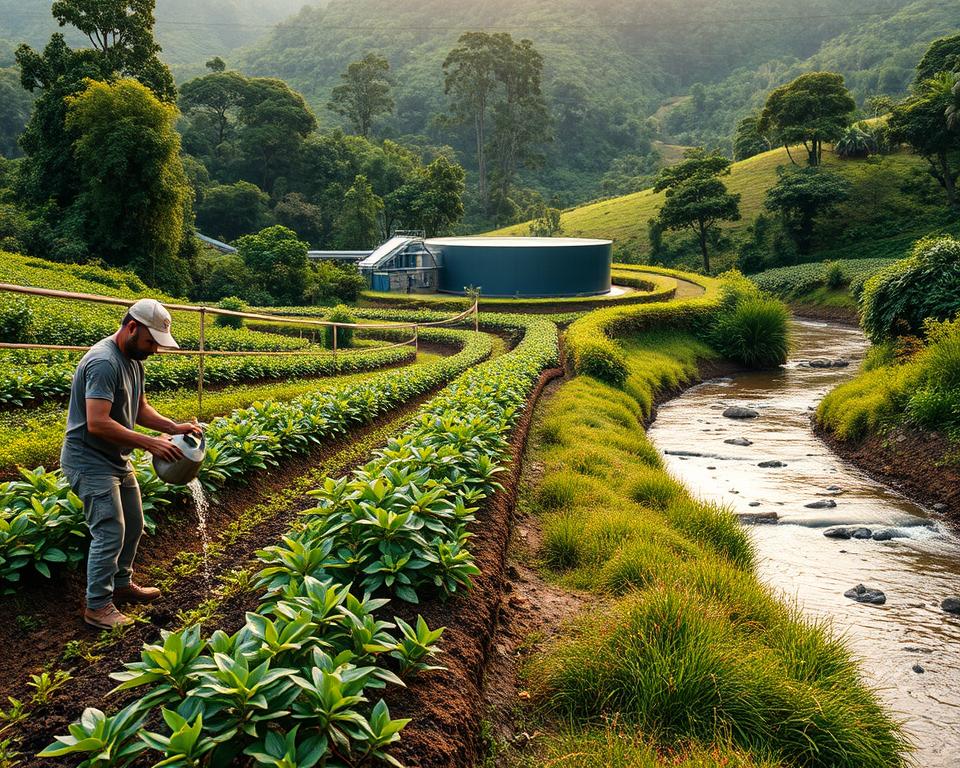
Developing Sustainable Agriculture Practices in Coffee Farms
Guatemalan coffee producers are mixing old and new to farm better. They use traditional methods and modern tech. This mix helps the environment and keeps farms productive.
Guatemalan farmers have always tried to live in harmony with nature. They use crop rotation, composting, and shade-grown coffee. Shade-grown coffee is better for the environment and tastes better too.
Success in sustainable farming comes from blending old wisdom with new tech. Farmers use natural pest control, save water, and protect the soil. These steps are key to farming sustainably.
| Traditional Practice | Modern Application | Benefit |
|---|---|---|
| Crop Rotation | Rotating coffee with other crops like maize or beans | Improves soil fertility and reduces pests |
| Composting | Using coffee cherry pulp as compost | Reduces waste and enriches soil |
| Shade-Grown Coffee | Maintaining or planting native trees to shade coffee | Preserves biodiversity and improves coffee quality |
For more info on sustainable coffee, check out this guide. Guatemalan farms are reducing their environmental impact. They’re also making their farms more resilient and improving farmer’s lives.
Creating Effective Biodiversity Conservation Programs
Guatemala’s coffee-growing areas are home to diverse ecosystems. The country’s mix of volcanic highlands and rainforests supports many plants and animals. Coffee cooperatives help keep these ecosystems healthy through sustainable farming.
Biodiversity conservation in Guatemala’s coffee regions involves several key strategies. These include:
- Restoring native vegetation in and around coffee farms to provide habitat for wildlife.
- Implementing agroforestry practices that integrate trees into coffee cultivation, enhancing ecosystem services.
- Protecting water sources and improving water quality through sustainable farming practices.
Guatemala’s Unique Biodiversity Opportunities
Guatemala has many ecosystems, like cloud forests and rainforests. The coffee-growing regions, especially in the western highlands, are very important for conservation. They are home to many species found only in Guatemala.
To make the most of these opportunities, coffee cooperatives can start eco-friendly projects. For example:
- Creating biodiversity corridors to connect isolated habitats.
- Supporting reforestation efforts with native species.
- Promoting sustainable land-use practices among farmers.
By using these strategies, Guatemala’s coffee cooperatives can greatly help with biodiversity conservation. This ensures the health of ecosystems and the sustainability of their coffee.
How to Design Waste Management and Recycling Systems
To lessen environmental harm, Guatemala’s coffee cooperatives must create strong waste management systems. Good waste management is key to lowering coffee production’s environmental impact. Coffee cooperatives in Guatemala can do this by setting up a detailed waste management plan. This plan should include recycling and the right disposal of waste.
The first step is to figure out the types and amounts of waste made during coffee making. This includes waste from coffee cherry processing, packaging, and other non-organic stuff. Knowing the waste helps cooperatives find ways to reduce, reuse, and recycle. For example, organic waste can be turned into fertilizer, cutting down on synthetic fertilizers and landfill waste.
Setting up a waste management system also means teaching farmers and community members about the value of proper waste disposal and recycling. This can be done through training and community outreach. Cooperatives can also look into working with local recycling places and waste services to make sure waste is managed right. For more on effective waste management in coffee processing, check out effective waste management in coffee processing.
By focusing on waste management and recycling, Guatemala’s coffee cooperatives can boost their social responsibility. This makes the coffee industry more sustainable. It also helps farmers and their communities by improving their lives.
Measuring and Communicating Environmental Impact
In Guatemala’s coffee sector, measuring and sharing environmental impact is key. Coffee cooperatives use methods like carbon footprint analysis and water quality checks. They also look at biodiversity.
Getting the community involved is crucial. This way, cooperatives make sure they meet community needs. It makes environmental efforts more effective and builds community pride.
Coffee cooperatives share their environmental impact in many ways. They publish annual reports and hold community events. They also use digital platforms. These steps help build trust with everyone involved.
| Strategy | Description | Benefit |
|---|---|---|
| Carbon Footprint Analysis | Measures the total greenhouse gas emissions | Identifies areas for reduction |
| Water Quality Monitoring | Assesses the quality of water sources | Ensures safe water for communities and ecosystems |
| Biodiversity Assessments | Evaluates the health of ecosystems | Conserves biodiversity and ecosystem services |
By measuring and sharing their environmental impact, Guatemala’s coffee cooperatives show their dedication. They help make the coffee industry more eco-friendly.
Conclusion: Building a Sustainable Future for Guatemalan Coffee
Guatemalan coffee cooperatives are key in promoting sustainable development and caring for the environment. They support projects that help coffee-growing communities and protect natural resources.
These cooperatives’ environmental projects have a big positive effect. They focus on saving water, using eco-friendly farming methods, and preserving biodiversity. These efforts protect the environment and encourage green practices.
As the Guatemalan coffee industry expands, focusing on sustainability is vital. This ensures a bright future for Guatemalan coffee, benefiting both the environment and local communities.
Environmental projects by coffee cooperatives also improve the lives of farmers and their families. This approach to sustainability is essential for the Guatemalan coffee industry’s long-term success.