

The coffee industry is changing fast, thanks to new tech and changing tastes. Guatemala, famous for its coffee, is leading this change.
Startups are key in updating the coffee world. They bring in new tech and green practices. This makes coffee better and helps farmers more.
The coffee market is facing big issues like climate change and diseases. New ideas are needed to keep it going.
Updating the coffee industry is key to meet the demand for better, greener coffee. Startups will play a big part in the coffee world’s future.
The Evolution of Guatemala’s Coffee Industry
The story of Guatemala’s coffee industry is one of strength and creativity. Coffee has been grown in Guatemala since the 19th century.
The industry has faced many hurdles, like ups and downs in coffee prices and climate change. Yet, Guatemala keeps its high-quality coffee reputation. A study shows that Guatemala’s coffee is known for its quality and unique taste, thanks to its special regions coffee production in Guatemala.
New coffee businesses and companies are bringing fresh ideas to the industry. They focus on sustainability and use new technology. The industry has also learned to change with the times and what people want.
Current Challenges in Guatemala’s Coffee Sector
Guatemala’s coffee production faces many challenges. These include environmental, economic, and social issues. Climate change, deforestation, and soil degradation harm coffee yields and quality.
Economic problems like price swings, high costs, and market access issues affect the sector. Social issues, like labor shortages and poor working conditions, also play a role.
To tackle these problems, tech-driven coffee startups are bringing new solutions. They focus on:
- Precision agriculture to boost crop yields and cut waste
- Digital platforms to link farmers with buyers, boosting their earnings
- Sustainable practices to lessen environmental harm
These innovations help solve current issues. They also make the coffee sector in Guatemala more sustainable and competitive.
Coffee Startups Innovation: The New Wave of Change
A new wave of coffee entrepreneurship is sweeping across Guatemala. It’s led by innovative startups. These startups are changing the game with new ways to make, process, and sell coffee.
One startup has introduced a new coffee processing method using advanced tech. This method boosts coffee quality and cuts down on environmental harm. Another startup is working on direct trade models. This ensures farmers get a fair price for their coffee, helping them financially.
These startups are making Guatemala’s coffee better and more sustainable. They’re also helping the local economy. Here’s a look at some of their key innovations and their effects.
| Innovation | Impact |
|---|---|
| Advanced Coffee Processing | Improved quality and reduced environmental impact |
| Direct Trade Models | Fair prices for farmers, economic empowerment |
| Sustainable Farming Practices | Environmental conservation, improved crop yields |
The rise of these startups is a big plus for Guatemala’s coffee industry. They’re using tech and green practices to set new standards. This is leading to a more sustainable and fair future for coffee.
How to Implement Technological Advancements in Coffee Production
Technological innovations are changing the coffee production world. They offer new chances for producers. Using new tech can make coffee production more efficient, better in quality, and more profitable.
Technology is especially important in precision agriculture. Tools like drones and satellite imaging help watch over crops. They also help make sure farmers use the right amount of resources.
Step-by-Step Implementation Guide
To start using new tech, producers should first look at their current ways of working. They should find out where they can do better. Then, they need to pick the right technology, like automated irrigation or digital market platforms.
- Assess current operations
- Identify areas for improvement
- Select appropriate technology
- Train staff on new systems
Cost-Benefit Analysis for Small Producers
For small producers, buying new tech can be expensive at first. But, the long-term gains, like being more efficient and reaching more markets, can be worth it. It’s important to do a detailed cost-benefit analysis to see if new tech is right for them.
By using new tech, coffee producers can stay competitive worldwide. They also help make the coffee industry more sustainable.
How to Integrate Sustainable Practices in Coffee Operations
Guatemala’s coffee sector is ready for a green revolution. This is thanks to new businesses and methods. As more people want sustainable coffee, it’s key to add eco-friendly steps to coffee work.
These steps help the planet and make coffee better. They also help farmers live better lives. Shade-grown coffee, organic farming, and saving water are some of these steps.
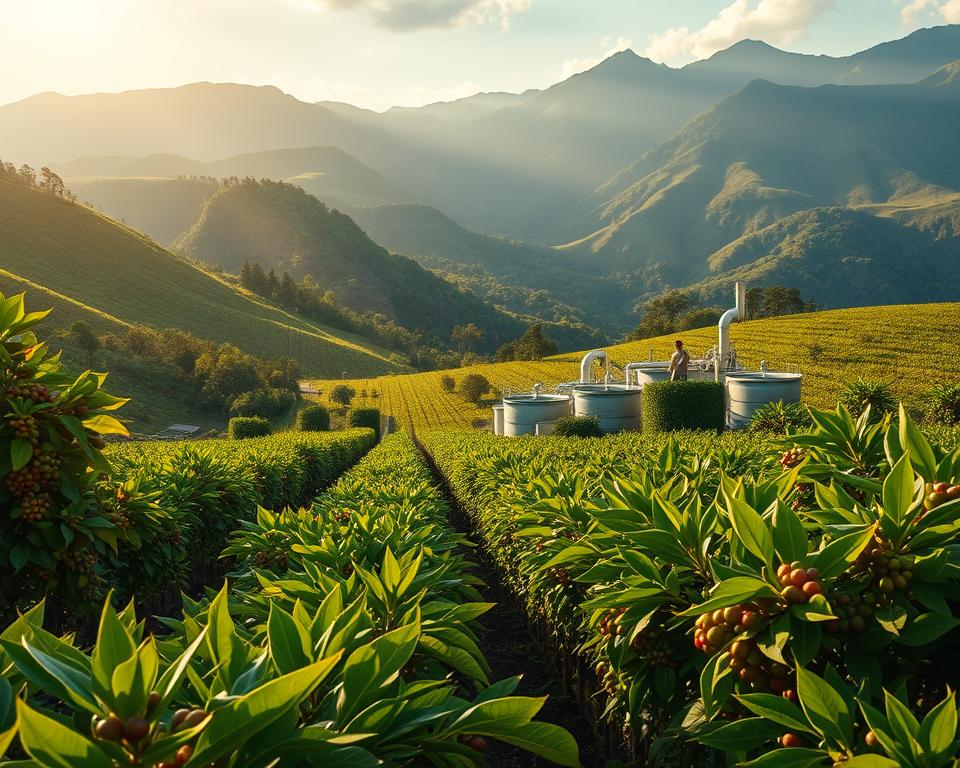
To start, farmers need training in green farming. Coffee makers should use eco-friendly ways to process coffee. They should also use clean energy. Fair Trade and Rainforest Alliance certifications help too.
| Sustainable Practice | Benefits | Implementation Steps |
|---|---|---|
| Shade-Grown Coffee | Biodiversity conservation, improved coffee quality | Plant native tree species, maintain canopy cover |
| Organic Farming | Reduced chemical use, healthier ecosystems | Avoid synthetic fertilizers, use compost |
| Efficient Water Use | Water conservation, reduced processing costs | Implement drip irrigation, recycle water |
By using these green practices, coffee companies in Guatemala can help the environment and people. They can also stand out in a crowded market. The future of Guatemala’s coffee is bright, thanks to innovation and green practices.
Establishing Direct Trade Models for Farmer Empowerment
Direct trade models help coffee farmers get more money for their work. This is good for their lives. It’s becoming more common thanks to new coffee companies and startups using tech.
These models mean farmers deal directly with buyers, skipping the middlemen. This way, farmers get paid more fairly. It also builds trust and teamwork. For example, a new effort in East Africa is helping farmers a lot.
| Benefits | Challenges |
|---|---|
| Better prices for farmers | Initial investment in infrastructure |
| Increased transparency | Building trust between farmers and buyers |
| Improved quality control | Logistical complexities |
Even with hurdles, direct trade is a big win. New coffee companies and startups are leading the way. They use tech to make things easier and better for farmers.
The coffee world is changing fast. Direct trade models are key to shaping the future of coffee in Guatemala and elsewhere.
Developing Consumer Experience Innovations
Startups are changing Guatemala’s coffee industry by focusing on unique experiences for consumers. This change helps them stand out in a crowded market. It also meets the changing tastes and preferences of coffee lovers.
Technology plays a big role in these changes. Some startups use mobile apps to let consumers track their coffee’s journey. They can learn about its production and even roast it themselves remotely.
Another area seeing innovation is experiential retail. Coffee shops are now more than just places to buy coffee. They offer educational workshops, tastings, and community events. This makes the experience richer and more engaging.
There’s also a push for personalization. Startups use data to give personalized coffee recommendations and tailored subscription services. This meets the unique tastes of each consumer.
These innovations improve the consumer experience and help the coffee industry grow. By embracing these trends, Guatemala’s coffee industry is set for a promising future.
How to Start a Coffee Innovation Business in Guatemala
Starting a coffee innovation business in Guatemala needs a deep understanding of the local market. Guatemala is famous for its high-quality Arabica coffee. There’s a growing demand for new products and services for both local and international markets.
To succeed, entrepreneurs must think creatively. They need to develop unique value propositions that stand out from others. This means understanding what consumers like and how they behave.
Conducting Market Research
Doing thorough market research is key. It involves collecting data on what consumers want, market trends, and what competitors are doing. Focus on:
- Understanding the demand for specialty coffee
- Identifying gaps in the market that your business can fill
- Analyzing consumer behavior and purchasing decisions
It’s also important to analyze competitors. Look at existing businesses, their strengths and weaknesses. Think about how your business can be different. Consider:
- Assessing the competitive landscape to identify market gaps
- Evaluating the quality and uniqueness of competitors’ products and services
- Developing a unique value proposition that sets your business apart
By focusing on these areas and using new innovations in the coffee market, entrepreneurs can start successful coffee startups in Guatemala. This boosts the local economy and makes Guatemala known for high-quality coffee.
Guide to Collaborating with Existing Coffee Stakeholders
To make a difference in Guatemala’s coffee world, startups need to work with others. This teamwork is key to using resources, skills, and connections that help new coffee businesses grow.
There are many ways to team up, like:
- Partnering with local coffee farmers to try new farming methods.
- Working with well-known coffee exporters to reach global markets.
- Collaborating with coffee research centers to create new tech.
When working with others, startups should aim to build trust and benefit both sides. This means sharing knowledge, resources, and risks. This way, startups can boost innovation in Guatemala’s coffee industry and succeed themselves.
Some important tips for good teamwork include:
- Finding common goals and interests.
- Setting up clear ways to talk.
- Defining who does what.
By using these tips and teaming up, coffee startups in Guatemala can help make the coffee industry more innovative and green.
Strategies for Overcoming Barriers to Innovation in Guatemala’s Coffee Sector
Emerging coffee companies in Guatemala are leading the way by breaking through old barriers. They bring in new tech and green practices, shaking up the coffee world.
But, there are still big hurdles to innovation in Guatemala’s coffee world. These include not enough money, old equipment, and a lack of skills. To beat these, everyone needs to join forces to make innovation easier.
- Investing in coffee technology to improve yields and quality
- Promoting sustainable practices to enhance environmental stewardship
- Developing direct trade models to empower farmers
- Encouraging collaboration between emerging coffee companies and established stakeholders
By using these strategies, Guatemala’s coffee can move past its current limits and shine in the global market. New coffee companies are key in this effort. They use innovation to make coffee better and greener.
The future of Guatemala’s coffee depends on its ability to innovate and keep up with the market. If everyone works together, the sector can stay strong and competitive.
Conclusion: The Future of Guatemala’s Coffee Through Innovation
Guatemala’s coffee industry is on the verge of a big change. This change comes from tech-driven coffee startups and new trends in the coffee world. The industry is growing by using new technology, being more sustainable, and trying new business ideas.
Technology is changing how coffee is made and sold. It helps farmers grow more coffee and sell it directly to people who want to buy it. Startups are key in this change, bringing new products and services that make buying coffee better.
Guatemala’s coffee industry is getting ready to grow and compete with others worldwide. The future of Guatemala’s coffee is looking good, thanks to innovation and care for the environment. By following new trends in the coffee industry, Guatemala can stay a top coffee producer. It can also help make the coffee world fairer and better for the planet.