
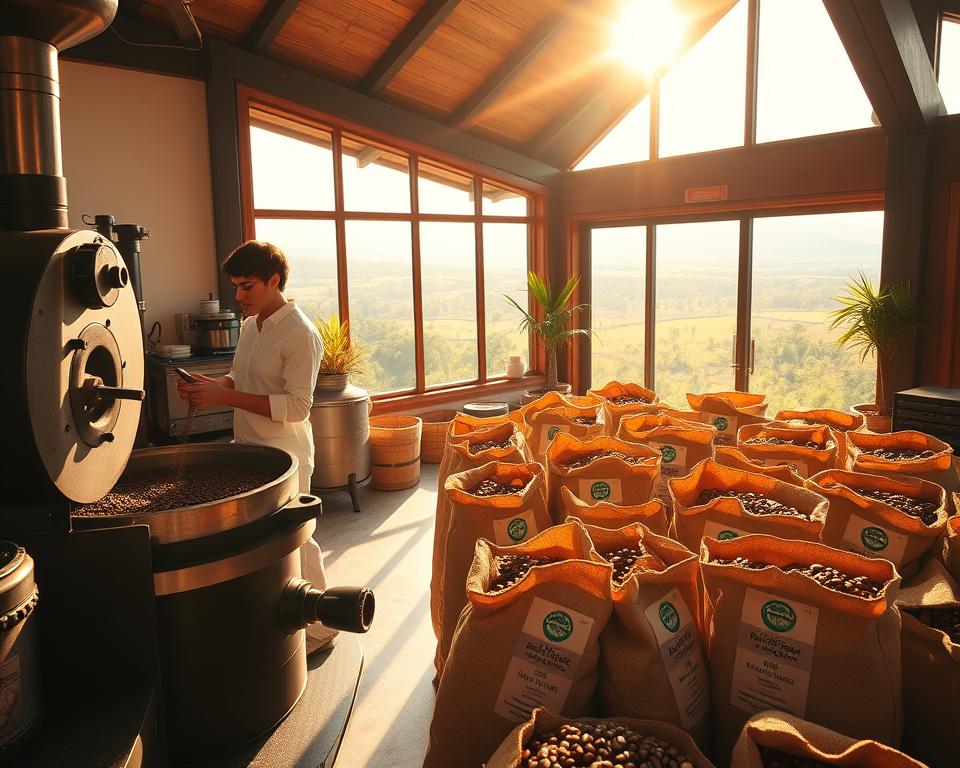
The coffee world is changing fast, moving towards sustainable coffee roasting. Guatemala is leading the way with its top-notch coffee beans.
Eco-roasting is more than a trend; it’s a big change for the better. It helps cut down the harm coffee making does to our planet. Coffee roasters are now making quality coffee while being kinder to the environment.
There are many good things about eco-roasting. It makes coffee taste better and reduces waste. As people care more about the planet, they want coffee that’s good for it too. This makes eco-roasting key for the coffee industry’s future.
The Environmental Significance of Sustainable Coffee Production
Sustainable coffee production is very important, especially in places like Guatemala. The coffee industry is a big job creator in Guatemala. It also has a big impact on the environment.
Coffee production can harm the environment in many ways. This includes cutting down trees, polluting water, and damaging soil. But, by using sustainable methods, coffee makers can lessen their harm.
- Shade-grown coffee, which helps preserve biodiversity
- Organic farming methods, reducing the use of chemical pesticides and fertilizers
- Efficient water use, minimizing waste and pollution
Organic coffee roasting is also key to sustainable coffee. Using energy-saving roasting methods and getting beans from eco-friendly farms helps reduce harm. This way, roasters play a big role in making coffee more sustainable.
The good things about sustainable coffee are many. It makes crops better, helps farmers earn more, and keeps the environment healthy. As more people care about the planet, they’ll want to buy sustainable coffee. This will push the industry to keep getting better.
Guatemala’s Coffee Legacy: A Perfect Canvas for Eco Roasting
Guatemala has a long history in coffee production. It’s a great place for eco-friendly coffee making. The country has been making high-quality Arabica beans for over a century.
Guatemala’s different areas, like Antigua, Huehuetenango, and Atitlán, have their own special soil and climate. This makes the coffee grown there very complex and flavorful.
- Eco-roasting practices in Guatemala focus on minimizing environmental impact.
- Sustainable coffee production methods enhance the flavor and quality of the beans.
- Guatemalan coffee farmers are adopting eco-friendly practices to preserve the country’s natural resources.
Coffee is more than just a product in Guatemala. It’s a part of the culture and supports many families. By using eco-roasting, Guatemala can stay competitive in the coffee world and protect the environment.
Guatemala’s coffee legacy is rich in:
- Its cultural heritage tied to coffee.
- Diverse coffee-growing regions.
- A commitment to sustainable and eco-friendly practices.
Eco Roasting Coffee: Core Principles and Practices
Green coffee roasting methods are leading the way in making coffee production more eco-friendly. The world is moving towards sustainable practices, and the coffee industry is following suit. It’s adopting eco-friendly roasting techniques to cut down its carbon footprint.
Eco roasting coffee stands out because of its core principles and practices. It uses heat recirculation systems and energy-efficient roasting cycles. These are different from traditional roasting methods.
Heat Recirculation Systems
Heat recirculation systems reuse the heat from the roasting process. This cuts down on energy use. It also lowers costs and reduces environmental impact.
Energy-Efficient Roasting Cycles
Energy-efficient roasting cycles aim to use less energy. They optimize roasting time and temperature. This way, coffee is roasted perfectly without wasting energy.
| Eco-Friendly Technique | Description | Benefits |
|---|---|---|
| Heat Recirculation | Reuses heat generated during roasting | Reduces energy consumption, lowers costs |
| Energy-Efficient Cycles | Optimizes roasting time and temperature | Minimizes energy use, perfect roast level |
By using eco-friendly roasting techniques, coffee producers can greatly reduce their environmental impact. As more people care about the environment, there’s a growing demand for sustainably made coffee. Eco roasting coffee is becoming crucial in the industry.
Setting Up Your Eco-Friendly Roasting Station
To make coffee roasting better for the planet, setting up an eco-friendly roasting station is key. This means picking the right gear and using green practices.
Home-Scale Options
For those roasting at home, starting green is easy. Use energy-saving roasting tools or tweak your current ones to use less power. Think about getting a sustainable coffee roaster made to save energy.
For big roasting setups, going green can cut down on harm to the environment. Get efficient roasting gear, start recycling coffee chaff, and tweak roasting to use less energy.
Important steps include using green energy like solar or wind. Also, cut down on water waste during roasting.
Step-by-Step Guide to Eco Roasting Guatemalan Coffee
The journey to perfectly roasted Guatemalan coffee starts with eco-friendly roasting. Eco-roasting is more than a method; it’s a way of life. It values sustainability, quality, and respects the coffee’s origin.
First, choose high-quality, sustainably sourced beans. Opt for beans that are certified organic and fair-trade. This ensures your coffee tastes amazing and supports good causes.
Next, set up your roasting station. Use eco-friendly equipment and make sure it’s energy-efficient. Think about getting a roaster that runs on renewable energy or saves energy.
The Roasting Process
Roasting is where the magic happens. For Guatemalan coffee, a medium roast is best. It brings out the coffee’s natural sweetness and complex flavors. Roast in a way that reduces waste and environmental impact.
| Roast Level | Temperature | Time |
|---|---|---|
| Light Roast | 400°F | 10 minutes |
| Medium Roast | 420°F | 12 minutes |
| Dark Roast | 440°F | 15 minutes |
After roasting, cool the beans quickly. Use a cooling tray or a fan. Quick cooling helps keep the beans’ flavor and aroma.
Finally, store your roasted coffee in airtight containers. Use eco-friendly packaging that’s compostable or recyclable. This keeps your coffee fresh.
By following these steps, you can enjoy high-quality, sustainably roasted Guatemalan coffee. It tastes great and supports a sustainable coffee industry.
Innovative Eco-Friendly Roasting Methods for Guatemalan Beans
Eco-friendly roasting methods are changing how Guatemalan coffee is made. The coffee world is moving towards sustainable practices. Roasting is a key area where we can make a big difference.
Energy-efficient roasting equipment is becoming popular. These machines cut down on carbon emissions by using less energy. Some roasters are even using solar power to reduce their impact even more.
Advanced roasting technologies are also being used. They allow for better control over the roasting process. This leads to less waste and better-tasting coffee. It’s great for Guatemalan coffee, known for its unique flavors.
| Roasting Method | Energy Efficiency | Environmental Impact |
|---|---|---|
| Traditional Roasting | Low | High |
| Energy-Efficient Roasting | High | Medium |
| Solar-Powered Roasting | Very High | Low |
These eco-friendly roasting methods are good for the planet and the coffee. As more people want sustainable coffee, Guatemalan producers are set to benefit.
By choosing green coffee roasting, the industry can lessen its environmental impact. It also makes high-quality coffee for those who care about the planet.
Mastering Flavor Profiles Through Sustainable Roasting
Mastering Guatemalan coffee’s flavor profiles through sustainable roasting is both an art and a science. It’s about understanding how the coffee bean’s natural traits and the roasting process work together. Sustainable roasting not only helps the environment but also brings out the coffee’s unique tastes.
Eco roasting coffee aims to highlight the coffee beans’ distinct notes and aromas. By controlling the roasting temperature and time, roasters can emphasize the coffee’s natural flavors. Guatemalan coffee, known for its balanced acidity and rich chocolate notes, benefits greatly from sustainable roasting.
To get the right flavor, roasters can try different roasting levels. Lighter roasts keep the coffee’s acidic and fruity notes, while darker roasts reveal deeper, richer flavors. The goal is to find a balance that complements the coffee’s natural taste.
Here are some tips for mastering flavor profiles:
- Keep an eye on roasting temperatures to avoid overheating, which can harm the beans.
- Adjust roasting times to get the perfect mix of acidity and body.
- Use high-quality, green coffee beans that are good for sustainable roasting.
By following these practices, coffee roasters can help the sustainable coffee industry grow. They also deliver exceptional flavors that highlight Guatemalan coffee’s best qualities.
Eco-Conscious Packaging and Distribution Strategies
Sustainable practices in coffee packaging and distribution are key to reducing the coffee industry’s environmental footprint. As more people care about the planet, there’s a growing need for eco-friendly coffee production and processing.
Using materials that can be biodegradable, recyclable, or reusable is at the heart of eco-conscious packaging. For example, switching from plastic to paper or compostable bags can cut down on waste. Also, making packaging smaller and lighter can save on shipping costs.
Efficient distribution methods are also vital for lessening environmental harm. This includes optimizing delivery routes, using eco-friendly vehicles, and combining shipments to reduce trips.
| Distribution Strategy | Environmental Benefit | Cost Impact |
|---|---|---|
| Route Optimization | Reduced carbon emissions | Lower fuel costs |
| Fuel-Efficient Vehicles | Lower emissions | Potential long-term savings |
| Shipment Consolidation | Fewer trips, reduced emissions | Lower transportation costs |
By embracing these eco-friendly packaging and distribution methods, coffee makers and distributors can lessen their environmental impact. They can also attract more environmentally aware consumers.
Supporting Guatemalan Communities Through Sustainable Practices
The social benefits of sustainable coffee production in Guatemala are huge. Eco-roasting helps local communities a lot. It includes fair trade, community projects, and green farming.
Eco-roasting makes coffee taste better and helps communities. Fair trade means farmers get a good price for their beans. This helps their lives a lot.
Also, eco-roasting supports projects like education and healthcare. These projects make life better for everyone in the community.
| Benefits | Description | Impact |
|---|---|---|
| Fair Trade Practices | Ensures fair prices for coffee beans | Improved livelihoods for farmers |
| Community Development | Supports education and healthcare initiatives | Better living standards for communities |
| Environmental Conservation | Promotes eco-friendly farming methods | Preservation of biodiversity |
Want to learn more about sustainable practices? Check out Fratello Coffee’s blog on Guatemala’s harvest.
Overcoming Challenges in Sustainable Coffee Roasting
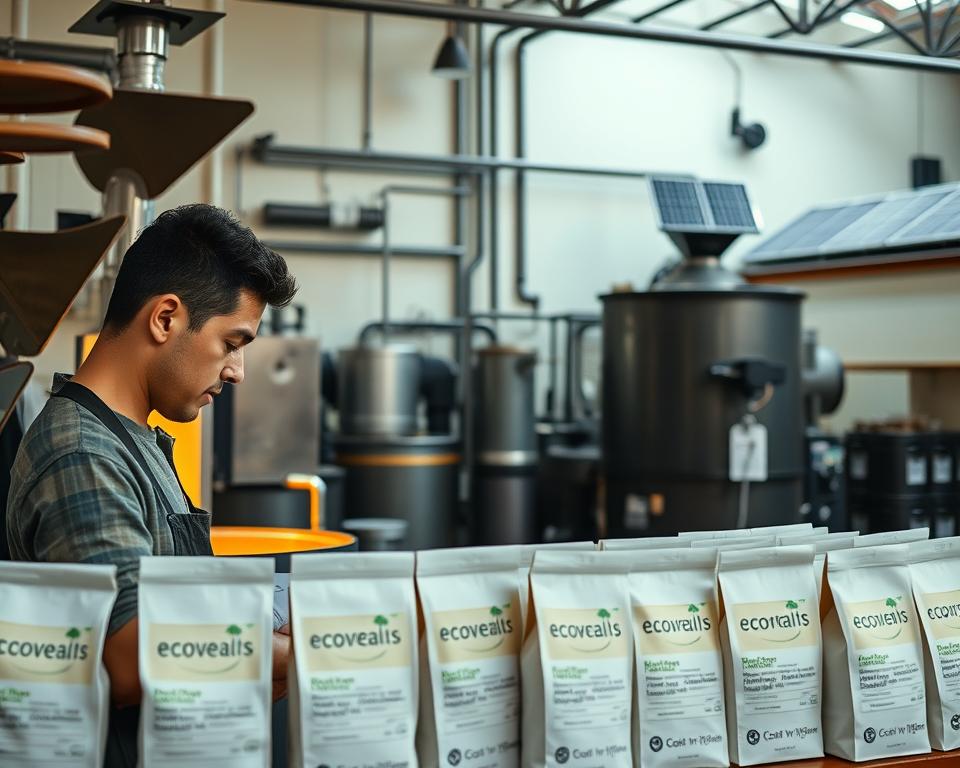
The path to sustainable coffee roasting comes with its own set of challenges. But knowing these obstacles is crucial to beating them. Roasters often face high costs for eco-friendly gear and need to learn about green roasting methods.
Finding top-notch, eco-friendly coffee beans is another big hurdle. It demands building strong ties with farmers who follow green and fair trade practices. A study on sustainable coffee shows how vital fair trade and organic farming are for eco-friendly roasting in promoting eco-friendly coffee roasting.
| Challenge | Strategy |
|---|---|
| Higher Initial Costs | Invest in energy-efficient roasting equipment |
| Sourcing Sustainable Beans | Establish direct trade relationships with sustainable farmers |
| Lack of Knowledge | Participate in workshops on green coffee roasting methods |
By tackling these challenges head-on and using smart strategies, roasters can master sustainable coffee roasting. This approach not only helps the planet but also boosts the coffee’s quality and taste.
Conclusion: Embracing the Future of Eco-Roasted Guatemalan Coffee
Eco roasting coffee is key in the coffee world, especially in Guatemala. Coffee is a big deal there, making up a lot of the economy. Eco-friendly coffee making helps cut down on harm to the planet and makes coffee taste better.
Learning about eco-roasting Guatemalan coffee is important. It starts with setting up a green roasting spot and getting good at making flavors last. New ways to roast and pack coffee also help make it better for the planet.
Helping Guatemalan communities through green coffee practices is crucial. It helps the planet and the people living there. As more people want eco-roasted coffee, we must face the challenges of making it.
Choosing eco roasting coffee is more than a trend. It’s a must for a greener future. By going green, the coffee world can help the environment and give great coffee to everyone.