
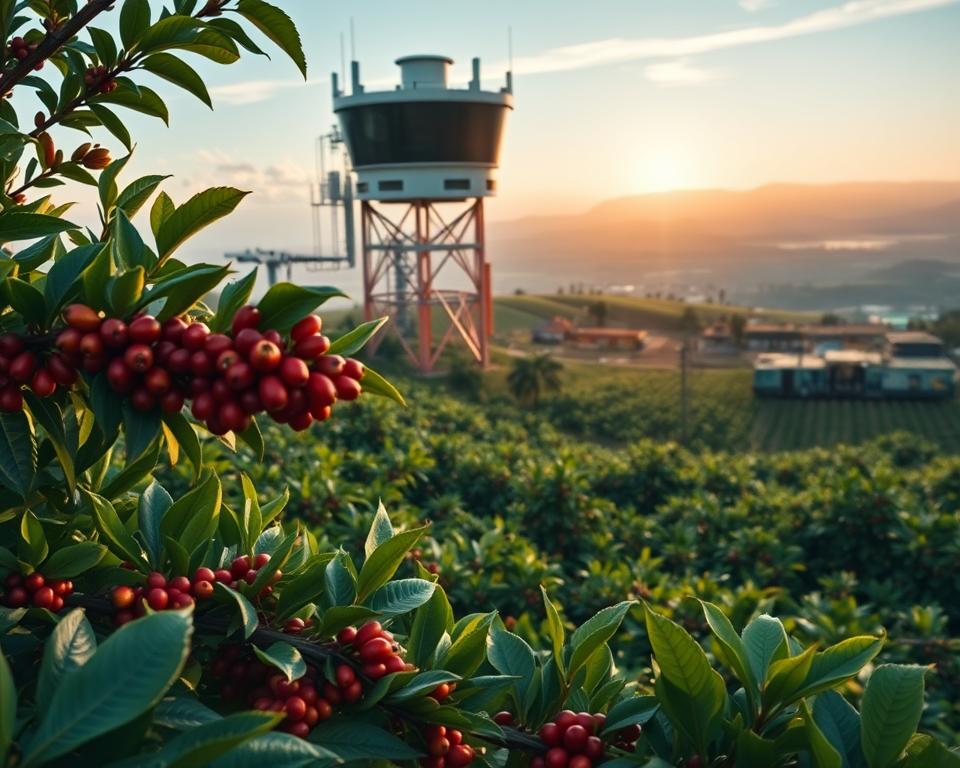
Guatemala’s coffee is famous for its high-quality Arabica beans. The country’s unique geography and climate make it perfect for growing coffee.
The use of artificial intelligence in harvest forecasting is changing how farmers predict coffee yields. It helps them make better decisions and reduce waste.
By using smart agriculture methods, farmers in Guatemala can pick the best time to harvest. This leads to more coffee and better quality.
The Current State of Coffee Harvesting in Guatemala
Guatemala is famous for its top-notch Arabica coffee beans. But, coffee farmers there struggle a lot during harvest time. They use old ways to pick coffee, like looking at the beans and collecting data by hand.
These traditional methods take a lot of time and can be wrong. This makes it hard for farmers to guess how much coffee they’ll get. It also affects how well they can plan and manage their work.
Using new tech, like AI for predicting harvests, could help a lot. It could make farming more efficient, cut costs, and improve the taste of the coffee.
Understanding Artificial Intelligence Coffee Harvest Applications
Guatemalan coffee farmers are using AI to better predict and manage their harvests. Artificial intelligence helps them forecast coffee harvests more accurately. This way, farmers can make smarter choices about their crops.
Weather Pattern Analysis
AI is key in predicting weather’s impact on coffee crops. It looks at past weather and current conditions. This helps farmers know how weather might affect their coffee.
AI also models coffee crop development. It considers soil quality, temperature, and moisture levels. This helps farmers spot problems early and fix them, boosting harvest efficiency.
By combining weather analysis and crop modeling, AI gives farmers a clearer view of their crops. This helps them plan better and increase their harvests.
Essential Tools and Technologies for AI-Powered Forecasting
To use AI for better coffee farming, farmers need the latest tech. They must use a variety of tools and technologies to optimize their coffee yield.
Weather Stations and Soil Sensors
Weather stations and soil sensors are key for getting real-time data. They help farmers understand temperature, humidity, and soil moisture. This info is crucial for keeping crops healthy and boosting yield.
Mobile Devices and Data Collection Tools
Mobile devices and data tools help farmers track crop health and pests. This data is essential for AI to predict problems and improve coffee production.
Small coffee farmers can find free or low-cost tools. Open-source weather stations and mobile apps are available. These make AI forecasting more affordable for those with tight budgets.
Enterprise-Level Systems
Bigger coffee farms and cooperatives need advanced systems. These systems combine data from various sources and offer detailed analytics. They often have AI models made just for their operations, helping with precision farming.
By using these tools and technologies, coffee farmers in Guatemala can use AI to increase their yields. They can also improve the quality of their coffee.
Step 1: Assessing Your Farm’s AI Readiness
Before starting with AI for harvest efficiency, check if your farm is ready for automated coffee harvesting. This first step is about looking at a few important things. These will show how well your farm can use and benefit from AI.
First, think about your farm’s data. AI needs data from the past and now to make good choices. Check if you have enough data on past harvests, weather, soil, and more.
Then, look at your farm’s setup. This means checking your equipment and if you have good internet. AI needs a strong setup to work well.
Lastly, think about your farm’s tech skills. Using AI needs some tech knowledge, either from your team or partners. See if you have the right skills or if you need to get some training or hire experts.
By looking at these points, you can see if your farm is ready for AI. You’ll also know what to work on before using automated coffee harvesting solutions.
Step 2: Collecting and Organizing Historical Harvest Data
AI-driven harvest forecasting needs historical harvest data. This step is key for training AI models. It helps predict future coffee yields and improve production.
Coffee farmers in Guatemala must track important metrics. These insights help understand what affects coffee production.
Essential Metrics to Track
- Yield: Record the quantity of coffee beans harvested per season to understand production trends.
- Weather Patterns: Document temperature, rainfall, and other environmental factors that impact coffee production.
- Soil Conditions: Monitor soil health, including nutrient levels and moisture content, to determine its effect on coffee yields.
- Pest and Disease Management: Track the incidence of pests and diseases, as well as the effectiveness of management strategies.
After identifying key metrics, organizing data is crucial. There are several ways to do this:
Data Organization Systems
Digital tools like spreadsheets or specialized software can help. They make data easy to access and analyze. This aids in making informed decisions.
By organizing historical harvest data, farmers can use advanced technology. This includes machine learning. It helps optimize coffee production and improve forecasting.
Step 3: Implementing Basic Sensor Networks
Coffee farmers in Guatemala can boost AI forecasting by setting up basic sensor networks. These networks help gather real-time data on environmental factors that impact coffee growth.
First, farmers need to pick the right sensors. Weather stations and soil sensors are key for tracking temperature, humidity, and soil moisture. This info is crucial for precision farming, helping farmers decide on irrigation, fertilizers, and pest control.
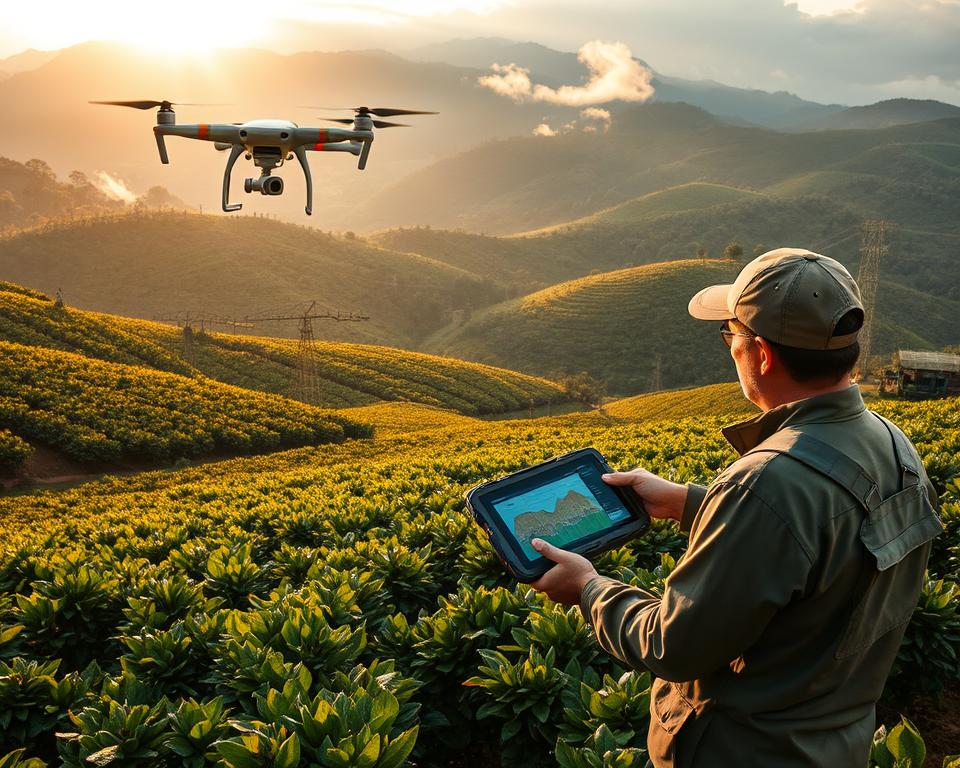
When setting up sensors, think about your farm’s layout. Place sensors in key spots to get accurate data. Keeping sensors in good working order is also vital to avoid losing data.
Setting up basic sensor networks is a big step towards using advanced AI tools like robotic coffee picking. It will not only better forecast harvests but also increase farm productivity.
- Identify the types of sensors needed (weather stations, soil sensors)
- Install sensors in representative areas of the farm
- Regularly maintain sensors to prevent data loss
By following these steps, coffee farmers in Guatemala can set up effective sensor networks. This will help improve their AI forecasting abilities.
Step 4: Choosing and Deploying AI Forecasting Models
To get the most out of AI in coffee harvesting, farmers need to pick and use the right forecasting models. They must think about data quality, model complexity, and how much computing power is needed.
There are many AI forecasting models out there, each with its own good points and downsides. Models like ARIMA, LSTM, and Prophet are often used in farming. Studies have found these models work well for predicting crop yields and improving harvests.
Guatemalan coffee farmers should look at a few things when picking an AI forecasting model:
- Data quality and availability
- Model complexity and how easy it is to understand
- How much computing power it needs
- If it can grow and change with needs
| Model | Strengths | Weaknesses |
|---|---|---|
| ARIMA | Good for forecasting over time, works well with missing data | Not great for complex, non-linear relationships |
| LSTM | Handles complex, non-linear relationships well | Needs lots of data to train, uses a lot of computing power |
| Prophet | Deals with multiple seasonality, strong against outliers | Can be sensitive to how it’s set up |
By carefully looking at these points and choosing the best AI forecasting model, Guatemalan coffee farmers can really boost their harvests. Using these models is a key step towards AI-driven harvest efficiency and better coffee production.
Step 5: Training Staff on AI-Driven Decision Making
AI forecasting in Guatemala’s coffee farms needs staff trained in AI. The coffee industry is moving towards smart agriculture. This means workers must understand and use data-driven insights.
Training should cover data analysis and AI forecasts. Staff should learn to make decisions based on these predictions. They also need to know how to use AI systems on the farm.
- Begin with basic AI knowledge and its use in farming.
- Use real examples from the farm to show AI’s benefits and challenges.
- Give hands-on training with the AI tools used on the farm.
Investing in staff training is key for Guatemalan coffee farmers. It ensures AI adoption improves yield and farm management. This drives digital transformation in coffee yield optimization.
Advanced Applications: Machine Learning Coffee Production Optimization
Guatemala’s coffee industry is on the verge of a big change. This is thanks to machine learning. It’s making farming better by improving yields, spotting diseases early, and checking coffee quality.
One big win is in predicting coffee yields. Machine learning looks at past weather, soil, and farm practices. It then guesses how much coffee will grow. This helps farmers plan better and use resources wisely.
AI tools are also helping find diseases early. They use pictures and sensors to spot problems. This means less chemical use and healthier crops.
Machine learning is also improving coffee quality. It looks at every step of coffee making. This way, it can predict the quality of the coffee. It helps farmers know where to improve and make sure their coffee is top-notch.
Using machine learning in coffee farming makes things more efficient and green. It cuts down on waste and helps the environment.
Overcoming Common Implementation Challenges in Guatemala
Introducing advanced technology for collecting coffee beans in Guatemala comes with hurdles. Coffee farmers struggle with limited infrastructure, a lack of technical skills, and high costs at the start.
To tackle these issues, farmers should first check their current setup. They need to see where they can spend money to improve. This might mean better internet or new tools for data.
It’s also key to train farm staff on new tech. This boosts their skills and makes sure the tech works well.
| Challenge | Solution |
|---|---|
| Limited Infrastructure | Invest in necessary hardware and internet upgrades |
| Lack of Technical Expertise | Provide staff training on AI-powered solutions |
| High Initial Costs | Explore financing options and government subsidies |
By facing these challenges head-on and finding ways to solve them, Guatemalan coffee farmers can use AI. This will make their work more productive and sustainable.
Case Studies: Successful AI Harvest Forecasting in Guatemala
Guatemala has seen the power of AI in coffee harvest forecasting. Farms have used artificial intelligence to boost their yields and work more efficiently.
Finca El Injerto is a great example. They used AI to plan their harvest better. This led to a 15% increase in coffee and a 10% cut in labor costs.
| Farm Name | Pre-AI Yield (kg/ha) | Post-AI Yield (kg/ha) | Change in Labor Costs (%) |
|---|---|---|---|
| Finca El Injerto | 2,500 | 2,875 | -10% |
| Finca La Bella | 2,200 | 2,530 | -8% |
| Finca Las Nubes | 2,800 | 3,220 | -12% |
These stories show how AI helps in the coffee industry in Guatemala. By using AI, farms can make better choices. This leads to more coffee and lower costs.
Conclusion: The Future of AI in Guatemala’s Coffee Industry
Guatemala’s coffee industry is on the verge of a big change. This change comes from using AI to make harvesting more efficient. AI-powered forecasting models are changing how farmers optimize their yields.
The future looks bright for AI in Guatemala’s coffee industry. With more investment in these technologies, farmers will see better yields and quality. New innovations will keep making coffee production more efficient and sustainable.
By using AI, Guatemala’s coffee farmers can stay ahead in a fast-changing market. As more farmers adopt these technologies, the future of coffee in Guatemala looks even brighter.