
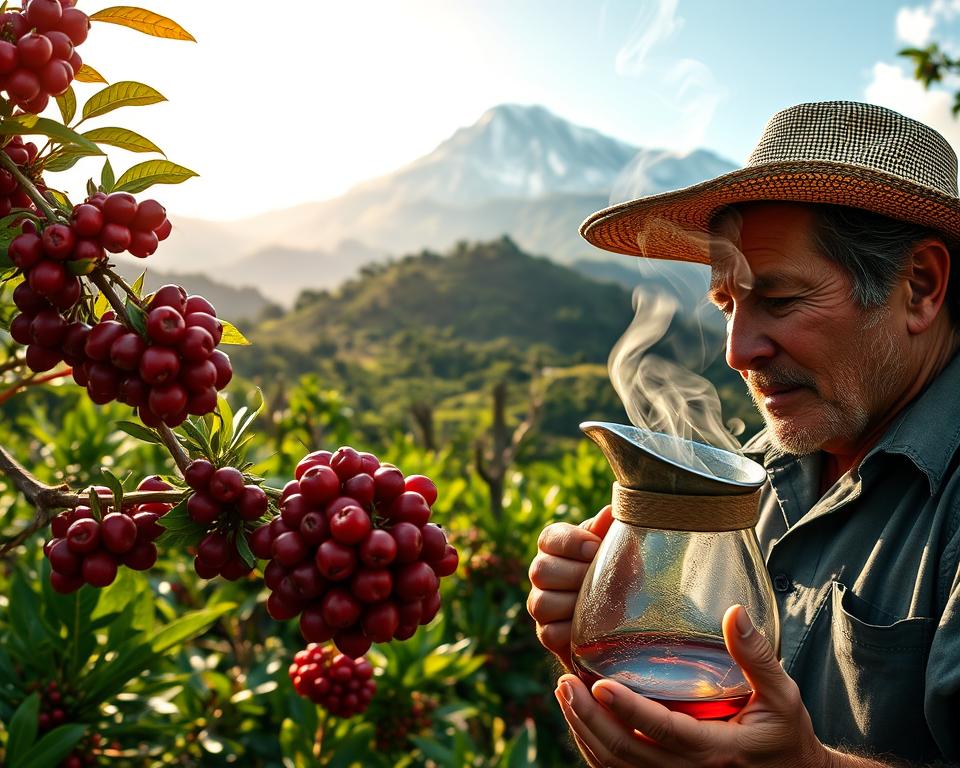
Guatemala’s volcanic climate is key to its coffee’s flavor. The rich soil and unique microclimates add depth and complexity to the coffee beans.
The volcanic regions of Guatemala are perfect for growing coffee. The high altitudes and rich soil make the beans taste better. This is why Guatemalan coffee is known for its balanced acidity and rich flavors.
This introduction to Guatemalan coffee explains why it’s so popular. It’s a favorite among coffee lovers around the world.
The Volcanic Landscape of Guatemala’s Coffee Terrain
Guatemala’s volcanic regions are famous for their high-quality coffee. This is thanks to the rich volcanic soil and the perfect climate. The country’s landscape is filled with volcanoes, making it perfect for growing coffee.
The volcanic soil in Guatemala is full of minerals. This adds to the coffee’s unique taste. The slow maturation of the coffee beans in this soil also boosts their flavor.
Guatemala’s coffee is grown in different areas, each with its own special traits. Antigua, Huehuetenango, and Atitlán are known for their coffee. These places have volcanic terrain, which helps the coffee grow well.
The mix of rich soil, enough rain, and sunlight in these areas makes the coffee taste great. This is why Guatemalan coffee, especially Specialty Coffee Guatemala, is loved by coffee lovers.
The special conditions in Guatemala’s volcanic regions make it perfect for Volcanic Soil Coffee. This coffee is known for its unique taste and smell. Guatemala’s focus on quality and sustainability also helps its coffee stand out worldwide.
Understanding Volcanic Coffee in Guatemala
Guatemala’s volcanic regions are home to some of the world’s most unique coffee. The mix of volcanic soil, climate, and high altitude creates a complex flavor. This is why Organic Guatemalan Coffee is so sought after.
Most coffee beans in these areas are Arabica, known for their quality and flavor. The volcanic soil adds a special taste to the beans. Organic farming practices also play a big role in the coffee’s quality.
Guatemalan coffee goes through strict standards to ensure quality and authenticity. Coffee that meets these standards is labeled as the Best Coffee from Guatemala. This shows its superior taste and production methods.
Several factors make Guatemalan volcanic coffee stand out:
- Rich volcanic soil full of minerals
- High altitudes that slow down coffee cherry ripening
- A climate with wet and dry seasons for a focused harvest
These elements, along with careful farming and processing, make the coffee flavorful and of high quality. Knowing these factors helps us appreciate the value and uniqueness of Guatemalan volcanic coffee.
The Scientific Connection Between Volcanoes and Coffee Flavor
Coffee from Guatemala’s volcanic areas has a special taste. This is because of the soil’s mineral mix. Minerals like potassium, magnesium, and calcium help coffee plants grow well.
The soil in these areas is very porous. It holds water well, letting coffee roots grow deep. This slow ripening of coffee cherries adds to the flavor.
Studies show that volcanic soil gives coffee its unique taste. It can taste like chocolate, caramel, and fruit. Potassium makes it sweeter, while magnesium adds brightness and acidity.
Guatemala’s Authentic Volcanic Coffee is a great example. The rich soil, enough rain, and mild weather make it perfect for coffee. This creates a unique flavor.
Learning about volcanoes and coffee flavor makes us appreciate Guatemalan coffee more. It also shows why we must protect these special volcanic areas.
How to Identify Guatemala’s Volcanic Coffee Regions
The unique terroir of Guatemala’s volcanic regions gives its coffee a special character. Knowing how to spot these premium coffees is important.
Guatemalan coffee is famous for its quality and flavor variety. The volcanic regions stand out, thanks to their rich soil and unique microclimates.
To find Guatemalan Volcanic Coffee, look for specific labels and certifications. The “Denominación de Origen” (DO) is a well-known certification. It shows the coffee comes from a specific area known for its unique terroir.
The “Consejo Regulador de la Denominación de Origen” (CRDO) is also key. It’s the group that checks if the coffee meets quality and origin standards. Coffees with this label are of high quality and from the right place.
| Certification | Description | Significance |
|---|---|---|
| Denominación de Origen (DO) | Protected designation of origin | Ensures coffee is produced in a specific geographical area |
| Consejo Regulador de la Denominación de Origen (CRDO) | Governing body overseeing DO certification | Guarantees quality and origin standards |
| Fair Trade Certification | Ensures fair prices and practices for farmers | Promotes sustainability and equity |
Also, look for geographical indicators on the label. These can include the region or department where the coffee was grown. Guatemala’s main coffee areas are Antigua, Huehuetenango, and Atitlán. Coffees from these places have unique flavors.
By checking these labels, certifications, and geographical markers, you can find and buy Premium Guatemalan Coffee from volcanic regions with confidence.
Recognizing the Flavor Signatures of Guatemalan Volcanic Coffee
To truly appreciate Guatemalan volcanic coffee, one must understand its unique flavor characteristics. Guatemalan coffee is known for its high quality. It’s grown in regions with rich volcanic soil, which gives it a distinct taste.
The process of cupping is essential for evaluating the flavor profile of coffee. It involves a systematic approach to assess the coffee’s aroma, flavor, and finish.
Preparation Steps for Cupping
To cup coffee effectively, follow these steps:
- Use freshly roasted and ground coffee.
- Use the correct water temperature (around 200°F).
- Use the right coffee-to-water ratio.
Evaluating Aroma, Flavor, and Finish
When cupping, pay attention to the coffee’s aroma, flavor, and finish. The aroma is the scent of the coffee, the flavor is the taste, and the finish is the lingering taste after swallowing.
| Characteristic | Description |
|---|---|
| Aroma | Floral or fruity notes |
| Flavor | Balanced acidity and sweetness |
| Finish | Long-lasting with hints of chocolate |
By understanding these characteristics, coffee enthusiasts can better appreciate the unique qualities of Guatemalan volcanic coffee. Specialty coffee from Guatemala is known for its complex flavor profile. This makes it a favorite among coffee connoisseurs.
How to Purchase Authentic Guatemalan Volcanic Coffee
To truly enjoy Guatemalan volcanic coffee, you need to know how to buy it right. The first step is understanding what makes it special.
When you’re looking to buy Guatemalan volcanic coffee, check for certain labels. Look for “Denominación de Origen” or “Café de Antigua” to know it’s genuine.
It’s also important to buy from trusted places. Visit specialty coffee websites or local roasters. They get their beans straight from Guatemalan farms.
Make sure to check where the coffee comes from. Look for details about the farm or cooperative on the packaging. A clear supply chain means it’s authentic.
| Characteristics | Authentic Guatemalan Volcanic Coffee | Non-Authentic Coffee |
|---|---|---|
| Labeling | Certifications like “Denominación de Origen” | Lacking specific origin labels |
| Source | Directly from Guatemalan farms or reputable roasters | Unknown or unverified sources |
| Origin Information | Detailed information about the farm or cooperative | Limited or no information about origin |
By paying attention to these details, you can make sure you’re getting real Guatemalan volcanic coffee. This way, you’ll get to enjoy its rich and unique flavors.
Brewing Methods to Maximize Volcanic Coffee Characteristics
The rich flavor of volcanic coffee from Guatemala can be maximized by using specific brewing methods. Guatemalan coffee beans grown in volcanic soil have a distinct taste. The right brewing techniques can enhance this taste.
To brew Guatemalan Coffee Beans well, you’ll need some equipment. You’ll need a high-quality coffee grinder, a pour-over or French press, and filtered water. The quality of your equipment greatly affects the coffee’s flavor.
- A burr grinder to grind the beans just before brewing
- A scale to measure coffee and water accurately
- Filtered water to prevent any impurities in the water from affecting the taste
Step-by-Step Brewing Guide
Here’s a simple guide to brewing Volcanic Soil Coffee:
- Measure out your coffee. Use 1 gram of coffee for every 15 grams of water.
- Grind your coffee beans to a medium-coarse grind.
- Heat your water to around 200°F (93°C).
- Pour the heated water over your grounds in a circular motion, starting from the center.
- Allow the coffee to bloom for about 45 seconds before continuing to pour the rest of your water.
By following these steps and using the right equipment, you can unlock the full flavor of your Guatemalan Coffee Beans. You’ll get a rich, complex cup that highlights the unique flavors from the volcanic soil.
The Harvest and Processing Methods of Volcanic Coffee
Coffee in Guatemala’s volcanic areas is made with great care. From picking ripe cherries to processing, every step matters. This attention to detail makes the coffee special.
Guatemala’s volcanic regions use traditional hand-picking. This method ensures only the best cherries are picked. The cherries are then processed in ways like washed, natural, or honey, each adding unique flavors.
The processing method greatly affects the coffee’s taste. Washed processing gives a clean, bright taste. Natural processing brings out fruitier, more complex flavors. The choice depends on the farm’s goals and resources.
After processing, the coffee is dried to 11% moisture. This can happen on patios, raised beds, or with dryers. Drying is key for flavor and quality. Once dry, the coffee is hulled, sorted, and graded before export.
The careful steps in Guatemala’s volcanic regions make its coffee stand out. Knowing these processes helps us value the effort that goes into Organic Guatemalan Coffee and Guatemala Volcano Coffee.
Sustainable Practices in Guatemala’s Volcanic Coffee Farms
In Guatemala’s volcanic highlands, coffee farms are at the forefront of sustainable agriculture. They mix old methods with new eco-friendly ones. This not only improves the quality of their Premium Guatemalan Coffee but also helps the environment and society.
The volcanic regions of Guatemala are perfect for growing coffee. The soil is rich, and the climate is unique. Farms here use sustainable practices like organic farming, water saving, and protecting biodiversity. These efforts keep the environment balanced and lower the carbon footprint of coffee making.
Many coffee farms in Guatemala have Fairtrade and Rainforest Alliance certifications. These show their dedication to sustainable farming, fair labor, and community support. Specialty Coffee Guatemala is famous for its quality, and these certifications boost its global reputation.
| Sustainable Practice | Description | Benefit |
|---|---|---|
| Organic Farming | Avoidance of synthetic fertilizers and pesticides | Soil conservation and reduced chemical pollution |
| Water Conservation | Efficient irrigation systems | Reduced water waste and preserved water resources |
| Biodiversity Protection | Preservation of native flora and fauna | Enhanced ecosystem services and biodiversity |
The move towards sustainability in Guatemala’s coffee farms is good for the environment and local people. As more people care about the impact of their purchases, demand for Specialty Coffee Guatemala is expected to rise.
Conclusion: Appreciating the Volcanic Journey in Your Cup
The journey of Guatemalan Volcanic Coffee from volcanic regions to your cup is fascinating. It’s a tale of unique flavors and qualities shaped by the country’s volcanic landscape. The volcanic soil, climate, and terrain all play a part in the distinct taste profiles of this exceptional coffee.
Every sip of Guatemalan Volcanic Coffee tells a story. It shows the country’s coffee production expertise and the dedication of its farmers. By understanding how volcanoes affect coffee flavor, we can appreciate the complexity and depth of these coffees.
When you enjoy your cup of Volcanic Coffee in Guatemala, think about the sustainable practices and careful processing. Whether you’re a coffee lover or new to Guatemalan coffee, every cup is a chance to appreciate the craftsmanship and passion behind it.