
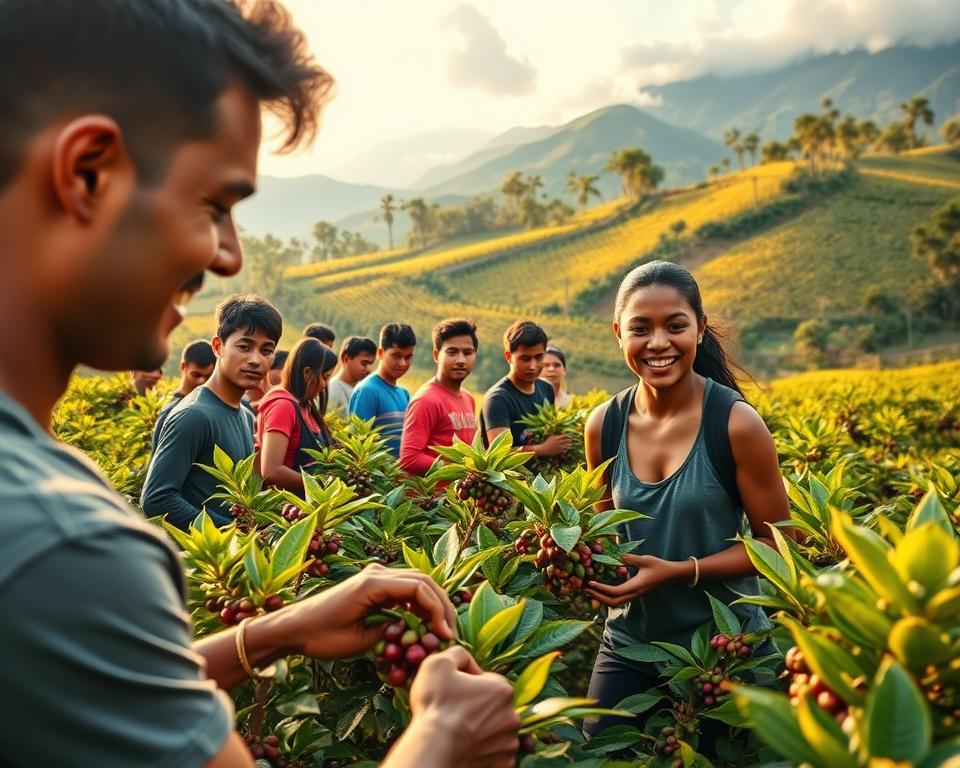
The coffee industry is changing fast, thanks to new farmers in Guatemala.
Young farmers are using new methods and caring for the environment. They’re changing how coffee is made and sold.
Programs like Julius Meinl’s Generations Programme help young people in coffee. They learn about climate change, keeping biodiversity, and using digital tools.
This makes coffee better and helps small farmers, especially young people and women, stay strong financially.
The Changing Landscape of Guatemalan Coffee
Guatemala’s coffee scene is evolving due to environmental and economic changes. Coffee has long been a key part of Guatemala’s economy. Many small farmers count on coffee as their main income.
But, the industry is facing big challenges. Climate change, soil loss, and price swings are major issues. To tackle these, Guatemalan coffee farmers are turning to sustainable methods.
These green farming practices reduce harm to the environment and help farmers. The move to sustainability is also driven by consumer demand. This allows Guatemalan coffee to stand out and possibly earn more.
In summary, Guatemalan coffee is moving towards sustainable practices. This shift is vital for the industry’s future and the farmers who rely on it.
Who Are the Next Generation Coffee Producers?
Young farmers are changing Guatemalan coffee. They are passionate and use new farming methods. This makes coffee better and more sustainable.
Juan Pérez, 25, from Antigua, Guatemala, is a great example. He uses regenerative farming. This has boosted his yield by 20% and improved soil health.
The new coffee farmers are open to new ideas. They also like to work together. This helps them share knowledge and resources.
| Farmer | Age | Innovation |
|---|---|---|
| Juan Pérez | 25 | Regenerative Agriculture |
| Ana Gómez | 28 | Precision Farming |
| Carlos Ramírez | 30 | Organic Fertilizers |
These young farmers are making a big difference. They are not just improving their farms. They are helping Guatemalan coffee grow and stay sustainable. Their work shows the power of modern farming in changing the coffee industry.
Implementing Sustainable Farming Practices
Guatemalan coffee producers are leading the way in sustainable farming. They focus on quality coffee and protecting the environment. This change is driven by a need to preserve nature, keep farms running, and meet eco-friendly demand.
They use many techniques, like cutting down on chemicals and natural pest control. These methods help keep biodiversity and improve coffee quality.
Reducing chemical use is a big part of their strategy. They use organic fertilizers and better soil care. This makes the soil healthier and reduces environmental harm.
Natural Pest Management Techniques
Natural pest control is key in sustainable coffee farming. They use beneficial insects, biological controls, and shade-grown coffee. This way, they manage pests without harming the environment or their crops.
Guatemalan coffee producers are making better coffee and helping the planet. As people care more about the environment, demand for eco-friendly coffee will rise. This opens up big opportunities for Guatemalan coffee in the global market.
Adopting Technology in Coffee Production
Technological innovation is changing coffee production in Guatemala. Modern technologies are greatly influencing the future of coffee farming.
Guatemalan coffee farmers are using new tech like precision agriculture. This tech uses GPS and remote sensing to better manage crops. It helps farmers spot areas needing extra care, saving water and fertilizers.
Drones are also being used to check on crop health and find pests early. This lets farmers act fast, preventing big damage and cutting down on chemical use.
Also, digital platforms are helping farmers connect with buyers. This makes trade fairer and more open. These platforms give data on market trends, helping farmers decide on production and prices.
Mobile apps are supporting farmers too. These apps give tips on growing coffee, share weather forecasts, and help farmers talk to each other. They strengthen community bonds and share knowledge.
These technologies are making coffee production better and greener. They help reduce farming’s environmental impact. As the coffee world keeps changing, tech will play a bigger role in coffee farming’s future.
Building Direct Trade Relationships
The new wave of Guatemalan coffee producers is making their coffee better and more profitable. They connect directly with buyers, cutting out middlemen. This way, farmers get a fairer price for their coffee.
Direct trade has many benefits. Farmers make more money and can focus on quality. When they earn a fair price, they invest in better farming and processing. This leads to coffee that sells for more.
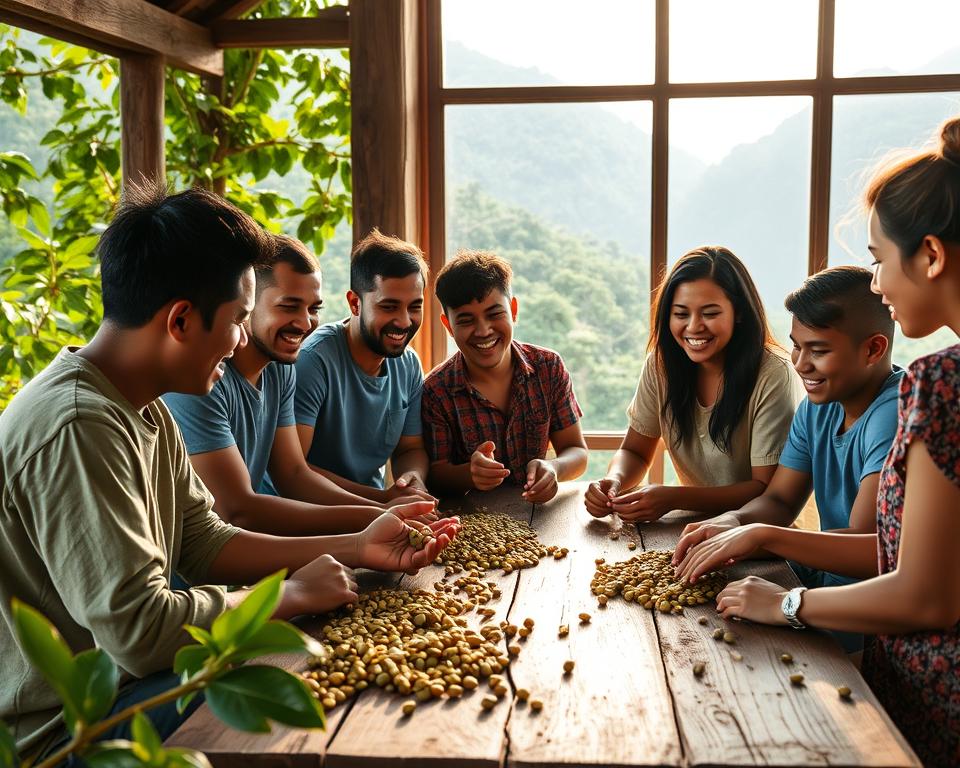
The next generation uses tech and social media to build these relationships. They show off their coffee, share their stories, and find buyers. This not only helps farmers financially but also builds a community in the coffee world.
Guatemala’s coffee producers are setting a new standard. This approach benefits farmers and coffee lovers alike. As this trend grows, it will positively change the coffee industry.
Revolutionizing Processing Methods
Innovative processing methods are changing Guatemalan coffee quality. The processing stage is key in coffee making, affecting flavor and aroma. Guatemalan coffee makers are trying new techniques to improve their coffee.
Some new methods include:
- Natural processing, where coffee cherries are dried whole, adding fruitiness.
- Honey processing, leaving some mucilage on the coffee, making it sweeter.
- Washed processing, removing skin and pulp for a cleaner taste.
These methods boost Guatemalan coffee quality and let producers stand out. The industry’s creativity is creating unique flavors coffee lovers seek.
These new methods also aim to be more efficient and eco-friendly. For example, anaerobic processing uses less water and creates special flavors.
As the industry grows, we’ll see more new methods from Guatemalan coffee makers. Their focus on quality, sustainability, and uniqueness promises exciting changes.
Forming Community Initiatives and Knowledge Networks
Community and knowledge sharing are key in Guatemala’s coffee world. The next generation of farmers sees the power of working together.
Young farmers are joining cooperatives and networks. These groups offer training, resources, and ways to sell their coffee. This helps new farmers learn the best ways to grow and sell coffee.
These community efforts bring many benefits. Farmers share tips on growing coffee sustainably and how to market it well. They also build a strong sense of community, which is important for the coffee industry’s future.
By teaming up, Guatemalan coffee farmers can face challenges like climate change and market changes better. This teamwork not only helps the coffee industry but also improves rural communities.
In summary, starting community projects and knowledge networks is crucial for Guatemala’s coffee. It shows a commitment to working together, being innovative, and sustainable. This sets a solid base for the coffee industry’s future in the region.
Developing Climate Resilience Strategies
Climate change is affecting coffee production in Guatemala. Coffee producers are finding new ways to stay resilient. They are using eco-friendly coffee farming methods. These methods help fight climate change and make the coffee industry more sustainable.
Guatemalan coffee farmers are also using modern farming techniques. These include better irrigation, soil care, and pest control. These methods help them grow more coffee and improve its quality. This way, they reduce harm to the environment while keeping their coffee top-notch.
Some strategies include growing coffee under shade. This protects the plants from harsh weather and supports wildlife. Farmers are also planting more trees and saving water. These actions help keep their farms sustainable for the future.
Guatemalan coffee farmers are working hard to protect their crops. They are making the coffee industry more sustainable and eco-friendly. Their efforts will help ensure a bright future for coffee farming.
Creating Distinctive Brand Identity for Guatemalan Coffee
Guatemalan coffee producers are making a mark by creating unique brand identities. They use technology and new marketing ideas to stand out. This helps Guatemalan coffee find its own niche in the market.
These producers are tech-savvy, using digital tools to show off their coffee’s rich flavors and quality. They use e-commerce and social media to connect with buyers. This way, they share the story of their coffee.
The future of coffee in Guatemala is about more than just quality beans. It’s about building a brand that speaks to people all over the world. They focus on the special terroir of Guatemala and the unique processing methods that give their coffee its taste.
Guatemalan producers also emphasize sustainability and direct trade. This makes their brand not just unique but also responsible and eco-friendly. Such a brand attracts customers who care about quality and the planet.
In summary, making Guatemalan coffee stand out is a complex task. It involves technology, marketing, and a dedication to quality and the environment. With tech-savvy producers leading, the future of Guatemalan coffee looks bright.
Conclusion: The Future of Coffee Through Innovation
The coffee industry in Guatemala is changing fast. It’s thanks to new farming methods and tech. Over 70% of farmers are now growing crops that can handle the weather better.
These new ways of farming can make more coffee and hurt the environment less. Using green energy can cut down on pollution by 20-50%. Also, reducing waste can cut it by up to 60%. For more on this, check out Farmonaut’s blog on coffee supply chain.
Guatemalan coffee’s future is looking good. The industry will keep growing and doing well. Innovation and caring for the planet will be key to its success.