
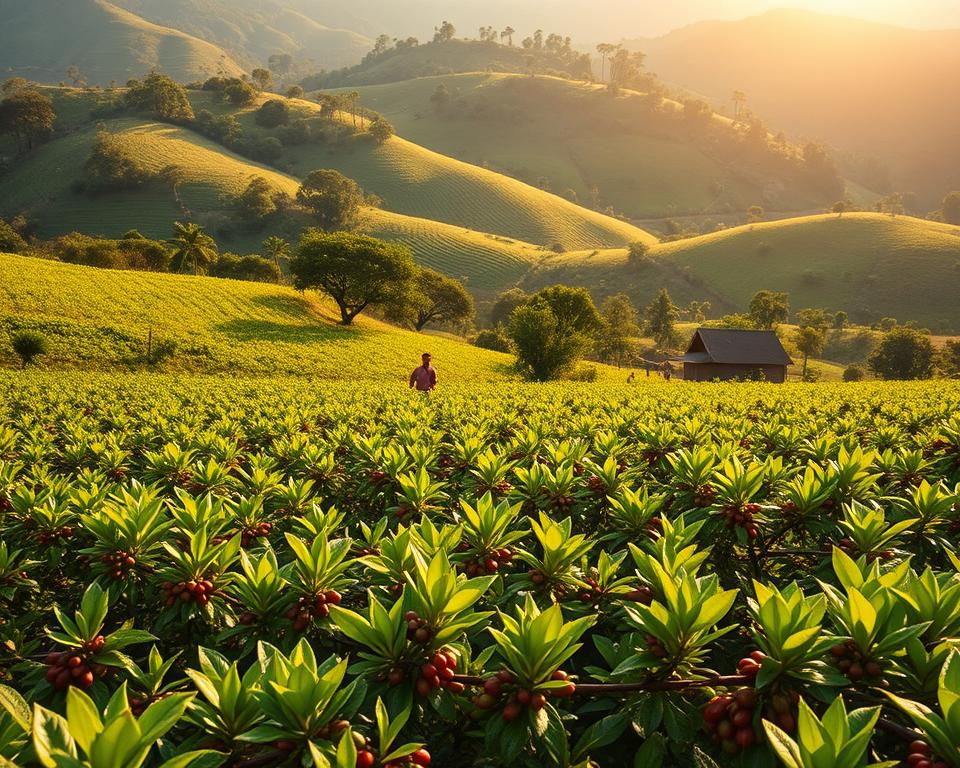
Guatemala’s coffee industry is facing big ecological problems, like deforestation and water pollution. As more people want coffee, it’s key to use sustainable methods.
Coffee farmers in Guatemala are finding new ways to be kinder to the planet. They’re working together to use eco-friendly methods. This includes growing coffee under shade and using organic farming.
By choosing sustainable coffee, Guatemala’s coffee industry can help the environment. It also helps local communities. This way, the ecosystem gets better, and farmers and their families live better lives.
The Current State of Guatemala’s Coffee Industry
Guatemala is known for its rich coffee history. It’s a big part of the country’s economy. It helps thousands of farmers and rural communities make a living.
The industry has big challenges. Climate change, soil problems, and water issues affect coffee quality and yield. But, many farmers are starting to use sustainable methods.
| Region | Coffee Production (tons) | Sustainability Practices |
|---|---|---|
| Antigua | 10,000 | Organic farming, shade-grown coffee |
| Huehuetenango | 8,000 | Agroforestry, water conservation |
| Atitlán | 7,000 | Eco-friendly processing, biodiversity conservation |
Guatemala’s coffee industry is going green. This change helps improve coffee quality and farmers’ lives. It’s a step towards a sustainable future.
Climate Change Impact on Coffee Production
Rising temperatures are changing how coffee is made in Guatemala. The warmer weather and changes in rain affect both the amount and quality of coffee beans. This makes it harder for farmers to grow coffee because of more pests and diseases.
Coffee in Guatemala is very sensitive to temperature changes. As it gets warmer, coffee grows best at higher places. This means farmers need to find new ways to grow coffee that are good for the environment.
Altitude Shifts and Adaptation Needs
Coffee farmers in Guatemala are moving their farms to higher places. This is a big challenge because it requires new tools and might mean losing land. Farmers also need to use methods that are good for the planet and help their farms last long.
Using methods that make coffee farms more resilient is key. Practices like agroforestry help keep the environment healthy and reduce the carbon footprint. By doing this, Guatemala’s coffee industry can better face the challenges of climate change.
Soil Degradation and Water Management Issues
Soil degradation and water management are big problems for Guatemala’s coffee industry. Soil damage from farming can cause erosion and lower fertility. This hurts coffee yields.
Water is also key for coffee, needing a lot to grow. Bad water use can lead to shortages. This affects coffee, local people, and nature.
Long-term Productivity Concerns
The health of Guatemala’s coffee farms depends on soil and water. Practices like shade-grown and organic farming help. They fight soil damage and save water.
| Practice | Impact on Soil Health | Water Management Impact |
|---|---|---|
| Shade-Grown Coffee | Reduces soil erosion, maintains soil organic matter | Conserves water through reduced evapotranspiration |
| Organic Farming | Enhances soil fertility, promotes soil biota | Improves soil water retention, reduces chemical runoff |
Using eco-friendly coffee methods can cut down on carbon emissions. This helps Guatemala’s coffee industry stay green for the future.
Deforestation and Biodiversity Loss
Deforestation and biodiversity loss are big threats to Guatemala’s coffee industry. The growth of coffee farms has cleared forests. This has harmed many species’ homes and reduced ecosystem services.
Coffee farming is closely tied to the health of the ecosystems around it. Forests offer shade, improve soil, and support biodiversity. These are key for growing coffee sustainably.
Ecosystem Services for Coffee Production
Services like pollination, pest control, and soil conservation are crucial for coffee. Diverse ecosystems help with pollinators and natural pest fighters. This cuts down on the need for harmful chemicals.
| Ecosystem Service | Benefit to Coffee Production |
|---|---|
| Pollination | Increased coffee yields due to diverse pollinator populations |
| Pest Control | Reduced pest pressure through natural predators and parasites |
| Soil Conservation | Improved soil health and reduced erosion |
Using sustainable coffee practices and supporting green coffee initiatives can lessen deforestation and biodiversity loss. Coffee farmers can help by adopting agroforestry and saving natural habitats. This makes the coffee industry more sustainable.
Environmental Challenges Coffee Solutions: A Community Approach
Community-led efforts are key to solving environmental issues in Guatemala’s coffee sector. By involving local communities, coffee makers can create solutions that fit their needs.
One important strategy is participatory planning. It brings farmers, local officials, and environmental experts together. They work on making coffee production more sustainable.
Participatory Planning Techniques
These techniques help communities spot and tackle environmental problems. They also develop and apply solutions that work for them. Some methods include:
- Community mapping to find high conservation areas
- Participatory rural appraisal to understand local needs
- Collaborative planning for sustainable coffee practices
The table below shows how community efforts have made a difference. It compares environmental conditions before and after using these methods.
| Environmental Indicator | Pre-Participatory Planning | Post-Participatory Planning |
|---|---|---|
| Soil Erosion | High | Reduced by 30% |
| Biodiversity Loss | Significant | Mitigated by 25% |
| Water Quality | Poor | Improved by 40% |
By focusing on community-driven solutions, Guatemala’s coffee industry can look towards a greener future. This approach not only protects the environment but also boosts the lives of coffee farmers.
Implementing Sustainable Coffee Practices Through Agroforestry
Agroforestry is becoming key in sustainable coffee farming in Guatemala. It brings many benefits to the environment and local communities. By adding trees to coffee farms, agroforestry boosts ecological interactions and makes coffee production more sustainable.
Agroforestry is great for biodiversity. By growing different tree species with coffee, farmers create a diverse and strong ecosystem. This supports local wildlife and makes the environment healthier.
Timing Considerations for Minimal Yield Impact
When starting agroforestry, timing is everything to avoid hurting coffee yields. Farmers should add trees during off-peak seasons or when coffee plants are not stressed. This careful timing helps keep productivity high during the transition.
Productivity Expectations During Transition
Switching to agroforestry might lower coffee yields at first. But, as the ecosystem adjusts, yields will increase. Agroforestry systems become more productive and resilient over time, benefiting both the environment and farmers’ incomes.
| Aspect | Traditional Coffee Farming | Agroforestry Practices |
|---|---|---|
| Biodiversity | Limited to coffee plants, potentially reducing local biodiversity | Promotes diverse ecosystems with various tree species and wildlife |
| Soil Health | May lead to soil degradation due to intensive farming practices | Enhances soil health through tree root systems and leaf litter |
| Climate Resilience | Vulnerable to climate change impacts like rising temperatures and changing rainfall patterns | More resilient to climate change due to diverse ecosystems and improved soil health |
For more info on sustainable coffee farming, check out this link. It shows how the industry is working towards a greener future.
Water Conservation and Protection Strategies
Sustainable coffee production in Guatemala depends on good water conservation and protection. Water is key in coffee making, and saving it is vital for the industry’s future.
One way to save water is through community-based monitoring systems. These systems help communities watch over water quality and amount. They spot problems and fix them.
Community-Based Monitoring Systems
Community monitoring gets local people involved in watching over water. It makes water data more accurate. It also makes community members want to help save water.
Creating Effective Riparian Buffer Zones
Creating good riparian buffer zones is also important. These are green areas near water that keep it clean. They stop dirt and nutrients from getting into the water. For more on water and coffee, check out this report on water security.
By using these methods, Guatemala’s coffee can be made more sustainably. This helps the environment and keeps coffee production going strong.
Soil Regeneration Techniques for Eco-Friendly Coffee Production
In Guatemala’s coffee industry, using soil regeneration methods is key for long-term success. Soil health is crucial for coffee quality and yield.
One good way to improve soil is by using cover crops. Cover crops protect the soil, make it better, and add biodiversity.
Selecting Region-Appropriate Cover Crops
Choosing the right cover crops is important. In Guatemala, legumes and grasses work well because they adapt well and help the soil.
- Legumes fix nitrogen, cutting down on synthetic fertilizers.
- Grasses help control erosion and make the soil better.
Maintaining Terraces for Long-term Stability
Terracing is also vital, especially on sloping lands in Guatemala. Keeping terraces in good shape stops soil erosion and keeps the land stable.
By using these techniques, Guatemala’s coffee farmers can make their farms more sustainable. They can also improve biodiversity and help the environment.
Building Climate Resilience in Coffee Communities
Guatemala’s coffee communities are facing big challenges due to climate change. They are finding new ways to stay strong. Rising temperatures and changes in rain patterns are big threats to their coffee crops.
Creating local weather monitoring networks is key. These networks help farmers make smart choices with up-to-date weather info.
Developing Local Weather Monitoring Networks
- Enhance forecasting accuracy
- Provide early warnings for extreme weather events
- Support adaptive farming practices
Another important step is to watch for pests and diseases. Climate change is changing how pests and diseases affect coffee crops.
Implementing Pest and Disease Surveillance
- Monitor pest and disease prevalence
- Develop targeted management strategies
- Reduce the use of chemical pesticides
By using these strategies, Guatemala’s coffee communities can become more resilient. This will help the coffee industry stay strong for the future.
Accessing Green Certification and Reducing Carbon Footprint
Guatemalan coffee farmers are now focusing on green certification to cut down their carbon footprint. This move makes their farming more sustainable. It also opens up new chances in the market.
Developing Efficient Record-Keeping Systems
Keeping accurate records is key for coffee farmers wanting green certification. They need to track their farming methods, water use, and waste. For more on this, check out this report.
| Aspect | Description | Benefit |
|---|---|---|
| Water Management | Implementing efficient irrigation systems | Reduced water waste |
| Waste Reduction | Composting coffee cherry pulp | Reduced landfill waste, nutrient-rich soil |
| Energy Efficiency | Using solar-powered equipment | Lower carbon emissions |
Preparing for Certification Audits
To get ready for audits, farmers must show their practices meet the standards. They need to keep detailed records and use sustainable methods.
By getting green certification and lowering their carbon footprint, Guatemalan coffee farmers help the environment. They also get a competitive edge in the market.
Conclusion: Toward a Sustainable Future for Guatemala’s Coffee
Guatemala’s coffee industry has been key to the country’s economy since 1856. Small farmers, making up about 97 percent of producers, are crucial. They support over 300,000 families, showing the industry’s importance.
However, the industry faces big environmental challenges. Leaf rust has hit nearly 40 percent of coffee land, causing huge losses. This can lead to up to 90 percent of the crop being lost.
To ensure a sustainable future for Guatemala’s coffee, community-driven solutions are key. Practices like agroforestry, water conservation, and soil regeneration are essential. These methods help farmers reduce their environmental impact and adapt to climate change.
By adopting these practices, the coffee industry can grow sustainably. This will not only protect the environment but also ensure the industry’s long-term success.
Guatemala’s coffee sector can overcome environmental challenges and keep growing. Working together, the industry can continue to boost the country’s economy. A sustainable future is possible with environmentally friendly practices and community efforts.