
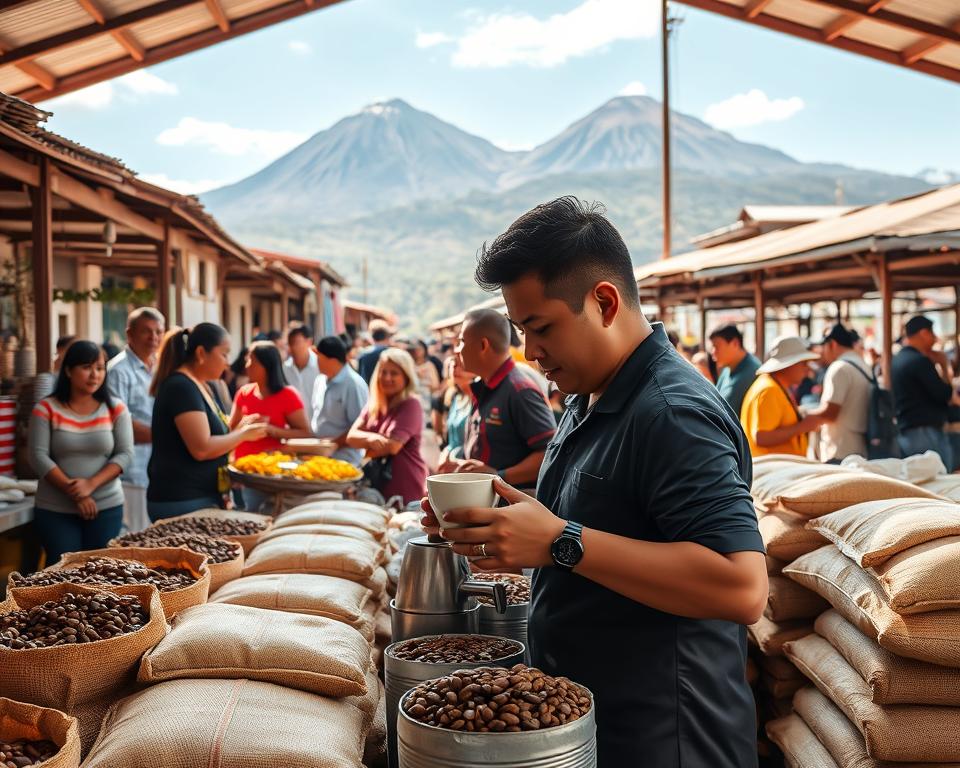
Guatemala’s rich culture is closely tied to its coffee. The country’s geography and climate are perfect for growing coffee. This has greatly influenced its food traditions.
Coffee has become a key part of Guatemalan dishes. You can find it in everything from coffee-glazed meats to coffee-infused sweets. It’s a big part of their food culture.
Coffee has boosted Guatemala’s economy and shaped its food identity. Learning about coffee’s role in Guatemalan cuisine helps us understand the country’s culture and traditions.
The Rich History of Coffee in Guatemala
Coffee came to Guatemala in the 18th century. It has deeply influenced the country’s culture and food traditions. Coffee plantations became a big part of Guatemala’s economy.
Guatemala’s coffee is grown in different areas. Each place has its own weather, making the coffee taste unique. Places like Antigua, Huehuetenango, and Atitlán are famous for their high-quality Arabica coffee.
Coffee is more than just a drink in Guatemala. It’s a big part of the country’s social life and traditions. Coffee brings people together at breakfasts and in coffee ceremonies.
- Coffee is used in many traditional Guatemalan recipes.
- It adds flavor to local dishes, like meats and desserts.
- Coffee shops and cafes are places where people meet, creating a lively food culture.
The history of coffee in Guatemala has shaped the country’s food and culture. It’s a big part of Guatemalan cuisine and culture.
Understanding Guatemala’s Coffee Regions
Guatemala’s diverse geography leads to many coffee regions, each with its own taste. The country’s climate and soil make each coffee unique.
Acatenango Valley Profiles
The Acatenango Valley is famous for its top-notch coffee. It has balanced acidity and rich flavors. This coffee tastes like chocolate and caramel, making it great with sweet pastries.
Cobán and Lake Atitlán are also key coffee areas in Guatemala. Cobán coffee is bright and fruity. Lake Atitlán coffee is balanced with a hint of spice. These flavors pair well with many local dishes.
- Cobán coffee goes well with Guatemalan dishes like jocón and tamales.
- Lake Atitlán coffee is perfect with fresh seafood and local cheeses.
- Acatenango Valley coffee is great with rich desserts like tres leches cake.
Knowing about Guatemala’s coffee regions and their flavors can make food and coffee pairing better. It helps us appreciate the country’s food traditions more.
Distinctive Characteristics of Guatemalan Coffee
Guatemalan coffee is famous for its unique taste. This taste comes from the country’s special land. The different areas of Guatemala add to the coffee’s complex flavor. You can taste chocolate, caramel, and fruit in it.
The coffee’s acidity and body are also special. It has a balanced acidity that’s neither too sharp nor too dull. Its rich body gives a satisfying feel in your mouth. These qualities make Guatemalan coffee great for many traditional Guatemalan dishes and cooking ways.
- A balanced flavor profile with notes of chocolate and fruit
- A medium to full body that provides a rich mouthfeel
- A balanced acidity that complements its flavor notes
Guatemalan coffee is not just good to drink. It’s also a key ingredient in many Guatemalan recipes. Its rich taste and balanced acidity pair well with many local dishes.
Traditional Breakfast Culture: Coffee as the Centerpiece
In Guatemala, coffee is a key part of breakfast. It’s made and served in a way that shows the country’s love for coffee. Breakfasts often include eggs, beans, and tortillas, but coffee is the main attraction.
Coffee in Guatemala is more than a drink; it’s an experience. It’s strong and black, letting the coffee’s natural flavors stand out. The way coffee is made and served is a big part of Guatemalan culture. Many families have their own special ways of making coffee that have been passed down for years.
With more people visiting Guatemala for coffee tours, breakfasts are changing. Visitors from all over come to see the coffee farms and learn how coffee is made. This has made people appreciate Guatemalan coffee even more, especially in traditional breakfasts.
Coffee and Gastronomy in Guatemala: A Perfect Pairing
The mix of coffee and food in Guatemala is unique. The country’s food, with its deep flavors, goes well with its famous coffee. Guatemalan coffee tastes fruity, floral, chocolatey, or nutty, making meals even better.
Guatemalan food uses local items like corn, beans, and chilies. These are mixed with meats and spices. Adding coffee to these dishes makes them even more special. For example, a Guatemalan breakfast with desayuno chapín (eggs, beans, and tortillas) is great with Antigua coffee. It has a sweet taste and balanced acidity.
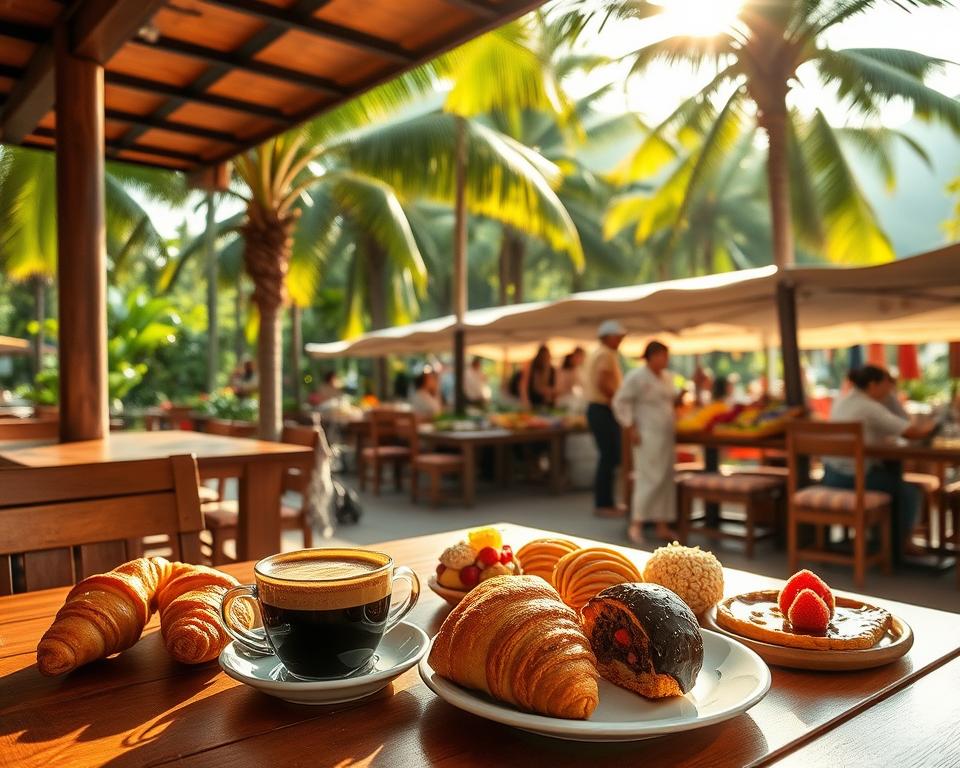
Guatemalan coffee goes well with many local foods. Coffee from Huehuetenango, with its bright taste and fruit notes, is good with recaudo (a spicy stew). Coffee from Atitlán, with its smooth chocolate taste, is perfect with tamales.
In Guatemala, pairing coffee with food is more than just taste. It’s about the country’s culture and history. This mix shows Guatemala’s rich food heritage, blending indigenous and Spanish traditions.
Coffee-Infused Recipes in Guatemalan Cuisine
Guatemala’s love for coffee is seen in its food too. Coffee is not just a drink but also a flavor enhancer in many dishes. It adds depth to both sweet and savory recipes.
Coffee desserts in Guatemala are a treat. Coffee flan, for example, mixes coffee’s richness with flan’s creaminess.
Step-by-Step Coffee Flan Recipe
To make coffee flan, you need:
- 1 can of condensed milk
- 1 cup of heavy cream
- 1/2 cup of granulated sugar
- 2 large eggs
- 2 tablespoons of strong Guatemalan coffee
- 1 teaspoon of vanilla extract
Blend the condensed milk, heavy cream, sugar, eggs, coffee, and vanilla. Pour into ramekins and bake at 350°F for 45 minutes in a water bath.
Making Traditional Rellenitos with Coffee Syrup
Rellenitos are stuffed plantains from Guatemala. Adding coffee syrup gives them a unique flavor. To make syrup, boil 1 cup of coffee, 1 cup of sugar, and 1 cup of water. Simmer until thick.
| Ingredient | Quantity |
|---|---|
| Guatemalan Coffee | 1 cup |
| Sugar | 1 cup |
| Water | 1 cup |
Coffee Rub Technique for Meats
Coffee can flavor meats too. Mix 1/4 cup of ground coffee with 2 tablespoons of brown sugar, 1 tablespoon of smoked paprika, and 1 tablespoon of garlic powder.
Preparing Authentic Coffee-Based Sauces
Coffee sauces are another way to use Guatemalan coffee. For a simple sauce, mix 1 cup of coffee with 1/2 cup of heavy cream and 2 tablespoons of butter. Simmer until thick.
Learn more about Guatemalan cuisine and coffee at Lemon8’s page on Guatemalan food. It’s full of info on traditional dishes and their coffee connection.
The Coffee Finca Experience: From Bean to Table
The coffee finca experience in Guatemala is a journey for the senses. It teaches visitors about coffee making and its role in local food. Guests learn about the rich history and culture of coffee production.
Coffee fincas in Guatemala show the coffee-making process. This includes planting, harvesting, processing, and roasting. Visitors see the care that goes into making top-quality coffee beans.
This experience affects the local food scene. Chefs and food lovers learn about Guatemalan coffee’s flavors and smells. They use this knowledge to create new food and coffee pairings.
Coffee Finca Experience Highlights
| Experience | Description | Impact on Local Cuisine |
|---|---|---|
| Coffee Tasting | Sample a variety of coffee blends | Inspires new coffee and food pairings |
| Production Tour | Learn about coffee production from bean to cup | Enhances understanding of coffee’s role in local gastronomy |
| Culinary Workshops | Participate in workshops that combine coffee with local cuisine | Fosters innovation in food and coffee pairing |
The coffee finca experience is a special and educational journey. It teaches visitors about coffee and its key role in Guatemalan food. By seeing the process from bean to table, visitors value the skill behind Guatemala’s famous coffee.
Coffee Ceremonies and Social Traditions
In Guatemala, coffee is more than a drink; it’s a key part of social life and cultural events. It brings people together, creating a sense of community and warmth. This is what Guatemalan hospitality is all about.
Coffee is at the heart of social gatherings. Here, traditional Guatemalan dishes and freshly brewed coffee are shared. These moments are for sharing stories, strengthening bonds, and celebrating.
Coffee tourism in Guatemala has grown because of its cultural importance. Visitors can explore coffee farms and learn how coffee is made. This supports local economies and helps travelers understand Guatemalan culture.
Guatemalan coffee is essential to the country’s culture. It connects locals and visitors through their love for coffee. This shows the deep impact of coffee on Guatemalan society.
Sustainable Coffee Practices and Their Impact on Local Cuisine
Sustainable coffee production is key in shaping Guatemalan cuisine today. Guatemala is embracing eco-friendly coffee methods. This is changing local cuisine in big ways.
Adding sustainable coffee to Guatemalan dishes keeps old cooking ways alive. It also brings new ideas to the kitchen. Chefs mix coffee with traditional foods, making unique flavors that show off Guatemala’s rich food history.
One big plus of eco-friendly coffee is it helps save Guatemala’s nature. This means more ingredients for local dishes. Chefs can make tasty, green dishes that are good for the planet.
| Traditional Dish | Coffee-Infused Version | Description |
|---|---|---|
| Pepián | Coffee-Glazed Pepián | A traditional stew infused with the rich flavors of coffee glaze. |
| Tamales | Coffee-Spiced Tamales | Tamales filled with coffee-spiced meats, offering a unique twist on a classic. |
The mix of sustainable coffee and Guatemalan food is making a new kind of cuisine. It’s based on tradition but also welcomes new ideas. As Coffee and Gastronomy in Guatemala grow, the future of local food looks bright.
Conclusion: Coffee’s Enduring Legacy in Guatemalan Food Culture
Coffee has deeply influenced Guatemalan food culture. It has shaped the nation’s culinary identity. Guatemalan coffee is a key part of its social fabric.
From traditional breakfasts to coffee-infused dishes, coffee’s impact is clear. It’s a big part of Guatemalan cuisine.
Coffee culture in Guatemala is rich and unique. It has a long history and distinct coffee regions. Sustainable practices add to its charm.
The coffee finca experience and coffee ceremonies are special. They highlight the country’s coffee culture. Guatemalan coffee is vital to its culinary heritage.
In conclusion, Guatemalan coffee’s role in food culture is huge. Its influence is seen in many areas. Its legacy continues to shape the nation’s cuisine and traditions.