
Guatemalan coffee is famous for its rich taste. This is thanks to the country’s varied regions and coffee-making traditions. Using an AeroPress to brew Guatemalan coffee lets coffee lovers fully enjoy its flavors. The AeroPress method is great for Guatemalan coffee, highlighting its unique notes and acidity.
When you mix Guatemalan coffee’s taste with the AeroPress’s brewing, you get a smooth, full coffee. This guide will show you how to brew Guatemalan coffee with an AeroPress. We’ll also explore the cultural side of coffee farming in Guatemala.
Key Takeaways
- Understanding the flavor profile of Guatemalan coffee
- Benefits of using an AeroPress for brewing
- Step-by-step guide to brewing Guatemalan coffee
- Cultural context of coffee farming in Guatemala
- Tips for optimizing your AeroPress brewing technique
The Rich Heritage of Guatemalan Coffee
Guatemalan coffee has a long history, going back centuries. It is deeply connected to the country’s culture and past. This legacy shows in the high-quality coffee Guatemalan farmers produce, loved worldwide.
Guatemala’s Position in the Global Coffee Market
Guatemala is among the world’s leading coffee producers. Its coffee is famous for its unique flavors. These flavors come from the country’s varied regions and climates. Coffee lovers around the globe seek out Guatemalan coffee for its quality and taste.
Historical Development of Coffee Cultivation in Guatemala
Coffee farming in Guatemala started in the 18th century. It has grown into a complex industry. The country’s volcanic soil, climate, and high altitude are perfect for coffee.
Over time, Guatemalan farmers have honed their skills. They have developed methods and traditions that make their coffee special. This has made Guatemalan coffee a key player in the global market.
Understanding Guatemalan Coffee Regions
Guatemala’s coffee taste varies by region. Each area has its own special soil, climate, and height. These factors shape the coffee’s flavor.
Antigua: Volcanic Soil and Complex Flavors
The Antigua region is famous for its volcanic soil. This soil makes the coffee taste complex. It has notes of chocolate and caramel.
Antigua’s coffee is loved for its balanced taste and rich feel.
Huehuetenango: High-Altitude Nuances
Huehuetenango is in the highlands of Guatemala. It’s known for coffee with high-altitude nuances. The cool climate and clear seasons slow down the coffee’s growth.
This makes the coffee bright and fruity. Huehuetenango coffee is crisp and has floral notes.
Cobán: Rainforest Climate and Unique Characteristics
Cobán is in the Alta Verapaz region. It has a rainforest climate. The high humidity and rain make it special for coffee.
Cobán coffee tastes earthy and herbal. It has a unique flavor that stands out.
In summary, Guatemala’s coffee regions offer different tastes. From Antigua’s balanced coffee to Huehuetenango’s bright flavors and Cobán’s earthy notes. Knowing these differences helps us enjoy Guatemalan coffee’s variety.
What Makes Guatemalan Coffee Special
Guatemalan coffee is famous for its unique taste. This is due to the country’s special terroir and how the coffee is processed. The climate, soil, and altitude all play a part in this.
Flavor Profile and Tasting Notes
Guatemalan coffee has a balanced acidity and a rich body. It tastes like chocolate and caramel or has fruit and floral hints. The taste can change a lot depending on where it’s from.
In Antigua, the coffee is known for complex, spicy flavors. Huehuetenango coffee, on the other hand, has bright acidity and fruity notes.
Processing Methods in Guatemala
Guatemalan coffee makers use different ways to process their coffee. These include washed, natural, and honey processing. Washed coffee is clean and bright.
Natural processing makes the coffee fruitier and sweeter. Honey processing leaves some fruit on the beans, creating a balanced cup with both clarity and body.
The method used can greatly affect the coffee’s taste. It lets producers show off the special qualities of their beans.
Essential Equipment for the Perfect AeroPress Brew
To make the perfect cup of Guatemalan coffee with an AeroPress, you need to know the right equipment. The AeroPress is known for making smooth, full-bodied coffee. It’s versatile and easy to use.
AeroPress Components and Setup
The AeroPress has a few main parts: the chamber, plunger, filter cap, and filters. Start by rinsing the filter with hot water to get rid of any taste. Setting up right is key for the best brewing temperature and flavor. It’s designed to be easy to use, making brewing simple.
Additional Tools for Optimal Results
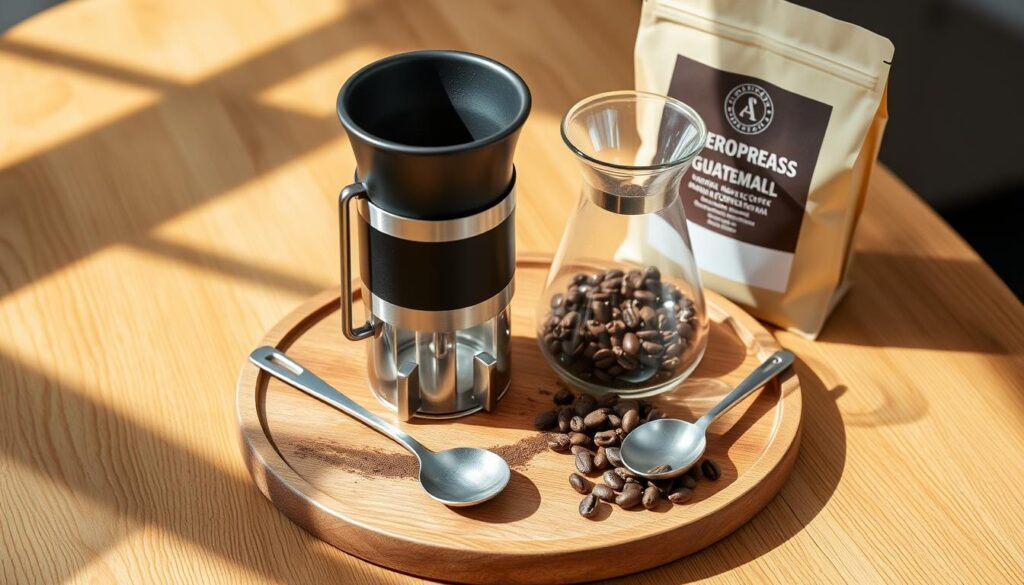
There are other tools that can make your brewing better. A digital scale is crucial for measuring coffee and water right. A grinder is also a must, as grinding your coffee fresh before brewing makes it taste better. You’ll also find a thermometer for checking water temperature and a timer for controlling brewing time useful.
| Tool | Purpose | Benefit |
|---|---|---|
| Digital Scale | Measuring coffee and water | Accurate ratios |
| Grinder | Grinding coffee beans | Freshness and flavor |
| Thermometer | Monitoring water temperature | Optimal brewing temperature |
| Timer | Controlling brewing time | Precise brewing control |
Selecting the Right Guatemalan Coffee Beans
Guatemalan coffee beans come in a wide range of flavors. Choosing the right ones is key for a great brew. The right beans can make your coffee experience even better, highlighting Guatemalan coffee’s unique taste.
Single-Origin vs. Blends
Choosing between single-origin and blends is a common debate for Guatemalan coffee. Single-origin beans are loved for their unique flavors. These flavors are shaped by the region they come from.
For example, beans from Antigua, Huehuetenango, and Cobán have their own special tastes. This is because of the different soil and climate in each area.
- Single-origin beans offer a pure expression of the region’s flavor profile.
- Blends, on the other hand, combine beans from various regions to create a balanced flavor.
Roast Levels and Their Impact on Flavor
The roast level of Guatemalan coffee beans greatly affects their taste. Light roasts keep the coffee’s natural acidity and fruit notes. They are bright and fruity.
Dark roasts, on the other hand, have deeper, richer flavors. They taste like chocolate and spices, with less acidity.
- Light roasts: Bright acidity, fruit, and floral notes.
- Medium roasts: Balanced acidity and body, with nuanced flavors.
- Dark roasts: Deep, rich flavors with reduced acidity.
The Ultimate AeroPress Recipe for Guatemalan Coffee
To get the most out of Guatemalan coffee, you need to master the AeroPress brewing method. The AeroPress is great because it’s easy to use and lets you try different ways to make coffee. This way, you can find the perfect cup for you.
Standard Method vs. Inverted Method
The AeroPress has two main ways to brew coffee: the standard method and the inverted method. The standard method is simple. You add coffee grounds, pour hot water, and press it into a cup. It makes a clean, full-bodied coffee.
The inverted method is a bit different. You put the AeroPress upside down, add coffee and water, stir, and then flip and press. This method lets the coffee steep longer, which can make the flavor more complex. Try both methods to see which one you like better.
Water Temperature and Quality Considerations
Water temperature is key in brewing coffee. It affects how much flavor you get from the coffee grounds. For Guatemalan coffee in an AeroPress, aim for water between 195°F and 205°F. This temperature range is best for getting the most flavor and oils from the coffee.
Also, the quality of the water matters a lot. Use fresh, filtered water to avoid any bad tastes or impurities in your coffee.
Brewing Time and Pressure Techniques
The brewing time for AeroPress coffee can change based on the method. The standard method takes about 2 minutes. The inverted method can take 1-2 minutes, depending on how you like it.
Pressure technique is also important. It affects how fast the water flows through the coffee. Press gently but firmly to get an even extraction without channeling.
Step-by-Step Brewing Instructions
To get the most out of Guatemalan coffee, follow this AeroPress brewing guide. It’s all about careful preparation, precise brewing, and cleaning up. This ensures a great cup every time.
Preparation Phase
The first step is to prepare everything you need. This includes your AeroPress, a grinder, a scale, and high-quality Guatemalan coffee beans. Start with a 1:15 coffee-to-water ratio. Grind the beans to a medium-fine grind for the AeroPress.
Tip: Use filtered water to avoid off-flavors from tap water.
The Brewing Process
Start by placing the AeroPress on a stable surface. Rinse the filter with hot water to remove any taste. Add the ground coffee to the AeroPress chamber. Pour heated water (around 200°F) over the grounds, making sure to saturate them evenly. Stir gently to ensure all grounds are in contact with water.
Let the coffee bloom for about 30 seconds before slowly pouring in the rest of the water. Stir again gently. Attach the cap and prepare for pressing. Slowly press the mixture into your cup or a separate container. The total brewing time should be around 2 minutes.
“The AeroPress is a hybrid brewing method that combines the best features of French press and pour-over brewing, offering a smooth, full-bodied coffee with a rich flavor profile.”
, it’s ideal for bringing out the complex flavors of Guatemalan coffee.
Post-Brew Cleanup
After brewing, remove the cap and carefully press the AeroPress plunger to eject the coffee grounds into the compost or trash. Rinse all parts of the AeroPress with warm water to prevent any coffee oils from building up. Regular cleaning keeps your coffee tasting great and your AeroPress in good shape.
Maintenance Tip: Occasionally, deep clean your AeroPress by soaking it in a mixture of water and vinegar to remove any buildup.
Perfecting Your Grind Size for Guatemalan Beans
To get the most flavor from Guatemalan coffee, you need to master the grind size. The grind size greatly affects how the coffee tastes. It’s key to the coffee’s quality.
Ideal Grind Consistency for AeroPress
The AeroPress method needs a medium to fine grind. This size lets the coffee’s flavors shine. If the grind is too coarse, the coffee tastes weak or sour.
Too fine a grind makes the coffee bitter. A medium to fine grind is best. Use a burr grinder for this, as it gives a consistent size. Blade grinders can heat up the beans and are not good for this.
How Grind Size Affects Extraction
The grind size affects how fast the coffee extracts during brewing. Proper extraction brings out Guatemalan coffee’s complex flavors. The right grind size lets water flow through the coffee just right, getting the flavors and oils.
Too fine a grind can cause the coffee to taste bitter. Too coarse makes it weak or sour. Try different grind sizes to find the perfect one for your AeroPress.
Coffee-to-Water Ratios for Different Flavor Profiles
When brewing Guatemalan coffee with an AeroPress, the coffee-to-water ratio is key. It greatly affects the coffee’s taste. This is important for both new and experienced coffee lovers to know.
The ratio of coffee grounds to water is what matters. Changing this ratio lets you adjust the taste of your coffee. You can make it strong or balanced, depending on what you like.
Strong Concentrate Ratios
If you like your coffee very strong, use a lower coffee-to-water ratio. A 1:3 to 1:5 ratio is best for a bold, intense coffee. It’s great for those who want a coffee as strong as espresso.
Example: Using 17 grams of coffee with 51 grams of water (1:3 ratio) makes a strong concentrate.
Balanced Cup Ratios
For a balanced flavor, use a higher coffee-to-water ratio. A 1:15 to 1:17 ratio is good for a balanced cup. It brings out the coffee’s subtle flavors. This is perfect for those who prefer a smoother coffee.
| Coffee-to-Water Ratio | Flavor Profile |
|---|---|
| 1:3 to 1:5 | Strong Concentrate |
| 1:15 to 1:17 | Balanced Cup |
Trying different coffee-to-water ratios is essential to find your ideal cup. Whether you prefer a strong coffee or a balanced one, adjusting this ratio is crucial. It’s the key to mastering Guatemalan coffee with an AeroPress.
Cultural Context: Coffee Farming in Guatemala
Guatemalan coffee farming is deeply rooted in the country’s rich cultural heritage. For generations, coffee has been a cornerstone of Guatemalan agriculture. It has influenced the lives of farmers and shaped the nation’s identity.
Sustainable Farming Practices
Guatemalan coffee farmers are adopting sustainable farming practices. These practices include shade-grown coffee, organic farming, and soil conservation. By using these methods, farmers reduce their environmental impact and improve coffee quality.
The Life of Coffee Farmers
Coffee farming is a way of life for many Guatemalans. Farmers work hard to cultivate, harvest, and process coffee. They often use traditional techniques passed down through generations.
“Coffee is not just a crop, it’s our livelihood, our culture, and our future.”
But coffee farmers face many challenges, like climate change and market fluctuations. Despite these, their dedication remains strong.
Fair Trade and Direct Trade Relationships
Fair trade and direct trade relationships are key in Guatemala’s coffee industry. These practices ensure farmers get fair prices for their coffee. This allows them to invest in their farms and communities.
By supporting these farmers, consumers help promote a more equitable and environmentally conscious coffee industry. As global demand for high-quality coffee grows, Guatemalan farmers are well-positioned to benefit from their commitment to sustainability and fair trade.
Customizing Your AeroPress Recipe for Different Guatemalan Regions
To fully appreciate Guatemalan coffee, you need to adjust the AeroPress brewing method. Each region in Guatemala has its own unique flavor. By making specific brewing adjustments, you can enhance these flavors.
Adjustments for Antigua Beans
Coffee from Antigua is known for its balanced acidity and rich, chocolatey flavors. Use a slightly coarser grind and brew for about 2 minutes. This brings out the full-bodied flavors.
Modifications for Huehuetenango Coffee
Huehuetenango coffee is famous for its bright acidity and fruity notes. Use a finer grind and brew for about 1.5 minutes. Also, adjust the water temperature to around 200°F to enhance the taste.
Techniques for Cobán Varieties
Cobán coffee has distinct floral and herbal notes. Use a medium grind and brew for about 2 minutes. Filtered water and consistent temperature help reveal its unique characteristics.
By tailoring the AeroPress recipe to each Guatemalan coffee region, you can enjoy a more nuanced brewing experience.
Conclusion: Mastering the Art of Guatemalan Coffee with AeroPress
Brewing Guatemalan coffee with an AeroPress is a detailed process. It needs focus and a desire to try new things. Knowing the special qualities of Guatemalan coffee areas, like Antigua and Huehuetenango, helps improve your brewing skills.
Getting better at brewing comes from tweaking things like grind size, coffee-to-water ratio, and brewing time. For example, a finer grind can highlight Guatemalan coffee’s bright acidity. On the other hand, a coarser grind can reveal its rich, chocolatey flavors. By mastering these tweaks, you can fully enjoy your AeroPress.
As you keep brewing Guatemalan coffee with your AeroPress, remember that practice is key. Try different roast levels, brewing methods, and ratios to find your perfect cup. With patience and practice, you’ll learn to bring out the complex flavors and aromas of Guatemalan coffee. You’ll achieve true brewing mastery with your AeroPress.