
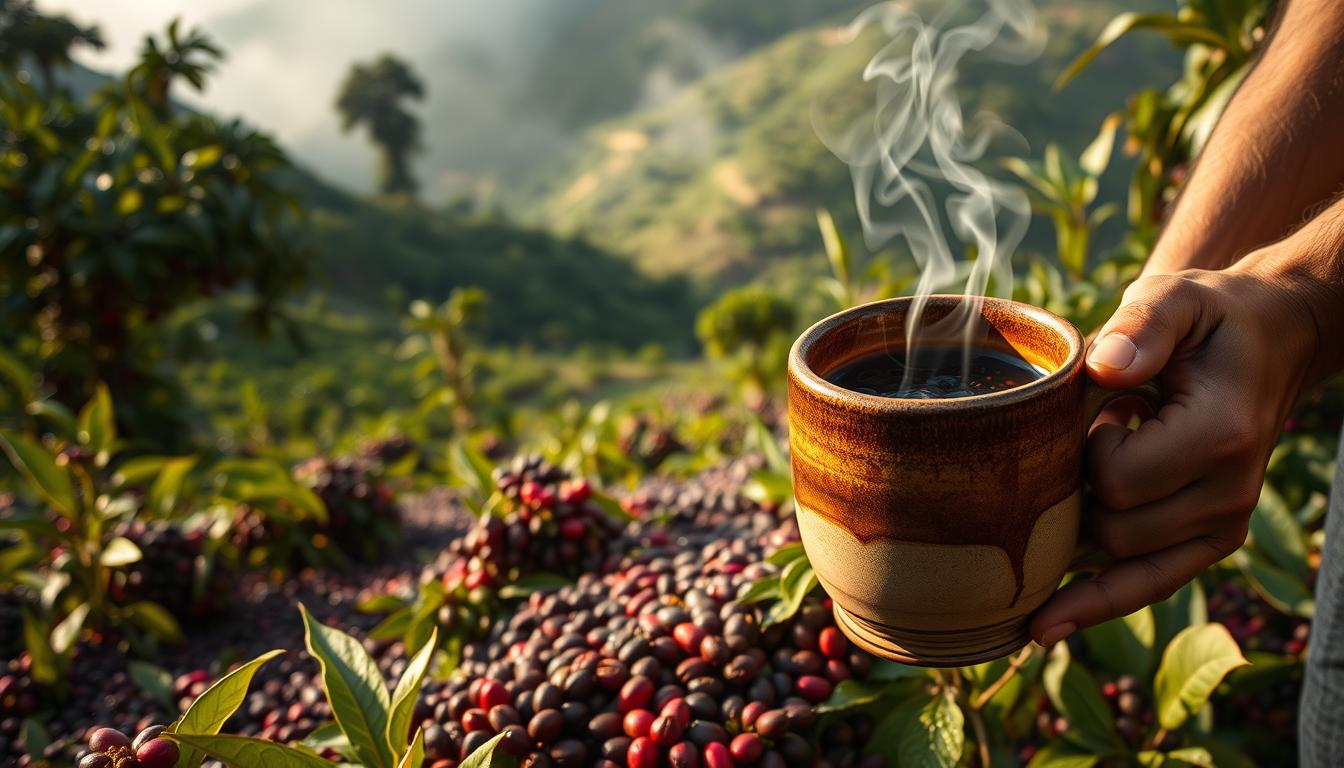
Guatemala is famous for its rich soil and varied climates. It has been a key player in the global coffee world for centuries. Many families there have passed down their coffee-making skills for generations.
The Guatemalan Coffee Flavor Wheel is a tool for coffee lovers. It helps them understand and enjoy Guatemalan coffee’s complex tastes. It shows how Arabica beans from different areas have their own special flavors.
Coffee lovers can use the Guatemalan Coffee Flavor Wheel to discover the wide range of tastes in Guatemalan coffee. They can find everything from chocolate and caramel to fruit and spice notes.
Key Takeaways
- The Guatemalan Coffee Flavor Wheel is a valuable resource for understanding Guatemalan coffee’s complex flavors.
- Guatemala’s diverse climates and rich volcanic soil contribute to its coffee’s unique flavor profiles.
- Arabica beans grown in different regions of Guatemala have distinct characteristics.
- The flavor wheel helps coffee enthusiasts appreciate the nuances of Guatemalan coffee.
- Guatemalan coffee is known for its high quality and rich cultural heritage.
The Rich World of Guatemalan Coffee
Guatemalan coffee is special because of its volcanic soil, high altitudes, and climate. This mix creates a unique taste. The country’s careful growing methods also play a big role.
What Makes Guatemalan Coffee Unique
Guatemalan coffee tastes different, from chocolatey and nutty to fruity and floral. The climate, soil, and height of the land add to this variety. This makes Guatemalan coffee unique worldwide.
Each region in Guatemala grows coffee with its own special taste. For example, Antigua’s coffee is known for its balanced taste and rich flavor. Huehuetenango’s coffee is bright and complex.
The Importance of Understanding Flavor Profiles
Knowing about Guatemalan coffee’s flavors is key to enjoying it. Recognizing the different tastes and acidity levels helps coffee lovers enjoy their coffee more.
| Region | Flavor Profile | Acidity Level |
|---|---|---|
| Antigua | Rich, chocolatey, balanced | Medium |
| Huehuetenango | Fruity, complex | High |
| Cobán | Fruity, floral | Medium to High |
Knowing these flavor profiles helps coffee lovers appreciate Guatemalan coffee’s subtleties. It helps them choose the best coffee for their taste.
The History and Evolution of Coffee in Guatemala
The story of coffee in Guatemala is filled with colonialism, innovation, and cultural heritage. Coffee arrived in Guatemala in the 18th century. It quickly became a key part of the economy.
Colonial Origins and Development
Coffee started in Guatemala during the colonial era. Jesuit priests brought the first coffee plants. The soil and climate were perfect, leading to lots of coffee farms.
Modern Coffee Farming Practices
Today, Guatemalan coffee farmers use new methods to grow better coffee. They use advanced irrigation, organic fertilizers, and careful processing.
| Farming Practice | Description | Benefit |
|---|---|---|
| Advanced Irrigation | Precision watering systems | Increased water efficiency |
| Organic Fertilizers | Natural soil enhancers | Improved soil health |
| Careful Processing | Meticulous harvesting and processing | Enhanced coffee quality |
The Cultural Significance of Coffee in Guatemala
Coffee is very important in Guatemalan culture. Many families make their living from coffee. It has also shaped the country’s social and cultural life.
Coffee’s role in Guatemala goes beyond money. It influences local customs and community life. Coffee farms are often places for social events and keeping traditions alive.
Flavor Wheel Coffee: Understanding the Concept
For coffee lovers, the Guatemalan coffee flavor wheel is key. It helps explore the rich tasting notes of Guatemalan coffee. The wheel is a visual guide to coffee’s complex flavors, aiding in identifying and describing them.
What Is a Coffee Flavor Wheel
A coffee flavor wheel is a circular diagram. It categorizes coffee flavors, from general like fruity or chocolatey to specific like citrus or cocoa. It helps coffee lovers understand their favorite brews better.
As
“The coffee flavor wheel is a tool that helps coffee enthusiasts identify and describe the flavors they experience, allowing for a more nuanced understanding of coffee.”
It’s a common language for coffee pros and fans to talk about flavors.
How the Guatemalan Wheel Differs from Standard Wheels
The Guatemalan coffee flavor wheel focuses on Guatemalan coffee’s unique flavors. It’s different from standard wheels, which are more general. The Guatemalan wheel highlights specific notes like chocolate and caramel in coffees from Antigua.
- Regional flavor profiles
- Unique tasting notes
- Flavor categories specific to Guatemalan coffee
Using the Wheel to Enhance Your Coffee Experience
Using the Guatemalan coffee flavor wheel can make your coffee experience better. It helps understand the flavors in your coffee. This knowledge can lead to choosing the right brewing methods and coffee beans for a more enjoyable coffee.
For example, if you like fruity notes, the wheel can guide you to coffees from Huehuetenango. This targeted approach can deepen your appreciation of Guatemalan coffee.
Key Regions of Guatemalan Coffee Production
Guatemalan coffee tastes different in each region. This is because of the unique growing conditions in each area. Guatemala has many coffee-producing regions, each with its own special terroir and climate.
Antigua: Volcanic Soils and Chocolate Notes
Antigua is famous for its coffee. It’s known for volcanic soils that give the coffee a rich, chocolatey taste. The mix of soil, climate, and altitude in Antigua makes its coffee special.
Elevation, Climate, and Distinctive Flavors
The high elevation and mild climate of Antigua make the coffee mature slowly. This results in a complex flavor. The coffee often tastes like chocolate and caramel with a balanced acidity.
Huehuetenango: High Altitude and Bright Acidity
Huehuetenango is another key coffee region in Guatemala. It’s known for its high altitude and bright acidity. The coffee here has fruit-forward flavors and complex acidity.
Tasting Notes and Regional Characteristics
Coffee from Huehuetenango tastes like citrus and berries. It has a crisp acidity that makes it unique. The dry climate and high altitude in Huehuetenango add to these special qualities.
Cobán: Cloud Forests and Fruity Profiles
Cobán is famous for its cloud forests. These forests create a special microclimate. This microclimate helps develop fruity and floral flavors in the coffee. The coffee from Cobán is known for its rich, fruity taste.
Weather Influence on Flavor Development
The cloud cover and mist in Cobán slow down the ripening of the coffee. This enhances the fruit notes and makes the flavor more complex. The result is a coffee with a distinctive fruity character and a smooth, balanced body.
Decoding the Flavor Profiles of Guatemalan Coffee
Guatemalan coffee is famous for its rich flavors. These flavors can be broken down to show a variety of tastes. Knowing about these flavors helps us enjoy Guatemalan coffee even more.
Primary Flavor Categories: Fruity, Chocolatey, and Nutty Notes
Guatemalan coffee has many flavors, like fruity, chocolatey, and nutty notes. These flavors come from the soil, altitude, and how the coffee is made. For example, coffee from Antigua tastes like rich chocolate. Coffee from Huehuetenango is known for its bright acidity and fruity flavors.
Understanding Acidity Levels and Body
The acidity levels and body of Guatemalan coffee are key to its taste. Acidity can be bright and snappy or low and smooth. The body, or how the coffee feels in your mouth, can be light, medium, or full. Knowing these helps us enjoy Guatemalan coffee’s complexity.
Identifying Unique Aromatics in Guatemalan Beans
Guatemalan coffee also has unique aromatics. These can be floral, fruity, or spicy. Spotting these aromatics makes the coffee experience better. Below is a table showing common flavors and aromatics in Guatemalan coffee regions.
| Region | Flavor Profile | Aromatics |
|---|---|---|
| Antigua | Chocolatey, Nutty | Floral, Caramel |
| Huehuetenango | Fruity, Bright Acidity | Fruity, Citrus |
| Cobán | Fruity, Floral | Jasmine, Bergamot |
By learning about Guatemalan coffee’s flavors, acidity, body, and aromatics, we can appreciate it more. This complex and nuanced drink is truly special.
The Science of Taste: Developing Your Coffee Palate
The science of tasting coffee is complex. It involves many factors that affect how we taste its flavor. Knowing how we taste coffee is key to improving our palate.
How We Perceive Coffee Flavors
Coffee flavor comes from taste, smell, and texture. Our tongue can taste five basic flavors: sweet, sour, bitter, salty, and umami. But, coffee’s complex flavors mainly come from its smell.
The role of aroma in coffee tasting cannot be overstated. When coffee is heated, it releases smells that add to its flavor. This smell greatly affects how we taste coffee.
Training Your Palate to Identify Subtle Notes
Improving your palate means learning to notice coffee’s subtle flavors. This happens by tasting different coffees and noticing their unique tastes. Begin by tasting various coffees and noting their flavors.
Tips for Palate Development:
- Taste coffee often to get used to different flavors.
- Notice the coffee’s acidity, body, and flavor notes.
- Use a flavor wheel to spot specific tastes.
Common Flavor Descriptors for Guatemalan Coffee
Guatemalan coffee is famous for its rich and complex tastes. It often has notes of chocolate, fruit, and spices. Knowing these common flavors helps you understand Guatemalan coffee’s unique tastes.
| Region | Common Flavor Notes |
|---|---|
| Antigua | Chocolate, Caramel, Spice |
| Huehuetenango | Fruit, Floral, Citrus |
| Cobán | Fruity, Floral, Herbal |
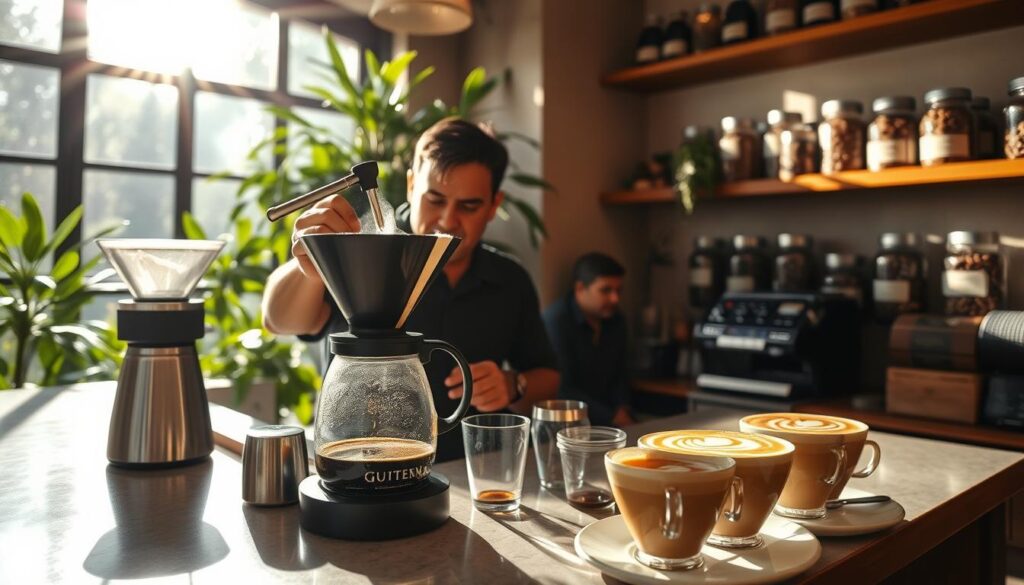
By learning about taste and practicing, you can enjoy Guatemalan coffee’s full range. Regular tasting and paying close attention will make your coffee experience better.
Essential Brewing Equipment for Guatemalan Coffee
To brew Guatemalan coffee perfectly, you need the right equipment. The right tools can make the coffee’s unique flavors shine. This makes for a great brewing experience.
Grinders and Their Impact on Flavor Extraction
The grind quality is key for great flavor. Burr grinders are better than blade grinders because they give a consistent grind. This consistent grind is important for balanced extraction.
A consistent grind ensures even saturation during brewing. This brings out the complex flavors of Guatemalan coffee.
Brewing Methods That Highlight Guatemalan Profiles
Guatemalan coffee can be brewed in many ways. Each method highlights different flavors. Here are some popular methods:
- Pour-over: It offers a clean and nuanced extraction. It highlights the coffee’s acidity and fruit notes.
- French press: It brings out the coffee’s body and rich, chocolatey flavors.
- Cold brew: It results in a smooth, low-acidity brew. It showcases the coffee’s sweeter notes.
Water Quality and Temperature Considerations
Water quality and temperature are key in brewing coffee. Use fresh, filtered water to avoid off-flavors. The ideal brewing temperature is between 195°F and 205°F.
Water temperature affects how much flavor is extracted. The best extraction happens within this temperature range.
| Brewing Method | Grind Size | Water Temperature |
|---|---|---|
| Pour-over | Medium-fine | 200°F |
| French press | Coarse | 195°F |
| Cold brew | Coarse | Cold |
Choosing the right brewing equipment and techniques lets coffee lovers enjoy Guatemalan coffee’s unique flavors.
Step-by-Step Brewing Guide for Guatemalan Coffee
Unlocking Guatemalan coffee’s unique flavors starts with a good brewing process. It’s key to follow a precise guide. This guide considers the coffee’s origin, processing, and roast level.
Determining the Ideal Grind Size by Brewing Method
The grind size of your coffee beans is crucial. It affects how fast the coffee is extracted and its taste. Different methods need different grind sizes for the best flavor.
Pour Over Specifications
For pour-over, use a medium-coarse grind. This size balances flavor extraction and flow, making your coffee smooth and balanced.
French Press Parameters
French press needs a coarse grind. This size prevents too much extraction and bitterness. It lets the coffee’s rich flavors shine during immersion.
Espresso Requirements
Espresso requires a fine grind. This grind helps the espresso machine extract flavors and oils well. It makes a concentrated and rich shot.
Optimal Coffee-to-Water Ratios
The coffee-to-water ratio is key for balanced extraction. Use a ratio of 1:15 to 1:17 for most methods. Adjust based on taste and method.
Brewing Temperatures and Timing
The best brewing temperature is 195°F to 205°F. Pour-over takes 3-4 minutes, French press 4 minutes, and espresso 20-30 seconds.
Extraction Techniques to Highlight Regional Characteristics
To show off Guatemalan coffee’s regional flavors, adjust your brewing. Longer brewing times can bring out body and sweetness. Shorter times highlight acidity and fruit.
By following this guide, coffee lovers can fully enjoy Guatemalan coffee. They can explore its rich flavors and unique regional tastes.
Conducting Your Own Guatemalan Coffee Tasting
To truly appreciate Guatemalan coffee, you need to taste it through a structured process. This means setting up a professional cupping session. You also need to understand the steps of coffee tasting and record your observations.
Setting Up a Professional Cupping Session
A professional cupping session needs specific equipment. This includes a cupping table, green coffee beans, a grinder, and a scale. The room should be quiet and free from distractions to accurately assess the coffee’s characteristics.
The Four Steps: Fragrance, Aroma, Taste, and Aftertaste
Coffee tasting has four key steps: fragrance, aroma, taste, and aftertaste. Fragrance is the scent of the dry coffee grounds. Aroma is the scent after hot water is added. The taste is about the flavor profile, and aftertaste is the flavor that lingers after swallowing.

Recording and Comparing Tasting Notes
To record and compare tasting notes, use a tasting sheet. This sheet has sections for fragrance, aroma, taste, and aftertaste. It also has a section for overall impressions.
Sample Tasting Sheet Template
| Coffee Sample | Fragrance | Aroma | Taste | Aftertaste |
|---|---|---|---|---|
| Guatemalan Antigua | Floral notes | Citrus hints | Balanced acidity | Chocolatey |
| Huehuetenango | Fruity aroma | Bright acidity | Complex flavor | Clean finish |
By following these steps and using a tasting sheet, you can understand Guatemalan coffee’s unique qualities.
Conclusion: Applying Your Knowledge of the Guatemalan Flavor Wheel
Understanding the Guatemalan flavor wheel can make coffee lovers better at brewing. It shows how Guatemalan coffee’s complex flavors can be explored. This way, every sip can be a new adventure.
Home brewers can start by trying different brewing methods and tools. They can adjust things like grind size and coffee-to-water ratio. This helps bring out the best flavors in their Guatemalan coffee.
As they dive deeper into the Guatemalan flavor wheel, coffee lovers will grow to love Guatemalan coffee even more. They’ll get better at making coffee that tastes amazing. This makes their coffee time even more special.