
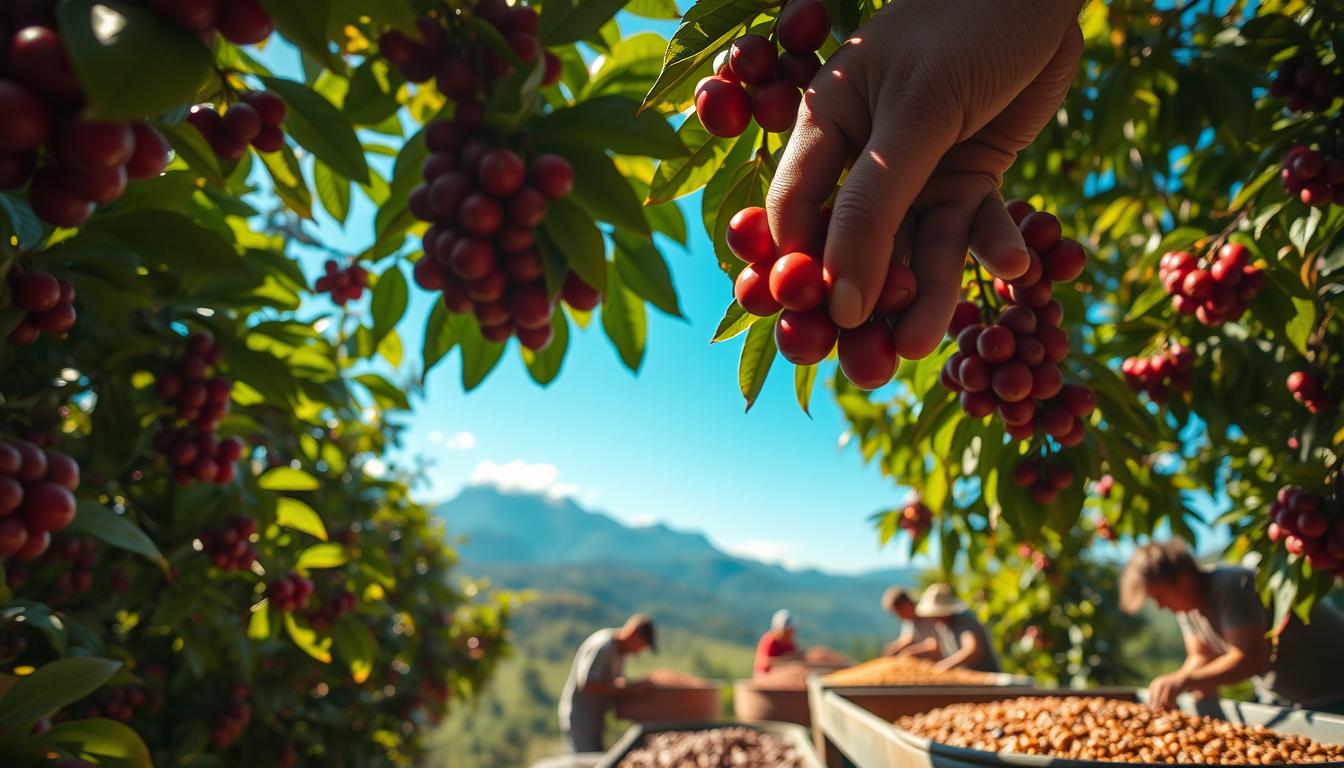
Making the perfect espresso is an art that needs precision and quality ingredients. It also requires a deep understanding of coffee extraction. Using top-notch Guatemalan beans can make your espresso taste richer and more complex.
Learning to pull the perfect espresso is more than just following a recipe. It’s about knowing the details of coffee beans and how to brew them. With Guatemalan beans, you can get a balanced extraction that highlights the coffee’s best flavors.
Key Takeaways
- High-quality Guatemalan beans are essential for a perfect espresso.
- Mastering coffee extraction is crucial for a rich flavor profile.
- The right brewing technique can elevate your espresso experience.
- Understanding coffee beans is key to achieving balanced extraction.
- Precision is vital in pulling the perfect espresso.
The Unique Character of Guatemalan Coffee
Guatemala’s coffee is special because of its rich soil and varied climate. It has a balanced acidity and rich flavors. This makes it a favorite among coffee lovers.
Flavor Profile and Characteristics
Guatemalan coffee has a complex flavor profile. It often tastes like chocolate, caramel, and fruit. The different climates and soils in Guatemala add to its unique taste.
The taste can change a lot depending on where it’s from. Some areas have coffee with bright acidity and floral notes. Others have deeper, richer flavors.
| Region | Flavor Profile |
|---|---|
| Antigua | Rich, chocolatey, with hints of spice |
| Huehuetenango | Fruity, with notes of citrus and berries |
| Cobán | Balanced, with floral and herbal notes |
Why Guatemalan Beans Make Exceptional Espresso
Guatemalan beans are great for espresso because of their balanced acidity and rich flavor. They’re grown at high altitudes, which makes them taste more complex. The careful processing also keeps the natural flavors, making a high-quality espresso.
Understanding Guatemala’s Premier Coffee Regions
Guatemala’s coffee industry is booming thanks to its many growing regions. Antigua, Huehuetenango, and Cobán are top-notch for their quality. Each region has its own special traits that make Guatemalan coffee so unique.
Antigua: Volcanic Soil and Complex Flavors
Antigua is famous for its coffee, thanks to the volcanic soil. This soil adds complex flavors to the coffee. You’ll taste chocolate and spice, with a perfect balance of acidity.
The volcanoes around Antigua protect the coffee plants. This creates a perfect climate for slow maturation. This slow process makes the coffee taste even better.
Huehuetenango: High Altitude Excellence
Huehuetenango is known for its high altitude. This high elevation means the coffee cherries mature slower. This results in a more complex flavor.
Coffees from Huehuetenango are bright and fruity. Coffee lovers seek these out for their unique taste.
- High altitude slows down coffee cherry maturation
- Results in complex flavor profiles
- Bright acidity and fruit notes are characteristic
Cobán: Rain-Influenced Subtle Notes
Cobán is famous for its high rainfall. This rain greatly affects the coffee’s flavor. The coffee from Cobán has subtle notes and a smooth taste.
The lush environment and plenty of rain make Cobán’s coffee special. Coffee lovers adore its unique flavor.
Essential Equipment for Pulling Espresso Guatemala Style
Getting the right equipment is key to bringing out Guatemalan coffee’s unique flavors. To make the perfect espresso, knowing what equipment you need is crucial.
Espresso Machine Requirements
An espresso machine is the heart of making top-notch espresso. For Guatemalan beans, the machine must have certain features to highlight the best flavors.
Pressure Considerations
The ideal espresso machine should make 9 atmospheres of pressure. This is vital for getting the complex flavors of Guatemalan coffee. It ensures the coffee’s oils and solids are extracted well.
Temperature Stability
Temperature stability is also key. The machine must keep a steady temperature between 195°F and 205°F. This range is perfect for balancing flavors and creating a great crema.
Grinder Specifications for Guatemalan Beans
A good grinder is essential for the right grind size and consistency. For Guatemalan espresso, the grinder’s specs are very important.
Burr vs. Blade Grinders
Burr grinders are better than blade grinders. They give a consistent grind and don’t heat up the beans. This consistency is crucial for balanced flavors.
Grind Consistency Importance
The grind’s consistency affects the espresso’s flow rate. A consistent grind leads to even extraction. This is vital for rich flavors and a great crema in a well-made espresso.
Preparing Your Guatemalan Beans
The journey to a perfect Guatemalan espresso starts with preparing the beans right. This step is key to bringing out the unique flavors of Guatemalan coffee in your espresso shot.
Selecting the Right Roast Level
Guatemalan beans have a complex flavor profile. The roast level can make these flavors better or worse. A medium to dark roast is best for espresso, balancing acidity and body.
Lighter roasts keep more acidity, while darker roasts offer richer flavors. Think about the flavor notes you want to highlight. A medium roast can show off chocolate and caramel notes. Darker roasts bring out deep fruit tones.
Optimal Grind Size for Guatemalan Espresso
Finding the right grind size is crucial for espresso. The grind should be fine enough for proper extraction but not too fine to cause channeling or over-extraction.
Visual Indicators of Proper Grind
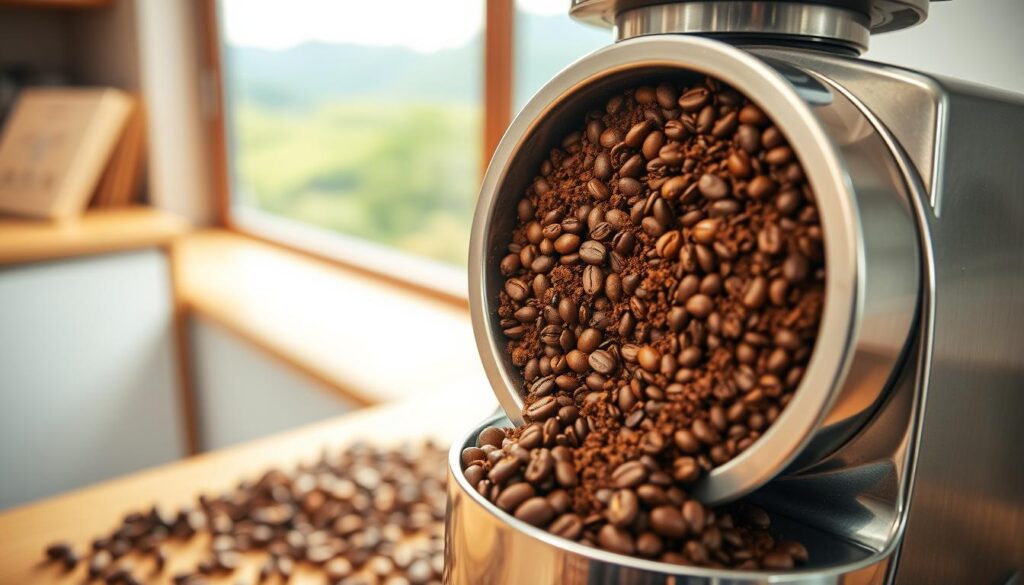
A good grind has a uniform texture. It should hold its shape but feel slightly soft to the touch. Checking the grind visually helps you see if it’s too coarse or too fine.
Adjusting for Different Regions
Guatemala’s different regions might need slight grind size adjustments. Beans from Antigua might need a different grind than those from Huehuetenango. Experimenting is the best way to find the perfect grind for your beans.
The Perfect Dose and Ratio
Guatemalan coffee beans have unique qualities. The dose and ratio are key in making espresso. Getting the balance right is crucial to enjoy the complex flavors.
Weighing Your Grounds
It’s important to weigh coffee grounds accurately. This ensures consistent espresso shots. A typical dose for a double shot ranges from 18 to 20 grams. Adjustments can be made based on bean density and desired strength.
Water-to-Coffee Ratios for Guatemalan Beans
The water-to-coffee ratio greatly impacts the espresso’s taste. Finding the right balance is essential for Guatemalan beans.
Traditional Ratios
Traditionally, a 1:2 to 1:3 ratio is standard for espresso. This range creates a rich, full-bodied flavor, showcasing the beans’ natural taste.
Modern Approaches
Modern baristas try ratios from 1:2.5 to 1:3.5. This allows for a tailored flavor profile. For Guatemalan beans, a 1:2.7 ratio is ideal for balance.
Adjusting the dose and ratio carefully unlocks Guatemalan espresso’s full potential. This creates an exceptional coffee experience.
Step-by-Step Espresso Pulling Technique
Creating the perfect espresso shot starts with knowing your espresso machine and Guatemalan coffee. It’s all about mastering a few key steps. Each step is important for the espresso’s quality.
Proper Tamping Pressure
Tamping is key for even extraction. Proper tamping pressure stops channeling and ensures water flows right through the coffee. Aim for about 30 pounds of force. A calibrated tamper helps keep the pressure even.
Pre-Infusion Techniques
Pre-infusion is a first step that soaks the coffee grounds lightly before the main pull. It releases CO2 and gets the grounds ready for even extraction. Adjust the pre-infusion time and pressure based on the Guatemalan beans.
Extraction Time and Pressure
Espresso extraction time is between 20 to 30 seconds. Optimal extraction time is key for a balanced flavor. Use 9 atmospheres of pressure, which is common for espresso machines. Adjusting the grind and tamping can fine-tune the extraction.
Visual Cues for Perfect Extraction
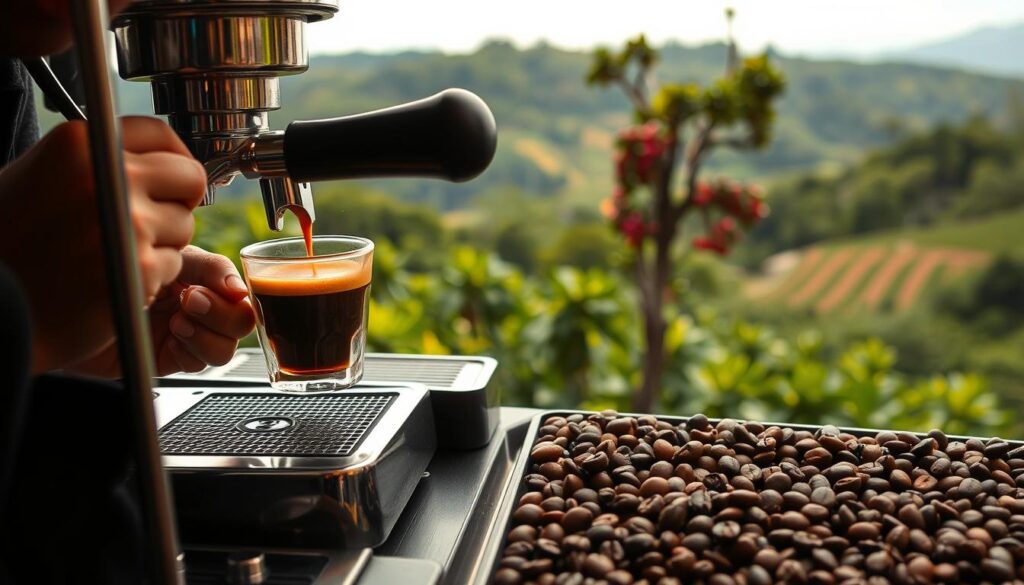
Visual cues are vital for checking extraction quality. A good shot has a thick, creamy crema and steady coffee flow. The crema should be a rich, hazelnut brown. These signs help baristas tweak their technique for the perfect shot.
By focusing on these steps and details, baristas can make high-quality espresso shots with Guatemalan beans every time.
Mastering the Art of Crema with Guatemalan Beans
Creating exceptional crema is key to great espresso. Guatemalan beans are perfect for this. The crema’s quality depends on the bean’s origin, roast, and grind size.
What Makes Guatemalan Crema Special
Guatemalan coffee beans have balanced acidity and rich flavors. This makes their crema velvety. Their chocolate and caramel notes add to the espresso’s luxury.
Coffee lovers say, “Guatemalan coffee’s rich taste is ideal for a luxurious crema.”
Techniques to Enhance Crema Development
To get the best crema with Guatemalan beans, try these techniques:
- Adjusting the grind size to optimize extraction
- Using the right water temperature
- Ensuring proper tamping pressure
By mastering these methods and knowing Guatemalan beans’ unique qualities, baristas can make espresso with a rich, creamy crema. This elevates the coffee experience.
Tasting Notes: What to Expect from Your Espresso Guatemala
Guatemala’s varied geography leads to a wide range of espresso flavors. Each cup is unique. Guatemalan espresso is known for its balanced acidity and rich taste. The flavor can change a lot based on where the beans come from.
Regional Flavor Variations
Guatemala’s coffee regions give espresso its unique taste. Knowing these differences can make enjoying Guatemalan coffee even better.
Antigua’s Chocolate and Spice Notes
Espresso from Antigua has chocolate and spice notes. You might taste cinnamon and nutmeg. The volcanic soil and mild climate of Antigua add to these flavors.
Huehuetenango’s Bright Acidity
Huehuetenango’s coffee is known for its bright acidity and floral notes. It’s often described as vibrant and complex.
Cobán’s Subtle Fruit Undertones
Cobán’s coffee has subtle fruit undertones and a hint of citrus. Its nuanced flavor makes it a hit with coffee lovers.
| Region | Flavor Profile | Notable Characteristics |
|---|---|---|
| Antigua | Chocolate, Spice | Cinnamon, Nutmeg |
| Huehuetenango | Bright Acidity, Floral | Vibrant, Complex |
| Cobán | Fruit Undertones, Citrus | Subtle, Nuanced |
Identifying Quality in Your Cup
To spot quality in Guatemalan espresso, look for balanced acidity and rich flavors. Look for distinct regional tastes, like those mentioned, for top-notch coffee.
When tasting Guatemalan espresso, notice the aroma, flavor notes, and aftertaste. Quality coffee has a nice aroma, balanced flavor, and a lasting aftertaste.
Troubleshooting Common Issues with Guatemalan Espresso
Making perfect Guatemalan espresso needs the right tools and knowing how to fix problems. Even skilled baristas face issues that can ruin their espresso. It’s key to know how to solve these problems to always make great espresso.
Addressing Under-Extraction Problems
Under-extraction makes espresso taste sour or weak. It’s often because of the grind or how the coffee is tamped. Make sure the grind is fine and the coffee is evenly tamped. Also, changing the brewing time can help a lot.
Fixing Over-Extraction Issues
Over-extraction makes espresso bitter. It happens when the grind is too fine or the brewing time is too long. Try making the grind coarser or brewing for less time. Also, keep an eye on the water temperature, as high temperatures can make it worse.
Adjusting for Humidity and Bean Freshness
Humidity and bean freshness greatly affect espresso quality. In humid places, beans soak up moisture, causing uneven extraction. Keep beans in a cool, dry spot to avoid this. Also, using beans that are only a few weeks old ensures the best flavor.
| Issue | Cause | Solution |
|---|---|---|
| Under-extraction | Coarse grind or uneven tamping | Finer grind or better tamping |
| Over-extraction | Too fine grind or long brewing time | Coarser grind or shorter brewing time |
| Inconsistent flavor | Humidity or old beans | Store beans properly or use fresher beans |
Proper Storage of Guatemalan Coffee Beans
To keep Guatemalan coffee’s unique flavors, storing it right is key. These high-quality beans’ flavors and aromas can spoil if not stored well.
Optimal Storage Conditions
Guatemalan coffee beans need a cool, dark spot. Keep them away from sunlight and moisture. Use an airtight container to block air, light, and humidity. Glass or ceramic containers work best because they block out more than plastic or metal.
Shelf Life Considerations
The life of Guatemalan coffee beans depends on storage and roast level. Whole beans can last up to 6 months in good storage. Ground coffee, though, only lasts 1-3 months.
| Storage Method | Shelf Life (Whole Beans) | Shelf Life (Ground Coffee) |
|---|---|---|
| Airtight Container, Cool, Dark | Up to 6 months | 1-3 months |
| Non-Airtight Container, Room Temperature | 1-2 months | 1-2 weeks |
“The way coffee is stored can significantly impact its flavor and aroma. Proper storage is key to enjoying the full potential of Guatemalan coffee beans.”
The Cultural Heritage of Guatemalan Coffee
Guatemalan coffee culture is a mix of colonial, indigenous, and modern elements. This rich heritage shows in the country’s coffee farming. It’s shaped by centuries of history and tradition.
Historical Context of Coffee Farming
Coffee farming in Guatemala has a long history. It was influenced by both colonial and indigenous practices. The arrival of coffee in the 18th century started a new chapter in Guatemalan agriculture.
Colonial Influences
The Spanish colonization of Guatemala changed its agriculture, including the introduction of coffee. This led to the creation of large coffee plantations. These were mainly owned by European settlers.
Indigenous Farming Traditions
Indigenous communities kept their traditional farming ways alive. These methods have been passed down for generations. Today, they are being mixed with modern coffee farming.
Modern Cultivation Practices and Sustainability
Guatemalan coffee farming now focuses on sustainability. It combines old knowledge with new methods. This produces high-quality coffee with less environmental harm.
Fair Trade Initiatives
Fair trade has been key in promoting sustainable farming in Guatemala. It ensures farmers get fair prices. This helps improve their lives and supports community projects.
Environmental Challenges and Solutions
Guatemalan coffee farmers face challenges like climate change and soil degradation. Many farms are using eco-friendly methods. These include shade-grown coffee and organic farming.
The cultural heritage of Guatemalan coffee shows the country’s rich history and people’s strength. By blending tradition with modern sustainability, Guatemalan coffee thrives. It offers a unique taste to coffee lovers everywhere.
- Guatemalan coffee culture is deeply rooted in history and tradition.
- Modern coffee farming practices prioritize sustainability and environmental stewardship.
- Fair trade initiatives support local communities and promote equitable trade practices.
Conclusion
Making the perfect espresso with Guatemalan beans needs a good grasp of its unique traits. It also requires mastering the coffee extraction process. By learning the art of Guatemalan espresso, home brewers can discover a world of complex flavors and rich crema.
To get the best results, it’s key to try different Guatemalan coffee regions. Places like Antigua, Huehuetenango, and Cobán each have their own taste. Adjusting things like grind size, tamping pressure, and water-to-coffee ratios helps bring out the best in your Guatemalan espresso.
With time and effort, home brewers can get better at making high-quality Guatemalan espresso. They can learn to make a rich, velvety crema. By understanding Guatemalan coffee’s nuances and improving their extraction techniques, brewers can make a more satisfying cup.