
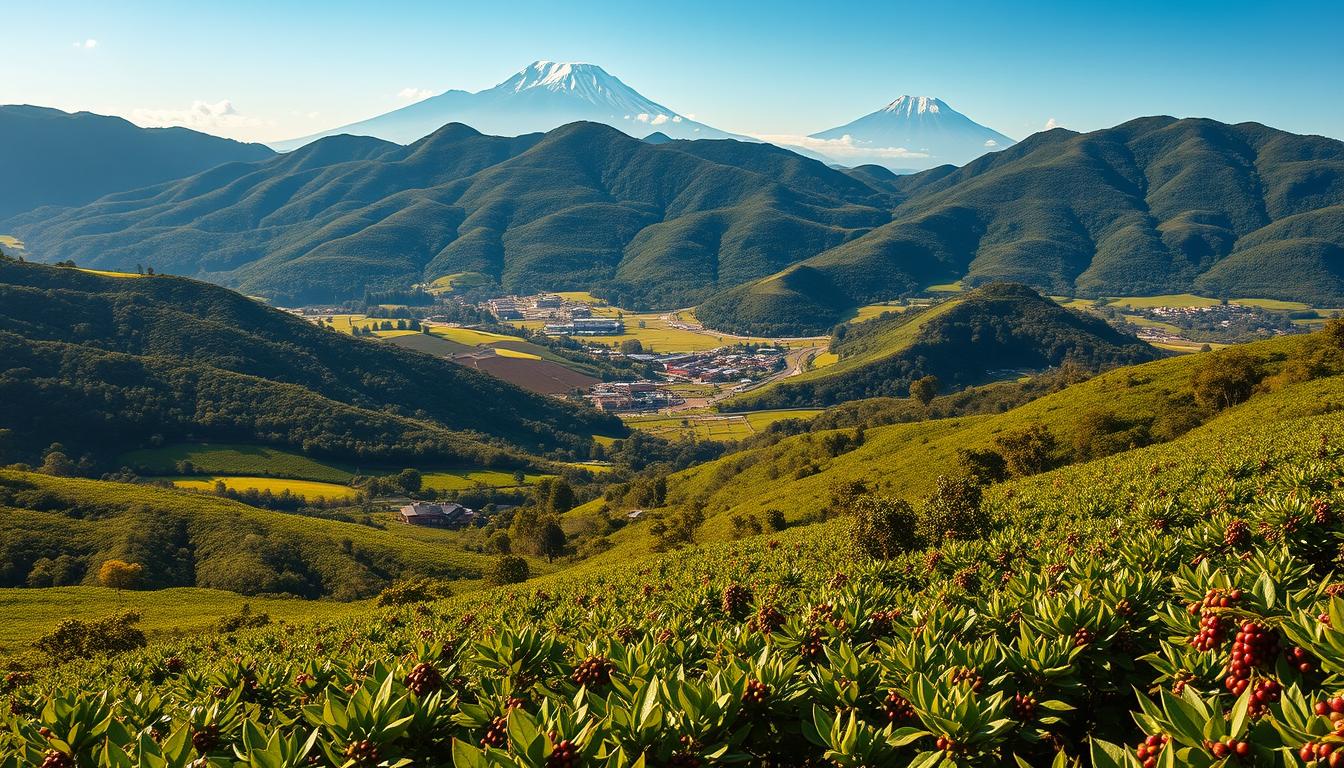
Guatemala is famous for its coffee, thanks to its many regions. Each area has its own taste, shaped by altitudes and soil.
The main coffee spots are Antigua, Huehuetenango, and Cobán. These places have high altitudes and rich soil. This mix creates complex coffee flavors.
The altitude where coffee grows affects its taste. Higher altitudes mean more detailed and refined flavors.
Key Takeaways
- Guatemala’s diverse coffee regions offer unique flavor profiles.
- Altitude plays a crucial role in shaping coffee flavor.
- Regions like Antigua, Huehuetenango, and Cobán are known for their high-quality coffee.
- Coffee grown at higher altitudes tends to have more complex flavors.
- Guatemalan coffee is renowned for its rich volcanic soil and distinct flavor notes.
Understanding Guatemala’s Coffee Regions
Guatemala’s coffee regions are key to the country’s coffee taste. Each area has its own special terroir. This makes Guatemalan coffee known for its wide range of flavors.
The Significance of Antigua
Antigua is famous for its rich volcanic soil and balanced coffee. Its coffee has a smooth flavor with a hint of chocolate. This makes it a hit with coffee lovers.
The Unique Qualities of Huehuetenango
Huehuetenango stands out for its high altitude and dry climate. Its coffee is known for bright acidity and fruity notes. This gives it a unique taste.
Exploring the Richness of Cobán
Cobán is known for its lush cloud forests. Its coffee is complex and rich. It has floral and fruity undertones, adding to Guatemalan coffee’s diversity.
Each region in Guatemala—Antigua, Huehuetenango, and Cobán—brings something special to coffee. Knowing about these areas helps us appreciate the complexity and richness of Guatemala’s coffee.
The Role of Altitude in Coffee Flavor
Altitude is key in shaping coffee’s flavor, affecting its quality and taste. Guatemala’s varied landscapes offer a perfect setting to see how altitude changes coffee.
Flavor Profiles and Altitude Dynamics
Coffee from high altitudes has a complex flavor. The slower growth at these heights leads to more acidity and a richer taste.
On the other hand, coffee from lower altitudes matures faster. This results in sweeter flavors but less acidity. This balance is important for both coffee makers and drinkers.
How Altitude Influences Acidity and Aroma
Altitude greatly affects coffee’s acidity. Coffees from higher altitudes have a bright, lively acidity.
The aroma of coffee also changes with altitude. Coffees from higher elevations often have a more complex and intense aroma. These aromas can include floral and fruity notes.
Knowing how altitude impacts acidity and aroma helps us appreciate Guatemalan coffee. It also helps us make better comparisons.
Volcanic Soil and Its Impact on Coffee
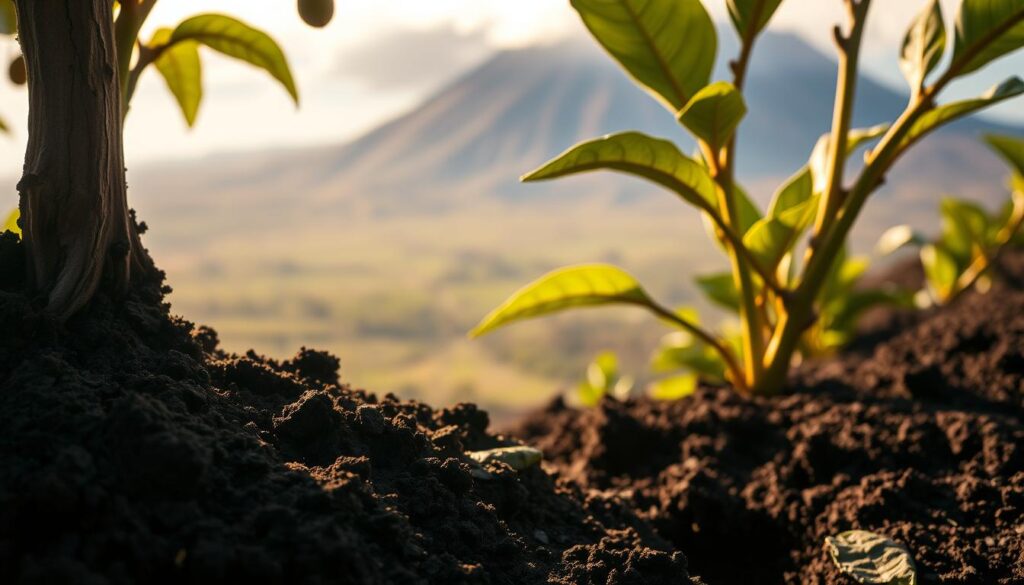
Guatemala’s coffee is special because of its volcanic soil. This soil is full of minerals and nutrients. It makes the coffee taste unique.
Nutrient-Rich Soil from Guatemala’s Volcanic Mountains
The volcanic mountains in Guatemala have some of the richest soil in the world. This soil is packed with minerals like potassium, magnesium, and calcium. These minerals are key for growing great coffee.
Experts say, “Guatemala’s volcanic soil is crucial for coffee’s complex flavors.” Coffee from these areas often tastes like chocolate, caramel, and fruit. This shows how soil affects flavor.
“The unique combination of minerals in Guatemala’s volcanic soil gives its coffee a distinct taste that is highly prized by coffee connoisseurs.”
Flavor Complexity Derived from Soil Composition
The soil in Guatemala’s volcanic areas is key to coffee’s flavor. Minerals and the soil’s pH level shape the coffee’s taste. For example, potassium makes coffee sweeter, while magnesium adds brightness and acidity.
| Mineral | Impact on Coffee Flavor |
|---|---|
| Potassium | Enhances sweetness |
| Magnesium | Contributes to brightness and acidity |
| Calcium | Supports overall plant health and flavor development |
The mix of minerals and other factors like altitude and climate create a complex flavor. This is what makes Guatemalan coffee so special. The flavor complexity from the soil is a big reason for its high quality.
Sustainable Farming Practices in Guatemala
Guatemalan coffee farmers are now using sustainable farming methods. These methods improve coffee quality and help protect the environment. This change is key to keeping coffee production and nature in balance.
These sustainable practices help farmers and the environment in many ways. Some important practices include:
Shade-Grown Techniques and Their Benefits
Shade-grown coffee grows under a tree canopy, like a natural forest. This method has many advantages:
- It helps keep biodiversity by giving homes to many species
- It stops soil erosion because tree roots hold the soil
- It makes coffee taste better because it grows slower
Organic Certifications: Ensuring Quality and Sustainability
Organic certifications mean coffee farms follow strict rules. They avoid synthetic fertilizers and pesticides. This ensures high-quality coffee and supports sustainable farming.
Organic certifications bring many benefits:
- They keep ecosystems healthy by avoiding chemicals
- They improve soil health with natural fertilizers
- They make coffee taste better because of careful handling
Fair Trade Initiatives and Their Economic Impact
Fair Trade initiatives are vital for coffee farmers. They ensure farmers get a fair price for their coffee. This helps local communities by allowing them to invest in their farms and improve their lives.
The main benefits of Fair Trade include:
- They give farmers fair prices, boosting their income and stability
- They fund community projects like schools and healthcare
- They empower farmers through training and support
Guatemalan coffee farmers are making their coffee better and the industry more sustainable. They are also making sure farmers get a fair deal.
Community Cooperatives and Local Empowerment
In Guatemala’s coffee areas, community cooperatives are key. They empower local farmers. These groups are more than just organizations; they are the heart of the coffee world. They give farmers the support they need.
The Role of Cooperatives in Farmers’ Lives
Cooperatives change coffee farmers’ lives. They offer training and resources to improve farming skills. This leads to better coffee quality and higher yields.
By working together, farmers share knowledge and cut costs. They also get stronger in the market. This is a big win for them.
Cooperatives also give financial help to farmers. They help with the ups and downs of coffee farming. This is key since farmers often can’t get loans from banks.
Examples of Community Projects
Many community projects have been started by cooperatives in Guatemala. For example, some focus on sustainable farming. This includes organic and shade-grown coffee. It makes coffee better and helps the environment.
- Projects focused on improving coffee quality through better processing techniques.
- Initiatives aimed at enhancing the livelihoods of farmers through education and training.
- Programs that promote environmental sustainability, such as reforestation and water conservation.
These projects show how important cooperatives are. They empower farmers and support sustainable coffee farming in Guatemala.
Historical Context of Coffee Cultivation in Guatemala
Coffee in Guatemala has a rich history, deeply connected to the country’s past. It started in the 19th century and changed Guatemala into a top coffee producer. This marked a new chapter for the nation.
Coffee as a Cultural Heritage
Coffee is a big part of Guatemalan culture. It has shaped traditions, social structures, and even food. Guatemalan coffee is known for its quality, making the nation proud.
Coffee is everywhere in Guatemala, from farms to cafes. It has inspired local crafts and helped communities. Many farms and cooperatives support social projects.
Economic Importance of Coffee: Past and Present
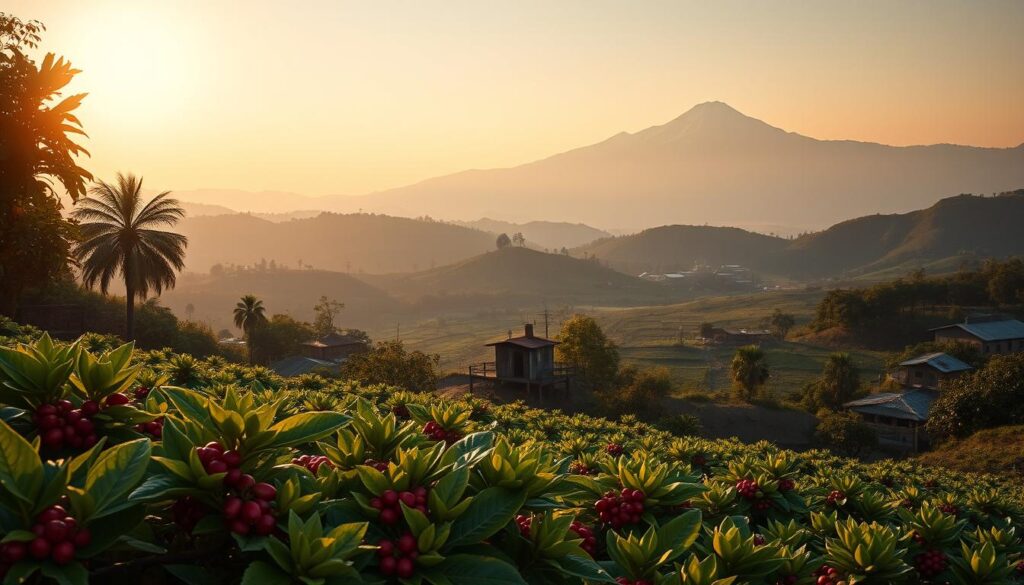
Coffee has greatly impacted Guatemala’s economy, then and now. In the late 19th and early 20th centuries, coffee was key to the economy. Today, it still provides jobs for many.
The coffee industry boosts other sectors like transportation and tourism. Coffee tourism is growing, letting visitors see how coffee is made.
Key benefits of the coffee industry in Guatemala include:
- Jobs in rural areas
- Foreign income from exports
- Boosting local economies with tourism
- Supporting industries like transportation and processing
In summary, coffee in Guatemala is more than farming. It’s a cultural treasure and a key part of the economy. Knowing its history helps us understand Guatemala’s coffee industry and its future.
The Environmental Impact of Coffee Farming
Sustainable coffee farming is key in Guatemala to protect its biodiversity and ecosystems. Coffee production can harm the environment if not done right. It can cause deforestation, soil erosion, and water pollution.
Practices for Soil and Water Conservation
Coffee farms in Guatemala are using new ways to save soil and water. Shade-grown coffee helps keep biodiversity and stops soil erosion. Techniques like terracing and contour planting also help keep soil quality and prevent landslides.
Water conservation is also a big deal. Many farms use efficient irrigation systems to cut down on waste. Some even collect rainwater to lessen their need for groundwater.
Biodiversity and Ecosystem Preservation Efforts
Guatemalan coffee farms are working hard to save biodiversity. They keep agroforestry systems to give homes to many plants and animals. This helps the local ecosystems and makes coffee crops more resilient to climate change.
Some coffee cooperatives are also planting trees and making wildlife corridors. These efforts help the ecosystem and support biodiversity.
The environmental harm from coffee farming in Guatemala can be lessened with sustainable methods. By focusing on saving soil, water, and biodiversity, the coffee industry can have a greener future.
The Future of Guatemalan Coffee
Guatemalan coffee producers are working hard on sustainability and quality. They want to keep their success going strong.
The world’s coffee market is changing fast. People want coffee that’s high-quality and comes from sustainable sources. This change is both a chance and a challenge for Guatemalan coffee makers.
Trends in Global Coffee Consumption
More people around the world are drinking coffee. This is thanks to new markets and a love for specialty coffee. Guatemalan coffee, with its unique tastes, is ready to take advantage of this trend.
Specialty coffee is in high demand. It’s all about the coffee’s quality and special features. Guatemalan coffee makers are working to improve their coffee and focus on quality.
The Potential for Sustainable Growth
Guatemalan coffee has a big chance for sustainable growth. This is thanks to the country’s dedication to green farming and protecting the environment.
By using sustainable methods, Guatemalan coffee makers can make better coffee. They also help keep the environment safe. This way, they can have lasting success in the global market.
In short, Guatemalan coffee’s future is bright. It’s all about being sustainable and focusing on quality to grow in the global market.
Conclusion
Guatemala’s coffee industry is complex and influenced by many factors. Altitude, soil, and sustainable farming are key. The country’s different regions, like Antigua, Huehuetenango, and Cobán, each offer unique flavors.
Recap of Guatemala’s Coffee Regions and Sustainability Efforts
The coffee’s flavor changes with altitude. Higher altitudes often mean more complex tastes. Guatemalan coffee is known for its rich flavors and acidity.
Sustainable farming practices, like shade-grown and organic, improve coffee quality. They also help the environment and support fair trade.
Empowering Consumers through Informed Choices
Choosing sustainable coffee helps local communities and the environment. As demand for quality, sustainable coffee grows, it’s crucial to know the impact of our choices. This way, we help keep Guatemala’s coffee heritage alive and support its coffee farmers.