
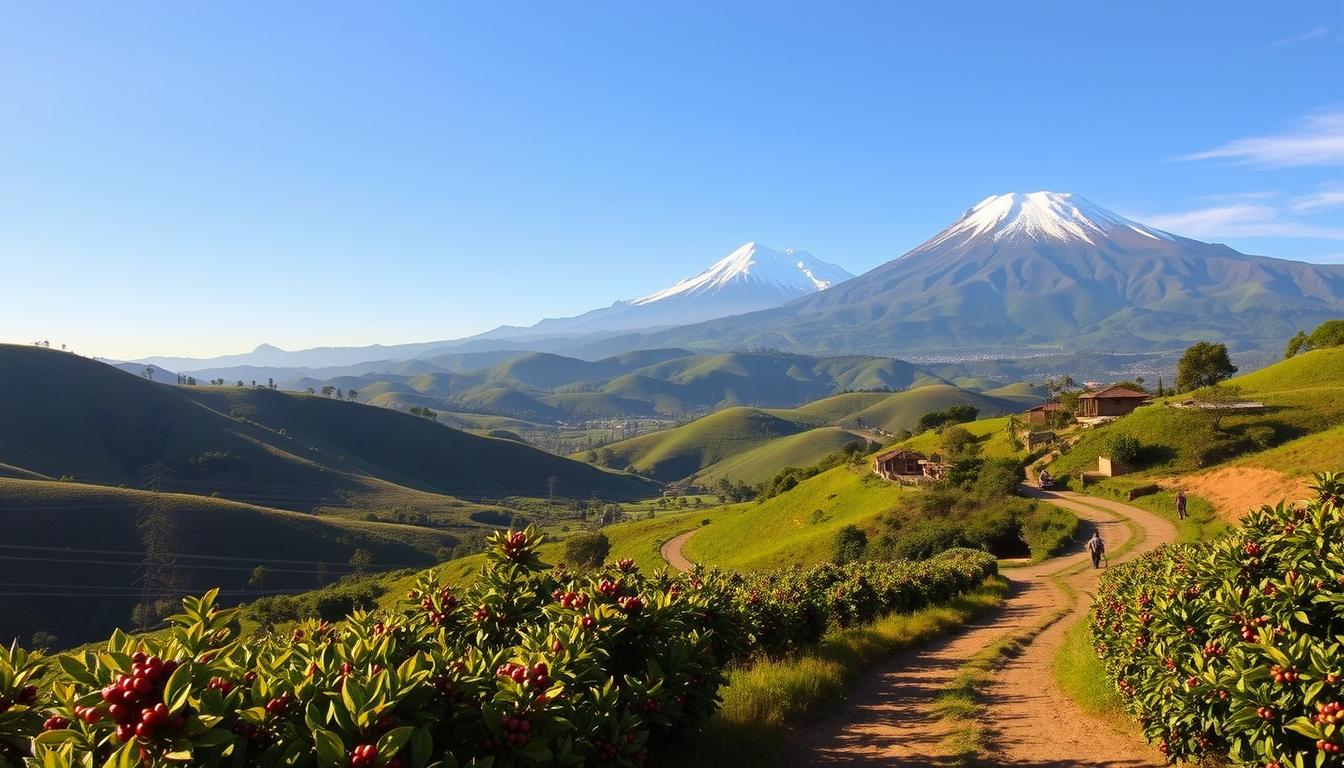
Guatemala is famous for its exceptional coffee. This is thanks to its unique geography and fertile volcanic soil. Places like Antigua, Huehuetenango, and Atitlán stand out for their high-quality coffee production.
The rich soil fertility in these areas, along with the climate and altitude, make Guatemalan coffee special. This is why Guatemalan coffee is loved worldwide for its balanced taste and rich flavors.
Key Takeaways
- Guatemala’s unique geography contributes to its exceptional coffee.
- Regions like Antigua and Huehuetenango are known for high-quality coffee.
- The fertile volcanic soil enhances the flavor profile of the coffee.
- Guatemalan coffee is characterized by balanced acidity and rich flavors.
- The distinct climate and altitude play a crucial role in coffee quality.
The Importance of Volcanic Soil in Coffee Cultivation
Guatemala’s rich volcanic soil is key to its top-notch coffee. This soil’s unique mix shapes the coffee’s flavor and quality.
Volcanic soil is packed with minerals. These minerals are vital for coffee plants. They give the coffee its unique taste and smell.
How Volcanic Ash Enriches the Soil
Volcanic ash is a big part of Guatemala’s soil. It adds important nutrients like potassium, magnesium, and calcium. These nutrients help coffee plants grow strong.
The ash also makes the soil better for water and air. This helps roots grow and makes the soil more fertile.
Nutrient Profile of Guatemala’s Volcanic Soil
Guatemala’s soil is known for its rich nutrients. It has lots of potassium, magnesium, and iron. These minerals make Guatemalan coffee taste complex.
| Nutrient | Benefit to Coffee Plants | Impact on Flavor |
|---|---|---|
| Potassium | Promotes overall plant health and resistance to disease | Enhances sweetness and body |
| Magnesium | Essential for photosynthesis and plant growth | Contributes to the coffee’s acidity and flavor complexity |
| Iron | Important for chlorophyll production and plant vigor | Adds depth and richness to the coffee’s flavor profile |
Local cooperatives in Guatemala use sustainable farming. They grow coffee in the shade and get organic certifications. These methods protect the environment and improve the coffee’s quality.
Key Coffee Regions of Guatemala
Guatemala is famous for its coffee, thanks to its rich soil and varied climate. Each region has its own unique taste and quality. These areas are key to Guatemala’s coffee success.
Antigua: A Rich Heritage of Coffee Farming
Antigua is a top coffee spot in Guatemala, with a long history of coffee making. Its coffee is known for its balanced taste and hints of chocolate and spice. The volcanoes nearby add to the coffee’s special flavor.
“The coffee from Antigua is known for its bright acidity and complex flavor profile, making it a favorite among coffee connoisseurs.”
Huehuetenango: Elevation and Flavor Complexity
Huehuetenango is another important coffee area in Guatemala. It’s known for its high altitudes and complex tastes. The coffee here has bright acidity and fruit flavors, with a sweet and floral taste.
Cobán: Diversity in Microclimates
Cobán is in northern Guatemala, famous for its varied climates and rich wildlife. The coffee here is grown in the Alta Verapaz department. It’s known for its balanced taste and hints of fruit and spices.
Community efforts are vital in these regions. They support farmers and protect the environment. Many cooperatives use sustainable farming, like shade-grown and organic methods.
| Region | Elevation (meters) | Flavor Profile |
|---|---|---|
| Antigua | 1,500-1,700 | Balanced acidity, chocolate, spice |
| Huehuetenango | 1,500-2,000 | Bright acidity, fruit notes, floral |
| Cobán | 1,300-1,600 | Balanced acidity, fruit, spices |
These efforts help farmers and protect the environment. They promote sustainable farming and biodiversity.
The Role of Altitude in Flavor Development
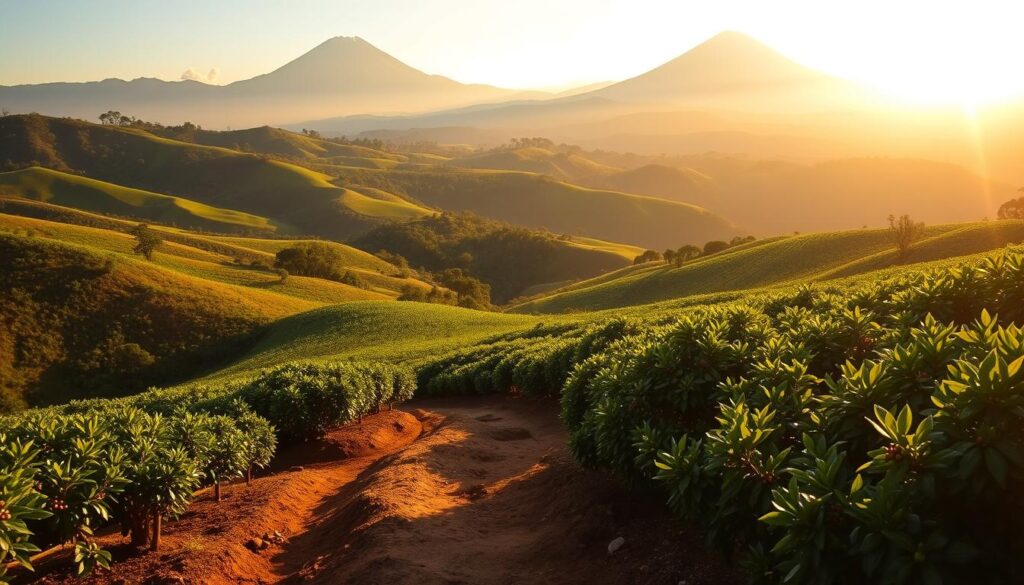
The high elevations in Guatemalan coffee regions deeply affect the flavor of the coffee. At these heights, coffee cherries mature more slowly. This leads to a more complex flavor profile.
Impressive Elevations in Guatemalan Coffee Regions
Guatemala boasts some of Central America’s highest coffee-growing areas. Places like Huehuetenango and Atitlán reach elevations from 1,500 to over 2,000 meters. The combination of these high altitudes and rich volcanic soil fertility makes for perfect coffee-growing conditions.
Impact of Altitude on Acidity and Sweetness
The altitude where coffee is grown greatly influences its acidity and sweetness. At higher elevations, coffee often has a brighter acidity and sweeter taste. This is because the slower maturation process enhances these qualities.
Coffee grown at high altitudes also has a more distinct flavor. This is because there’s a higher concentration of sugars and acids. The mix of high altitude and fertile soil in Guatemala makes its coffee exceptional. It’s highly prized by coffee lovers around the world.
Sustainable Farming Practices Among Cooperatives
Guatemalan coffee cooperatives lead in sustainable farming. They use methods that protect the environment and ensure top-quality coffee. These practices also improve the coffee’s flavor and help preserve natural resources.
Shade-Grown Techniques: Protecting the Environment
Guatemalan cooperatives use shade-grown techniques. This method keeps biodiversity high, reduces soil erosion, and supports wildlife. It also makes the coffee taste better by letting it ripen slower, which adds more minerals and nutrients.
Organic Certifications: A Commitment to Quality
Many cooperatives have organic certifications. This shows their dedication to quality coffee without harmful chemicals. Organic farming keeps the environment clean and preserves soil health. Guatemala’s volcanic soil is perfect for this, making the coffee both tasty and sustainable.
Fair Trade Initiatives: Empowering Farmers
Fair Trade is key for Guatemalan cooperatives. It ensures farmers get a fair price for their coffee. This helps local communities and fights for social justice. It lets farmers improve their farms and lives, making coffee production more sustainable.
| Sustainable Practice | Environmental Benefit | Impact on Coffee Quality |
|---|---|---|
| Shade-Grown Techniques | Biodiversity conservation, reduced soil erosion | Complex flavor profile, enhanced mineral content |
| Organic Certifications | Reduced chemical runoff, preserved soil health | Cleaner, more natural flavor profile |
| Fair Trade Initiatives | Empowers local communities, promotes social justice | Improved livelihoods for farmers, sustainable production |
These sustainable practices help farmers a lot. They protect the environment, ensure quality coffee, and support social justice. This leads to better incomes and working conditions for farmers, boosting their communities’ prosperity.
Community Projects and Their Impact
Community projects have a huge impact on Guatemalan coffee farming. They help improve the lives of coffee farmers and their families. They also promote sustainable farming practices.
Educational Programs Supporting Local Farmers
Educational programs are key in Guatemalan coffee farming. They teach farmers new farming techniques and how to grow more coffee. Training on coffee growth and pest control is very helpful.
“Education is the key to unlocking the potential of our farmers. By providing them with the right training and resources, we can significantly improve their productivity and quality of life.”
Workshops on sustainable farming, soil conservation, and climate-resilient agriculture are part of these programs. They help farmers become better at what they do. They also make coffee production more sustainable.
Environmental Protection Initiatives
Protecting the environment is a big part of these projects. Efforts like reforestation, water conservation, and protecting biodiversity are underway. Shade-grown coffee, for example, helps keep ecosystems healthy and reduces the need for harmful chemicals.
| Initiative | Impact | Beneficiaries |
|---|---|---|
| Reforestation | Improved biodiversity | Local ecosystems |
| Water Conservation | Reduced water waste | Farmers and local communities |
| Biodiversity Protection | Preserved ecosystems | Local wildlife and farmers |
Economic Development through Cooperative Models
Community projects also focus on economic growth. Cooperative models help farmers by giving them better market access and prices. This way, farmers can work together, share resources, and face challenges as a team.
- Improved market access for farmers
- Better pricing through collective bargaining
- Shared resources and knowledge among members
Supporting these projects helps ensure Guatemalan coffee farming is sustainable for the long term. The positive effects are clear in the better lives of farmers and the protection of the environment.
Historical Context of Coffee in Guatemala
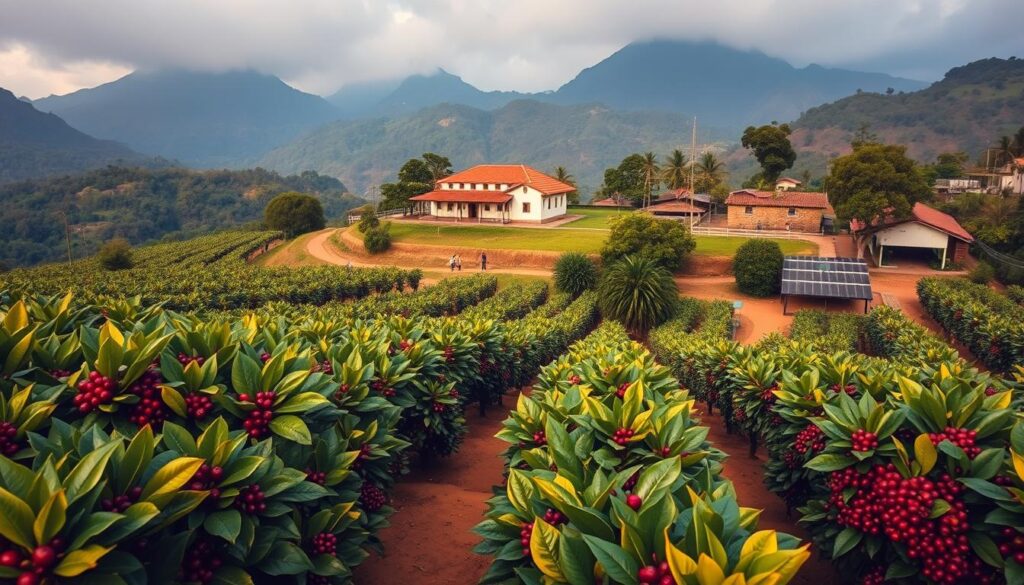
The history of coffee in Guatemala is fascinating. It started with European settlers introducing it. The fertile soil helped make it a key part of the economy.
In the 19th century, coffee came to Guatemala. The climate and volcanic soil were perfect for it. The soil’s fertility and drainage were ideal for coffee.
Coffee’s Introduction and Early Growth
Local farmers were excited when coffee was introduced. They saw its potential in Guatemala’s volcanic areas. The country’s climate, altitude, and soil fertility made it perfect for quality coffee.
In the late 19th and early 20th centuries, coffee grew a lot. Foreign investment and large plantations helped. Guatemala’s coffee industry became a big economic force.
The Economic Significance of Coffee Production
Coffee has been crucial to Guatemala’s economy for over a century. It provides jobs and export revenue. The industry’s success is linked to the fertile volcanic soil.
Today, Guatemalan coffee is famous for its unique flavors and quality. Coffee cooperatives and farms keep improving. With growing demand for specialty coffee, Guatemala is set to stay a key player.
Challenges Faced by Guatemalan Coffee Farmers
Climate change and market ups and downs are big hurdles for Guatemalan coffee farmers. These issues hurt farmers’ lives and the quality and amount of coffee they make.
Climate Change and Its Effects on Crop Yields
Climate change is changing the weather, making it harder for coffee plants to grow. Warmer weather brings more pests and diseases. Droughts or too much rain can harm crops and lower yields.
The more frequent extreme weather makes it tough for farmers to know when to plant and harvest.
Climate change affects coffee yields in many ways:
- Less water because of changing rain patterns
- More pests and diseases
- Changes in where coffee can grow
Farmers are using climate-resilient practices like shade-grown coffee and soil care. These methods keep the soil healthy and help plants grow. They also protect biodiversity.
Market Fluctuations and Price Volatility
Guatemalan coffee farmers also face big economic challenges. The global coffee market’s prices change a lot. These changes are due to many factors, including supply and demand, politics, and speculation.
When prices fall, many farmers find it hard to make ends meet. This leads to financial problems.
Some reasons for market ups and downs include:
- Global supply and demand imbalances
- Changes in currency values
- Trade policies and tariffs
To tackle these issues, many farmers are adopting sustainable farming practices. They are also getting certifications like Fair Trade to get a steady income. New ways of farming are being tried to make coffee better and get higher prices.
Future Prospects for Guatemalan Coffee
Sustainable practices and a growing demand for specialty coffee are key factors that will shape the future of Guatemalan coffee.
Innovations in Sustainable Agriculture
Innovations in sustainable agriculture are crucial for the long-term viability of Guatemalan coffee. Techniques such as shade-grown coffee and organic farming practices not only improve the quality of the coffee but also contribute to environmental conservation.
These practices help in maintaining soil health, conserving water, and reducing the carbon footprint of coffee production. As a result, Guatemalan coffee farmers are able to produce high-quality coffee while also protecting the environment.
The Growing Demand for Specialty Coffee
The demand for specialty coffee is on the rise globally, and Guatemalan coffee is well-positioned to capitalize on this trend. With its rich flavor profile and high-quality production standards, Guatemalan coffee is gaining popularity among specialty coffee roasters and consumers.
| Factor | Impact on Guatemalan Coffee |
|---|---|
| Innovations in Sustainable Agriculture | Improved quality and environmental conservation |
| Growing Demand for Specialty Coffee | Increased market opportunities and higher prices for high-quality coffee |
The cultural significance of coffee in Guatemala is also worth noting. Coffee production is not just an economic activity but also an integral part of the country’s heritage and identity.
Conclusion: The Enduring Legacy of Guatemalan Coffee
Guatemalan coffee is a top pick for coffee lovers. This is because of the country’s special volcanic soil and focus on sustainable farming. The soil’s rich minerals help the land stay fertile, which is great for growing coffee.
Cultural Significance and Quality
Coffee is a big part of Guatemalan culture. Many families make a living from it. The unique taste of Guatemalan coffee comes from the country’s different climates and soil.
Sustainable Practices and Future Prospects
Guatemalan coffee farmers are known for their green farming methods. These practices improve the coffee’s quality and help the environment. With more people wanting specialty coffee, Guatemalan farmers are ready to meet the demand. They focus on quality and caring for the planet.