
Guatemala is famous for its coffee, with top spots like Antigua, Huehuetenango, and Atitlán. The Rainforest Alliance certification is key in the country’s coffee world. It supports sustainable farming and helps local farmers’ lives.
The Rainforest Alliance helps local groups by offering training and support. This boosts their coffee’s quality. It also helps the environment and makes sure everyone is treated fairly.
Key Takeaways
- Rainforest Alliance certification promotes sustainable farming practices in Guatemala.
- Local cooperatives benefit from training and support.
- The certification enhances coffee quality and contributes to environmental conservation.
- Social equity is improved through fair labor practices.
- Guatemala’s coffee regions, such as Antigua and Huehuetenango, are prominent beneficiaries.
Overview of Rainforest Alliance Certification
The Rainforest Alliance certification has a long history and a clear mission. It’s known for its commitment to the environment, social responsibility, and economic growth. This certification is more than just a label; it’s a promise to protect our planet and support fair trade.
History and Mission of Rainforest Alliance
The Rainforest Alliance started in the 1980s. Its goal is to save biodiversity and improve lives by changing how we use land and do business. They focus on certifying farms, like coffee plantations, to help achieve this goal.
To get certified, farms must follow strict standards. They need to use sustainable farming practices, protect nature, and treat workers fairly. This way, coffee farms can show they meet high standards and earn the Rainforest Alliance seal of approval.
Importance of Sustainable Practices
Using sustainable methods in coffee farming is key for keeping biodiversity alive and ensuring coffee can be grown for years to come. Methods like shade-grown coffee, organic farming, and saving water help the environment and improve local lives.
| Sustainable Practice | Environmental Benefit | Social Benefit |
|---|---|---|
| Shade-Grown Coffee | Biodiversity Conservation | Improved Livelihoods |
| Organic Farming | Soil Conservation | Healthier Communities |
| Water Conservation | Reduced Water Pollution | Efficient Resource Use |
Local cooperatives are crucial in adopting these sustainable methods. They not only make better coffee but also help protect our planet. By choosing sustainable coffee, we support farmers and help the environment.
Coffee as a Cultural Pillar in Guatemala
In Guatemala, coffee is more than just a product; it’s a cultural symbol. The country’s geography, with its rich volcanic soil and climate, is perfect for coffee. This has made coffee a big part of Guatemala’s identity.
Coffee has been a part of Guatemala since the 19th century. Over time, the industry has changed due to global trends and local economic shifts.
Historical Roots of Coffee Production
The 18th century saw coffee arrive in Guatemala, starting a new chapter in farming. The highlands were the first place coffee was grown, thanks to the climate and soil.
Coffee quickly became a key economic activity, drawing in investors and workers. The growth of coffee also led to better roads and ports, helping trade inside and outside the country.
Economic Impact on Local Communities
The coffee industry has deeply affected local communities in Guatemala. It has created jobs, both directly in coffee farming and indirectly in services.
Certification programs, like Rainforest Alliance certification, are key to sustainable coffee production. They ensure coffee is grown in an eco-friendly and socially responsible way. This benefits local communities and helps the coffee industry stay sustainable.
Guatemalan coffee farmers gain by using sustainable practices and getting certifications. This opens up premium markets and helps them get better prices. It also encourages them to keep farming sustainably.
Key Coffee Regions in Guatemala
Guatemala is famous for its coffee, thanks to places like Antigua, Huehuetenango, and Cobán. These areas are known for their unique soil and climate. They produce top-notch coffee and help the country’s economy and environment.
Antigua: A Heritage of Flavor
Antigua is a historic coffee spot in Guatemala. It’s surrounded by volcanoes, which gives its coffee a special taste. Rainforest Alliance certification here means coffee is grown in a way that’s good for the planet and tastes great.
Huehuetenango: Altitude and Quality
Huehuetenango is famous for its high altitude coffee. The cooler weather and clear seasons help the coffee grow slowly. This makes the flavor richer.
Cobán: Unique Climate and Soil Benefits
Cobán is in the highlands of Guatemala. It has a special climate and soil. Coffee is grown under shade, which helps the environment and the coffee plants. Sustainable farming practices are common here, making coffee production good for the planet and farmers.
Guatemala’s coffee regions, like Antigua, Huehuetenango, and Cobán, are key players in the global coffee market. They focus on quality and the environment. This makes Guatemalan coffee, including Rainforest Alliance certified, a top choice for coffee lovers.
Sustainable Farming Practices in Coffee Cultivation
Using sustainable farming practices is key for Guatemalan coffee’s future. These methods improve coffee quality and help the environment. They also support local communities.
Shade-Grown Coffee: Benefits for Biodiversity
Shade-grown coffee grows under a tree canopy. It’s a traditional way that boosts biodiversity. It also cuts down on chemical use.
By keeping trees, farmers protect their coffee. They also create homes for birds and other animals.
Shade-grown coffee has more than environmental benefits. It also makes the coffee taste better. This is because the beans ripen slower, giving a richer flavor.
Organic Certifications: Ensuring Quality and Health
Organic certifications are important for coffee quality and health. Farms must follow strict rules to get certified. This means no synthetic fertilizers or pesticides.
Organic farming is good for the soil and plants. It also keeps farmers and their families healthy. Choosing organic coffee supports eco-friendly farming.
Fair Trade Initiatives: Empowering Local Farmers
Fair Trade helps farmers get fair prices for their coffee. This improves their lives and lets them invest in their communities.
Through Fair Trade, farmers reach global markets. They get fair pricing for their sustainable coffee. This is vital for small farmers facing big challenges.
Volcanic Soil and Coffee Quality
Volcanic soil is key in many Guatemalan coffee areas. It’s full of minerals and nutrients, helping coffee plants grow well.
This soil’s mineral-rich nature gives Guatemalan coffee its complex flavor profiles. Nutrients like potassium, magnesium, and calcium boost the beans’ quality and taste.
How Soil Composition Affects Flavor Profiles
The soil’s makeup greatly affects coffee’s taste. Volcanic soil’s high nutrient levels help coffee cherries grow well. This leads to beans with unique and lively flavors.
Coffee from volcanic soil often has balanced acidity and a rich body. These traits are loved by coffee lovers. The soil’s minerals also add to the coffee’s taste, bringing out fruit, chocolate, or spice notes.
| Soil Characteristic | Impact on Coffee Flavor |
|---|---|
| High Potassium Content | Enhances overall flavor and promotes healthy plant growth |
| Presence of Magnesium | Contributes to the coffee’s body and richness |
| Calcium Availability | Supports the development of coffee cherries and bean quality |
The Role of Altitude in Coffee Growth
Altitude is crucial in coffee making, affecting quality and flavor. Coffee grown at high altitudes matures slower, leading to more complex flavors.
In Guatemala, places like Huehuetenango and Antigua have high altitudes. These help coffee grow sustainably, with slower maturation. This makes the coffee’s acidity and flavor more complex.
Guatemala’s volcanic soil and high altitudes create a perfect environment for coffee. The unique flavors and sustainable methods make Guatemalan coffee famous worldwide.
Impact of Rainforest Alliance on Local Cooperatives
The Rainforest Alliance has changed the lives of coffee farmers in Guatemala. It does this through its certification programs. These programs promote sustainable farming, improving both the environment and farmers’ lives.
Supporting Farmer Education and Training is key for the Rainforest Alliance. It gives farmers the tools to grow better crops. A farmer said, “The training we received has been invaluable; it’s like having a constant guide to improve our farming techniques.“
Supporting Farmer Education and Training
The Rainforest Alliance offers detailed training for farmers. They learn about sustainable farming, soil care, and managing biodiversity. For example, they learn about shade-grown coffee, which protects plants and preserves nature.
This method of farming is good for the environment and farmers. It can lead to better coffee and more money for farmers.
A big part of the training is teaching sustainable farming practices. Farmers learn to use organic fertilizers and save water. This helps the environment and cuts down costs.
Increasing Access to Markets and Fair Pricing
The Rainforest Alliance also helps farmers get better prices for their coffee. Certified cooperatives can sell to markets that value sustainability. This means farmers can earn more money.
Thanks to the Rainforest Alliance, many cooperatives sell more coffee to international buyers. This boosts their income and encourages others to farm sustainably. It’s a positive change for the coffee community.
“The Rainforest Alliance certification has opened new doors for us, allowing us to sell our coffee at a fair price and improve our living conditions.”
The Rainforest Alliance has a big impact on cooperatives in Guatemala’s coffee sector. It helps farmers by supporting education and training. It also helps them get better prices for their coffee. This makes farming more sustainable and profitable.
Community Projects Enhancing Farmers’ Lives
In Guatemala’s coffee regions, community projects are changing farmers’ lives. The Rainforest Alliance supports these efforts. They aim to better the lives of farming communities.
Health and Education Initiatives
The Rainforest Alliance has started health and education projects. These help coffee farmers and their families. For example, health clinics have been set up in remote areas.
These clinics offer medical care and health education. A local farmer says, “Health is the foundation of a productive life,” showing how vital these efforts are.
Education is also a big focus. Programs for kids and adults are available. Scholarships help students, and adult programs teach farming and business skills. These efforts empower farmers and improve their lives.
Environmental Protection Efforts
The Rainforest Alliance also works to protect the environment. They have programs for reforestation, water conservation, and sustainable farming. “Protecting the environment is not just about conservation; it’s about ensuring the long-term sustainability of our coffee farms,” says a cooperative leader.
These actions help biodiversity and help farmers deal with climate change. Sustainable practices improve soil health and reduce erosion. This approach protects the environment for the future.
As one farmer says,
“Sustainability is not just a goal; it’s a way of life for us. We strive to work with nature, not against it.”
This belief is central to the Rainforest Alliance’s work. It’s making a real difference in Guatemalan coffee farmers’ lives.
Challenges Facing Guatemalan Coffee Farmers
Guatemalan coffee farmers face many challenges that threaten their sustainability. These issues affect coffee quality, yield, and farmers’ livelihoods. They also impact the communities around them.
Climate Change: A Growing Concern
Climate change is a big problem. It causes unpredictable weather, rising temperatures, and changes in rain. These changes can lead to less coffee, lower quality, and more disease and pests.
Economic Pressures and Market Competition
Guatemalan coffee farmers also deal with economic pressures and market competition. Global coffee prices can change a lot, making it hard to stay profitable. The global market is very competitive, so Guatemalan coffee must be top-notch and certified to stand out.
These challenges affect certification and sustainability a lot. Keeping certifications like Rainforest Alliance is tough due to climate change and economic issues. But, these certifications are key to getting into premium markets and ensuring a sustainable coffee future in Guatemala.
The Future of Rainforest Alliance Coffee in Guatemala
The future of Guatemalan coffee, with a focus on biodiversity, looks bright. The coffee industry is evolving, with a growing emphasis on sustainable practices and environmental care.
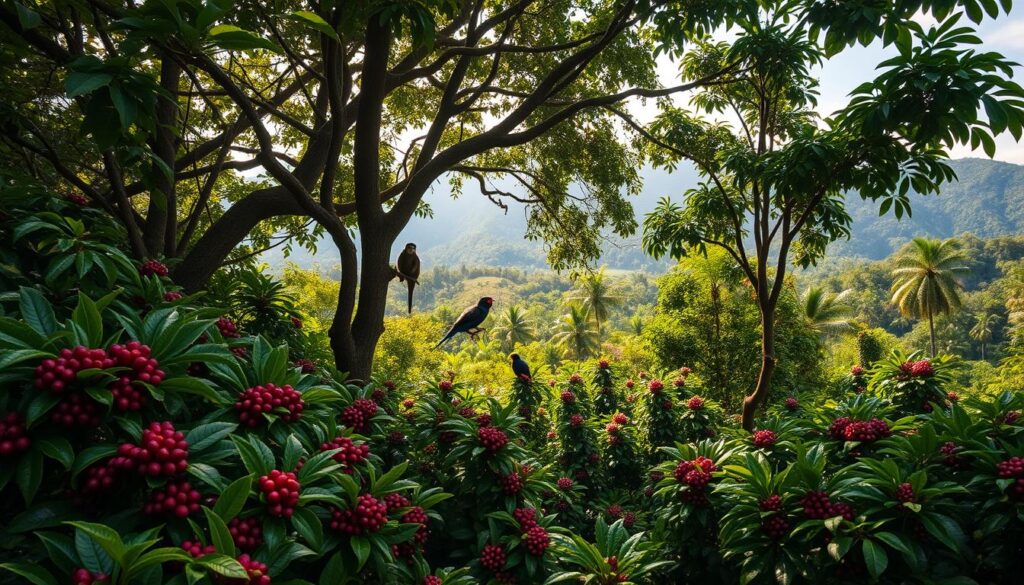
The Rainforest Alliance certification is more than a label. It’s a promise to care for the environment, society, and economy. Coffee producers in Guatemala are improving their coffee quality and protecting biodiversity through sustainable farming.
Opportunities for Growth and Sustainability
Adopting sustainable farming practices is key for growth. Shade-grown coffee, for example, supports many plants and animals, making ecosystems healthier. It also keeps soil healthy, saves water, and cuts down on harmful chemicals.
Investing in farmer education and training is vital. The Rainforest Alliance teaches farmers how to farm sustainably. This benefits farmers and helps the coffee economy stay strong.
Collaborations for a Stronger Coffee Economy
Working together is crucial for a stronger coffee economy. Coffee producers, local cooperatives, and international groups share knowledge and resources. They help each other face challenges like climate change and pests, improving coffee quality and sustainability.
The role of consumers is also important. Buying Rainforest Alliance certified coffee supports sustainable farming. This demand encourages more producers to farm in environmentally friendly ways, creating a positive cycle.
In summary, the future of Rainforest Alliance coffee in Guatemala is promising. With a focus on sustainability, education, and teamwork, the Guatemalan coffee industry can grow while protecting the environment.
Conclusion: The Lasting Impact of Rainforest Alliance
The Rainforest Alliance certification has changed the game for Guatemalan coffee farmers. It promotes sustainability and boosts their livelihoods. By using sustainable farming, farmers can grow more while keeping the environment safe.
Benefits for Farmers and the Environment
This certification brings many benefits. Farmers see better crop quality, more biodiversity, and better ecosystem services. It also helps them deal with climate change, making the coffee industry stronger.
Consumer Awareness and Support
It’s important for consumers to know and support Rainforest Alliance coffee. By picking certified coffee, they help a sustainable coffee industry grow. This support helps farmers who care for the environment and their communities. As more people want sustainable products, the Rainforest Alliance’s work will make a big difference.