
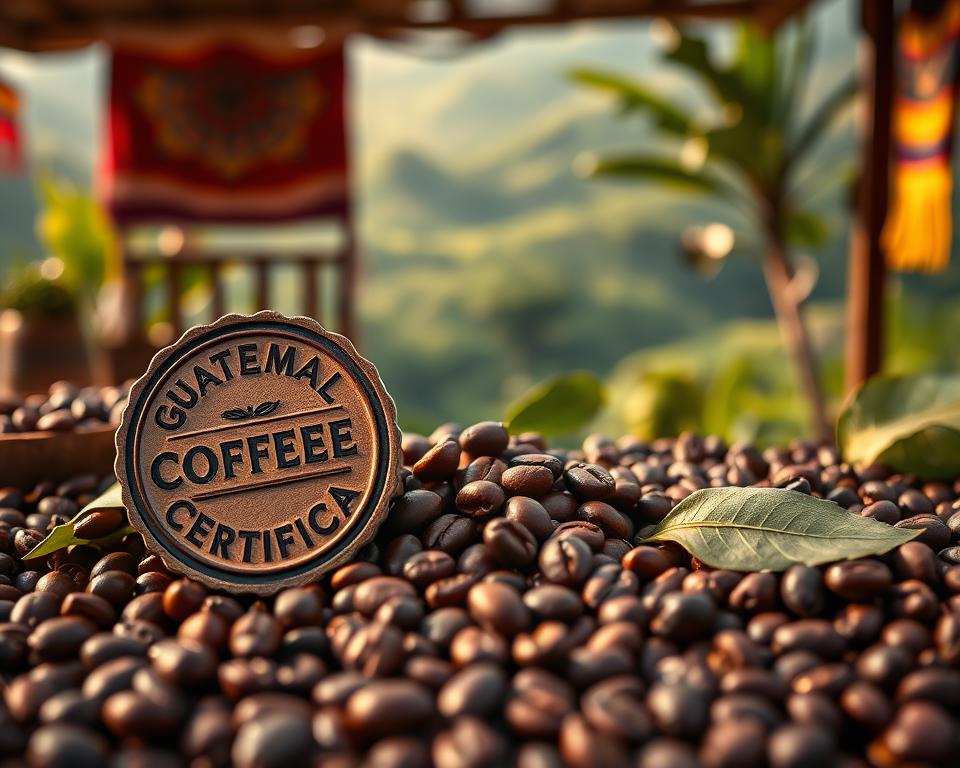
Guatemalan coffee is famous for its unique taste and quality. These qualities come from the country’s rich coffee culture and history. The Denomination of Origin is key in proving the coffee’s true origin and quality.
The Denomination of Origin is a high honor. It shows the coffee meets traditional methods and comes from a specific place. This honor boosts Guatemalan coffee’s value worldwide and keeps its cultural heritage alive.
Learning about the Denomination of Origin in Guatemalan coffee helps us value its craftsmanship. It shows the hard work and tradition behind every cup of coffee.
The Concept of Designation of Origin
Guatemala’s coffee heritage is protected and promoted by the Designation of Origin. This ensures the quality and authenticity of its coffee. The Designation of Origin is a certification that guarantees the origin and quality of coffee.
This label is awarded to coffee beans grown in specific regions. These regions are known for their unique climatic conditions, soil quality, and traditional farming practices.
Guatemalan coffee brands benefit from this designation. It assures consumers of the coffee’s authenticity and quality. The certification process involves verifying that the coffee is produced, processed, and prepared within a defined geographic area.
It also ensures that traditional methods and quality standards are followed. By promoting the unique characteristics of coffee from different regions, the Designation of Origin supports the diversity and richness of Guatemalan coffee. This enhances its reputation in the global coffee market.
Origins of Geographic Indication Systems in Agriculture
Geographic Indication Systems started to protect local farm products. They make sure products like coffee are known for their special traits. These traits come from where the product is made.
In coffee, these systems are key. They keep coffee true to its place of origin. This is very important for coffee from Guatemala. Each area there makes coffee with its own taste.
Application in Coffee Production
Geographic Indication Systems protect Authentic Guatemalan coffee. They stop fake products and keep quality high. This is good for everyone.
It helps local farmers and producers too. They get to show off their unique products worldwide.
Guatemala’s Coffee Heritage
Guatemala’s coffee culture dates back to the 18th century. It’s a big part of the country’s identity. Coffee is more than just a product here; it’s a tradition passed down through generations.
The country’s geography is perfect for coffee. Volcanic highlands and rich soil make Guatemalan coffee stand out. It’s known worldwide for its quality and unique flavors.
Guatemala’s coffee culture is deeply rooted in tradition. The old ways of making coffee are still followed. This keeps the country’s coffee culture rich and vibrant.
| Region | Coffee Characteristics |
|---|---|
| Antigua | Known for its balanced acidity and rich flavor |
| Huehuetenango | Characterized by its bright acidity and fruity notes |
| Atitlán | Recognized for its smooth, balanced flavor with hints of chocolate |
For more info on Guatemala’s coffee, visit Guatemala: The Hidden Jewel of High-Quality Coffee.
The Denomination of Origin in Guatemalan Coffee
To grasp the greatness of Guatemalan coffee, we must look at the Denomination of Origin. This label highlights the special traits and high quality of coffee from certain areas in Guatemala.
The rules for Denomination of Origin in Guatemalan coffee are set by the Guatemalan Ministry of Agriculture, Livestock, and Food (MAGA) and others. To get this label, coffee makers must follow strict rules. These include:
- Geographical origin: Coffee must be grown in one of Guatemala’s recognized coffee-producing regions.
- Varietal: Only specific coffee varieties are eligible.
- Cultivation practices: Producers must follow approved cultivation and harvesting methods.
- Processing methods: Coffee processing must meet certain standards.
Also, producers must go through a detailed certification process. This involves checks and reviews to make sure they meet the standards. The certification proves the coffee’s quality and realness.
Getting the Denomination of Origin label lets Guatemalan coffee makers stand out in the world market. They can ask for more money because of the known quality and uniqueness.
The Denomination of Origin also helps Guatemalan coffee’s image globally. It boosts a culture of quality and excellence.
Understanding Guatemala’s Eight Coffee Growing Regions
Guatemala’s coffee is special because of its eight unique growing regions. Each region has its own taste and features. These are shaped by things like altitude, soil, and climate.
Antigua is famous for its balanced coffee with chocolate notes. Atitlán is known for bright acidity and fruit flavors. Huehuetenango produces coffee with a high altitude and citrus notes.
The Fraijanes Plateau is known for balanced acidity and rich flavor. Oriente is famous for its coffee with a heavy body and spicy notes.
San Marcos and Nueva Santa Rosa are also important. San Marcos coffee has bright acidity and floral notes. Nueva Santa Rosa offers coffee with balanced acidity and fruit flavors.
Verapaces is known for its coffee with a rich body and earthy notes.
The Guatemalan coffee certification process recognizes these regions. It ensures coffee labeled with a specific region meets standards. This is key for keeping Guatemalan coffee quality and authentic.
Knowing these regions helps us appreciate Guatemalan coffee’s diversity. Whether you love coffee or are new to Guatemalan coffee, exploring these regions deepens your appreciation for its heritage.
How to Recognize Regional Flavor Profiles in Guatemalan Coffee
Exploring Guatemalan coffee’s unique flavors is like traveling through the country’s coffee-growing areas. Each region adds its own twist to the coffee’s taste. This makes Guatemalan coffee stand out.
Guatemala has eight main coffee-growing areas. Each one gives coffee its own special taste. For example, Antigua’s coffee is known for its smooth taste and hints of chocolate. On the other hand, Huehuetenango’s coffee is bright and fruity.
| Region | Typical Flavor Notes |
|---|---|
| Antigua | Chocolate, balanced acidity |
| Huehuetenango | Fruity, bright acidity |
| Atitlán | Floral, citrus notes |
Knowing about these regional flavors helps us enjoy Guatemalan coffee more. It lets us see the beauty of Guatemala’s coffee culture.
How the Certification Process Works
Guatemala is known for its high-quality coffee. To keep this reputation, it has a strict certification process. This process checks if coffee beans are of good quality, from the right place, and made the right way.
The first step in the process is for coffee producers to follow strict rules. They must keep detailed records of how they grow, harvest, and process their coffee. They also go through regular checks to make sure they follow these rules.
After the coffee is picked and processed, it’s checked for quality. The certification team looks at things like taste, acidity, and body. They make sure it meets the high standards expected.
This certification process has many benefits:
- It makes sure Guatemalan coffee is real and of high quality in the market.
- It gives producers a chance to stand out in the global market.
- It keeps Guatemalan coffee’s good name by stopping bad products from being sold as Guatemalan.
In the Guatemalan coffee market, getting certified is more than just a rule. It’s a sign of excellence. It shows that coffee is made with care and follows strict standards. This helps coffee production in Guatemala by supporting sustainable and fair trade practices.
Knowing how the certification process works helps both buyers and producers. It shows the effort and quality that goes into every cup of Guatemalan coffee.
How to Identify Authentic Guatemalan Coffee with Denomination of Origin
For coffee lovers, checking the Denomination of Origin is crucial. This label ensures the coffee comes from one of Guatemala’s eight coffee-growing areas. It also means the coffee meets quality and production standards.
To spot authentic Guatemalan coffee, look for the certification mark on the packaging. This mark shows the coffee meets Guatemalan standards. Reputable brands proudly show this mark.
Some top Guatemalan coffee brands include:
- Antigua Coffee
- Atitlán Coffee
- Huehuetenango Coffee
When buying Guatemalan coffee, check the packaging for details. Authentic coffee will have info on its origin.
By paying attention to these details, coffee lovers can enjoy Guatemalan coffee’s rich flavors. They also support local producers who focus on quality.
How Producers Benefit from the Designation
Getting the Denomination of Origin is a big win for coffee makers in Guatemala. It makes their coffee stand out and opens doors to new markets.
The money side is a big plus. With this label, Guatemalan coffee can sell for more. This means more money for farmers and better lives for them.
It also pushes for better coffee making. Farmers work harder to meet the high standards needed for this label. This makes their coffee even better.
| Benefits | Description | Impact |
|---|---|---|
| Economic Advantages | Higher prices for coffee due to recognized quality | Increased revenue for farmers |
| Quality Improvements | Adoption of best practices in production and processing | Enhanced coffee quality and distinctiveness |
| Market Opportunities | Access to new markets and customers seeking authentic Guatemalan coffee | Expanded market presence for producers |
In short, the Denomination of Origin is a big plus for Guatemalan coffee makers. It helps them stand out, earn more, and share their special coffee culture with the world.
How to Support Sustainable Practices in Guatemalan Coffee
To keep Guatemalan coffee at its best, we must support sustainable farming. This helps protect the environment, keeps biodiversity rich, and improves coffee taste.
Coffee in Guatemala gets a big boost from sustainable farming. The Guatemalan coffee certification pushes producers to use green methods. This includes growing coffee under shade, organic farming, and saving water.
When we choose sustainable Guatemalan coffee, we help save Guatemala’s nature. We also get to enjoy top-notch coffee. Producers who follow these green practices get certified. This shows their coffee’s true origin and eco-friendly making.
To back sustainable Guatemalan coffee, look for “Denomination of Origin” and “Organic” labels. These labels mean the coffee is made in ways that are good for the planet and local people.
How to Experience Guatemalan Coffee Culture
Exploring Guatemalan coffee culture can change your life. Visiting coffee farms is a great way to do this. You’ll see how coffee goes from bean to cup.
Joining in local coffee traditions is also rewarding. Coffee-producing areas in Guatemala offer tours and hands-on experiences. These let visitors connect with the local culture.
If you can’t go to Guatemala, you can still enjoy authentic Guatemalan coffee. Look for coffee with a Denomination of Origin. This ensures it’s of high quality and true to its roots.
Here are some ways to experience Guatemalan coffee culture:
- Visit coffee farms and witness the production process.
- Participate in local coffee festivals and traditions.
- Explore the eight distinct coffee-growing regions of Guatemala through their coffee.
- Engage with coffee roasters who source their beans from Guatemala and learn about their roasting processes.
To learn more about Guatemalan coffee and its challenges, check out experiencing coffee’s challenges through a Guatemalan lens. This gives a deeper look into the culture and its importance.
Conclusion: The Enduring Legacy of Guatemalan Coffee’s Designation of Origin
The Denomination of Origin in Guatemalan Coffee has set a high standard for quality. It has also made a big impact on the Guatemalan coffee export market.
This certification makes sure Guatemalan coffee is real. It also helps keep the country’s coffee heritage alive. This supports coffee producers and helps the environment.
Guatemalan coffee is now known all over the world. Its unique taste and high quality make it stand out in the global market.
The Denomination of Origin has helped keep traditional coffee-growing areas alive. It also encourages new ideas and excellence in the coffee industry.
When we buy Guatemalan coffee with Denomination of Origin, we help the country’s coffee culture. We also support the long-term success of its coffee production.