
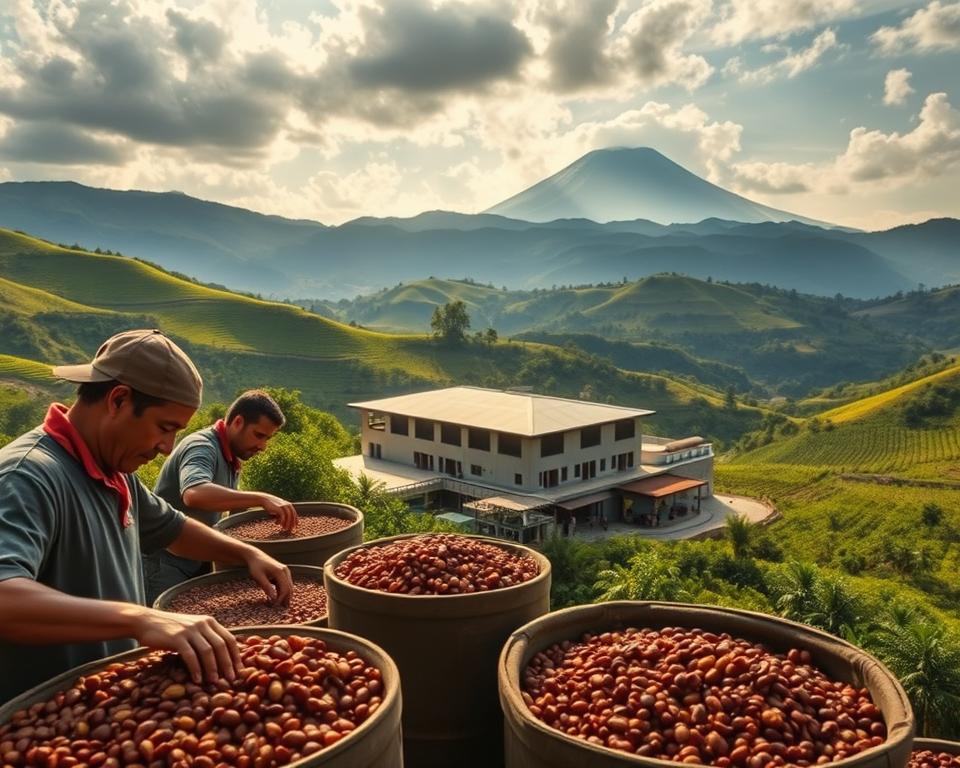
Guatemalan coffee is famous for its quality. It’s a big part of the country’s economy. The cooperative model helps farmers compete globally.
Coffee Cooperatives in Guatemala have boosted farmers’ lives and helped the region grow. Farmers share resources and knowledge. This makes them stronger in the market.
This teamwork benefits the local economy and community. It shows how Guatemalan coffee production can lead to sustainable growth.
The Rich Heritage of Guatemalan Coffee
Guatemalan coffee has a long history, starting in the 18th century. It’s known for its unique flavors and high quality. The country’s geography, with volcanic soil and varied climates, adds to its coffee’s complexity.
Key Historical Milestones in Guatemalan Coffee Production
Coffee was first grown in Antigua in the 18th century. Over time, coffee spread across the country. Each region developed its own special taste.
- Introduction of coffee plants in Antigua in the 18th century
- Expansion of coffee production to other regions in the 19th century
- Establishment of coffee cooperatives in the 20th century to support local farmers
Eight Distinct Coffee-Growing Regions and Their Flavor Profiles
Guatemala has eight unique coffee-growing areas. Each area, like Antigua and Atitlán, has its own taste.
| Region | Flavor Profile |
|---|---|
| Antigua | Known for its balanced acidity and rich flavor |
| Atitlán | Characterized by its bright acidity and fruity notes |
| Huehuetenango | Noted for its bold flavors and spicy undertones |
The variety in flavors across these regions shows Guatemalan coffee’s rich heritage. It’s a favorite among coffee lovers around the world.
Understanding Coffee Cooperatives in Guatemala
In Guatemala, coffee cooperatives play a key role in the coffee industry. They help local farmers in many ways. These groups are more than just organizations; they are a step towards a fairer and more profitable coffee farming sector.
Core Principles of Cooperative Organization
Coffee cooperatives in Guatemala follow important principles. They focus on member benefits, making decisions together, and working together. By sharing resources and knowledge, farmers can get better prices, access new technologies, and improve their skills.
The move to organized cooperatives has changed the lives of many farmers. Through these groups, farmers can get fair trade certification. This leads to better prices for their coffee and a better life for them and their families. For more information, check out this case study on Guatemalan coffee cooperatives.
By joining coffee cooperatives, Guatemalan farmers can handle the global coffee market better. This ensures a bright future for their communities.
The Economic Impact of Coffee Cooperatives
Coffee cooperatives in Guatemala have a big impact on farmers’ lives. They help farmers by promoting sustainable farming and organic coffee. This is good for the farmers and the environment.
Profit-Sharing Mechanisms and Economic Benefits
In Guatemala, coffee cooperatives share profits fairly. This means farmers get a big part of the money made from coffee. It helps farmers do better and grow high-quality, organic coffee.
- Fair distribution of profits among cooperative members
- Incentives for producing high-quality coffee
- Support for sustainable agriculture practices
Collective Bargaining and Export Strategies
Guatemalan coffee cooperatives work together to get better prices from buyers. This helps them sell more coffee worldwide. It makes them stronger in the global market.
From Cherry to Export-Ready Bean
Turning coffee cherries into beans is a big job. It includes picking, pulping, fermenting, and drying. Cooperatives make sure the coffee is top-notch for buyers.
Supporting coffee cooperatives helps Guatemala’s coffee industry grow. They focus on organic coffee and sustainable farming. This helps farmers and protects the environment.
How Coffee Cooperatives Empower Local Communities
Guatemalan coffee cooperatives do more than just grow coffee. They play a big role in improving the lives of local farmers and their families. They start projects that make life better for everyone.
Community Centers, Roads, and Public Facilities
In Guatemala, coffee cooperatives work on building community centers, roads, and public places. These projects make life easier and better for everyone. They help with community activities and daily life.
- Community centers are places for social events and gatherings.
- Good roads help move coffee and goods, which helps the local economy.
- Schools and healthcare centers are important for community health and education.
Scholarship Programs and Agricultural Training
Coffee cooperatives help with education and skills through scholarships and training. This helps the community grow and become more knowledgeable.
- Scholarships help students go to school.
- Training in farming makes crops better and farming more sustainable.
Mobile Clinics and Preventive Care Programs
Health is a big focus for coffee cooperatives. They have mobile clinics and preventive care programs. These are key in rural areas where health services are hard to reach.
- Mobile clinics bring medical help to remote areas.
- Preventive care teaches people about staying healthy and preventing diseases.
Establishing a Successful Coffee Cooperative: Step-by-Step Guide
To start a coffee cooperative, you need to think about many things. This includes legal papers, leadership, and getting the community involved. Each step is important for the cooperative’s success over time.
Documentation and Governmental Procedures
The first thing to do is get the legal stuff done and follow government rules. You need to register the cooperative and get any needed licenses. A study on cooperatives says that being registered is key for a cooperative to be seen as real and work well cooperative development study.
It’s important to know the laws about cooperatives in Guatemala. Learn about the country’s rules for cooperative societies. This helps you understand what documents you need and how to register.
Leadership Roles and Democratic Decision-Making
Good leadership is crucial for a coffee cooperative. You need a structure that lets everyone have a say in how things are run. Make sure who does what is clear, like planning, money handling, and solving problems.
Incentive Systems and Community Engagement
Creating rewards for members can make them more involved and motivated. These rewards can be for things like the quality of coffee or how much they help out. Keeping everyone informed and involved through meetings and clear talks helps too.
By following these steps and focusing on sustainable farming, coffee cooperatives in Guatemala can do well for a long time. They can help the local community a lot. The goal is to balance making money, helping people, and taking care of the environment.
Implementing Sustainable Agricultural Practices in Guatemalan Coffee Farms
Guatemalan coffee farms are moving towards a greener future. They’re adopting eco-friendly methods to improve coffee quality and protect Guatemala’s nature. This change helps keep the country’s biodiversity safe.
Natural Fertilizers and Pest Management
Guatemalan coffee farms are now using natural fertilizers. They choose compost and organic materials over synthetic ones. This cuts down on pollution in soil and water.
They also use smart pest control. This way, they keep pests in check without harming good bugs. It keeps the ecosystem balanced.

Choosing the right trees for shade is another big step. Farms pick a variety of trees to create a protective canopy. This not only shields coffee plants but also homes birds and other animals.
Good tree management also keeps the soil healthy. It helps prevent soil loss and erosion.
Efficient Processing Methods and Wastewater Treatment
Using smart processing methods is key to reducing coffee’s environmental impact. Guatemalan farms are going for wet processing to save water. They also have systems to clean wastewater, keeping waterways pure.
These steps make coffee farming better for the planet. They improve coffee quality and help preserve nature. This dedication to sustainability is vital for Guatemala’s coffee future.
Coffee Cooperatives in Guatemala: Achieving Fair Trade Certification
Getting Fair Trade certification is a big deal for coffee cooperatives in Guatemala. It shows they care about doing things right. This certification helps them stand out in the market and makes sure they follow strict rules about people, money, and the planet.
Social, Economic, and Environmental Criteria
To get Fair Trade certified, Guatemalan coffee cooperatives have to meet certain rules. They need to make sure workers are treated fairly, support local projects, and farm in a way that’s good for the environment. They go through a detailed check to make sure they follow these standards.
One great thing about Fair Trade certification is the premium. This extra money is decided by the cooperative itself. It’s used for things like fixing roads, helping out members, and funding community projects. This way, the money is used wisely and everyone knows how it’s spent.
Marketing Strategies for Certified Products
With Fair Trade certification, Guatemalan coffee cooperatives can sell their coffee for more money. They can also reach new customers. It’s important for them to market their coffee well to show off its ethical and sustainable qualities.
| Benefits | Description | Impact |
|---|---|---|
| Fair Labor Conditions | Promotes ethical treatment of workers | Improved worker welfare |
| Community Development | Supports projects like education and healthcare | Enhanced community well-being |
| Sustainable Practices | Encourages environmentally friendly farming | Reduced environmental impact |
Overcoming Challenges Facing Coffee Cooperatives in Guatemala
Coffee cooperatives in Guatemala are key for many farmers’ lives. They must tackle many challenges to stay strong.
Climate change is a big problem for coffee farming. Higher temperatures and changing rain patterns bring more pests and diseases. This hurts coffee crops.
Resistant Varieties and Farming Techniques
Using resistant coffee types and better farming methods can help fight climate change. Cooperatives are pushing for these changes. They want varieties that can handle diseases and pests better.
Diversification and Risk Management Tools
Cooperatives are also trying to grow other crops. This way, they don’t rely only on coffee. It helps them manage risks better.
| Strategy | Description | Benefits |
|---|---|---|
| Resistant Varieties | Adopting coffee varieties resistant to diseases and pests | Improved yields, reduced losses |
| Diversification | Diversifying income streams beyond coffee production | Reduced financial risk, increased resilience |
| Leadership Development | Training leaders within the cooperative | Enhanced decision-making, improved governance |
Leadership Development and Technology Integration
Teaching leaders is also vital for cooperatives. It makes decision-making and governance better. Using digital tools for farm management and market access can also boost efficiency and profits.
By using these strategies, coffee cooperatives in Guatemala can face challenges head-on. They can keep thriving in a tough global market.
Developing Innovative Strategies for Cooperative Growth
Coffee cooperatives in Guatemala are using new ways to grow. They aim to be more competitive in the global market. These strategies help them stay profitable and sustainable.
Communication Channels and Quality Assurance
Good communication is key for coffee cooperatives. It keeps all members on the same page. Quality assurance is also important. It affects how well the coffee sells.
| Strategy | Description | Benefit |
|---|---|---|
| Improved Communication | Regular meetings and updates | Better alignment among members |
| Quality Control Measures | Regular quality checks | Enhanced reputation and marketability |
Online Platforms and Social Media Strategies
Using online platforms and social media is a smart move. It helps coffee cooperatives market and sell better. They can reach more people and talk directly to customers.
Creating special products and agritourism can boost income. These steps add variety and offer unique experiences. They help attract tourists.
By trying these new strategies, coffee cooperatives in Guatemala can grow sustainably. They help the local coffee industry thrive.
How Consumers Can Support Guatemalan Coffee Cooperatives
Supporting Guatemalan coffee cooperatives is easy. There are simple ways for consumers to help. By choosing wisely, they can make a big difference.
Identifying Authentic Certifications and Origins
When buying Guatemalan coffee, look for Fair Trade and Organic certifications. These labels mean the coffee is made and sold fairly. They also show it’s good for the environment.
| Certification | Description | Benefits |
|---|---|---|
| Fair Trade | Ensures fair prices and trading practices | Improves farmers’ livelihoods |
| Organic | Promotes environmentally friendly farming practices | Enhances soil health and biodiversity |
Understanding Price Premiums and Their Impact
Buying Guatemalan coffee at a higher price helps farmers. This extra money can better their lives. It lets them improve their farms.
Planning Visits and Meaningful Interactions
Visiting cooperatives and talking to farmers is special. It builds a strong bond between buyers and producers.
By following these steps, consumers can greatly help Guatemalan coffee cooperatives. They support a fair and sustainable coffee world.
Success Stories: Transformative Coffee Cooperatives in Guatemala
Coffee cooperatives in Guatemala are changing lives for coffee farmers and their communities. They use sustainable farming and fair trade. This not only makes better coffee but also helps their areas grow.
These cooperatives are working on community projects. They build schools, healthcare centers, and protect the environment. These efforts help raise the standard of living for farmers and their families.
Gender Equality and Quality Improvement Programs
Some cooperatives focus on gender equality. They train women and give them leadership roles. They also work on making coffee better, which boosts its value.
Economic Indicators and Social Progress Metrics
The success of these cooperatives shows in their finances and social gains. They earn more money each year, which they use to help their communities. Education and healthcare for members have also improved.
The impact of coffee cooperatives in Guatemala is inspiring. It shows how community efforts can lead to growth and better lives for farmers and their communities.
Conclusion: The Future of Coffee Cooperatives and Regional Development in Guatemala
Coffee Cooperatives in Guatemala are key to the country’s growth. They empower local communities and support sustainable farming. The quality of Guatemalan coffee, known for its rich taste, is a big part of their success.
The role of these cooperatives is crucial as coffee farming in Guatemala changes. They help farmers work together, which boosts their power and allows for community projects. This teamwork benefits the local economy and keeps Guatemala’s coffee traditions alive.
Looking ahead, Coffee Cooperatives in Guatemala will keep driving progress. By supporting them, we help local communities and ensure Guatemalan coffee stays sustainable. As more people seek high-quality coffee, these cooperatives are ready to meet the demand and make a big difference in Guatemala.