
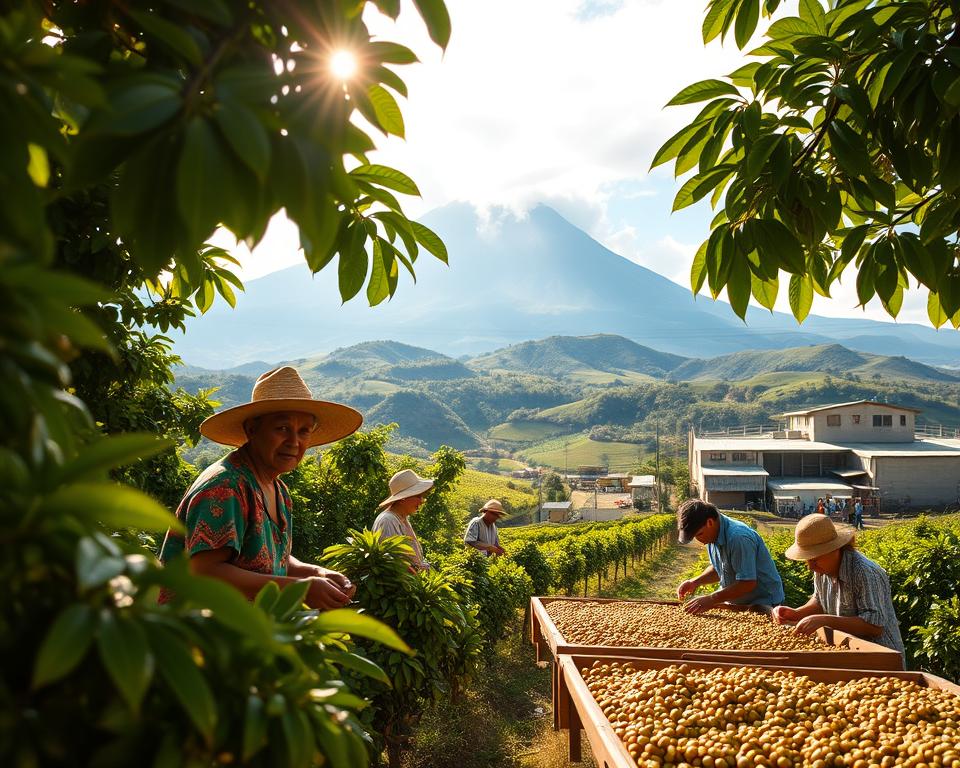
In Guatemala’s coffee industry, cooperatives are key to better coffee quality. Farmers work together, sharing knowledge and resources. This helps them make high-quality coffee.
Cooperatives offer training and support to farmers. This helps them improve their farming and processing. Better techniques lead to better coffee quality.
Standardizing quality makes Guatemala’s coffee stand out worldwide. This boosts farmers’ earnings and helps the economy.
Understanding Guatemala’s Coffee Cooperative System
The coffee cooperative system is key in Guatemala’s coffee world. It supports sustainable practices. These groups are owned by their members, mostly small coffee farmers.
By working together, they can make more money, grow better coffee, and talk to buyers on better terms.
Guatemala’s cooperatives are all about helping each other, making decisions together, and caring for the planet. They give farmers the tools to grow and process coffee better. This helps farmers use methods that are good for the environment and make their coffee taste better.
This system also helps make sure farmers get a fair price for their coffee. This helps the local economy and fights for fairness in the coffee world.
How Coffee Cooperatives Quality Standards Impact the Global Market
Coffee cooperatives in Guatemala are key to the quality and competitiveness of coffee worldwide. They follow strict quality standards. This makes sure their coffee meets international buyers’ high expectations.
Fair trade certification is a big factor in the global market. It ensures coffee is made and traded fairly. This certification boosts Guatemalan coffee’s market value and helps farmers get a fair price.
- Increased competitiveness: High-quality coffee from Guatemala can compete well in the global market.
- Market differentiation: Fair trade certification and quality standards make Guatemalan coffee stand out.
- Consumer trust: Quality and ethical production practices build trust with consumers.
Guatemalan coffee cooperatives improve their global market position by keeping quality high and getting fair trade certification. This benefits the cooperatives, their members, and Guatemalan coffee’s reputation.
In summary, Guatemalan coffee cooperatives’ quality standards greatly affect the global coffee market. Fair trade certification and a focus on quality are crucial. These efforts are vital in shaping the global coffee trade.
Building Quality Control Infrastructure Within Guatemalan Cooperatives
Guatemalan cooperatives are working hard to meet international quality standards. They are investing in quality control to improve their coffee and stand out globally.
They are focusing on organic farming methods. This not only boosts coffee quality but also supports sustainable farming. They are training their members to ensure consistent quality.
| Component | Description | Benefit |
|---|---|---|
| Training Programs | Training for farmers on best practices | Improved coffee quality |
| Quality Assessment | Regular assessment of coffee quality | Consistency in quality |
| Organic Farming | Adoption of organic farming methods | Sustainability and quality |
Guatemalan cooperatives are making big strides in quality control. They are becoming more competitive in the global market.
Step-by-Step Quality Assessment Protocols for Cooperative Members
To make top-notch specialty coffee, cooperative members must follow quality check steps. These steps are key to making sure the coffee is up to specialty coffee standards.
Proper Sample Collection Methods
Getting the coffee samples right is the first step. Cooperative members should pick samples in a methodical way. This ensures the samples are truly representative of their coffee.
- Randomly select samples from different parts of the coffee lot.
- Ensure samples are collected at the same stage of processing.
- Use clean, dry containers to store samples.
Developing Standardized Flavor Profiles
Creating consistent flavor profiles is vital for specialty coffee. Cooperative members should:
- Use a standardized cupping protocol to evaluate the flavor profile of their coffee.
- Record detailed notes on the coffee’s taste, acidity, and body.
- Compare their findings with established flavor profiles for their coffee region.
Spotting and classifying defects is crucial for quality. Cooperative members need to know how to identify common defects like:
- Black or sour beans.
- Beans with insect damage.
- Over or under-ripened beans.
By sticking to these quality check steps, cooperative members can boost their coffee’s quality. This makes their coffee stand out in the specialty coffee market.
How to Implement Sustainable Practices Through Cooperative Frameworks
To stay ahead, Guatemalan coffee cooperatives must adopt green practices. These practices help the environment and show they care about society. Making these changes involves many people and steps.
Direct trade partnerships are key in making Guatemalan coffee cooperatives more sustainable. These partnerships help cooperatives get fair prices for their coffee. They also improve the quality and use eco-friendly farming methods.
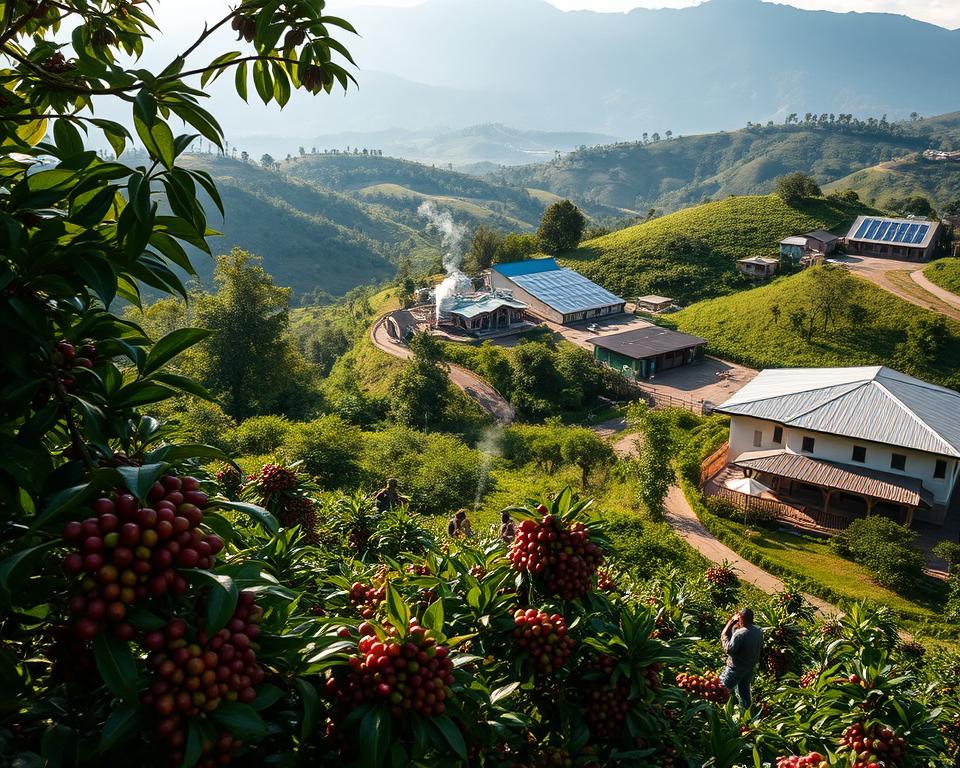
The table below shows important steps for making cooperatives more sustainable:
| Strategy | Description | Benefits |
|---|---|---|
| Direct Trade Partnerships | Establishing direct trade partnerships to secure fair prices and improve quality control. | Better income for farmers, improved quality, and increased customer satisfaction. |
| Environmental Conservation | Adopting environmentally friendly farming practices to reduce the carbon footprint. | Reduced environmental impact, improved biodiversity, and enhanced ecosystem services. |
| Social Responsibility | Implementing social programs to improve the livelihoods of farmers and their communities. | Improved social welfare, increased community engagement, and better living standards. |
By using these strategies, Guatemalan coffee cooperatives can make big strides in sustainability. This helps make the coffee industry fairer and greener for everyone.
Achieving Fair Trade Certification: A Guide for Guatemalan Cooperatives
Guatemalan cooperatives can boost their coffee quality by getting Fair Trade certification. This certification shows they care about sustainability, fairness, and quality. It’s a great way for cooperatives to help their members and communities.
To get Fair Trade certification, cooperatives must follow certain steps. They need to ensure fair prices, safe work conditions, and direct trade. They also have to show they follow these rules and pass an audit by a certification body.
After getting certified, cooperatives get better market access and prices for their coffee. They can also start community projects. This improves the lives of cooperative members and their families.
To keep their certification, cooperatives must meet ongoing requirements. They need to pass regular audits and submit progress reports. This keeps them true to Fair Trade values and maintains high standards for consumers.
Transitioning to Organic Farming Methods in Coffee Cooperatives
Coffee cooperatives in Guatemala are moving to organic farming. This change aims to make farming more environmentally friendly. It also hopes to get better prices for their coffee.
Organic farming has many good points. It uses fewer chemicals, keeps soil healthy, and boosts biodiversity. These actions help the environment and can make coffee taste better. This might lead to higher prices in the market.
To switch to organic farming, cooperatives need a clear plan. They should teach farmers about organic methods. They also need to protect the soil and manage pests in a smart way.
| Benefits | Challenges | Solutions |
|---|---|---|
| Improved environmental sustainability | Higher initial costs | Access to organic farming grants |
| Potential market advantages | Need for farmer training | Training programs for farmers |
| Increased biodiversity | Potential yield reduction | Adoption of integrated pest management |
By knowing the pros and cons, and using smart solutions, Guatemalan coffee cooperatives can make the switch. This will improve their farming and help them compete in the market.
Developing Specialty Coffee Production Through Cooperative Support
Cooperatives are key in improving specialty coffee quality. They help increase coffee bean value. Fair trade certification is a big part of this, ensuring farmers get a fair price and promoting sustainable farming.
Fair trade certification is essential for specialty coffee. It sets quality and ethical sourcing standards. Cooperatives with this certification get better market access and higher prices. The process includes environmental and labor standards, and direct trade.
To make top-notch specialty coffee, cooperatives must follow strict quality rules. This includes the right harvesting and processing methods. They also need to check the quality carefully.
Specialty coffee production through cooperatives has many benefits. It leads to better coffee and improves farmers’ lives. Cooperatives with fair trade certification and high standards can boost their market position and help the coffee industry stay sustainable.
Establishing Direct Trade Partnerships: A Cooperative Approach
Guatemalan coffee producers can get better prices and stronger relationships by working together. Direct trade partnerships let cooperatives sell directly to buyers. This way, producers get fair prices for their top-quality coffee.
Direct trade also helps promote organic farming. Cooperatives that use organic methods help the environment. They also attract buyers who want to pay more for organic coffee.
To start direct trade partnerships, several steps are needed. Cooperatives must check their coffee’s quality and do market research. They also need to talk to buyers about prices and terms.
| Steps to Establish Direct Trade Partnerships | Description | Benefits |
|---|---|---|
| Quality Assessment | Evaluate coffee quality to meet global standards | Attract premium prices |
| Market Research | Identify potential buyers and market trends | Increase market share |
| Negotiation | Directly negotiate prices and terms with buyers | Improve price transparency |
Direct trade partnerships help Guatemalan coffee cooperatives in many ways. They improve their market position, support organic farming, and make pricing clearer. This approach is good for producers and helps make the coffee industry fairer and more sustainable.
Overcoming Quality Challenges: Practical Cooperative Solutions
Guatemalan coffee cooperatives face many challenges in keeping up with high-quality standards. One big issue is the uneven quality due to different ways of processing and handling coffee among members.
To solve this, cooperatives can set up standard processing methods and offer training to all members. They should teach the best ways to pick coffee cherries, ferment, and dry them. Also, they can invest in tools like cupping labs and drying facilities to help improve coffee quality.
Another good idea is to create a quality monitoring system for the whole cooperative. This means having regular cupping sessions to check coffee quality and give feedback. This way, cooperatives can spot where they need to get better and work together to make their coffee better.
Cooperatives can also focus on sustainable farming practices. This includes growing coffee under shade and using organic methods. These practices not only make the coffee better but also help the environment.
Conclusion: The Future of Quality Standardization in Guatemalan Coffee Cooperatives
The future of quality in Guatemalan coffee cooperatives is bright. This is thanks to direct trade partnerships and a focus on sustainability. Cooperatives are building strong ties with buyers worldwide. This helps them improve their quality and stand out globally.
Guatemalan coffee cooperatives have already made big steps. They’ve started quality control, switched to organic farming, and got Fair Trade certified. These moves not only make their coffee better but also help their members and the planet.
Supporting these cooperatives is key to their growth. Especially in forming direct trade partnerships. Together, cooperatives, buyers, and others can make Guatemalan coffee better and fairer. This will lead to a future filled with quality and fairness in the coffee world.