

Guatemalan coffee is famous for its rich taste. This is thanks to the different shades it grows under. Growing coffee under shade improves soil, boosts biodiversity, and adds to the flavor.
The shade used in growing coffee can change the taste a lot. From the thick canopy of native forests to the managed shade of agroforestry, the options are wide.
Knowing about the different shades and how they affect coffee flavor is key. This article will explain how shade impacts taste. It will also highlight what makes Guatemalan coffee special.
The Relationship Between Shade and Coffee Quality
Coffee quality is greatly influenced by the shade it gets while growing. The ideal shade lets enough sunlight in but keeps it cool and pest-free. This balance is key for the best coffee.
Studies reveal that shade-grown coffee tastes more complex than sun-grown coffee. Shade slows down ripening, helping cherries develop evenly. A study on the National Center for Biotechnology Information website shows shade-grown coffee’s quality and eco-friendliness benefits.
Shade-grown coffee is better in quality than sun-grown coffee. As high-quality coffee demand rises, knowing how shade affects quality is crucial. This is especially true in places like Guatemala, famous for its coffee.
Coffee Shade Types and Their Distinctive Characteristics
Different shade-grown coffee varieties have unique traits that shape the coffee taste. The shade type affects the flavor, quality, and amount of coffee beans.
There are many coffee shade types, like rustic, polyculture, and monoculture. Rustic systems use native trees for shade, boosting biodiversity and flavor complexity. Polyculture systems plant multiple crops with coffee, improving ecological interactions and flavor nuances.
Shade tree characteristics are also key. For example, Inga trees fix nitrogen, enriching the soil. Fruit trees provide shade and extra income.
Knowing about different shade-grown coffee varieties is vital for quality improvement. By picking the right shade and management, farmers can enhance flavor and quality.
In summary, the variety in coffee shades enriches Guatemalan coffee’s taste and quality. Embracing this diversity allows producers to craft unique and complex coffee experiences.
The Science of Flavor Development Under Shade
The science behind coffee flavor is closely tied to how beans are grown, especially the shade level. Shade affects how fast coffee cherries mature. This, in turn, shapes the flavor of the beans.
Shade-grown coffee has many advantages. For one, it matures slower, leading to more complex flavors. The shade canopy also controls temperature and humidity. This helps create a balanced taste.
| Shade Level | Flavor Profile | Maturation Rate |
|---|---|---|
| Low Shade | Fruity, Floral | Fast |
| Moderate Shade | Balanced, Nutty | Medium |
| High Shade | Complex, Chocolatey | Slow |
The slow maturation under shade leads to complex flavors. Coffee producers can improve their shade management. This way, they can make high-quality coffee beans.
Implementing Rustic Shade Systems for Complex Flavors
Rustic shade systems are key to creating the complex flavors in top-notch coffee. They mimic nature, giving coffee plants a home under native trees.
Choosing the right native trees is essential for a rustic shade system.
Selecting Native Canopy Trees
Native trees like Inga spp. and Gliricidia sepium are perfect. They fit well with the local climate and soil, needing little care.
Maintaining Biodiversity Balance
Keeping a balance of biodiversity is also key. It means having a variety of trees to support plants and animals. This boosts the shade system’s ecological services.
| Tree Species | Ecological Benefits | Impact on Coffee Flavor |
|---|---|---|
| Inga spp. | Fixes nitrogen, provides shade | Enhances sweetness, reduces bitterness |
| Gliricidia sepium | Acts as a fertilizer tree, attracts pollinators | Contributes to complex flavor profiles |
Shade-grown coffee is loved for its biodiversity and rich flavors. It’s often preferred over sun-grown coffee. Shade-grown coffee has a more complex taste because it matures slower under the shade.
Creating Effective Polyculture Shade for Enhanced Aromatics
Coffee farmers can boost their beans’ aroma by using polyculture shade. This method involves growing coffee with other trees. It makes the coffee taste more complex and diverse.
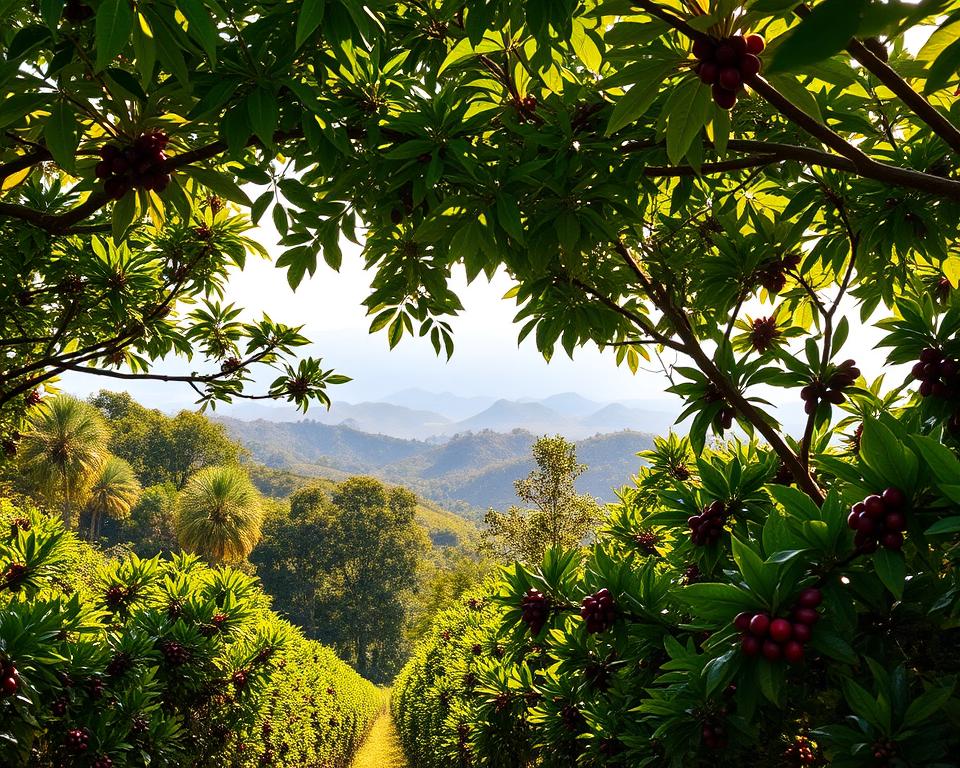
Understanding spacing and layering is key to a good polyculture shade system. Proper spacing lets coffee plants get enough sunlight and air. Layering different trees creates a microclimate that helps the coffee.
Spacing and Layering Techniques
Spacing and layering are vital for a thriving polyculture shade system. Planting trees at different heights and densities protects coffee from too much sun. It also keeps humidity levels up.
Managing Multiple Species
Managing many species in a polyculture shade system needs careful planning. Farmers must pick trees that complement coffee, provide shade, and improve soil quality.
| Tree Species | Benefits to Coffee | Spacing Recommendations |
|---|---|---|
| Inga Trees | Provide shade, improve soil nitrogen | 10-15 meters apart |
| Banana Plants | Create a microclimate, additional income source | 5-7 meters apart |
| Guava Trees | Enhance biodiversity, attract beneficial insects | 8-12 meters apart |
By choosing and managing tree species well, coffee farmers can improve their coffee’s aroma. This leads to a more complex and desirable taste.
Commercial Shade Management for Optimal Bean Quality
Effective commercial shade management is key for top-notch coffee beans. Farms with well-managed shade canopies often have more complex flavors and higher quality beans.
Managing shade involves several important practices. These include pruning schedules and methods, and optimizing the shade percentage for coffee plants.
Pruning Schedules and Methods
Pruning keeps shade trees healthy and productive. Regular pruning schedules control the canopy density. This ensures coffee plants get the right amount of shade.
Pruning methods depend on the shade tree type. They usually involve removing dead or diseased branches. This promotes healthy growth.
Shade Percentage Optimization
Getting the right shade percentage is crucial for coffee quality. Too little shade can stress coffee plants, reducing quality. Too much shade can slow down ripening and flavor development.
The ideal shade percentage varies by climate, coffee variety, and altitude. It usually ranges from 30% to 50%.
By managing shade well, commercial coffee producers can improve bean quality. This leads to better market prices and customer satisfaction.
Comparing Shade-Grown vs. Sun-Grown Guatemalan Coffee
In Guatemala, coffee is made differently depending on whether it’s grown in the shade or in the sun. Shade-grown coffee has a more complex taste because it grows slower. Sun-grown coffee, on the other hand, grows faster and can produce more.
The choice between shade and sun affects the coffee’s taste and the farm’s environment. Shade-grown coffee helps with biodiversity and soil health. Sun-grown coffee needs more work to grow.
Changing from sun to shade, or vice versa, is a big change for farmers. It takes a few seasons to get the plants used to the new way. At first, the yield might go down as the plants adjust.
Farmers also need to change how they fight diseases and pests. Shade-grown coffee might need different methods than sun-grown coffee.
Monitoring Quality Changes During Conversion
It’s important to check the coffee’s quality during the change. Farmers do this by tasting the coffee and adjusting their methods. They look for changes in taste, acidity, and body.
By watching these changes, farmers can improve their coffee making. They can choose to grow in the shade or keep growing in the sun.
Selecting and Managing Shade Trees for Superior Coffee
Choosing and caring for shade trees is key for coffee farmers who want the best coffee. Shade trees help the soil, stop erosion, and make the farm more diverse.
Farmers need to think about a few things when picking shade trees. They should look at the tree’s shade, how fast it grows, and if it gets along with coffee plants. The best trees give just the right amount of shade, so coffee plants get enough sun but stay cool.
- Inga spp. (Ice cream bean)
- Gliricidia sepium (Mother of cocoa)
- Erythrina spp. (Coral tree)
To manage shade trees well, farmers should prune them often. This keeps the right amount of shade and stops the trees from fighting for water and nutrients. They also need to watch their trees for pests and diseases.
Shade-grown coffee has many benefits, like better taste and more wildlife. By picking and caring for shade trees wisely, farmers can make their coffee farms better and more sustainable.
Here are some tips for managing shade:
- Check shade trees often for disease or pests.
- Prune trees to keep the right shade level.
- Watch the soil and adjust tree care as needed.
Seasonal Adjustments to Shade Management
Seasonal changes are key to keeping coffee plants healthy and flavorful. Each season brings different weather conditions that affect coffee growth.
In the wet season, too much rain can make the shade area too humid. This can lead to diseases. On the other hand, the dry season needs more shade to keep plants from drying out.
Farmers can change their shade management with the seasons. Here are some strategies:
| Season | Shade Management Strategy | Benefit |
|---|---|---|
| Wet Season | Prune shade trees to improve air circulation | Reduces disease risk |
| Dry Season | Increase shade density | Protects plants from drought |
| Transition Period | Monitor and adjust shade levels | Ensures continuous plant health |
By adjusting their shade canopy for coffee plants, farmers can improve growing conditions. This leads to better quality and taste in their coffee beans.
Shade management is a constant process. It needs ongoing monitoring and adjustments to meet the changing needs of coffee plants all year.
Regional Guatemalan Shade Practices and Their Flavor Signatures
Guatemala’s different regions have unique shade practices for coffee. This affects the taste of its shade-grown coffee beans. The country’s varied geography and climate lead to many coffee varieties.
In places like Antigua, Huehuetenango, and Atitlán, coffee farms have their own shade practices. For example, Antigua’s farms use a mix of trees. This creates a rich and diverse ecosystem.
On the other hand, Huehuetenango farms use natural vegetation for shade. This method boosts biodiversity and adds to the coffee’s complex taste.
| Region | Shade Practice | Flavor Profile |
|---|---|---|
| Antigua | Mixed shade trees | Balanced acidity, chocolate notes |
| Huehuetenango | Rustic shade systems | Complex, fruity, and floral notes |
| Atitlán | Polyculture shade | Bright acidity, citrus, and berries |
Guatemala’s varied shade practices lead to many unique flavors. This makes Guatemalan coffee very sought after. Understanding these differences helps both producers and consumers value Guatemalan coffee more.
As more people look for high-quality, shade-grown coffee, Guatemalan farmers are ready. They can offer a variety of shade-grown coffee beans, each with its own taste.
Conclusion: Harnessing the Power of Shade for Exceptional Coffee
Cultivating coffee under shade brings many benefits. It improves flavor and boosts biodiversity. Farmers can choose the right shade type to enhance their coffee quality.
Shade-grown coffee offers many advantages. It can develop complex flavors and improve aromatics. As the coffee industry grows, shade management is key to quality coffee.
In Guatemala, coffee is a big part of the economy. Using shade-grown practices helps the environment and the community. This way, farmers can make top-notch coffee for a picky market.