
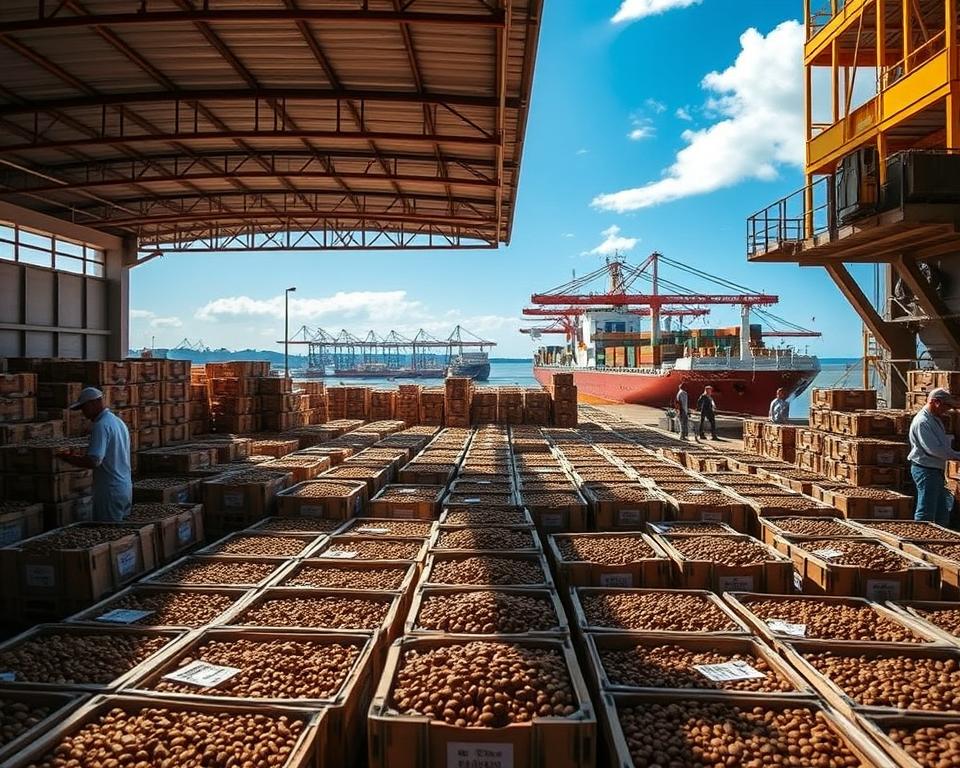
Guatemala’s coffee is famous for its top-notch Arabica beans. A big part of these beans are sent to countries all over the world. Making sure these exports are of high quality and genuine is key, and traceability is at the heart of this.
Traceability in the coffee world means following the coffee from the farm to the person drinking it. It makes sure everything is clear and follows rules for being green and fair. By using blockchain technology and IoT sensors, Guatemala’s coffee sellers can make their product even more valuable. This helps in promoting fair trade and sustainable coffee farming.
This approach is good for the farmers and sellers. It also gives buyers peace of mind about the coffee’s origin and quality. This way, they support fair trade coffee production.
The Value of Traceability in Guatemala’s Coffee Industry
Traceability is changing Guatemala’s coffee industry for the better. It makes the supply chain clear and sustainable. This way, coffee quality goes up, and everyone gets a fair share of the benefits.
Thanks to traceability, coffee lovers can choose their coffee wisely. They learn where their coffee comes from and how it’s made. This helps them value the hard work and quality that goes into each bean.
Traceability also helps the environment and fair labor. Guatemalan coffee makers can do better for their families and the planet. This makes the coffee industry stronger and more sustainable for the future.
By using traceability, Guatemala’s coffee can stand out worldwide. This benefits both the farmers and those who enjoy their coffee.
Coffee Traceability Export: Essential Methods and Approaches
Guatemala’s coffee export industry relies on tracing coffee beans. This ensures quality and authenticity, building trust with consumers. For Guatemala, where coffee is a big export, tracing is key to stay competitive globally.
Tracking coffee origin is crucial. It follows coffee from farm to market. Methods like GPS, barcodes, and detailed records help track coffee. This way, producers and exporters can prove their coffee’s authenticity and quality.
Certification programs also play a big role. Fairtrade and Rainforest Alliance certifications ensure sustainable production and strict tracking. These programs keep the supply chain transparent, from farm to export.
Technology, like blockchain, is also important. It creates a permanent, clear record of coffee transactions. This makes tracking coffee easier, preventing fraud and ensuring standards are met.
In summary, tracing coffee beans is complex but essential. Guatemala uses tracking, certifications, and technology like blockchain. This ensures the quality, authenticity, and transparency of its coffee exports.
Preparing Your Guatemala Coffee Business for Traceability Implementation
The journey to traceability in Guatemala’s coffee industry starts with a clear export process. Businesses must first understand their current operations. They need to find areas for improvement.
To get ready for traceability, Guatemala coffee businesses should look at their supply chain. They need to map out every stage, from coffee cherry production to export.
Next, they must set up a strong data collection system. This will help them track coffee beans through the supply chain. It ensures all important information is captured and recorded correctly.
| Step | Description | Benefits |
|---|---|---|
| 1. Supply Chain Assessment | Map out every stage of the supply chain | Identify areas for improvement |
| 2. Data Collection System | Establish a robust system for tracking coffee beans | Accurate recording of relevant information |
| 3. Training and Capacity Building | Train staff on traceability procedures | Ensure smooth implementation |
By following these steps, Guatemala coffee businesses can smoothly transition to traceability. This enhances their coffee traceability export capabilities. It also helps make the coffee industry more transparent.
Digital Technologies Transforming Coffee Traceability
Digital innovations are changing the coffee supply chain, making it more transparent. Technologies like blockchain are key. They help track coffee from farm to cup, boosting transparency.
Blockchain is a secure, unchangeable record of all coffee transactions. It proves coffee’s authenticity and ensures it’s sourced sustainably.
- Identifying stakeholders and their roles
- Creating a blockchain platform for the coffee industry
- Training stakeholders on the system
Cost Considerations for Different Farm Sizes
The cost of digital traceability systems varies by farm size. Big farms can afford advanced systems. Smaller farms need cheaper options.
It’s important for digital traceability to be available to all farms. This might mean scaling technology or offering subsidies to small producers.
As the coffee industry uses more digital tech, we’ll see better traceability. This will lead to more transparent and sustainable coffee sourcing.
Implementing Paper-Based Traceability Systems for Smaller Producers
Smaller coffee producers can greatly benefit from using paper-based traceability systems. These systems help track coffee beans from farm to cup. They ensure the coffee is traceable and meets international standards.
Paper-based traceability means keeping detailed records at each stage of coffee production. This includes the farm’s location, harvest date, coffee quantity, and processing methods. Keeping these records shows a commitment to quality and transparency, key for fair trade coffee.

Paper-based systems are simple and don’t need a lot of technology or training. They are affordable for smaller producers with limited resources. Plus, they can fit into existing record-keeping practices without disrupting production.
To make a paper-based traceability system work, producers need to focus on keeping accurate records. Training staff on the importance of record-keeping is crucial. This way, producers can show their coffee beans are traceable, boosting their credibility and marketability.
By using paper-based traceability, smaller Guatemalan coffee producers can become more competitive. They help improve the quality and transparency of Guatemala’s coffee industry.
Step-by-Step Guide to Implementing Your Traceability System
To make the coffee export process more transparent, a step-by-step guide to traceability is key. This guide will help you set up a strong traceability system. It ensures coffee origin tracking and a clear coffee export process.
Identifying Key Traceability Points
Finding key traceability points is the first step. These points cover every stage of the coffee supply chain, from picking to export. By marking these areas, producers can track and record each coffee batch accurately.
The main traceability points are:
- Harvesting: Recording the date, location, and amount of coffee picked.
- Processing: Documenting the processing method and date.
- Drying and Storage: Tracking drying and storage conditions and locations.
- Export: Recording shipment details, like date, amount, and destination.
Establishing Baseline Measurements
Setting baseline measurements is crucial for checking your traceability system’s success. These measurements serve as a starting point for future data comparisons. They help spot areas for improvement in coffee origin tracking.
Baseline measurements might include:
| Measurement | Description | Frequency |
|---|---|---|
| Coffee Yield | Quantity of coffee produced per hectare | Annual |
| Processing Time | Time from harvesting to processing | Monthly |
| Storage Conditions | Temperature and humidity in storage facilities | Weekly |
By following these steps and setting up a solid traceability system, Guatemala’s coffee producers can boost transparency and integrity in their export process. This move not only builds customer trust but also supports a sustainable and fair coffee supply chain.
Starting a traceability system is a smart move for a transparent coffee export process. By identifying key points and setting baseline measurements, producers can maintain quality and accountability in the supply chain.
Meeting International Standards and Certification Requirements
Following international standards is crucial for coffee industry sustainability. The coffee world follows many standards and certifications. These ensure coffee quality and support sustainable farming.
Many global certifications focus on sustainability in coffee. Fairtrade, Organic, and Rainforest Alliance are well-known. Each has its own rules for coffee producers and exporters.
To meet these standards, you need to understand the certification process. You also need to set up traceability systems. Here’s a table showing key certification requirements and their benefits for sustainable coffee.
| Certification | Key Requirements | Benefits for Sustainability |
|---|---|---|
| Fairtrade | Fair price payment, democratic organization | Promotes fair trade practices, improves livelihoods of farmers |
| Organic | Avoidance of synthetic fertilizers and pesticides | Enhances soil health, biodiversity, and ecosystem services |
| Rainforest Alliance | Sustainable agriculture practices, forest conservation | Conserves biodiversity, promotes ecosystem services |
By following these standards and certifications, coffee producers in Guatemala can boost their market presence. This effort is vital for the coffee industry’s future in Guatemala.
Overcoming Traceability Challenges in Guatemala’s Coffee Regions
Guatemala’s coffee areas face many hurdles in setting up good traceability systems. The coffee supply chain is complex, and small farmers often lack the resources needed. This makes it hard to achieve traceability in coffee exports.
The main issue is the lack of infrastructure and technology in rural spots. This makes it tough to gather and share data for traceability. Also, the cost of setting up traceability systems is too high for many small producers.
To tackle these problems, several steps can be taken. Working together is key, involving farmers, exporters, and government groups. Also, using digital tech can make the coffee supply chain clearer and cut down traceability costs.
| Challenge | Strategy | Benefit |
|---|---|---|
| Limited Infrastructure | Invest in Digital Technologies | Enhanced Transparency |
| High Implementation Costs | Collaborate with Stakeholders | Reduced Costs |
| Lack of Training | Provide Training Programs | Improved Traceability |
By tackling these issues and using smart strategies, Guatemala’s coffee sector can boost traceability in coffee exports. This will also make the supply chain more transparent overall.
Success Stories: Guatemala Coffee Traceability in Action
Fair trade coffee in Guatemala has seen big benefits from traceability. A local cooperative’s traceability system is a prime example. It has boosted their coffee quality and sales through fair trade.
The cooperative worked hard to set up a traceability system. They trained farmers, used digital tools to track coffee, and got fair trade certifications. This led to better market access and higher prices for their coffee.
| Initiative | Impact | Benefits |
|---|---|---|
| Implementation of Traceability System | Improved coffee quality and increased revenue | Better market access, higher prices for traceable coffee beans |
| Farmer Training Programs | Enhanced farming practices and quality control | Increased productivity and better coffee quality |
| Digital Technologies | Efficient tracking and verification of coffee beans | Transparency and accountability throughout the supply chain |
These stories show how traceability helps Guatemala’s coffee industry, especially in fair trade. By using traceability, producers and cooperatives can be more sustainable and profitable. They also help make the coffee supply chain more open and fair.
Conclusion: Securing Guatemala Coffee’s Future Through Traceability
Guatemala’s coffee industry is set for success, thanks to its focus on quality and sustainability. Traceability is key, making sure coffee beans are sourced right and made with care for the environment.
A clear coffee export process is also important. It builds trust with buyers and supporters. With good traceability, Guatemala’s coffee makers show they care about the planet and are open, gaining a strong spot in the world market.
As the coffee world changes, keeping up with traceability is crucial for Guatemala. By valuing sustainability and openness, Guatemala’s coffee makers can look forward to a strong future. They’ll also help make the global coffee trade fairer and greener.