
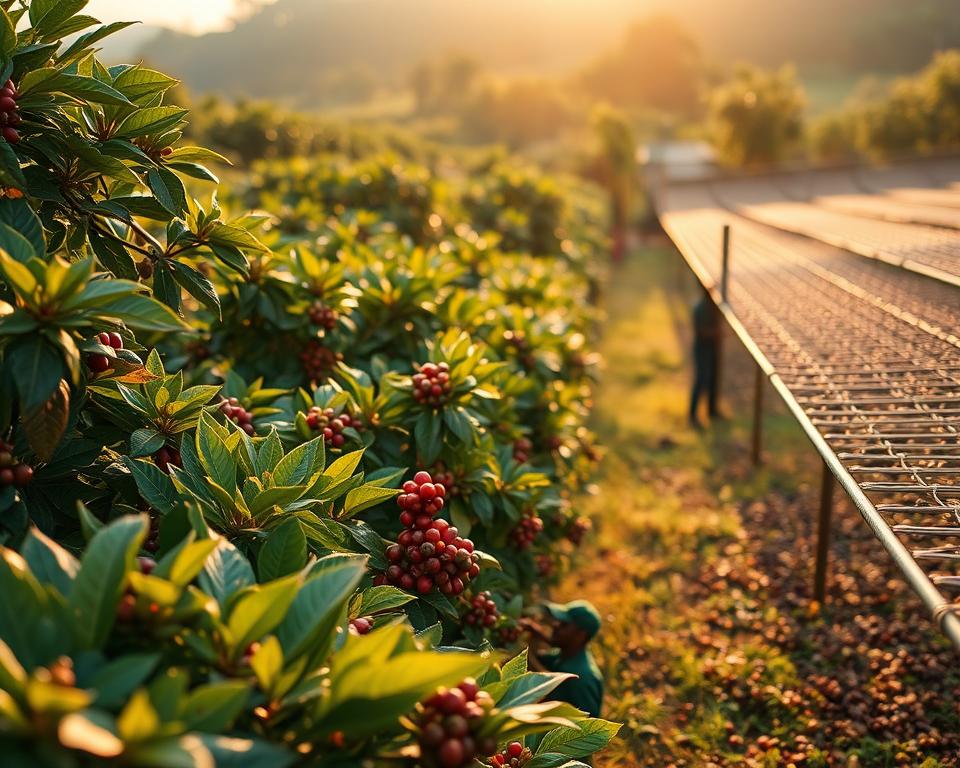
Guatemala is famous for its top-notch coffee. But, the coffee industry has big environmental problems. It’s key to find ways to reduce waste for sustainable coffee.
The way coffee is grown creates a lot of waste. This waste harms the environment and threatens the future of coffee farming. Using smart ways to manage coffee waste can help solve these issues.
By moving towards a circular economy, the coffee world can lessen its harm to the planet. This means using waste over and over again. It’s a step towards a greener future for Guatemala’s coffee.
The Coffee Waste Challenge in Guatemala
The coffee industry in Guatemala has a big problem: managing lots of waste. This waste comes from processing coffee. The industry is key to the country’s economy, so it must find a way to be both productive and green.
Pulp and Cherry Residues
Processing coffee creates a lot of pulp and cherry residues. If not handled right, these can harm the environment. They can pollute water and soil. It’s important to manage these organic wastes well.
There’s more waste from coffee processing, like parchment and husks. These add to the environmental impact of coffee. Using eco-friendly ways to get rid of these wastes is key to making Guatemalan coffee more sustainable.
To make coffee production more sustainable, Guatemalan producers need to manage waste better. They should find ways to use waste materials and dispose of waste in a green way.
Principles of Circular Economy for Coffee Farmers
The circular economy is changing how coffee farmers in Guatemala handle waste. By using circular economy principles, farmers can greatly lessen their harm to the environment.
The main ideas of circular economy for coffee farmers are to cut down on waste, use things over again, and recycle. Here are some important strategies:
- Reducing water usage in coffee processing
- Reusing coffee pulp and husks as organic fertilizers
- Recycling coffee waste into valuable products
By following these steps, Guatemalan coffee farmers can lessen their environmental harm. They also get better at what they do. Making coffee production more eco-friendly is good for the planet and helps coffee farming last longer.
It’s key to find ways to deal with coffee waste to lessen its harm to the environment. By using circular economy methods, farmers can make waste into something useful.
How to Assess Your Coffee Operation’s Waste Footprint
Understanding the waste from coffee operations is crucial for reducing it. It’s a key step towards making coffee production more sustainable.
Measuring Different Waste Streams
Coffee operations create different types of waste, like coffee pulp, husks, and wastewater. It’s important to measure these waste streams to manage them well.
- Identify the sources of waste in your coffee operation.
- Quantify the amount of waste generated at each stage of production.
- Record the types of waste produced, such as organic or inorganic waste.
Identifying Reduction Opportunities
After assessing your waste, you can find ways to reduce it. This means looking at your waste streams and finding ways to cut down on waste.
- Implement recycling programs for organic waste.
- Optimize your production processes to reduce waste generation.
- Explore alternative uses for coffee waste, such as composting or bioenergy production.
By following these steps, Guatemalan coffee farmers can manage their waste footprint well. This helps make the coffee industry more sustainable.
Effective Coffee Waste Management Strategies for Guatemalan Farms
Guatemalan farms are now focusing on reducing waste in coffee production. This shift is part of a broader effort to make coffee production more sustainable. By managing waste better, farms can reduce their environmental impact and improve their sustainability.
Short-term Actions
Guatemalan coffee farms can take several steps to manage waste better in the short term. These include:
- Improving waste segregation practices to separate organic from inorganic waste.
- Implementing composting programs to turn coffee pulp into valuable compost.
- Reducing water usage through more efficient processing techniques.
Long-term Infrastructure Development
For long-term sustainability, investing in infrastructure is crucial. This can involve:
- Developing anaerobic digestion systems to produce biogas from coffee waste.
- Constructing proper waste storage facilities to prevent environmental contamination.
- Implementing eco-friendly disposal methods for coffee husks and parchment.
By adopting these strategies, Guatemalan coffee farms can greatly reduce their environmental footprint. Effective waste management not only makes the coffee industry more sustainable. It also improves the quality of the coffee produced.
Guatemalan farms that adopt sustainable practices and eco-friendly disposal methods will benefit. They will see improvements in their operational efficiency and market reputation.
Converting Coffee Pulp into Valuable Resources
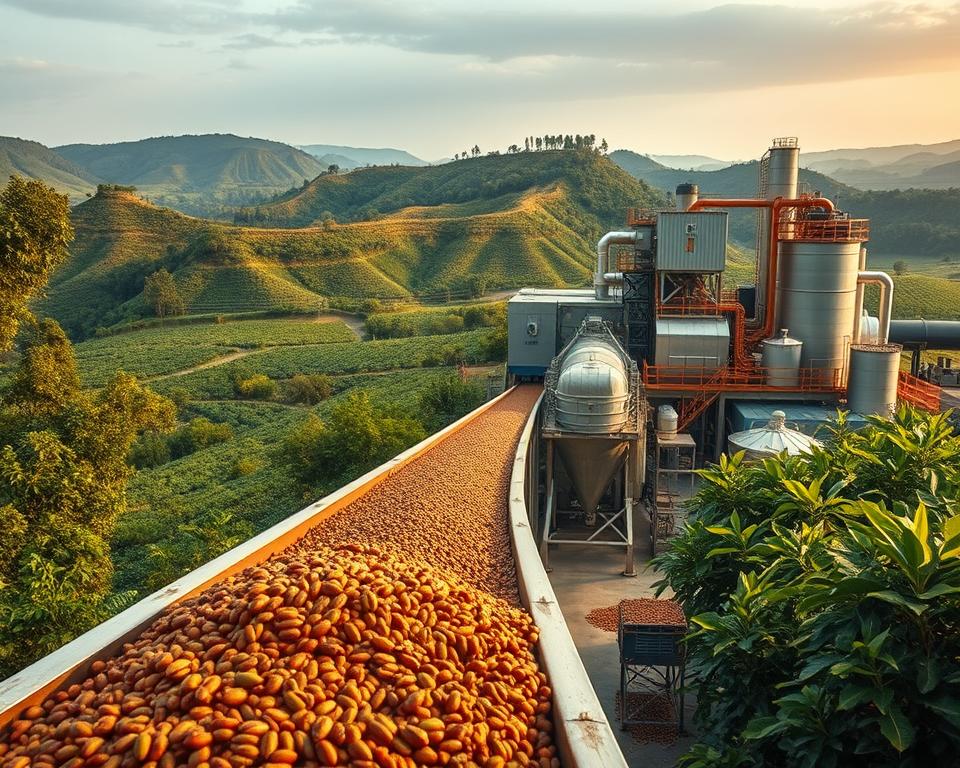
In Guatemala, coffee farmers are leading the way in turning coffee pulp into useful products. This move boosts sustainability in coffee making. Coffee pulp, once seen as waste, is now being turned into valuable resources. This helps create a more circular economy in the coffee world.
Mushroom Cultivation
One creative method is using coffee pulp for growing mushrooms. The pulp’s nutrients make it perfect for mushroom growth. These mushrooms can then be sold, adding to the farmer’s income.
Animal Feed Supplements
Coffee pulp can also be made into animal feed supplements. It’s packed with protein and nutrients, making it great for animal health and growth.
| Method | Benefits | Potential Challenges |
|---|---|---|
| Mushroom Cultivation | Diversifies income, reduces waste | Initial investment in mushroom cultivation infrastructure |
| Animal Feed Supplements | Provides nutrient-rich feed, additional income | Requires processing to ensure safety and quality |
Guatemalan coffee farmers are making a big impact by using these methods. They’re not only cutting down on waste but also making more money. This is thanks to organic waste management and recycling in coffee production.
Transforming Coffee Husks and Parchment
Coffee husks and parchment, once seen as waste, are now valuable in Guatemala’s coffee industry. This change helps the environment and boosts the coffee industry’s sustainability. It also offers green coffee waste solutions, making coffee production more eco-friendly.
Local Craft Opportunities
Coffee husks can be turned into many craft items, like decorations, bio-composites, and fuel. In Guatemala, local artisans use these materials to make unique, eco-friendly products. These items are popular both at home and abroad.
Parchment and husks can also be made into valuable export products. For example, they can be turned into organic fertilizers, animal feed, or mushroom substrates. These products help coffee farmers earn more and support a circular economy.
| Product | Description | Market Potential |
|---|---|---|
| Organic Fertilizer | Made from composted coffee husks and parchment | High demand in organic farming |
| Animal Feed | Processed coffee husks used as nutritious feed | Growing demand in sustainable animal husbandry |
| Mushroom Cultivation | Coffee husks used as substrate for mushroom growth | Increasing popularity in specialty mushroom markets |
Guatemalan coffee farmers can greatly reduce waste and improve their lives by using these new methods. This change supports a sustainable coffee industry. It shows how green coffee waste solutions can make a big difference.
Water Conservation and Treatment in Coffee Processing
Water conservation and treatment are key in sustainable coffee processing. In Guatemala, coffee is a big deal. Managing water is vital for the environment and coffee quality.
Coffee processing needs a lot of water, like for pulping, fermentation, and washing. Farms can save water by reusing it and using smart irrigation. This helps both the environment and the coffee.
Filtration Methods
Filtration is crucial for treating coffee processing wastewater. It includes mechanical and biological methods. For example, a study showed integrated filtration systems can really help the environment.
Biological Treatment Options
Biological treatments are also important for coffee wastewater. They use microorganisms to break down pollutants. This makes the water safer for the environment or irrigation.
Guatemalan coffee producers can make their farms more sustainable. They can lessen their environmental impact. This helps the whole coffee industry become more eco-friendly.
Renewable Energy Solutions from Coffee Waste
Renewable energy from coffee waste is key in sustainable coffee production in Guatemala. It helps reduce use of non-renewable energy, lowers emissions, and supports a circular economy.
Energy-Efficient Drying Techniques
Drying coffee is a big challenge. Old methods use a lot of fossil fuels. But, new drying techniques using coffee waste are becoming popular.
These methods use less energy and produce fewer emissions. They’re a step towards a greener future.
Coffee waste can also be turned into fuel for roasting. Using husks and other waste, producers make biofuels. These are cleaner and better for the planet than traditional fuels.
Starting these renewable energy solutions needs money for new tech. But, the long-term gains like lower costs and more sustainability are worth it. Guatemalan coffee producers see the value in going green.
Building Collaborative Networks for Coffee Waste Management
Creating strong networks is crucial for better coffee waste management. In Guatemala’s coffee world, working together is key. It helps share knowledge, resources, and the best ways to do things.
Government Programs
Government efforts are important for green coffee practices. The Guatemalan Ministry of Agriculture supports farmers with green waste management. They offer help and tools for farming in a way that’s good for the planet.
Industry Associations
Groups like the Guatemalan Coffee Association (ANACAFÉ) are also vital. They help coffee makers work together. This sharing of ideas and tech makes the coffee industry more sustainable.
| Collaborative Effort | Description | Benefits |
|---|---|---|
| Government Programs | Initiatives by the Guatemalan Ministry of Agriculture | Support for sustainable agriculture practices |
| Industry Associations | ANACAFÉ’s efforts to promote sustainable coffee practices | Enhanced knowledge sharing and technology adoption |
Through these networks, Guatemalan coffee farmers can do better with waste. This helps make the coffee industry more sustainable for everyone.
Measuring and Marketing Your Circular Economy Efforts
Guatemalan farmers are focusing more on eco-friendly coffee disposal and environmentally conscious production. They need to measure and market their circular economy work. This boosts their market access and helps make the coffee industry more sustainable.
Transparency Reporting
Transparency is key to gaining trust from consumers and stakeholders. Guatemalan coffee producers can do this by:
- Regularly publishing reports on their circular economy successes.
- Using well-known sustainability standards as guides.
- Getting third-party auditors to check their claims.
Leveraging Sustainability for Market Access
Guatemalan coffee producers can improve their market position and brand image by marketing their sustainability. They can:
- Showcase eco-friendly practices in their marketing.
- Join sustainability-focused trade shows and conferences.
- Work with brands and retailers that care about the environment.
By measuring and marketing their circular economy work, Guatemalan coffee producers can stand out in a global market. This helps make the coffee industry more sustainable and environmentally aware.
Conclusion: Embracing a Sustainable Future for Guatemalan Coffee
Guatemalan coffee producers can make a big difference by using sustainable practices. They can manage coffee waste better. This way, they turn waste into something useful.
By reducing waste, like turning coffee pulp into energy or compost, they earn more. Saving water and treating it well is also key for a green coffee industry.
Guatemalan coffee makers can meet the demand for eco-friendly coffee. They can show off their green efforts. This attracts buyers who care about the planet.
By following these steps, the Guatemalan coffee industry can grow in a way that’s good for the planet and people.