
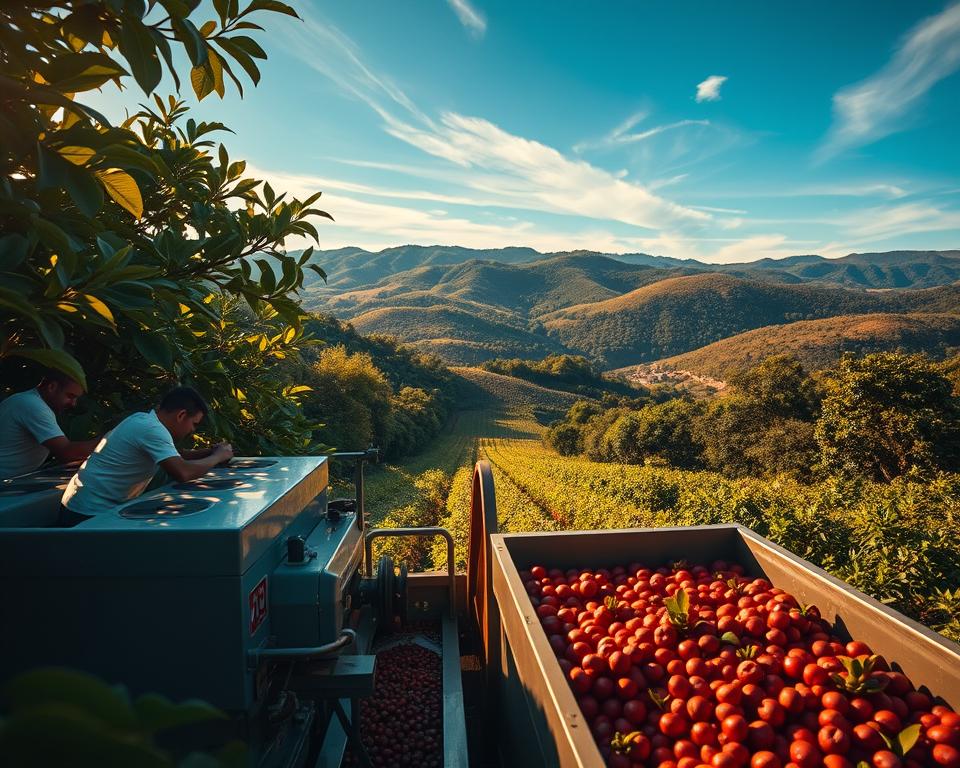
Guatemala is famous for its top-notch coffee. The country’s coffee industry is now using new methods to get even better. New technology in coffee harvesting is changing how farmers work. It helps them make higher-quality coffee beans.
New tools like drones and automated picking robots are making harvesting better. These tools help farmers pick coffee more accurately and quickly. This means they save money and make better coffee.
Guatemalan coffee farmers are using these new technologies. This helps them improve their work. It also keeps Guatemala known for its excellent coffee.
The Current State of Coffee Harvesting in Guatemala
Guatemalan coffee farmers face many challenges in harvesting coffee. These include the impact of altitude and the availability of labor. Coffee is a big part of Guatemala’s economy, being a key export.
Altitude Considerations
Guatemala’s varied terrain, with its high altitudes, offers both benefits and hurdles for coffee farming. High altitudes are perfect for growing top-quality Arabica coffee, known for its rich flavors. Yet, these areas are hard to reach and harvesting costs are higher.
Labor Availability Issues
Finding enough workers is a big problem for coffee farming in Guatemala. The industry struggles to keep workers, due to migration and the hard work of harvesting. This has raised labor costs and the need for better ways to harvest.
| Factor | Impact on Coffee Harvesting | Potential Solution |
|---|---|---|
| Altitude | Affects coffee quality and harvesting logistics | Implement advanced coffee harvesting techniques |
| Labor Availability | Influences harvesting efficiency and costs | Adopt sustainable coffee farming practices and mechanization |
The mix of altitude and labor issues shows the need for new solutions in Guatemalan coffee harvesting. By using new harvesting methods and sustainable farming, farmers can work better, save money, and make better coffee.
Coffee Harvesting Technology: An Overview
Smart coffee harvesting equipment has changed coffee production a lot. It makes both the yield and quality better. This is very important for countries like Guatemala, where coffee is a big deal.
This technology includes many tools and methods to make harvesting better. At its heart, it uses sensors, automation, and data to improve coffee making.
One big plus of smart harvesting is picking coffee cherries at the best time. This makes the coffee beans better and cuts down on waste. It means fewer unripe or overripe cherries are picked.
Also, these tools help farmers keep an eye on their farms better. They give real-time info on things like soil moisture, temperature, and crop health. This lets farmers make better choices, which can boost their yield and help the environment.
Using coffee harvesting technology is a move towards better farming. As more people want high-quality coffee, this tech will be key in meeting that need.
Mechanical Harvesting Solutions for Coffee Farms
Guatemalan coffee farmers are now using mechanical harvesting to work more efficiently. This method could change the coffee world by cutting down on labor costs and making coffee better.
Mechanical harvesting uses machines to pick coffee cherries, lessening the need for manual work. It’s great for big coffee farms where finding workers is hard.
- Flat or gently sloping lands are perfect for mechanical harvesting.
- Areas with few obstacles, like stones or steep slopes, make it easier to operate.
- Coffee farms with trees spaced evenly can get the most out of mechanical harvesters.
Efficiency Metrics
There are key ways to measure how well mechanical harvesting works:
- Picking speed and how much can be done
- The quality of the coffee cherries picked
- How much it saves on labor costs
By focusing on these, Guatemalan coffee farmers can make their harvesting better. This leads to more coffee being made and more money being made too.
Digital Tools and Software for Optimizing Harvest Management
Digital technologies are changing how coffee is harvested. Advanced software and tools help farmers make their harvests better and more efficient.
Ripeness Detection Systems
Ripeness detection systems are key for coffee harvesting. They use computer vision and machine learning to find the best time to pick coffee cherries. This way, farmers can get better coffee and cut down on waste.
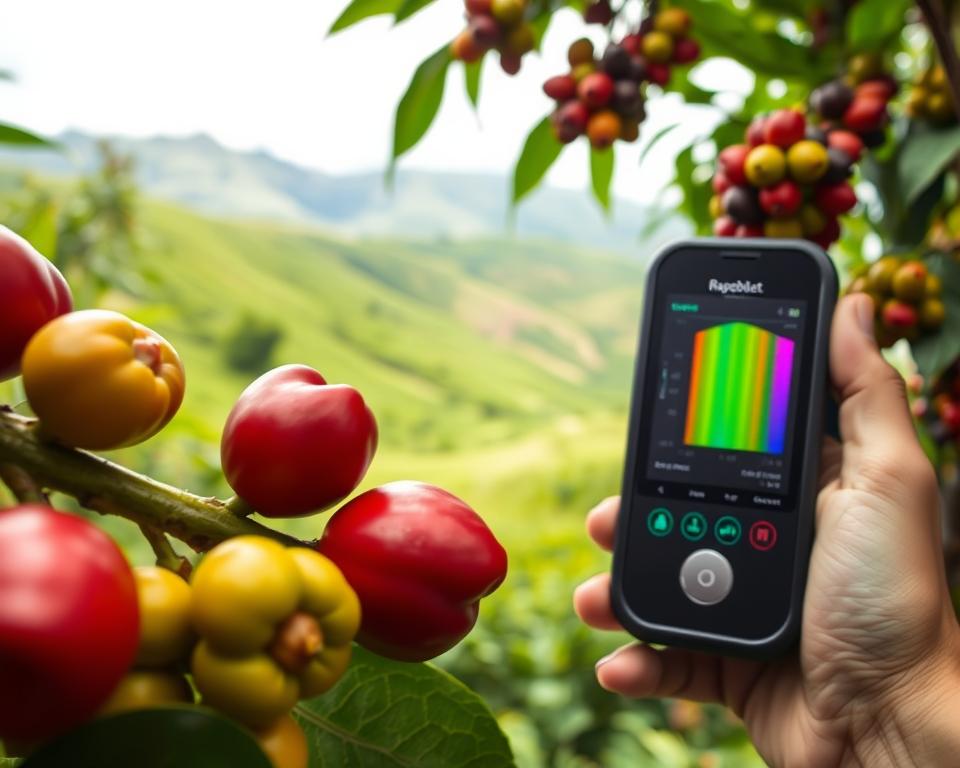
Yield prediction models are also important. They forecast coffee crop yields based on past data and weather. This helps farmers plan better, from hiring workers to buying equipment.
To learn more about technology in coffee production, check out Medium. It talks about Dimitra’s tech in Ethiopian coffee. It shows how digital tools can make coffee harvesting more efficient and farm management better.
Implementing Coffee Harvesting Technology: Step-by-Step Guide
To get the most out of coffee harvesting tech, Guatemalan farmers need a clear plan. This guide will show you how to use advanced coffee harvesting methods well.
The first step is to check how you harvest coffee now. Look at how you use labor, equipment, and how good your coffee is.
After spotting what needs work, pick the right tech. You might choose mechanical harvesters, digital tools, or precision farming.
Key Considerations for Technology Adoption
- Cost-benefit analysis of different technologies
- Training requirements for farm workers
- Integration with existing farming practices
Next, set up the tech on your farm. This means installing the equipment, training your team, and checking how it works at first.
| Step | Description | Expected Outcome |
|---|---|---|
| 1. Assessment | Evaluate current harvesting processes | Identify areas for improvement |
| 2. Technology Selection | Choose appropriate coffee harvesting technology | Improved efficiency and yield |
| 3. Implementation | Set up technology and train staff | Successful integration of new technology |
By following this guide, Guatemalan coffee farmers can use coffee harvesting tech well. This will boost their productivity.
Precision Agriculture Techniques in Coffee Harvesting
Guatemalan coffee farmers are using new tech to grow more coffee and harm the environment less. Precision agriculture uses advanced tech and data to make farming better.
This method helps farmers make smart choices with real-time data. They use drones to watch crops, sensors to check soil moisture, and GPS to apply fertilizers and pesticides right.
One big plus of precision agriculture is it helps coffee farming be more green. Farmers use resources better, cutting down on waste and harm to the environment.
| Technique | Benefit | Impact |
|---|---|---|
| Drones for Crop Monitoring | Early detection of pests and diseases | Reduced chemical usage |
| Soil Sensors | Optimal irrigation management | Water conservation |
| GPS-Guided Machinery | Precise application of fertilizers and pesticides | Reduced environmental impact |
Guatemala’s coffee farming is changing thanks to precision agriculture. Farmers are growing better coffee, more of it, and helping the planet too.
Case Studies: Successful Technology Implementation in Guatemalan Farms
Many Guatemalan coffee farms have seen great success by adding technology to their harvesting. This section shares two examples. They show how new tech can boost productivity and quality.
Productivity Improvements
Using mechanical harvesting has greatly boosted farm productivity. For example, one farm’s efficiency went up by 30% after getting a mechanical coffee picker.
| Farm Name | Pre-Implementation Productivity | Post-Implementation Productivity |
|---|---|---|
| Finca El Rosario | 1000 kg/hour | 1300 kg/hour |
| Finca La Esperanza | 900 kg/hour | 1200 kg/hour |
Quality Enhancement Results
Technology has also improved coffee quality. Farms using digital tools and precision agriculture have seen better coffee. One farm’s specialty coffee production went up by 25%.
The success of these Guatemalan farms shows the power of technology in coffee production. By using new methods, they’ve become more efficient and competitive. This helps the whole Guatemalan coffee industry grow.
Overcoming Barriers to Technology Adoption
Improving coffee yields starts with overcoming technology adoption barriers. Guatemalan coffee farmers face many challenges. These include technical, financial, and social hurdles.
Technical barriers include a lack of infrastructure and compatibility issues. Financial barriers are high initial costs for new equipment.
Social barriers, like resistance to change and the need for training, are also big challenges. To tackle these, offering financial incentives, training, and technical support is key.
Highlighting the benefits of new techniques can also help. These benefits include better efficiency and quality. Working together is vital for successful adoption.
By tackling these barriers and using effective strategies, Guatemalan farmers can improve their harvesting. This will lead to better coffee yields.
Conclusion: Embracing the Future of Coffee Harvesting in Guatemala
The future of coffee harvesting in Guatemala is looking bright with new technology. Tools like mechanical harvesters and digital systems are changing the game. These innovations are making the coffee industry more efficient and sustainable.
Guatemalan coffee farms can now work smarter, not harder. They can save money on labor and help the environment. Success stories show how these technologies can truly transform the industry.
As the coffee world keeps growing, using new tech is key for Guatemalan farms. They need to stay ahead and care for the planet. With more tech and green practices, Guatemala’s coffee future is very promising.