
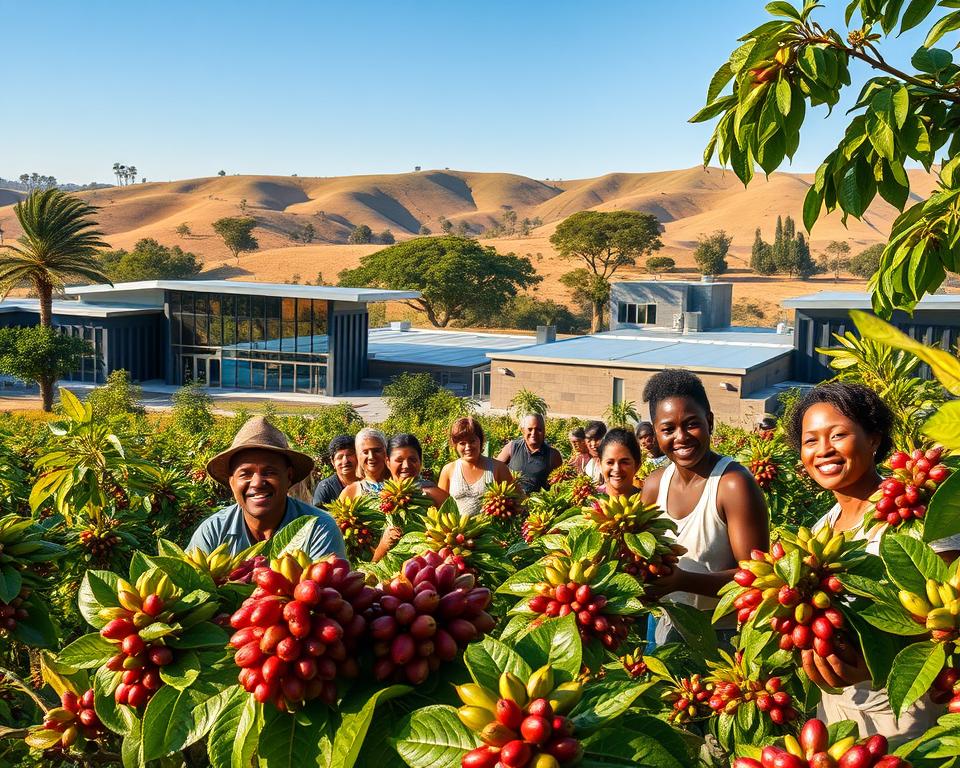
The coffee industry is a big deal for many countries, like Guatemala. But, it has problems with fair trade and social inclusion. It’s key to make sure farmers get fair prices and that local communities gain from coffee.
Guatemala’s coffee sector can lead to good changes. It can empower communities and be sustainable. By focusing on fair trade and social inclusion, the industry can help farmers and their communities. This guide will look into why these practices matter and how they help local communities.
The Guatemalan Coffee Landscape and Fair Trade Foundations
Guatemala is perfect for growing coffee because of its unique soil and weather. The country’s coffee farms are small and focus on being green. Fair trade helps by making sure farmers get a fair price for their coffee. This is thanks to ethical sourcing practices.
There are many good things about fair trade coffee. It helps coffee-growing areas grow and improve. It lets Guatemalan coffee farmers better their lives and help their communities.
The coffee from Guatemala is famous for being top-notch. It’s grown in different parts of the country. Here’s a look at some of these areas and what makes their coffee special.
| Region | Coffee Production Characteristics |
|---|---|
| Antigua | Known for balanced acidity and rich flavor |
| Huehuetenango | Produces coffee with bright acidity and fruity notes |
| Atitlán | Characterized by coffee with complex flavor profiles |
The Guatemalan coffee industry is doing well. This is thanks to fair trade and caring for the environment. It’s good for the farmers and the people who drink the coffee.
How Fair Trade Social Inclusion Coffee Transforms Communities
Fair trade social inclusion coffee is changing lives in Guatemala. It’s making the coffee industry fairer. This is helping coffee-growing communities thrive.
One big change is better living conditions. Farmers get fair prices for their coffee. This means they can afford homes, food, and healthcare.
Education is also getting a boost. There are scholarships and training for kids and adults. This helps farmers improve their skills and run their businesses better.
Women are gaining power too. Fair trade offers training and leadership roles. This helps women and makes the community stronger.
In summary, fair trade coffee is changing Guatemala for the better. It’s improving lives, education, and fairness. This makes coffee-growing communities more stable and prosperous.
Establishing Direct Relationships with Guatemalan Coffee Producers
It’s key to connect directly with Guatemalan coffee makers for fair trade and social inclusion. This method makes deals clear and fair, helping both sides.
Direct ties mean fair prices for everyone.
Setting Fair Prices Above Market Minimums
Fair prices help farmers earn enough to improve their farms and lives. This leads to better living conditions for farmers and their families.
- Stable income for producers
- Investment in farm improvements
- Community development projects
Creating Long-term Partnership Agreements
Long-term deals between buyers and farmers build a strong base for growth. These agreements help farmers plan and invest, focusing on quality and sustainability.
| Benefits | Producers | Buyers |
|---|---|---|
| Stable Income | Yes | No |
| Quality Assurance | No | Yes |
| Sustainable Practices | Yes | Yes |
By working directly with farmers, buyers can make sure their coffee is sourced ethically. This supports the well-being of coffee communities. It’s a key part of fair trade and inclusive supply chains.
Implementing Transparent Supply Chain Practices
Transparency in the coffee supply chain is key for ethical sourcing. It builds trust with consumers and stakeholders. It also makes sure fair trade practices are followed, boosting the impact of fair trade coffee.
Digital traceability tools are a big help in making supply chains clear. They track coffee from farm to consumer, showing the whole journey.
Digital Traceability Tools for Guatemalan Coffee
Digital tools like blockchain and QR codes are changing coffee sourcing. They let consumers see where their coffee comes from. This builds trust and keeps suppliers accountable.
| Tool | Description | Benefit |
|---|---|---|
| Blockchain | A decentralized ledger that records transactions | Enhances transparency and security |
| QR Codes | Codes that provide information about the coffee’s origin | Improves traceability and consumer trust |
Storytelling Approaches That Honor Farmers
Storytelling brings the supply chain to life. It shares the stories of farmers and their families. This makes coffee more personal and shows the good of fair trade.
Using digital tools and storytelling together helps the Guatemalan coffee industry. It supports inclusive supply chain management and better ethical sourcing.
Developing Gender Equality Initiatives in Coffee Communities
Fair trade is now empowering women in Guatemala’s coffee sector. These efforts help achieve gender equality. This leads to stronger communities and a fairer coffee industry.
One key strategy is microloan programs for women farmers. These loans help women invest in their farms. This boosts their economic stability.
Microloan Programs for Women Farmers
Microloans are key to empowering women farmers. They get the money needed to improve their farms. This increases their income and helps their families and communities.
Skills Training and Leadership Development
Skills training and leadership programs are also vital. They teach women to lead in their cooperatives and communities. This promotes fairness and inclusion.

These initiatives have a big impact. They not only help women financially but also grow the community.
| Initiative | Impact | Beneficiaries |
|---|---|---|
| Microloan Programs | Economic Empowerment | Women Farmers |
| Skills Training | Leadership Development | Women in Cooperatives |
| Leadership Development | Community Leadership | Community Members |
By focusing on gender equality, fair trade is making the coffee industry in Guatemala better. It’s creating a more just and sustainable future.
Integrating Indigenous Knowledge into Sustainable Coffee Production
The way we make coffee is changing thanks to traditional knowledge. For ages, indigenous groups have farmed in ways that respect nature. Now, these old methods are being mixed with new ones to make farming better and fairer.
Using indigenous knowledge in coffee farming makes the industry greener and helps local people. It lets farmers use fewer chemicals, making their coffee better and the land healthier.
Shade-Grown Coffee Techniques
Shade-grown coffee is a big part of this change. It means growing coffee under trees, like in a forest. This method helps animals, keeps the soil good, and saves water.
Natural Pest Management Approaches
Indigenous groups also know how to fight pests without chemicals. They use plants and natural stuff to keep pests away. This way, farmers can protect their crops and keep the environment balanced.
Using indigenous knowledge in coffee farming is good for everyone. It helps the planet and makes sure farmers get a fair deal for their coffee. This way, coffee can be both good for the earth and fair for those who grow it.
Building Educational Programs for Coffee-Growing Communities
Fair trade coffee does more than just help the economy. It also focuses on empowering communities. Educational programs are key in Guatemala’s coffee-growing areas.
These programs help coffee farmers get better at their jobs. They learn new skills and knowledge. This helps them improve their lives and support their communities.
Youth Engagement in Coffee Production
It’s important to get young people involved in coffee. They learn the skills needed for coffee production. This keeps family farming traditions alive.
Adult Education for Diversified Income Opportunities
Adult education programs help farmers earn more than just from coffee. They learn about sustainable farming, business, and money management. This helps them make smart choices about their work.
Investing in education through fair trade coffee helps everyone. It makes the coffee industry fairer and improves the lives of farmers and their families.
Developing Community Healthcare Initiatives Through Fair Trade
Fair trade is changing healthcare in coffee-growing areas. It focuses on the health of farmers and their families. This leads to better health for these communities.
Coffee farming is hard work, with dangers for farmers. Research shows fair trade helps by giving farmers training and tools.
Addressing Occupational Health Concerns
- Providing personal protective equipment to farmers
- Training on safe handling of pesticides and fertilizers
- Implementing ergonomic practices to reduce physical strain
Fair trade also improves health for mothers and children. These services are key for community well-being.
Maternal and Child Health Services
- Access to prenatal and postnatal care for mothers
- Immunization programs for children
- Nutrition education for families
Fair trade tackles important healthcare needs. This leads to better health in coffee-growing areas. As more people want socially responsible coffee, these efforts will likely grow. This will help farmers and their families even more.
Creating Inclusive Decision-Making Structures in Cooperatives
Creating inclusive decision-making structures in cooperatives is key for social equity in the coffee industry. It’s important for all stakeholders to have a say in decisions. This ensures everyone’s voice is heard.
This approach makes cooperatives more democratic and sustainable. It helps them make decisions that benefit the whole community. This way, everyone gets a chance to contribute.
It’s also important to include youth in the coffee industry. Cooperatives can engage young people through training, mentorship, and projects led by them. This way, their ideas and perspectives are valued.
Accessibility Measures for Persons with Disabilities
Cooperatives must also ensure accessibility for people with disabilities. They can make meeting spaces accessible, offer sign language, and provide materials for the visually impaired. This creates an inclusive space for everyone to participate.
By taking these steps, cooperatives can enjoy the benefits of fair trade coffee. This includes better social equity and community growth. The success of fair trade depends on cooperatives’ ability to be inclusive in their decision-making.
Measuring and Communicating Social Impact in Coffee Communities
Measuring and sharing social impact is key for fair trade coffee. Fair trade aims to better the lives of coffee farmers and their communities. Showing this impact is vital for ongoing support.
Measuring social impact means looking at how fair trade changes coffee communities. This includes better income, education, healthcare, and gender equality. Organizations use specific metrics and data to show the good they do.
Sharing stories of coffee farmers and their families is a great way to show impact. It makes the benefits of fair trade real and relatable.
Impact Storytelling Through Digital Media
Digital media is a strong tool for sharing these stories. Videos, social media, and blogs can tell the tales of coffee farmers. This not only reaches more people but also motivates them to choose fair trade coffee.
Being open is crucial for trust. Clear reports on how premium funds are spent show fairness and accountability. This includes details on community projects like education and healthcare.
| Community Project | Premium Fund Allocation | Impact |
|---|---|---|
| Education Initiative | 30% | Improved literacy rates among children |
| Healthcare Program | 25% | Increased access to medical care for farmers and their families |
| Gender Equality Project | 20% | Empowerment of women through training and economic opportunities |
By effectively measuring and sharing social impact, fair trade coffee can build stronger ties with consumers. This helps make the coffee industry fairer for all.
How Consumers Can Support Guatemalan Fair Trade Coffee
Supporting Guatemalan fair trade coffee is easy and impactful. You can help by making smart choices when you buy coffee. This way, you directly support coffee farmers and their communities.
Choosing products with the Fair Trade certification is a great start. This mark means the coffee meets high standards for fair trade. It ensures the coffee is made and traded fairly.
You can also buy coffee from cooperatives or stores that focus on fair trade. This supports community empowerment. Plus, spreading the word about fair trade coffee helps too.
By doing these things, you help make the coffee industry better. You support Guatemalan farmers and their communities.
Conclusion: The Future of Fair Trade and Social Inclusion in Guatemala’s Coffee Sector
The Guatemalan coffee sector has grown a lot in fair trade. This growth supports social equity and sustainability. By 2016, over 1,400 FT-certified groups worldwide had more than 1.6 million farmers and workers in 73 countries.
Coffee is a big part of Fair Trade, making up 46% of the total premium paid. It also accounts for 48% of all Fair Trade farmers.
Studies show that FT certification helps farmers get better prices and more sales. For example, a study found that FT certification helps mills stay open. In Costa Rica, more FT certification means a 2.2% income boost for farm owners. You can learn more about fair trade’s impact in this study on fair trade.
The future of fair trade in Guatemala’s coffee looks bright. With more focus on sustainable coffee, the industry can grow. This will help make sure resources are shared fairly. It’s key for a sustainable future for coffee producers.