
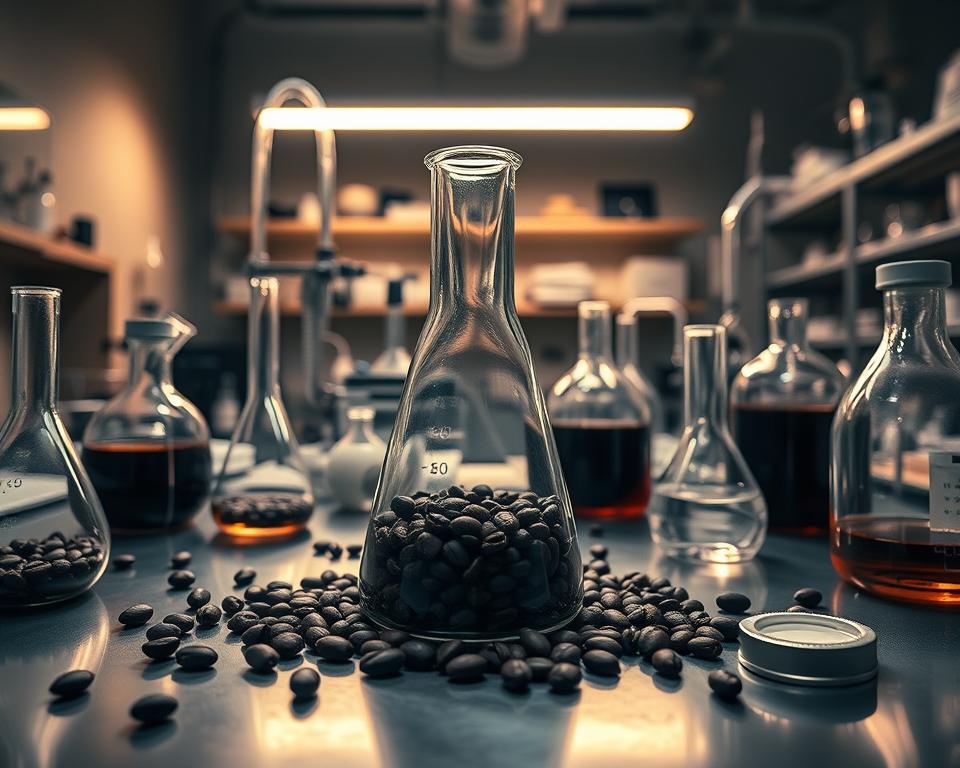
Guatemalan coffee is famous for its rich taste. This is thanks to the country’s special land and weather. New research in coffee chemistry is helping us understand how coffee is made, from growing to roasting.
Now, coffee makers in Guatemala can use science to improve their coffee. They learn about what makes their coffee taste good. This helps them make better coffee every time.
Science is changing the coffee world. It helps Guatemalan coffee makers make top-quality coffee. This meets the high standards of coffee lovers everywhere.
The Science Behind Coffee’s Complex Flavor Profile
Coffee’s flavor is shaped by many things. In Guatemala, the unique geography plays a big role. This includes high altitudes and volcanic soils.
Altitude Effects on Bean Density and Flavor
The altitude where coffee grows changes its flavor. At higher places, coffee beans grow slower. This makes them denser and more flavorful.
This slow growth lets more sugars and acids build up. These add to the coffee’s taste.
Volcanic Soil Contributions to Taste Complexity
Guatemala’s volcanic soils also impact coffee flavor. These soils are full of minerals like potassium and magnesium. The plants absorb these minerals.
This adds to the coffee’s taste, making it bright and acidic. It’s a key part of what makes Guatemalan coffee special.
| Factor | Effect on Flavor |
|---|---|
| High Altitude | Denser beans with complex flavor characteristics |
| Volcanic Soils | Mineral-rich, bright, and acidic notes |
Knowing these factors is key for coffee makers in Guatemala. They use advanced methods to improve their coffee’s flavor.
Understanding Guatemala’s Coffee Heritage and Flavor Potential
Guatemalan coffee’s rich taste comes from long-standing farming ways. Guatemala’s coffee history is shaped by its special land and weather. These have been kept alive by coffee farmers for generations.
Old farming methods, like growing coffee in the shade and using organic farming, make Guatemalan coffee stand out. These ways not only improve the taste but also help the environment and keep biodiversity alive.
Lessons from Indigenous Cultivation Practices
Indigenous groups in Guatemala have been key in creating coffee farming that’s both high quality and sustainable. Studies show that their traditional methods lead to coffee with a richer flavor.
| Cultivation Practice | Impact on Flavor |
|---|---|
| Shade-grown coffee | Enhances complexity and acidity |
| Organic farming | Contributes to a cleaner and more nuanced flavor |
| Traditional drying methods | Preserves unique flavor compounds |
By keeping Guatemala’s coffee traditions alive, farmers can make coffee that’s sought after worldwide. Mixing old ways with new science is crucial for improving flavor.
Modern Scientific Approaches to Coffee Production in Guatemala
Science is changing the coffee game in Guatemala. New methods are making Guatemalan coffee better and more sought-after worldwide.
Farmer Education Programs on Flavor Development
Farmer education is a big deal. It teaches farmers how to make their coffee taste better. They learn about new ways to improve flavor and quality.
A study on PubMed Central shows how important these programs are. By learning about coffee flavor, farmers can make their coffee even better.
| Program Component | Description | Impact on Flavor |
|---|---|---|
| Flavor Profiling | Training farmers to identify and develop unique flavor profiles. | Enhances coffee distinctiveness. |
| Quality Control | Educating farmers on best practices for quality control. | Improves overall coffee quality. |
| Sustainable Practices | Promoting eco-friendly farming practices. | Contributes to a more sustainable flavor profile. |
Guatemala’s coffee is getting better thanks to education and science. They’re even looking into flavor modulation technology to make it even tastier.
Genetic Selection and Breeding for Superior Flavor
Research into coffee genetics is opening up new possibilities for better-tasting Guatemalan coffee. Programs for genetic selection and breeding are being used to improve the unique qualities of native Guatemalan coffee.
Guatemala is famous for its wide range of coffee types, each with its own taste. Scientists are picking out the best traits for flavor through genetic selection. They study the genes of coffee plants to see how different qualities are passed down.
Guatemala’s Native Varieties Enhanced Through Scientific Selection
Native varieties like Antigua and Huehuetenango are being studied for their taste. Scientists look for genetic signs of good traits like acidity, body, and flavor notes.
| Variety | Flavor Profile | Genetic Traits |
|---|---|---|
| Antigua | Balanced acidity, chocolate notes | High antioxidant content |
| Huehuetenango | Fruity, wine-like notes | Unique genetic markers for acidity |
By knowing the genetic roots of these traits, breeders can create new coffee types. These new varieties will have the best of traditional Guatemalan coffee and even better taste. This method not only makes coffee taste better but also helps make coffee farming in Guatemala more sustainable.
Using flavor enhancement techniques and coffee chemistry research is key in this effort. It helps make coffee that tastes great and can handle tough environmental conditions.
Implementing Precision Agriculture in Guatemalan Coffee Farms
Coffee farmers in Guatemala are using precision agriculture to improve their work. They are employing advanced technology to better manage their coffee crops.
They use drones, satellite images, and sensors to check on soil moisture, temperature, and crop health. This data helps farmers decide on irrigation, fertilizers, and pest control. This leads to higher yields and better-tasting coffee.
For more information on how technology is shaping the coffee industry, visit AI Shaping Coffee Industry.
| Precision Agriculture Technique | Benefit | Impact on Coffee Quality |
|---|---|---|
| Drones and Satellite Imaging | Monitoring crop health and detecting issues early | Improved yield and reduced defects |
| Sensor Technologies | Tracking soil moisture and temperature | Optimized irrigation and fertilization |
| Data Analysis | Informed decision-making for farm management | Enhanced flavor profile and quality consistency |
The use of precision agriculture in Guatemalan coffee farms is making coffee better. By adopting these modern methods, farmers can improve their coffee-making processes. This benefits both the farmers and those who enjoy their coffee.
Harvesting Innovations That Preserve Flavor Compounds
New ways of harvesting are making Guatemalan coffee taste better. Farmers are using advanced tech to improve their coffee beans’ quality.
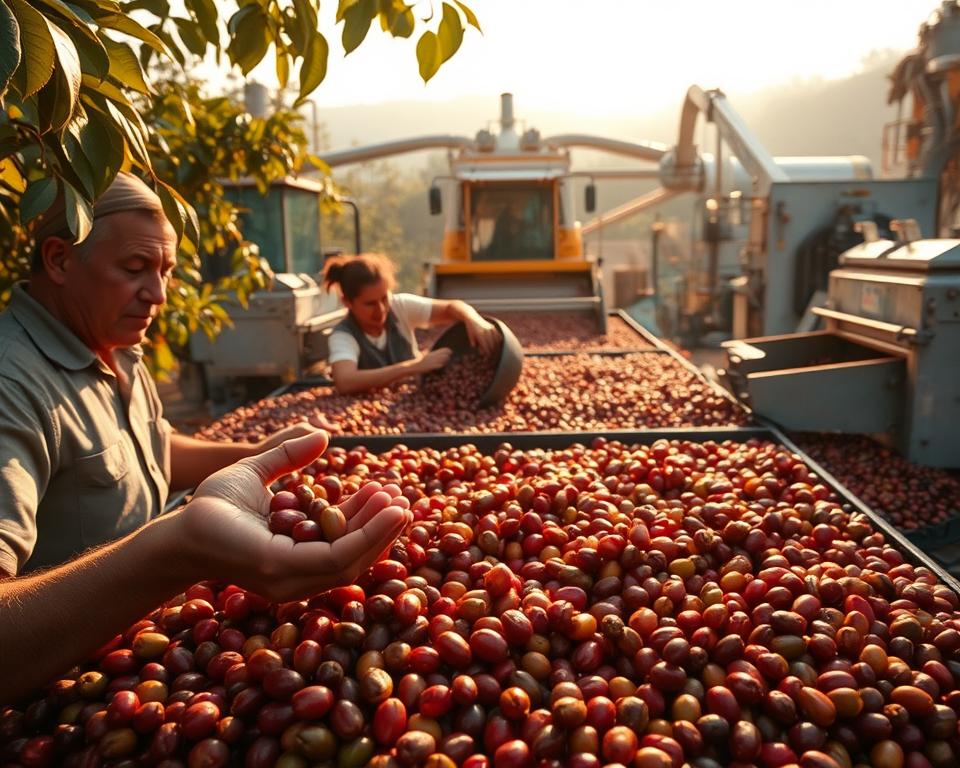
Flavor modulation technology helps farmers control coffee’s taste. It works with sensory analysis in coffee production to ensure top-quality coffee.
Time-to-Processing Considerations for Maximum Flavor
The time from picking to processing is key for keeping flavors in coffee. Studies show that quick processing boosts coffee’s taste.
| Harvesting Method | Time-to-Processing | Flavor Profile Impact |
|---|---|---|
| Selective Picking | Within 6 hours | Enhanced acidity and fruit notes |
| Machine Harvesting | Within 12 hours | Balanced flavor with reduced acidity |
| Strip Picking | Within 24 hours | Robust flavor with deeper notes |
Knowing how harvesting methods affect processing time helps farmers. They can choose the best method to enhance their coffee’s flavor.
Revolutionary Processing Methods Enhancing Flavor
New processing methods are changing the coffee world, making flavors better. How coffee is processed greatly affects its taste and quality.
Research into coffee chemistry is key. It helps us understand how processing methods change coffee’s flavors. Scientists study chemical changes to find the best ways to keep and improve flavors.
Measuring and Adjusting Environmental Factors During Processing
Things like temperature, humidity, and light during processing can change coffee’s flavor. New technologies help measure and adjust these factors. This makes flavors better.
Some new processing methods include:
- Controlled fermentation processes that enhance flavor compounds
- Advanced drying techniques that preserve delicate flavors
- Innovative washing methods that improve coffee quality
Using these modern methods, coffee makers in Guatemala can make their coffee taste better. This makes their coffee more competitive worldwide.
The future of coffee processing is bright. There’s ongoing research to make flavors even better.
How Science Is Improving Coffee Flavor Through Roasting Technology
Modern roasting technology is making coffee from Guatemala taste better. Roasting changes coffee beans’ chemical and physical properties. It boosts their flavor, aroma, and color.
New roasting tech lets coffee makers get better and more consistent roasts. This is thanks to advanced roasting gear. It lets them control the roasting process more precisely.
Getting the roasting equipment right is key for great flavor. Proper setup means the equipment works just right. This leads to coffee with consistent tastes.
Calibration is about adjusting the equipment for things like bean density and moisture. It’s about knowing how these factors impact the roasting. This knowledge is crucial for the coffee’s final taste.
- Precision temperature control allows for more nuanced flavor development.
- Advanced roasting software enables real-time monitoring and adjustments.
- Regular maintenance ensures equipment operates at peak performance.
By using advanced roasting tech and precise calibration, Guatemalan coffee makers can improve their coffee’s unique flavors. This not only helps the producers but also makes the coffee better for those who drink it. It shows off the best of Guatemalan coffee through better aroma extraction science.
Flavor Extraction Science: Optimizing Brewing Methods
Brewing coffee is more than just mixing grounds with hot water. It’s a blend of art and science. The goal is to extract flavors from coffee beans. This process is influenced by water temperature, coffee-to-water ratio, and brewing time.
The science of flavor extraction is complex. It involves understanding how brewing parameters affect taste. By using flavor modulation technology, coffee makers can improve their coffee’s taste.
Brew Ratio Calculations for Optimal Strength and Extraction
The brew ratio is key to getting the right flavor. It’s found by dividing coffee weight by water weight. A common ratio is 1:15 to 1:17 (coffee:water). But, this can change based on the brewing method and desired strength.
- A stronger brew ratio means a bolder flavor.
- Different brewing methods need different ratios for the best extraction.
- Understanding the best brew ratio and technique is crucial through sensory analysis.
To get the perfect coffee, optimizing brewing methods is essential. This includes adjusting the brew ratio. By grasping the science of flavor extraction and using sensory analysis, coffee lovers can try different techniques. This helps them find their perfect cup of coffee.
Applying Sensory Analysis and Taste Profile Development
Sensory analysis in coffee production has changed how we see flavor profiles. It looks at the coffee’s taste, aroma, and overall feel. This is key for creating unique and complex flavors, especially in Guatemala’s rich coffee.
In Guatemalan coffee, sensory analysis finds the special flavors of each area. Knowing these flavors helps producers make their coffee better. This makes Guatemalan coffee stand out worldwide.
Documenting and Tracking Flavor Modulation Results
Keeping track of flavor changes is vital for better coffee. By recording sensory analysis, producers can see how flavors evolve. This helps them make smarter choices for future coffee.
Studies in coffee chemistry, like those in scientific studies, help improve flavor profiling. Sensory analysis and keeping records help producers make their coffee even better. This also helps keep coffee production sustainable by highlighting regional flavors.
Sustainability Science: Preserving Quality While Protecting Ecosystems
Sustainability science is changing the coffee world. It keeps quality high while saving our planet. Guatemalan coffee makers are leading the way. They use green methods that make coffee taste better and help the environment.
Farmers are finding ways to keep their coffee tasty and eco-friendly. They use:
- Shade-grown coffee: This method boosts biodiversity and cuts down on harmful chemicals.
- Organic farming: It keeps soil and water clean by avoiding harsh chemicals.
- Water conservation: Smart irrigation systems save water.
Studies, like those in scientific research, show these methods make coffee better. They also make coffee making greener.
Guatemalan farmers are making their coffee sustainable. This keeps their crops healthy for the future and protects nature. It’s key to keeping Guatemalan coffee top-notch and supporting local life.
Conclusion: The Future of Coffee Flavor Science in Guatemala
Guatemala’s coffee industry is growing fast, thanks to new ways of processing coffee beans and extracting aromas. These scientific steps could lead to better-tasting coffee and more sustainable farming.
By using advanced farming, genetic choices, and new processing methods, Guatemalan coffee is getting better. The focus on perfect brewing and taste analysis is helping to understand coffee’s complex flavors.
The future of Guatemalan coffee looks bright, with science and technology at the forefront. With a focus on quality and the environment, Guatemala aims to stay a top player in the global coffee scene. They’re working to bring out the best flavors of their coffee.