
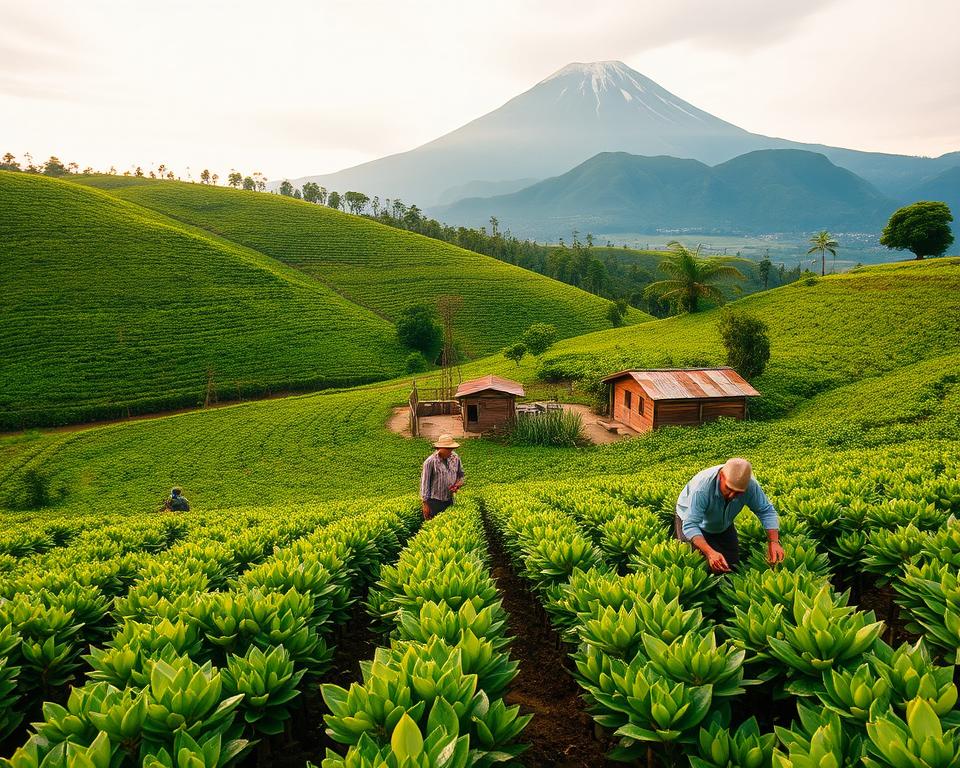
Guatemala is famous for its top-notch coffee. Many farms there work well with nature. The United Nations helps make the coffee industry greener.
The UN backs local farmers with special projects. This makes sure Guatemala’s coffee is good for the economy and the planet. This support is key for the coffee industry’s future in Guatemala.
The UN’s work helps local communities and keeps Guatemala’s nature safe. This is good for everyone involved.
Guatemala’s Coffee Industry: An Overview
Guatemala is known for its unique terroir and climate, making it a top coffee producer. The coffee industry is a big part of Guatemala’s economy. It also provides jobs for thousands of farmers and their families.
Guatemala’s coffee is of high quality, mostly Arabica. The country’s coffee-growing areas vary, from Huehuetenango’s highlands to Antigua’s volcanic slopes. This variety leads to a wide range of flavors, making Guatemalan coffee popular among specialty roasters.
Environmental Challenges
Coffee production in Guatemala has environmental challenges. Key issues include:
- Deforestation and habitat loss from coffee plantation growth
- Soil erosion and degradation from intensive farming
- Water pollution from coffee processing chemicals
These problems harm biodiversity and threaten coffee production’s future in Guatemala.
Economic Hurdles
Coffee farmers in Guatemala face economic challenges. These include:
- Fluctuating global coffee prices, affecting farmers’ income
- Limited market access and fair prices for their coffee
- The high cost of fertilizers and pesticides
Eco-friendly coffee programs and social responsibility projects are key. They promote sustainable farming and fair prices for farmers. These efforts can improve farmers’ lives and help the coffee industry in Guatemala.
Understanding UN Sustainable Coffee Projects in Guatemala
The UN is helping make Guatemala’s coffee sector more sustainable. It does this through many projects. These projects focus on environmentally friendly coffee and fair trade.
The United Nations Development Programme (UNDP) is a big part of these efforts.
UNDP’s Role
The UNDP helps Guatemalan coffee farmers in many ways. It runs programs to build their skills and get them into global markets. Some key things they do include:
- Training farmers on sustainable agricultural practices
- Enhancing the quality of coffee production
- Facilitating access to global markets
The Food and Agriculture Organization (FAO) also plays a big role in these projects.
FAO’s Contribution
The FAO works on several important tasks. These include:
- Promoting agroforestry practices among coffee farmers
- Supporting the development of climate-resilient coffee varieties
- Improving water management practices in coffee cultivation
Together, these UN agencies are helping Guatemala’s coffee industry. They are making it more sustainable and improving farmers’ lives.
The UN’s Approach to Sustainable Coffee Production
The United Nations is leading a push for sustainability in Guatemala’s coffee industry. They focus on reducing environmental harm and boosting farmers’ lives. This is done through various methods.
One key area is
Soil Conservation Techniques
. The UN supports terracing and cover cropping to fight soil erosion and improve soil health. These methods cut down on synthetic fertilizers and help biodiversity.
Some specific techniques include:
- Terracing to reduce soil erosion
- Cover cropping to enhance soil health
- Organic mulching to retain moisture
Another important area is
Water Management Systems
. The UN aids in setting up efficient irrigation and promotes water saving among farmers. This is vital in areas where water is scarce.
| Water Management Technique | Benefits | Impact |
|---|---|---|
| Efficient Irrigation Systems | Reduced water waste | Improved crop yield |
| Rainwater Harvesting | Supplemental water source | Reduced dependency on groundwater |
| Water Conservation Practices | Enhanced water efficiency | Better drought resilience |
Guatemalan coffee farmers can make a big difference by using these sustainable methods. They help the environment and also make their farms more profitable. This is thanks to better crops and lower costs.
Major UN Programs Supporting Guatemalan Coffee Farmers
The UN is working hard to make Guatemala’s coffee better. They have many programs that help local farmers. These efforts improve coffee quality and help farmers’ lives.
The Green Commodities Programme is a big help for Guatemala’s coffee. It makes farming more sustainable. This means better lives for farmers.
- Promoting sustainable agricultural practices to reduce environmental impact.
- Improving market access for farmers to increase their income.
- Supporting the development of sustainable commodity value chains.
This program helps farmers grow better coffee. It also makes them more competitive worldwide.
Regional Implementation Strategy
The Regional Implementation Strategy is another key UN program. It works with local groups to make coffee farming better. It focuses on:
- Conducting needs assessments to identify areas where support is most needed.
- Developing tailored programs to address these needs, focusing on sustainability and climate resilience.
- Monitoring and evaluating the impact of these programs to ensure they are meeting their objectives.
This strategy helps farmers deal with climate change and market issues. It’s a big help.
The Green Commodities Programme and the Regional Implementation Strategy are key to the UN’s work. They help make coffee farming in Guatemala better. This supports a fair and green coffee industry worldwide.
How UN Projects Address Climate Change Challenges
The UN is working hard to help Guatemalan coffee farmers deal with climate change. Rising temperatures and unpredictable rain hurt coffee yields and quality. This is a big problem for coffee production.
The UN is promoting eco-friendly practices to help farmers adapt. They focus on shade-grown coffee and drought-resistant varieties.
Shade-Grown Coffee Methods
Shade-grown coffee is grown under trees. This method protects plants from harsh weather and helps the soil. It also helps keep carbon dioxide out of the atmosphere.
Shade-grown coffee has many benefits:
- Improved soil health
- Increased biodiversity
- Better water retention
Drought-Resistant Varieties
The UN is also working on drought-resistant coffee. These new varieties can grow well even when there’s little water. This ensures coffee can still be made during dry times.
| Variety | Characteristics | Benefits |
|---|---|---|
| Drought-Resistant | Bred for water efficiency | Maintains yield during drought |
| Shade-Grown | Cultivated under tree canopy | Improved biodiversity and soil health |
Through these efforts, the UN’s programs are helping Guatemalan farmers. They are making sure coffee can still be grown in the future. This is good for the country’s coffee industry.
Economic Impact of UN Sustainable Coffee Projects
The UN has greatly helped Guatemalan coffee farmers through its sustainable coffee projects. These efforts focus on both the environment and the farmers’ economic stability.
Price Premium Strategies
The UN uses a key strategy: price premium for sustainable coffee. Farmers get more money for their coffee because it’s certified as sustainably made. This extra money comes from the costs of organic farming and protecting biodiversity.
- Increased revenue for farmers due to the premium prices
- Enhanced market access for sustainably produced coffee
- Encouragement of sustainable practices among coffee farmers
Diversification of Income Sources
The UN also helps farmers by diversifying their income. This includes:
- Promoting coffee tourism in sustainable coffee farms
- Encouraging the production of value-added products from coffee
- Supporting farmers in exploring alternative crops and agricultural practices
This approach makes farmers more economically resilient. It also helps the coffee industry in Guatemala become more sustainable.
The UN’s efforts are positively changing the lives of Guatemalan coffee farmers. They are helping create a more sustainable and fair coffee industry.
Social Benefits of UN Coffee Sustainability Efforts
The UN’s coffee sustainability efforts in Guatemala have a big impact. They focus on women’s cooperatives and leadership programs. These help farmers and make coffee production fairer and more sustainable.
Women’s Cooperatives
Women’s cooperatives are key in Guatemala’s coffee world. They let women join in making decisions, get training, and earn money on their own. The main benefits are:
- More women in coffee work
- Better market and money access
- More skills and knowledge
Leadership Development Programs
The UN also has programs for leadership. They help women and young people become leaders in their communities. The main benefits are:
| Program Benefits | Description |
|---|---|
| Leadership Skills | Training in management, decision-making, and problem-solving |
| Networking Opportunities | Access to a network of professionals and community leaders |
| Community Engagement | Opportunities to engage in community development projects |
The UN’s support for fair trade coffee helps Guatemalan farmers, especially women. These efforts make the coffee industry better for everyone involved.
How to Participate in UN Sustainable Coffee Projects
Joining the UN’s global coffee sustainability programs can really help coffee producers. It opens up new markets and makes the coffee industry more sustainable.
To get involved, coffee producers need to go through an initial assessment. This checks if their current ways match the UN’s sustainability goals.
Initial Assessment Process
The first step is key to seeing if a producer can join UN sustainable coffee projects. It looks at:
- How they farm and produce coffee
- The impact on the environment
- How they treat their workers and community
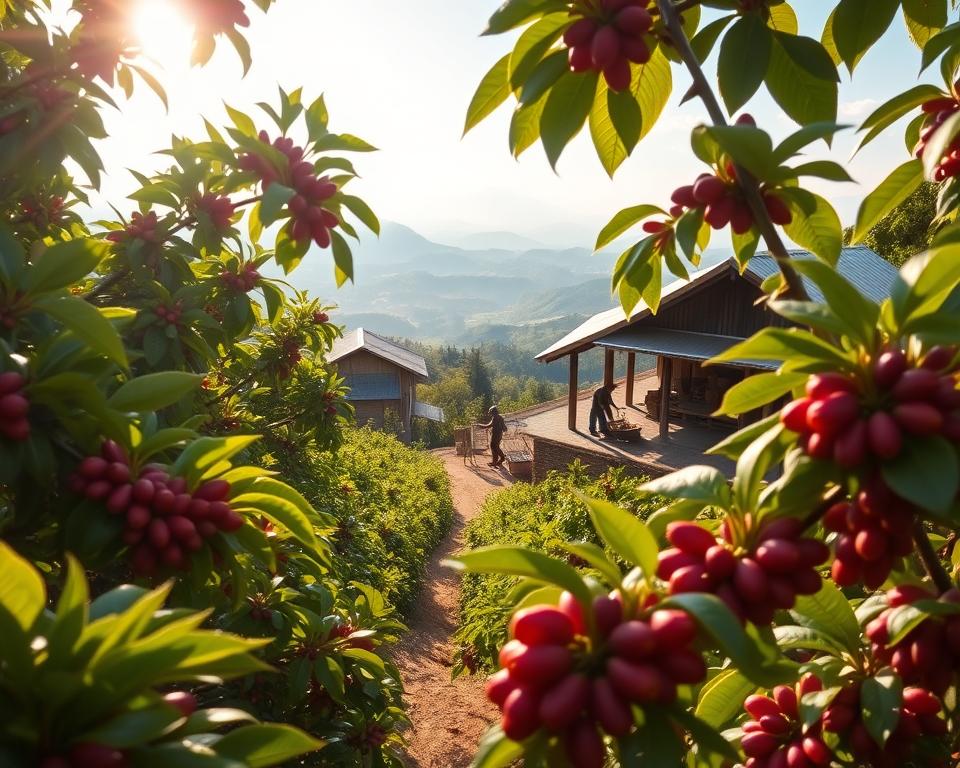
Certification Requirements
Once they pass the initial check, producers must meet certain standards. This makes them officially part of the UN’s ethical coffee projects.
| Certification Criteria | Description | Benefits |
|---|---|---|
| Environmental Sustainability | Using eco-friendly farming methods | Less harm to the environment |
| Social Responsibility | Practicing fair labor and community involvement | Better social conditions |
| Economic Viability | Using efficient production and getting into markets | More money made |
By taking these steps and meeting the needed standards, coffee producers in Guatemala can join UN sustainable coffee projects. This boosts their sustainability and competitiveness in the market.
Conclusion: The Future of UN-Supported Sustainable Coffee in Guatemala
The United Nations’ work in Guatemala’s coffee sector is showing great promise. It’s making the country’s coffee industry better while also protecting the environment and promoting fairness.
The UN has launched several programs to help coffee farmers in Guatemala. These efforts have led to better living conditions and more resilience against climate change for the farmers.
With more people wanting sustainable coffee, the UN’s un sustainable coffee projects are set to have a big impact. They aim to make Guatemala’s coffee industry fairer and more eco-friendly.
Supporting sustainable coffee initiatives can lead to a better future for Guatemalan coffee farmers and the planet. This will benefit both local communities and the global coffee market.