
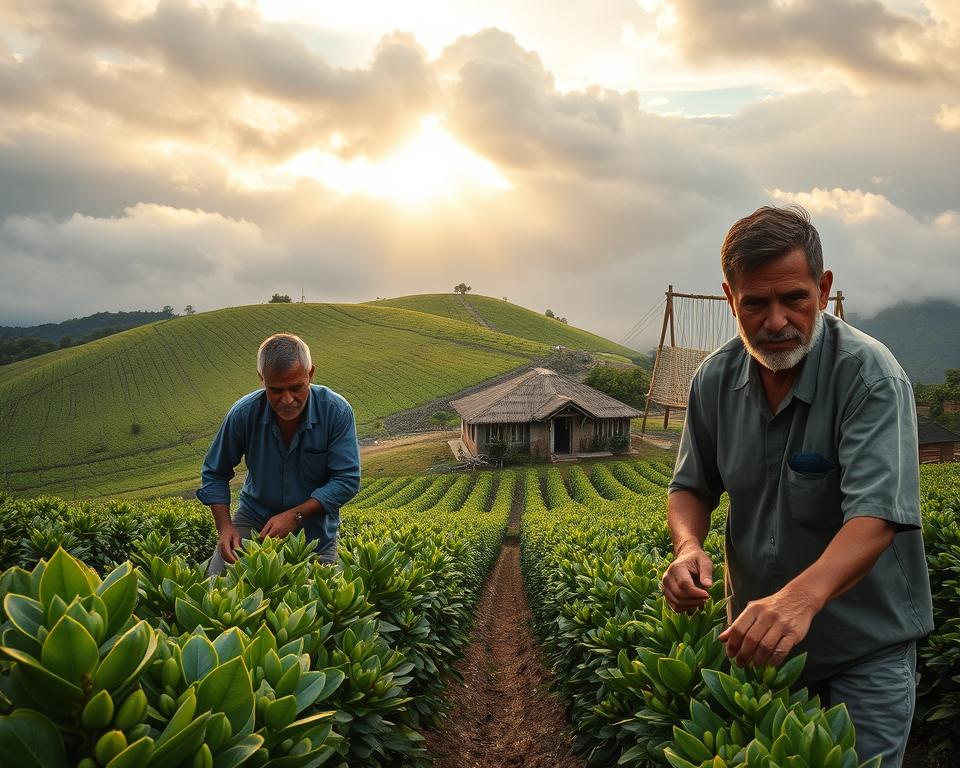
Guatemalan coffee is famous for its quality and unique taste. It’s in high demand worldwide. But, Guatemalan coffee makers often struggle to reach customers outside their area.
To succeed globally, they need to know the international coffee market well. They must use their special qualities and meet global market needs. This way, they can grow their sales and reach more customers worldwide.
This journey includes dealing with global trade’s challenges, finding new markets, and competing well.
The Global Coffee Market Landscape
The global coffee market is seeing a rise in demand for top-quality coffee beans. This is because more people are willing to spend extra for specialty coffee. This shift is changing the global coffee scene, opening up new chances for small coffee farms.
Exports of coffee beans are hitting new records, showing the market’s growth. Small farms in Guatemala can benefit by focusing on unique, high-quality coffee. It’s key for these farms to understand the global market to succeed.
Important trends in the global coffee market include sustainable coffee, online trading, and coffee with unique origins. By keeping up with these trends, small farms can find export chances and compete well globally.
To make the most of global coffee market chances, small farms need to be flexible. They should invest in quality, build a strong brand, and connect with buyers worldwide.
Understanding Your Coffee’s Unique Value Proposition
Guatemalan coffee is famous for its unique taste. This comes from the country’s rich volcanic soil and varied climate. This taste is a big part of what makes Guatemalan coffee special.
The way Guatemalan farmers grow their coffee adds to its quality. Many use methods that are good for the environment. This not only makes the coffee better but also helps protect nature.
Getting certifications like Fair Trade and Organic can make Guatemalan coffee even more appealing. These labels show that the coffee is made in a way that’s good for people and the planet.
By focusing on these special qualities, small coffee farms in Guatemala can stand out. They can attract customers who want to buy coffee that’s not only great tasting but also made in a responsible way.
Preparing Your Small Coffee Farm for Global Sales
Small coffee farms can reach global sales by investing in the right facilities and adopting sustainable practices. To stand out in the international market, improving your coffee’s quality and consistency is key.
Processing Facilities
Improving your processing facilities is crucial for global sales. You need modern techniques and equipment to meet international buyers’ standards. A study shows that investing in infrastructure boosts a farm’s marketability in the global coffee market.
| Processing Method | Quality Impact | Market Demand |
|---|---|---|
| Washed | High quality, clean taste | High |
| Natural | Fruitier flavors, varied quality | Moderate |
| Honey | Balanced acidity, sweet flavor | Increasing |
Storage Solutions
Good storage solutions are essential for keeping your coffee quality high. The right facilities protect your coffee from moisture, light, and pests. This ensures it stays fresh for export. Organic farming practices also attract buyers who value sustainability.
By focusing on these areas, small coffee farms can boost their success in the global market.
Building a Strong Digital Presence
In today’s world, having a strong online presence is key for small coffee farms. It helps them reach more people worldwide. A good digital presence also shows your dedication to social responsibility in the coffee world.
Here are some effective online marketing tips for small coffee farms:
- Make a website that shows off your coffee’s special qualities.
- Use social media to talk to customers and promote your brand.
- Send out email campaigns to reach more people.
- Join online marketplaces for specialty coffee.
Here’s a table with some strategies and their benefits:
| Strategy | Potential Impact |
|---|---|
| Social Media Engagement | More people know about your brand and stick with you. |
| Email Marketing | Get direct messages from customers for deals and news. |
| Online Marketplaces | Connect with a global audience looking for specialty coffee. |
By using these strategies, small coffee farms can reach more people online. It’s about being seen, talking to people, and being ready to serve the global coffee community.
Small Coffee Farms Global Sales: Strategies That Work
To grow their customer base, small coffee farms can sell online to people all over the world. Having a strong online store is key to reaching more customers.
Setting Up Your Online Store
Creating an online store lets small coffee farms show their products to people everywhere. Sites like Shopify and WooCommerce make it easy with their templates and simple design. For example, a coffee farm in Guatemala can show off its coffee’s unique tastes, like chocolate and caramel, to coffee lovers everywhere.
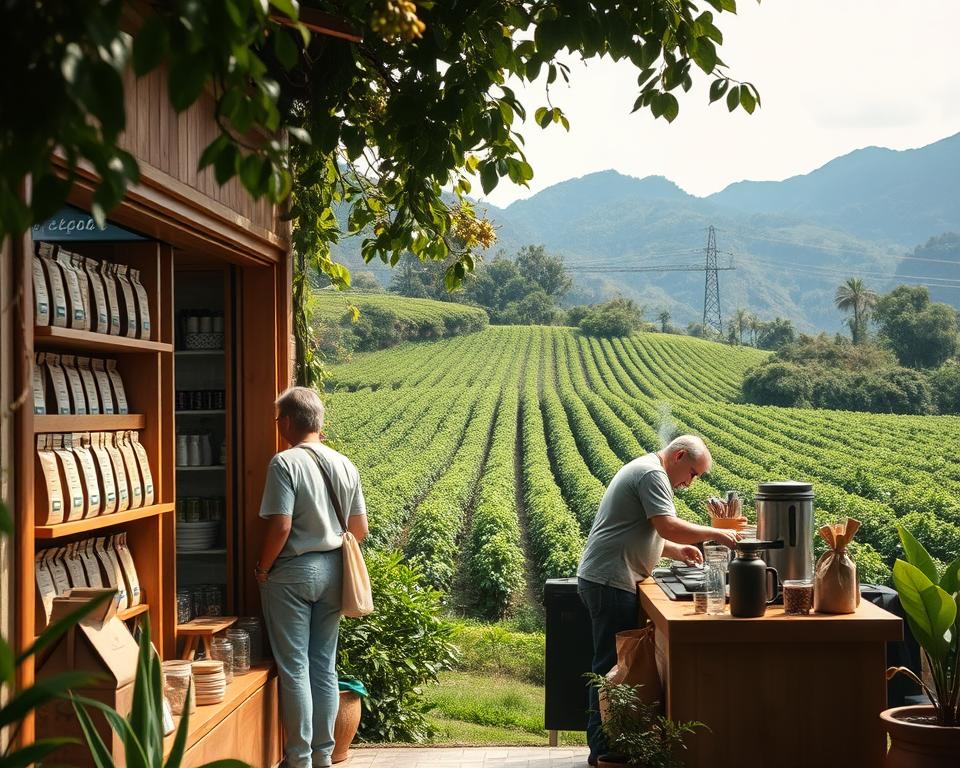
When setting up your store, use high-quality images and detailed descriptions. This builds trust with customers and makes your products stand out.
Managing International Payments
To sell globally, small coffee farms need to handle international payments well. Payment gateways like PayPal and Stripe handle many currencies safely. Some farms have added these systems to their stores, making it easy to get payments from all over.
Direct trade coffee sourcing is also a smart move. By working directly with buyers, farms can get better prices and be more transparent. This not only makes them more profitable but also helps the coffee industry be more sustainable.
Navigating Export Regulations and Logistics
To enter the global coffee market, knowing export rules and logistics is essential. Small Guatemalan coffee farms face a complex challenge to thrive abroad.
Exporting coffee to North America means following U.S. and Canadian customs rules. This includes correct labeling, quality checks, and paperwork. Farms must make sure their coffee fits each country’s standards.
European Union Standards
The European Union has strict rules for coffee imports. They focus on quality, sustainability, and fair trade. Guatemalan farms must follow these rules to sell to the EU.
Asian Market Regulations
Asia’s coffee market is growing, with countries like Japan and South Korea having their own rules. Knowing these rules, including tariffs and quality standards, is vital for success.
In summary, understanding export rules and logistics is crucial for Guatemalan coffee farms to grow globally. By knowing the rules for different areas, farms can meet requirements and seize export chances.
Sustainable and Ethical Coffee Production Practices
Guatemalan coffee farmers are now focusing on sustainable and ethical coffee production. This change helps the environment, local communities, and improves coffee quality and value.
Sustainable coffee production means using methods that are good for the planet, fair to people, and profitable. Some important practices include:
- Using organic farming to cut down on chemicals and support biodiversity.
- Conserving water to reduce waste and protect water sources.
- Growing coffee under shade to keep ecosystems healthy and natural habitats intact.
Ethical coffee supply chains are also key. They make sure farmers get fair prices and work in safe, respectful conditions. Fair trade coffee partnerships help farmers get better deals and support sustainable living.
Small coffee farms in Guatemala are making a big difference. They’re helping the coffee industry become more sustainable and fair. They also attract customers who want to buy ethical and sustainable products.
Forming Strategic Partnerships and Cooperatives
Cooperatives are key for many small coffee farmers. They help these farmers compete globally. By joining forces, small coffee farms can show more social responsibility and grow their market presence.
Cooperatives let farmers share resources and knowledge. They can get better prices by working together. For example, they can invest in shared facilities to improve coffee quality.
Some cooperatives focus on sustainable farming and community projects. These efforts help farmers and their communities. They also attract consumers who care about social responsibility in coffee.
| Cooperative | Location | Key Initiatives |
|---|---|---|
| La Voz Cooperative | Guatemala | Sustainable farming practices, community development |
| Café Justicia | Guatemala | Fair trade practices, environmental conservation |
| Atitlán Coffee Cooperative | Guatemala | Quality improvement, market access |
Small coffee farms can also partner strategically. This opens doors to new markets, technologies, and expertise. It can make farming more efficient, improve quality, and increase profits. As the coffee world changes, cooperatives and partnerships will be vital for social and environmental goals.
Leveraging Certifications and Origin Designations
Small Guatemalan coffee farms can grow by focusing on certifications and origin designations. These include Fair Trade, Organic, and Rainforest Alliance. They make a farm more appealing to those who care about sustainability and fair trade.
Origin designations like Antigua or Atitlán highlight a coffee’s unique taste and production. These names can lead to higher prices because of their quality and reputation.
- Fair Trade certification ensures equitable prices for farmers.
- Organic certification appeals to consumers seeking environmentally friendly products.
- Rainforest Alliance certification promotes sustainable farming practices.
Guatemalan coffee farms can stand out by using these certifications and origin designations. They can get better prices and attract more customers. This strategy helps farmers financially and showcases Guatemalan coffee’s quality and culture.
Financial Considerations and Pricing Strategies
Understanding financial aspects is crucial for small coffee farms’ global success. It’s important to grasp the financial sides of your business to compete well.
Cost of production is a big factor, including labor, materials, and processing. Small coffee farms also face export costs like transportation and customs fees. Pricing strategies must consider these to stay profitable.
Accessing capital is a big challenge for many small coffee farms. Microfinance options can help with production costs, quality improvement, or marketing. Microfinance institutions offer financial products tailored for small-scale farmers.
International Development Programs
International development programs can also support small coffee farms financially. They might offer grants, technical help, or market access. Joining these programs can boost sustainability and competitiveness globally.
By managing finances well and using smart pricing, small coffee farms can boost profits. This leads to long-term success in the global coffee market.
Conclusion: Building a Sustainable Global Presence for Your Guatemalan Coffee Farm
Guatemala is a top coffee producer, ranking fifth globally. Its coffee industry is key to the country’s economy. In 2007/08, Guatemala exported 3.82 million 60kg bags of green coffee, earning around $655 million USD. With the global coffee market involving 55 producing countries and total exports of 94.3 million bags, Guatemalan coffee farms have significant opportunities for growth.
To achieve a sustainable global presence, small Guatemalan coffee farms must focus on effective strategies. Understanding their unique value proposition and preparing for global sales are crucial steps. By leveraging certifications and origin designations, these farms can differentiate themselves in the global market. Forming strategic partnerships and cooperatives can further enhance their global reach and contribute to long-term success in global sales.