
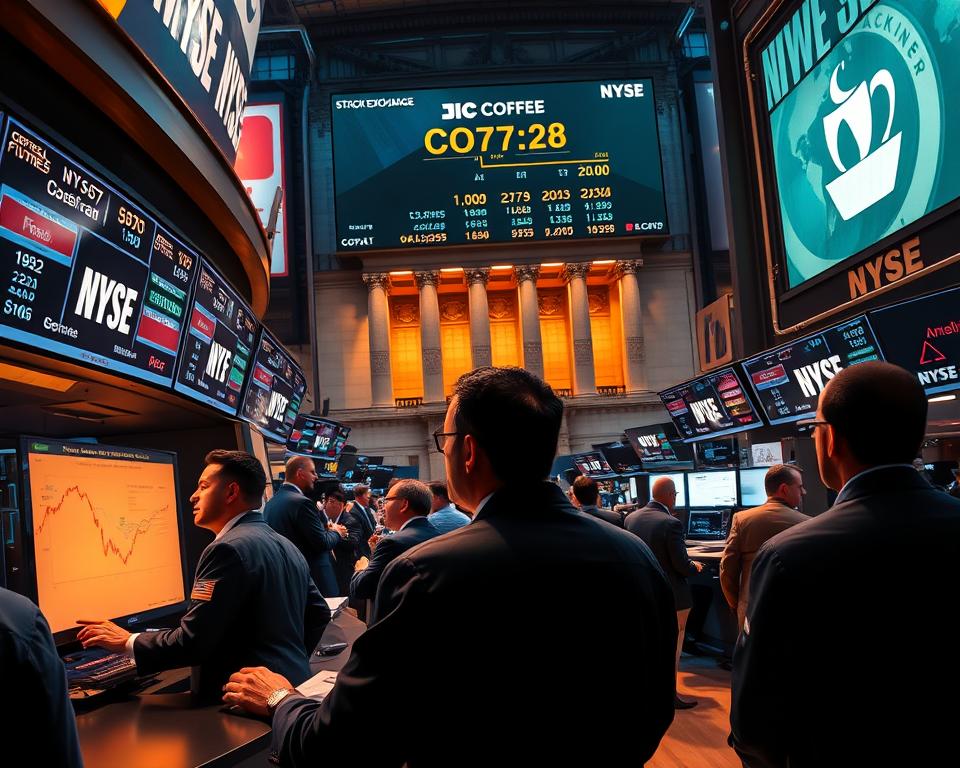
Coffee price changes on the New York Stock Exchange (NYSE) affect local farmers a lot. This is especially true for farmers in Guatemala.
For Guatemalan coffee makers, knowing NYSE coffee prices is key. It helps them navigate the global market well.
These price changes can really impact the lives of coffee farmers and their communities. It’s a big deal.
As the global coffee market keeps changing, it’s vital for Guatemalan coffee producers to keep up. They need to know about the trends and price changes on the NYSE.
The Global Coffee Market and Guatemala’s Position
Guatemala is a big player in the global coffee market. Its coffee quality and market trends shape its position. The country is famous for its high-quality Arabica beans. These beans come from different regions, each with its own unique flavor.
Key Guatemalan Coffee Varieties and Their Market Value
Guatemala is home to several key coffee varieties. These include Antigua, Atitlán, and Huehuetenango. These coffees are loved for their unique tastes and are in high demand worldwide. The value of these coffees depends on their quality, yield, and how much people want them.
The coffee price on the New York Stock Exchange is also important. Changes in global coffee prices can really affect coffee farmers in Guatemala.
Regional Quality Differences and Their Price Implications
Quality and price of coffee vary by region in Guatemala. Coffees from high places like Huehuetenango are known for their complex flavors. They cost more than coffees from lower areas. Knowing these differences helps farmers and buyers make smart choices in the market.
Understanding Coffee Prices on the New York Exchange
For Guatemalan farmers, knowing how coffee prices work on the New York Exchange is key. It helps them in the global market.
Futures Contracts and Their Function
Futures contracts are deals to buy or sell coffee at a fixed price later. They help both producers and buyers manage price changes.
The global market’s supply and demand set coffee trading rates. The New York Exchange is where these deals happen.
Price Differentials for Guatemalan Coffee
Guatemalan coffee is top-notch, and its price shows it. Price differentials adjust the base coffee price based on quality, origin, and more.
| Coffee Origin | Price Differential |
|---|---|
| Guatemala Antigua | +10% |
| Other Regions | +5% |
These differences can really affect Guatemalan coffee farmers’ earnings. So, it’s important to keep an eye on coffee commodity prices.
Historical Trends of Coffee Prices on the NYSE
The New York Stock Exchange (NYSE) has played a big role in coffee prices. It has a big impact on Guatemala’s coffee industry. Knowing these trends is key for coffee makers and those who work with them.
The 2011 Price Spike and Its Effects on Guatemala
In 2011, coffee prices on the NYSE went up a lot. This was because of bad weather in big coffee places and more people wanting coffee. This big jump really hit Guatemala hard, causing:
- More money for coffee farmers who had already picked their crops
- Higher costs for farmers who hadn’t picked yet, because of more expensive things like fertilizers and labor
After the 2011 price jump, Guatemala’s coffee industry showed it could bounce back. They did this by:
- Growing different types of coffee that are better at fighting off diseases and can handle the weather
- Putting money into new farming tech to get more coffee and spend less
These steps helped Guatemala get over the price jump. They also taught them how to deal with future changes in coffee prices and news in the coffee world.
Factors Influencing Coffee Prices on the New York Exchange
Coffee prices on the New York Exchange are influenced by many things. This includes Brazilian production and environmental threats in certain areas. Knowing these factors is key for those in the coffee business, especially in Guatemala.
Brazilian Production’s Impact on Global Prices
Brazil is the biggest coffee producer in the world. Its production levels greatly affect global coffee prices. If Brazilian coffee production goes down, global prices might go up.
- Increased demand for coffee from other producing countries
- Potential for price volatility on the New York Exchange
La Roya Fungus and Other Environmental Threats
Environmental threats like the La Roya fungus can harm coffee crops in Guatemala and other Central American countries.
Currency exchange rates also play a big role in local coffee prices. Changes in exchange rates can impact the income of Guatemalan coffee farmers.
Understanding these factors helps stakeholders deal with the global coffee market’s complexities. It allows them to make better decisions.
How to Monitor Coffee Price Movements
Keeping up with coffee price changes is key for farmers in Guatemala. They need to watch coffee prices on the New York Exchange. This helps them make quick decisions based on market shifts.
Free vs. Paid Market Data Services
Many market data services are out there, with both free and paid choices. Sites like Barchart give real-time coffee futures prices. Free options are a good start, but paid services offer deeper analysis and forecasting tools.
Mobile apps are handy for Guatemalan farmers to track coffee prices. Apps like CoffeeApp or FarmLogs give real-time data. They help farmers make smart choices.
Basic Analysis Techniques for Non-Traders
Non-traders can understand coffee price changes with basic analysis. By looking at trends and using technical indicators, farmers get market insights. This knowledge helps them make better decisions about selling coffee.
Using these tools and techniques, Guatemalan coffee farmers can lead the way. They can handle the global coffee market’s challenges.
Direct Impact on Guatemalan Coffee Farmers
The coffee market value on the New York Exchange is key for Guatemalan coffee farmers. Changes in coffee prices can greatly impact their income and how sustainable their work is.
Price Conversion Formula for Local Producers
To see the local effect, we need to change global coffee prices to what they are locally. This involves adjusting the global price for local exchange rates, taxes, and other regional factors.
Small vs. Large Farm Vulnerability Analysis
Small farms are more at risk from price changes because they have less money. Big farms can handle risks better by spreading out their income and using their size to their advantage.
| Farm Size | Vulnerability to Price Fluctuations | Risk Mitigation Strategies |
|---|---|---|
| Small | High | Limited financial reserves, cooperative support |
| Large | Low | Diversification, economies of scale |
Employment and Migration Patterns
Coffee price changes also affect jobs and migration in rural Guatemala. Low prices can mean fewer jobs, leading people to move to cities.
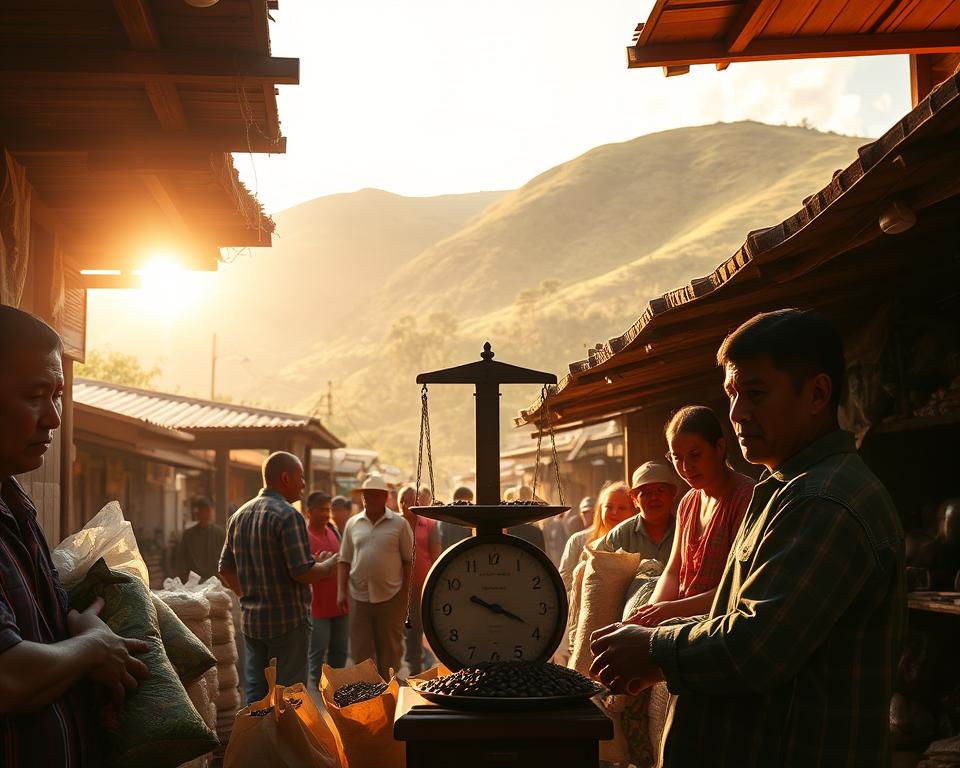
It’s important to understand these issues to help Guatemalan coffee farmers deal with the ups and downs of the global coffee market.
How to Respond to Coffee Prices New York Exchange Volatility
Guatemalan coffee producers can become more resilient by focusing on efficiency, quality, and smart market strategies. The changing coffee trading rates on the New York Exchange bring both challenges and chances for these farmers.
Efficiency Improvements in Processing
Making coffee processing more efficient can cut costs and boost profits, even when prices are low. This can be done by using better machines, improving processing methods, and cutting down on waste.
Cupping Protocols and Quality Control Systems
Using strict cupping protocols and quality control systems can help Guatemalan coffee stand out. High-quality coffee can get a higher price, helping protect against price swings.
| Quality Control Measure | Impact on Coffee Price |
|---|---|
| Rigorous Cupping Protocols | Potential for Premium Pricing |
| Effective Quality Control Systems | Consistency and Reliability |
Success Stories from Guatemalan Highlands
In the Guatemalan Highlands, there are many success stories. Coffee producers have managed to deal with price changes. They show how important teamwork, new processing methods, and direct trade are.
Small coffee producers can use simple hedging strategies to lessen risks. This includes forward contracts and other financial tools that help keep prices stable.
By using these strategies, Guatemalan coffee producers can handle the ups and downs of coffee prices on the New York Exchange. This ensures a brighter future for their farms.
Breaking Away from NYSE Price Dependencies
Diversification is crucial for Guatemalan coffee farmers. It helps them avoid the ups and downs of NYSE prices. By trying new strategies, they can reduce risks and boost profits.
Cost-Benefit Analysis of Certification
Getting certifications like Fair Trade or Organic is one way to go. These can lead to higher prices and stable markets. But, the costs of getting certified, like fees for audits, need to be balanced against the gains.
Finding and Approaching Specialty Roasters
Connecting directly with specialty roasters can lead to better prices and stable deals. Guatemalan farmers can look for these roasters online or at industry events.
Investing in local roasting and packaging can greatly increase coffee value. This move reduces reliance on NYSE prices. It also opens up local and regional markets where they can charge more.
Lessons from Asociación Chajulense and Similar Groups
Cooperatives like Asociación Chajulense have found ways to diversify and strengthen their market position. By learning from them, other Guatemalan coffee farmers can overcome NYSE price issues. They can succeed in the global market.
Accessing Government and International Support
To fight coffee price swings on the New York Exchange, Guatemalan farmers get help from many places.
ANACAFE Programs and Resources
ANACAFE, Guatemala’s National Coffee Association, helps farmers a lot. They offer training, technical help, and market info.
USAID and Other Development Assistance
The United States Agency for International Development (USAID) and others help Guatemalan farmers. They focus on better coffee quality, more productivity, and easier market access.
Collective Action for Policy Change
Guatemalan farmers can work together to change policies for the better. They join cooperatives and advocacy groups to push for sustainable coffee policies.
| Support Program | Description | Benefit to Farmers |
|---|---|---|
| ANACAFE Technical Assistance | Training and technical support for coffee farmers | Improved coffee quality and productivity |
| USAID Development Assistance | Support for improving coffee quality and market access | Increased income through better market access |
| Collective Action | Farmer cooperatives and advocacy for policy change | Better policies for sustainable coffee production |
Developing a Specialty Coffee Strategy
Guatemalan producers need a strong specialty coffee strategy to shine globally. Focusing on top-quality, unique coffee profiles boosts their market value. This helps them handle price changes better.
Terroir Analysis and Flavor Profiling
Knowing their farm’s terroir lets producers showcase their coffee’s unique flavors. They analyze soil, altitude, and climate to create a special taste.
Post-Harvest Processing Improvements
Boosting coffee quality starts with better post-harvest processing. Adopting best practices in harvesting, fermenting, and drying unlocks the coffee’s full potential.
Building strong buyer relationships needs clear communication and quick sample shipping. Producers should share detailed coffee info and send samples fast to buyers.
Social Media and Website Development
In today’s digital world, a strong online presence is key. Producers can use social media and websites to show off their coffee, share their story, and connect with buyers. For more on market changes, check Fratello Coffee’s blog on adapting to coffee cost changes in 2025.
By using these strategies, Guatemalan coffee producers can improve their market position. They’ll find more success in the specialty coffee world.
Future-Proofing Against Market Volatility
The future of Guatemalan coffee is at risk from market ups and downs. Farmers are fighting back with smart strategies. These not only improve coffee quality but also help the environment.
Shade-Grown Coffee and Varietal Selection
Shade-grown coffee is gaining fans for its eco-friendly benefits and top-notch taste. Choosing the right coffee varieties is key. Some are better at fighting off climate change and diseases.
Blockchain tech is being tested to give farmers a direct link to buyers. This move could boost farmers’ earnings and cut out middlemen.
Complementary Crops and Agritourism
Planting other crops and starting agritourism can bring in extra cash. This mix helps farmers deal with market swings.
By taking these steps, Guatemalan coffee farmers can better face market changes. This ensures a brighter future for their crops and communities.
Conclusion: Navigating the Complex Relationship Between Global Markets and Local Farming
It’s key for Guatemalan coffee farmers to understand coffee prices on the New York Exchange. This knowledge helps them deal with the global coffee market’s ups and downs. By studying price trends and what affects them, farmers can make smart choices to protect their businesses and find new chances.
Keeping up with global coffee market trends is vital for local farming. As the market shifts, Guatemalan coffee makers need to stay flexible. They should use tools and resources to improve how they grow and sell coffee.
Knowing how coffee prices work on the New York Exchange helps Guatemalan farmers. It lets them stand out in the global market. This way, they can grow stronger and more competitive in a changing world.