
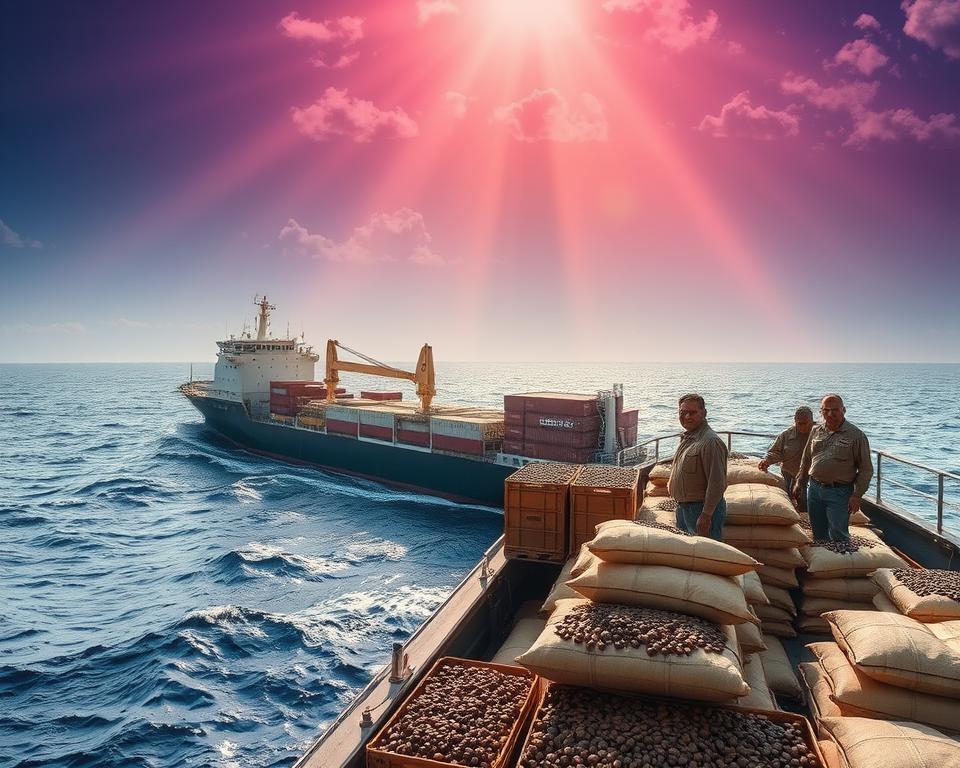
The global coffee trade depends on good logistics to get high-quality beans to people everywhere. Guatemala, a big name in coffee, has its own set of challenges in shipping coffee by sea.
It’s important to know these challenges to keep the coffee supply chain running smoothly. Things like where Guatemala is, its infrastructure, and following rules all affect how well coffee is shipped.
Good logistics in the global coffee trade can really improve the quality and availability of coffee. Looking at Guatemala’s challenges helps us understand the complex world of coffee trade.
The Unique Landscape of Guatemalan Coffee Production
Guatemala’s diverse landscape makes it perfect for coffee. Different areas have their own taste. Antigua, Huehuetenango, and Atitlán are famous for their high-quality Arabica coffee.
Each region has its own special conditions. Antigua’s coffee is balanced, with hints of chocolate and spice. Huehuetenango’s coffee is bright and fruity.
| Region | Flavor Profile | Altitude |
|---|---|---|
| Antigua | Balanced, chocolate, spice | 1,500 – 1,700 meters |
| Huehuetenango | Bright acidity, fruit notes | 1,500 – 2,000 meters |
| Atitlán | Fruity, floral | 1,500 – 1,800 meters |
The unique aspects of Guatemalan coffee production add to the challenges of shipping it by sea. Knowing these differences is key to managing the coffee supply chain well.
Mastering Coffee Maritime Transport Logistics
The success of coffee exports relies a lot on good maritime logistics and freight forwarding. It’s key to keep coffee quality high during transport. This ensures it gets to the global market in the best shape.
Freight forwarding is very important in this process. It connects coffee exporters with shipping lines. Good freight forwarding means planning well, choosing the right shipping routes, handling customs, and following international rules.
To excel in maritime logistics for coffee, exporters need to know about container choice, cargo insurance, and tracking. The table below shows important points for coffee exporters when picking a shipping container.
| Container Type | Features | Benefits for Coffee Transport |
|---|---|---|
| Refrigerated Containers | Temperature control, humidity management | Maintains coffee quality, prevents spoilage |
| Standard Dry Containers | Cost-effective, widely available | Suitable for green coffee, cost-efficient |
Knowing these details and using freight forwarders’ skills can help coffee exporters. They can cut costs and speed up delivery. This is especially important for Guatemalan coffee to stand out in the global market.
How to Prepare Coffee for Maritime Shipping
To make sure coffee gets to its destination well, a detailed preparation is key. This includes careful packaging, storage, and loading. These steps help keep the coffee quality high during shipping.
First, you need to package the coffee. Use grain sacks or containers made for coffee. They must protect against moisture and damage. The packaging should be strong and handle transport well.
Then, think about storage. Coffee should be kept in a cool, dry spot. It should be away from sunlight and any harmful substances. The area should also have good air flow to avoid moisture buildup.
| Preparation Step | Description | Importance |
|---|---|---|
| Packaging | Use durable, moisture-resistant materials | High |
| Storage | Store in a cool, dry, well-ventilated area | High |
| Loading | Secure containers to prevent shifting during transit | High |
By following these steps and using good coffee shipping services, coffee can arrive in top shape. This ensures quality coffee for everyone.
How to Navigate Guatemala’s Port Infrastructure
Knowing Guatemala’s port setup is key for coffee shippers to make their logistics smoother. The Port of Puerto Quetzal is a big spot for Guatemala’s coffee exports. Getting around these ports well helps cut down on delays and expenses.
Coffee shippers need to get the customs rules and logistics at these ports. They must know the export papers needed, like certificates of origin and phytosanitary certificates. They should also know the port’s hours, how containers are handled, and any coffee export rules.
To get around Guatemala’s ports well, coffee shippers can do a few things. They can team up with local shipping agents who know the port’s rules. Shippers can also use container tracking systems to keep an eye on their cargo as it moves.
By knowing and navigating Guatemala’s ports well, coffee shippers can make their supply chain better. They can lower costs and make sure their products get to markets on time.
Implementing Temperature and Humidity Control During Transit
Keeping coffee beans at the right temperature and humidity is key. Shipping by sea can expose coffee to many conditions that harm its quality.

To keep coffee beans in top shape, the right containers are essential. Also, using proper ventilation and moisture barriers is crucial.
Standard Containers vs. Specialized Coffee Containers
Regular shipping containers might not be enough to protect coffee quality. But, specialized coffee containers are made to control temperature and humidity.
- Standard Containers: Lack specific features for coffee, potentially leading to quality degradation.
- Specialized Coffee Containers: Equipped with temperature control, humidity regulation, and ventilation systems.
Ventilation and Moisture Barrier Requirements
Good ventilation is key to stop moisture buildup. This can cause mold and spoilage. Moisture barriers keep the container dry.
- Ensure containers have adequate ventilation systems to circulate air.
- Use moisture barriers such as silica gel packets or desiccants to absorb excess moisture.
- Regularly inspect containers for any signs of moisture accumulation.
By using these strategies, coffee exporters can lower the chance of quality loss during shipping. This ensures their coffee reaches its destination in the best condition.
How to Manage Transit Times and Scheduling
Managing transit times and scheduling is key in coffee supply chain management. It requires careful planning and coordination. This ensures coffee beans arrive on time.
To manage transit times well, coffee exporters need to know what affects them. This includes weather, port congestion, and customs procedures.
Working with shipping lines is also crucial. Exporters should team up with shipping companies. This helps schedule pickups and deliveries correctly. It makes sure coffee is shipped on time.
Having a backup plan is important too. Exporters should prepare for delays. This could mean finding new shipping routes or working with other logistics providers.
Effective management of transit times and scheduling helps coffee exporters. It ensures coffee is delivered on time. This keeps the quality high and makes customers happy.
Navigating Customs Clearance and Regulatory Compliance
Exporting coffee from Guatemala means dealing with many customs and rules. It’s important to follow these rules to make the export process smooth and efficient.
Getting the right certifications is a big part of following the rules. This includes getting organic and fair trade certifications. These are important for selling coffee in other countries.
Securing Organic and Fair Trade Certifications
Organic and fair trade certifications are key for Guatemalan coffee sellers. They show that the coffee meets international standards. They also make the coffee more attractive to buyers.
- Organic certification means the coffee was made without harmful chemicals.
- Fair trade certification makes sure farmers get a fair price for their coffee.
Obtaining Phytosanitary Certificates and Quality Assurance
Phytosanitary certificates are also very important for coffee exports. They prove the coffee is safe from pests and diseases. This protects trade between countries.
| Certificate Type | Purpose | Issuing Authority |
|---|---|---|
| Organic Certification | Ensures production without synthetic fertilizers or pesticides | Certification bodies accredited by international organizations |
| Fair Trade Certification | Guarantees fair price to producers | Fair trade certification bodies |
| Phytosanitary Certificate | Ensures coffee is free from pests and diseases | National plant protection organizations |
Understanding and following these rules is crucial for coffee export success. By doing so, Guatemalan coffee sellers can stay competitive in the global market.
Developing Risk Management Strategies for Coffee Shipping
To keep their coffee quality high, Guatemalan exporters must use proactive risk management. This is key in maritime transport logistics. Several steps are important for effective risk management in coffee shipping.
First, they need to spot potential risks like damage, theft, and natural disasters. It’s also important to understand how these risks affect their coffee supply chain.
Then, they should take steps to reduce these risks. This includes using strong packaging, getting cargo insurance, and choosing safe shipping routes.
With a solid risk management plan, Guatemalan coffee exporters can safeguard their products. This helps them stay competitive in the global market.
It’s crucial to keep checking and updating risk management practices. This ensures they work well and makes any needed changes.
Adopting Sustainable Approaches to Coffee Maritime Transport Logistics
The coffee industry needs to use sustainable shipping to protect the environment. As people care more about the planet, coffee makers from Guatemala and others must act. They must lessen their impact on nature.
Using eco-friendly packaging is a big step. Switching to materials that break down easily or can be recycled cuts down on waste. Also, packing more efficiently means fewer trips, which lowers emissions.
Reducing carbon footprint is another goal. This can be done by choosing ships that use less fuel, planning routes better, and slowing down. Slow-steaming ships use less fuel and produce fewer emissions.
Green technologies and alternative fuels are also key. Investing in wind-assisted ships or biofuels can reduce fossil fuel use. This makes shipping coffee more eco-friendly.
By going green, Guatemalan coffee makers help the planet and improve their image. They attract more customers who care about the environment.
Cost Optimization Strategies for Guatemalan Coffee Exporters
The Guatemalan coffee industry can greatly benefit from cost-saving strategies in shipping. Exporters face many challenges in global trade. They must find ways to cut costs without sacrificing quality.
Several strategies can help with cost optimization. These include:
- Efficient routing to cut down transit times and fuel use.
- Consolidating shipments to use space better and lower shipping costs.
- Negotiating with carriers for better rates and services.
To implement these strategies, exporters need to understand the shipping world well. They must also be ready to adjust to market changes. Using
By focusing on cost savings, Guatemalan coffee exporters can become more competitive. They can also boost their profits and keep their businesses running smoothly.
Conclusion: Building Resilient Coffee Supply Chains from Guatemala
Effective coffee supply chain management is key for Guatemalan coffee exporters. It helps them deal with the challenges of shipping coffee.
They can use strategies like controlling temperature and humidity. They also need to manage how long it takes to get the coffee to its destination. Plus, using sustainable methods is important.
These steps help exporters reduce risks and save money. They also make sure the coffee stays good quality while it’s being shipped.
As more people want specialty coffee, Guatemalan exporters with strong supply chains will do well. This will help grow the country’s coffee business.
By focusing on managing their coffee supply chains, Guatemalan exporters can succeed in the global market for a long time.