
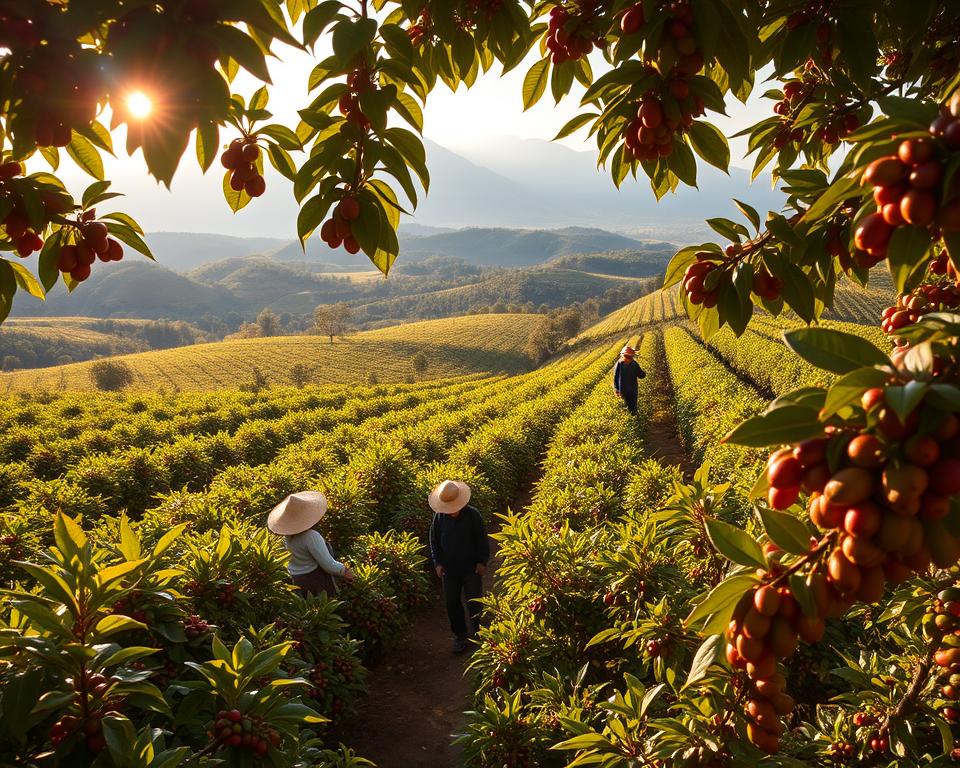
The Guatemalan coffee industry is famous for its top-notch Arabica beans. It plays a big role in the global coffee market. Looking ahead to 2025, the industry is set to grow more, thanks to a bigger demand for specialty coffee.
Guatemala’s coffee-growing tradition is rich and varied, with different flavors in each region. The country’s coffee export market is expected to stay strong. This article will dive deep into the current trends and what’s expected for 2025. It will also look at the key factors that will influence the industry’s future.
The Current State of Guatemalan Coffee Production
Guatemalan coffee production is facing big challenges due to climate change. The changing weather is messing with the balance needed for top-notch coffee. Higher temperatures and unpredictable rain are key issues affecting coffee quality and quantity.
Climate Impact on 2025 Harvest
The 2025 harvest in Guatemala will be greatly affected by the weather. Producers are struggling with more extreme weather, like droughts and heavy rains. This messes up the coffee cherry maturation, which can lead to less coffee and lower quality.
The table below shows how climate change might impact Guatemalan coffee production. It outlines changes in yield and quality under different climate scenarios:
| Climate Scenario | Projected Yield Change | Quality Impact |
|---|---|---|
| Moderate Warming | -5% | Moderate |
| High Warming | -15% | Significant |
| Extreme Weather Events | -20% | Severe |
It’s vital for the Guatemalan coffee industry to understand these challenges. By studying climate trends and their effects, producers and exporters can plan for the future. This helps keep Guatemalan coffee quality and reputation high.
Navigating the Guatemalan Coffee Export Market 2025
To succeed in the Guatemalan coffee export market by 2025, you need to know the current trends and future outlook. The coffee industry in Guatemala is set to grow a lot. This growth is due to more demand from new markets.
Exporters should keep an eye on the new markets for Guatemalan coffee. Key areas include Asia and Eastern Europe. These places are seeing more interest in top-quality coffee.
Emerging Markets for Guatemalan Coffee
The table below shows some new markets for Guatemalan coffee and their expected growth.
| Region | Projected Growth Rate | Key Drivers |
|---|---|---|
| Asia | 10% | Increasing demand for specialty coffee |
| Eastern Europe | 8% | Growing coffee culture and rising disposable incomes |
| Middle East | 12% | Expanding coffee market and increasing tourism |
For more details on the Guatemalan coffee market, check out the report on Guatemalan coffee market trends. By understanding these new markets and trends, Guatemalan coffee exporters can be ready for success in 2025 and later.
How to Analyze Coffee Quality Standards in Guatemala
Understanding coffee quality in Guatemala means looking at regional differences. These differences affect the taste of the coffee. Factors like altitude, soil, and climate play a big role.
Exporters should know about Guatemala’s grading system. It judges coffee by size, shape, and density. The grades range from Supremo to Standard.
Regional Quality Variations
Regional differences greatly impact coffee quality in Guatemala. Places like Antigua, Atitlán, and Huehuetenango are famous for their high-quality coffee. Each region has its own unique taste.
| Region | Flavor Profile | Altitude |
|---|---|---|
| Antigua | Balanced, with notes of chocolate and caramel | 1,500 – 2,000 meters |
| Atitlán | Fruity, with hints of citrus and berries | 1,500 – 2,000 meters |
| Huehuetenango | Robust, with notes of spice and nuts | 1,500 – 2,000 meters |
For more info on Guatemalan coffee, check out Guate Adventure. They offer insights into the coffee industry and market trends.
Step-by-Step Guide to Export Documentation
Exporting Guatemalan coffee needs careful attention to documents to meet international rules. The steps are crucial to avoid delays or rejections.
First, get a commercial invoice with all transaction details. This includes the coffee type, amount, value, and sale terms. It proves the deal between buyer and seller.
Then, you need a certificate of origin to show the coffee is from Guatemala. This is issued by Guatemalan authorities. It’s key for getting lower tariffs under trade deals.
Common Documentation Pitfalls to Avoid
- Inaccurate or incomplete info on the commercial invoice or certificate of origin.
- Not following the destination country’s specific rules.
- Missing export permits or licenses.
To make exporting smooth, check all documents carefully. Knowing the export process and avoiding mistakes helps. This way, exporters can help the Guatemalan coffee industry grow.
By following these steps and keeping up with export stats and industry growth, exporters can confidently handle the export market.
How to Connect with Guatemalan Coffee Producers
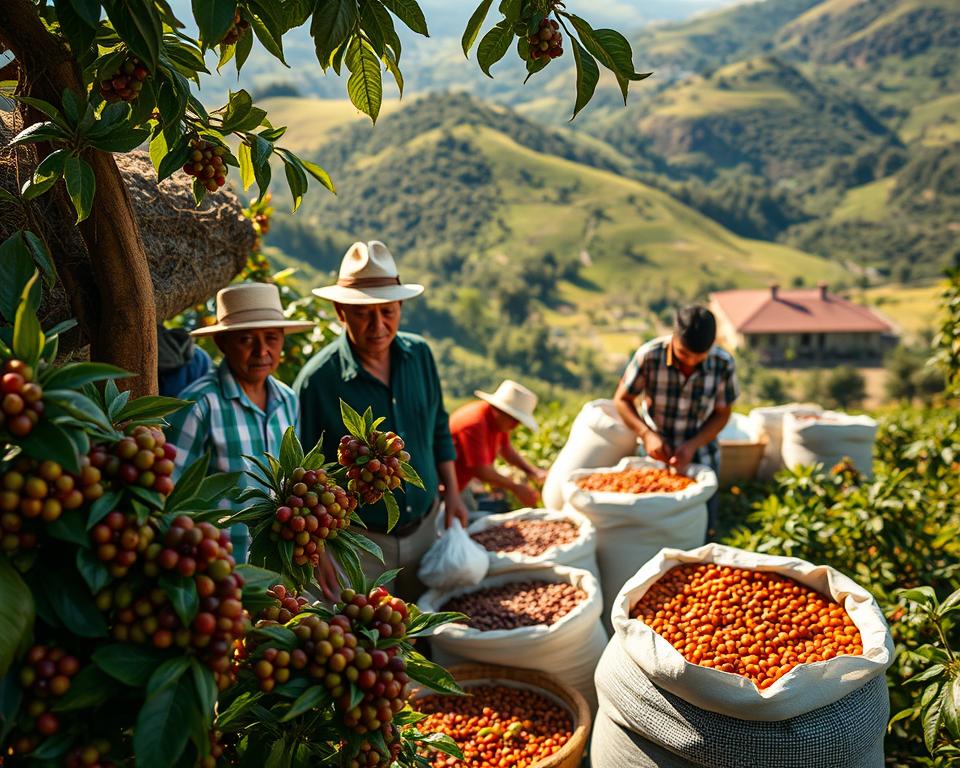
The future of Guatemalan coffee exports depends on strong ties with local producers. As more people want high-quality coffee, exporters need to connect well with Guatemalan coffee producers.
Digital Platforms for Producer Connections
Digital tools have changed how buyers meet coffee producers. Online marketplaces and social media groups focused on coffee are popular choices.
| Platform | Description | Benefits |
|---|---|---|
| Online Marketplaces | Websites connecting buyers directly with producers | Direct trade, competitive pricing |
| Social Media Groups | Groups on platforms like Facebook or LinkedIn focused on coffee trade | Networking, real-time updates |
| Coffee Trade Shows | Events where producers and buyers meet in person | Face-to-face interactions, building trust |
Using digital platforms and coffee trade shows helps exporters build a strong network. This ensures a steady supply chain. It also supports the future of Guatemalan coffee exports and meets trade projections.
Implementing Effective Pricing Strategies
Pricing strategies are key to making Guatemalan coffee exports profitable. To succeed in the Guatemalan coffee export market in 2025, exporters need a smart pricing plan.
It’s important to know what affects coffee prices. This includes global demand, weather, and world events. Knowing these helps exporters set better prices.
Hedging Against Price Volatility
Price changes can be a big risk in coffee exports. To manage this, exporters use hedging. This includes futures contracts and options.
For example, an exporter can lock in a price for future coffee sales. This protects against price drops and helps with budgeting.
With smart pricing and hedging, Guatemalan coffee exporters can stand out globally. They can also boost their profits.
Managing Logistics in the Guatemalan Coffee Supply Chain
Effective logistics management is crucial for Guatemalan coffee exports in 2025. The industry is famous for its top-notch Arabica beans. Keeping this quality throughout the supply chain is essential. Good logistics mean coffee beans reach international markets on time, keeping buyers happy and coming back for more.
Transportation is a key part of the Guatemalan coffee supply chain. Beans go from farms to processing places and then to ports for export. The state of the roads, transport availability, and how beans are handled can greatly affect their quality. It’s important to have reliable transport and high-quality handling practices.
Shipping Timelines and Considerations
Shipping timelines are also very important. Guatemalan coffee makers must think about weather, customs, and shipping container availability. Any delays can cause big financial problems.
To avoid these issues, producers and exporters should team up with logistics experts. They need to plan and carry out shipments well. Having backup plans for things like natural disasters or traffic jams is key. This way, Guatemalan coffee can stay competitive in the global market.
By improving logistics and supply chain management, Guatemalan coffee can meet the growing demand for quality coffee. This will help the industry stay strong and contribute to its positive trends.
Leveraging Sustainability Certifications for Market Advantage
In the Guatemalan coffee export market, sustainability certifications are a big plus. More and more people want to buy products that are good for the planet and fair to workers. By getting these certifications, Guatemalan coffee makers can stand out.
Certifications like Fairtrade, Rainforest Alliance, and Organic show that coffee meets high standards. They also open doors to more customers and can make exporters more money. Recent guatemalan coffee export statistics show a big demand for certified coffee. This is a great chance for the guatemalan coffee industry to grow.
Marketing Certified Guatemalan Coffee
To market certified Guatemalan coffee well, exporters need to show its value. They should use marketing to talk about the good it does for the environment and people. This makes their coffee more appealing to buyers.
Using online tools and working with coffee roasters who care about the planet can help. This way, Guatemalan coffee can be part of a greener coffee world. It also gives them an edge in the global market.
Overcoming Common Challenges in the Guatemalan Coffee Export Market
The future of Guatemalan coffee exports is at stake. Exporters deal with many hurdles, like currency changes, shipping problems, and keeping quality high.
Strategies for Managing Currency Fluctuations
Keeping profits up is key when currency values change. Exporters can use tools like forward contracts and options to protect against these risks.
Here is a comparison of different hedging strategies:
| Strategy | Description | Risk Level |
|---|---|---|
| Forward Contracts | Locking in exchange rates for future transactions | Low |
| Options | Giving the right to exchange currency at a specified rate | Medium |
| Swaps | Exchanging cash flows based on different interest rates or currencies | High |
By using these strategies, Guatemalan coffee exporters can face the market’s challenges head-on. This way, they can ensure a bright future for their coffee exports.
Future Trends Shaping Guatemalan Coffee Exports
Guatemalan coffee exports are set for a big change. This is because of new tastes and market shifts. By 2025, the coffee world will see big updates thanks to these trends.
The demand for specialty coffee in Guatemala is going up. People are ready to spend more for top-notch coffee beans. This trend will keep growing, with a focus on eco-friendly and direct trade methods.
Consumer Preference Shifts for 2025-2026
By 2025-2026, people will want coffee that’s good for the planet and fair to farmers. The main trends will be:
- More demand for organic and fair-trade coffee
- Interest in coffee with unique tastes
- Concerns about coffee’s environmental impact
To keep up, Guatemalan coffee sellers need to change their ways. They must focus on quality, being green, and being open. This will help Guatemala stay ahead in the global coffee market.
Conclusion: Succeeding in the Guatemalan Coffee Market
The Guatemalan coffee export market in 2025 is full of chances for growth. To make the most of it, exporters need to know about coffee production, quality standards, and logistics. This knowledge helps them use Guatemala’s famous coffee reputation to their advantage.
To do well in this market, staying up-to-date with Guatemalan coffee export market 2025 trends and Guatemala coffee trade projections is key. Knowing about future trends, like sustainability and changing consumer tastes, is also important.
Exporters can succeed by setting smart prices, working closely with local farmers, and using certifications. As the Guatemalan coffee industry changes, those who keep up and innovate will find success in 2025.