
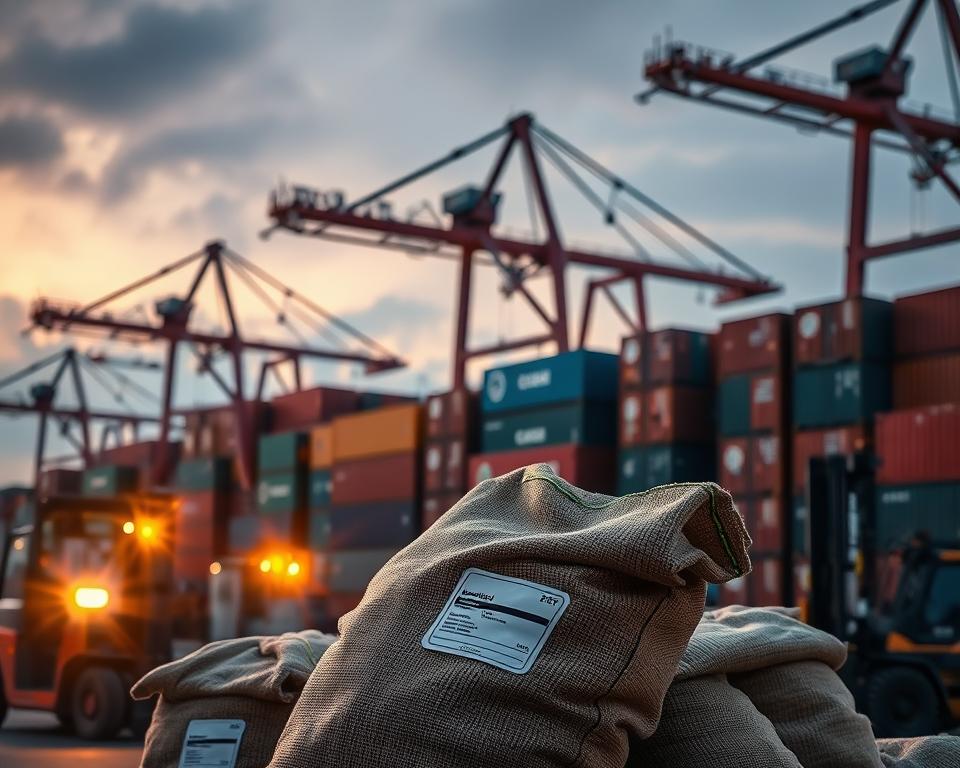
Guatemalan coffee exporters have many hurdles in the global market. Tariffs from importing countries can really cut into their profits.
There are also big logistical problems. Things like transportation delays and bad supply chains make exporting hard.
It’s key for everyone in the coffee world to know about these issues. From farmers to distributors, understanding these problems helps us tackle them better. By looking into the complexities of international coffee trade, we can help Guatemalan exporters overcome their challenges.
The Current Landscape of Guatemala’s Coffee Export Industry
Guatemala’s coffee export industry is changing with new tariffs and global trends. It’s a big player in the world coffee market. Factors like trade rules, logistics, and price changes affect its exports.
Guatemala’s coffee is known for its quality. It goes mainly to North America and Europe. The focus is now on specialty coffee, which sells for more.
- Increasing focus on sustainable and organic coffee production
- Growing demand for specialty coffee in major export markets
- Adaptation to changing coffee trade regulations and industry tariffs
Global coffee prices have a big impact on Guatemala’s exports. Price changes affect how much money coffee makers make. Also, other countries’ coffee is a big challenge.
To stay ahead, Guatemalan coffee makers must deal with these issues. They need to follow global trade rules and handle logistics well.
Big markets for Guatemalan coffee are the United States, Germany, and Japan. The industry must keep up with market changes and what consumers want to stay competitive.
Understanding Coffee Export Tariff Barriers
Guatemalan coffee exporters need to know about tariff barriers to grow their global sales. Tariffs, like coffee export taxes and import tariffs, affect how profitable Guatemalan coffee is in other countries.
North American Market Tariffs
The U.S. is a big market for Guatemalan coffee. Thanks to the Central America-Dominican Republic Free Trade Agreement (CAFTA-DR), Guatemalan coffee gets a break on tariffs. This deal has helped more coffee go to the U.S. market. For more details on CAFTA-DR, check out this document.
The European Union is also key for Guatemalan coffee. The EU-Central America Association Agreement gives Guatemalan coffee a tariff advantage in the EU. But, exporters must meet strict EU rules on quality and sustainability.
Asian Market Entry Requirements
Asian markets, like Japan and South Korea, are growing for Guatemalan coffee. These markets have their own rules, like food safety standards and tariffs. Knowing these rules is crucial for getting into these markets.
In summary, Guatemalan coffee exporters must deal with trade restrictions and tariffs. By understanding tariffs and rules in major markets, they can better compete worldwide.
Non-Tariff Trade Restrictions Affecting Coffee Exports
The path of Guatemalan coffee from farm to global markets is filled with hurdles. Non-tariff barriers are a big challenge for coffee exporters. They make it hard for Guatemalan coffee to compete worldwide.
These barriers can be many things, like quotas, embargoes, and rules about safety and health. For example, some countries have very strict rules about the quality and safety of coffee they import. This can be tough for Guatemalan exporters to follow.
Guatemalan coffee exporters face different rules in each country they sell to. The European Union, for instance, has strict rules about pesticide levels. The United States has rules about the quality and how coffee beans are packaged.
- The European Union’s rules on pesticide levels mean coffee must meet certain standards.
- The United States has strict rules on coffee quality, including how it’s graded and packaged.
- Some countries also have rules about the environment and social issues that exporters must follow.
To beat these challenges, Guatemalan coffee exporters need to know the rules in their target markets. They must understand the regulations, follow them, and sometimes get certifications to prove they’re meeting these standards.
By dealing with these non-tariff barriers well, Guatemalan coffee exporters can stay competitive. They can keep providing top-quality coffee to buyers around the world.
Logistical Infrastructure Challenges in Guatemala
Guatemala’s coffee exporters face big challenges with the country’s geography. Mountains and valleys make it hard to move coffee beans from farms to ports.
The two main ports for coffee exports are Puerto Quetzal and Puerto Barrios. Each has its own good and bad points.
Puerto Quetzal vs. Puerto Barrios Export Routes
- Puerto Quetzal: It’s on the Pacific coast, making it a quicker route to places like the United States and Asia. But, it gets crowded during busy times.
- Puerto Barrios: On the Caribbean coast, it’s a different path. It might help avoid relying on just one route. But, it’s longer from where coffee is grown.
Other big issues are the state of roads and how much it costs to move things around. Bad roads can slow things down and hurt the coffee. High costs can also cut into profits.
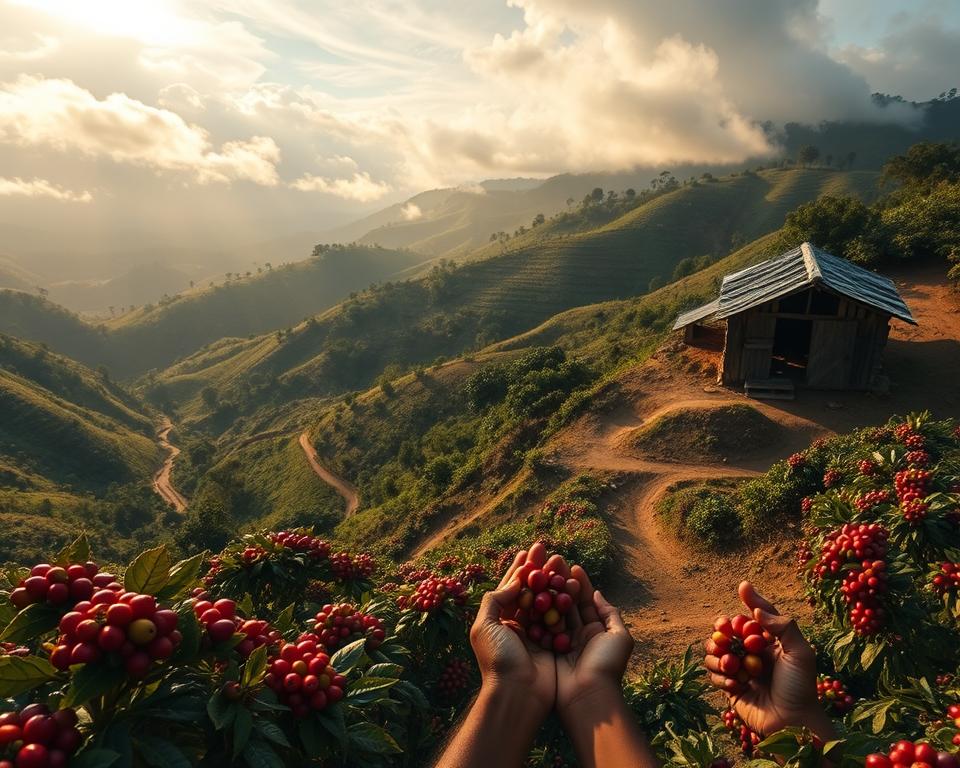
In short, Guatemala’s coffee export business has big problems with its logistics. Fixing these issues is key to making Guatemalan coffee more efficient and competitive.
Step-by-Step Guide to Navigating Export Documentation
Exporting coffee from Guatemala needs a good grasp of the needed documents and trade rules. This includes dealing with coffee export tariff barriers and following coffee trade regulations.
The first step is to know the different documents needed for coffee exports. These are commercial invoices, certificates of origin, and export licenses.
For those exporting organic and specialty coffee, getting the right certifications is key. Organic coffee gets certifications like USDA Organic, showing it’s made without harmful chemicals. Specialty coffee gets certifications that prove its quality and unique taste.
- USDA Organic certification
- Fairtrade certification for fair trade practices
- Certification from the Specialty Coffee Association for specialty coffee
Fair Trade Documentation
Fair Trade documentation is vital for those who want to show they support fair trade. Getting Fairtrade certification means producers get a fair price and meet social and environmental standards.
| Certification | Description | Benefits |
|---|---|---|
| USDA Organic | Ensures organic production methods | Access to premium markets, higher prices |
| Fairtrade | Promotes fair trade practices | Fair prices for producers, improved social and environmental standards |
| Specialty Coffee Association | Verifies coffee quality and distinct flavor profile | Higher prices, market differentiation |
By following this guide, Guatemalan coffee exporters can tackle the complex world of export documents. They can overcome coffee export tariff barriers and follow trade regulations. This boosts their marketability and competitiveness worldwide.
Practical Strategies for Overcoming Coffee Export Tariff Barriers
To beat coffee export tariff barriers, you need to know a lot about international trade rules and local help. Guatemalan coffee sellers can really gain from local groups that guide them through these tough issues.
Guatemalan coffee sellers face many problems. They must understand complex trade laws and handle the details of sending coffee out. A big challenge is dealing with tariffs from countries that import coffee.
Exporters can get help from local groups that focus on export rules and getting into markets.
AGEXPORT Services
The Guatemalan Exporters Association (AGEXPORT) helps exporters deal with international trade rules, including coffee tariffs. They offer:
- Market research and analysis to find markets with good tariff deals.
- Help with export papers and following international rules.
- Training on how to do international trade well.
| Service | Description | Benefit to Exporters |
|---|---|---|
| Market Research | Finding markets with low or no coffee tariffs. | Helps find more profitable places to sell. |
| Export Documentation | Help with paperwork and following rules. | Less chance of breaking rules and facing penalties. |
| Training Programs | Teaching exporters about international trade. | Makes exporters smarter and more competitive. |
Anacafé Support Programs
Anacafé, the Guatemalan National Coffee Association, helps coffee makers and sellers a lot. They offer quality, productivity, and market access programs. These include technical help, training, and promoting markets.
By joining Anacafé’s programs, sellers can learn about managing tariffs and getting better at selling globally.
In summary, beating coffee export tariff barriers needs a mix of local support and knowing international trade rules. By using AGEXPORT services and joining Anacafé’s programs, Guatemalan coffee sellers can tackle these problems better.
Optimizing Logistics for Coffee Exports from Guatemala
Guatemala’s coffee export industry needs good logistics to grow. Making logistics better can cut costs and make exports more efficient.
Harvest Timing Considerations
When coffee is picked in Guatemala matters a lot. It affects the coffee’s quality and price. Coffee is usually picked from November to March, with the busiest time from December to February.
To get logistics right, exporters must plan the harvest well. They need to work with farmers, watch the weather, and have a flexible plan.
| Harvest Month | Coffee Quality | Export Price |
|---|---|---|
| November | High | $150/ton |
| December | Very High | $160/ton |
| January | Excellent | $170/ton |
Weather-Related Disruptions in the Coffee Highlands
Guatemala’s coffee highlands face weather issues like heavy rain and landslides. These can hurt coffee making and shipping. For tips on handling these problems, check out logistical guides.
To deal with these issues, exporters can try different things. They can spread out their supply chain, build weather-proof places, and plan for emergencies.
Financial Considerations and Risk Management
Managing financial risks is key for coffee exporters, especially in Guatemala. Coffee is a big export there. Taxes and trade barriers can hurt profits a lot.
Coffee exporters deal with risks like damage during transport and storage. To lessen these risks, they can get insurance.
Protecting Against Loss and Damage
Insurance can help cover risks like damage in transit or loss from natural disasters. Here are some important points:
- Assessing the value of the coffee shipment
- Understanding policy terms and conditions
- Choosing the right type of coverage for the specific coffee variety
Specialty Coverage for Premium Coffee Varieties
Premium coffee gets higher prices globally. This makes it very valuable for Guatemala. There’s special insurance for these high-value shipments.
By understanding and managing risks, coffee exporters in Guatemala can handle the international market better. This includes taxes and trade barriers.
Conclusion: Building a Sustainable Coffee Export Strategy
Guatemalan coffee exporters face many challenges. These include export tariffs and logistical issues. These problems make it hard for them to compete globally. To solve these issues, they need a sustainable export plan.
A good export strategy must consider trade rules at home and abroad. It’s about dealing with tariffs and following rules to avoid financial losses.
Improving logistics and making export processes smoother can help Guatemalan coffee sellers. This way, they can be more competitive and meet the growing demand for specialty coffee. A well-thought-out plan helps exporters manage risks and succeed in the global market.
In the end, a sustainable export strategy is key for Guatemala’s coffee industry to grow and thrive.