
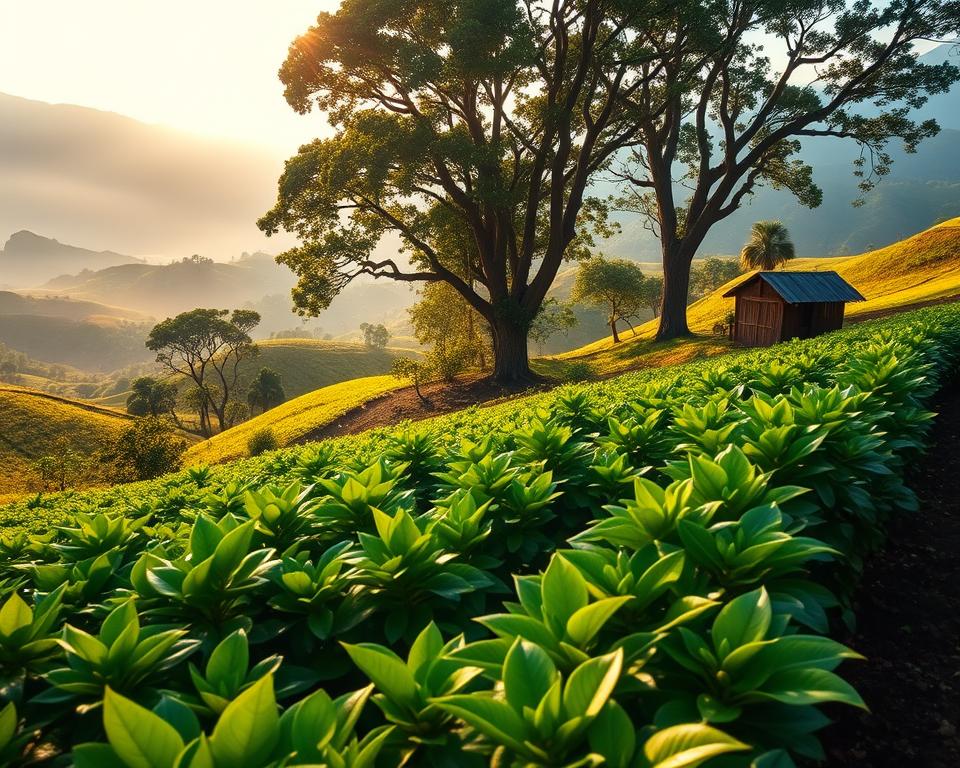
The term “terroir” is often linked with wine, but it also applies to coffee. In specialty coffee, terroir is about the mix of environmental factors that shape coffee beans’ flavor and quality.
Guatemala is a great example of terroir’s impact on coffee. The country’s varied regions, with their unique soils, climates, and altitudes, create complex coffee flavors.
Grasping coffee terroir is key to enjoying specialty coffee. It lets coffee lovers discover the special traits of coffee from different places and makers.
The Coffee Terroir Concept and Its Significance
Understanding the terroir concept is key to enjoying coffee’s varied flavors from places like Guatemala. Terroir combines environmental factors like soil, climate, altitude, and sunlight. These elements shape the taste and quality of coffee beans.
In Guatemala, the terroir varies greatly. This leads to coffee with unique flavors in different areas. For example, highland coffee often has a bright acidity and complex taste. This is different from coffee grown at lower altitudes.
The terroir in coffee adds special qualities to each bean. This makes every cup a taste of its origin. It’s important for both coffee lovers and producers. It affects the coffee’s quality and price.
Knowing about terroir helps us value the hard work and natural elements in Guatemalan coffee. It shows the care and effort that goes into making high-quality coffee.
The Key Elements of Coffee Terroir
Understanding coffee terroir means looking at elevation, soil, and climate. These elements greatly shape coffee’s taste and quality. In Guatemala, the varied landscapes lead to different terroirs, making the country’s coffee famous.
Elevation is key in coffee growth. Higher places mean slower growth, which can make flavors more complex. In Guatemala, coffee from high places has a denser bean and more acidity.
The Role of Mountain Ranges and Valleys
Guatemala’s mountains and valleys create many microclimates. These areas change temperature, rain, and sunlight, affecting the terroir. The variety in coffee flavors shows these regional differences.
| Terroir Element | Impact on Coffee | Guatemalan Example |
|---|---|---|
| Elevation | Influences maturation rate and flavor complexity | High-altitude regions like Antigua produce complex coffees |
| Soil | Affects nutrient availability and drainage | Volcanic soils in Guatemala contribute to distinct flavor profiles |
| Climate | Impacts temperature and rainfall patterns | Regions like Huehuetenango experience a dry climate, ideal for coffee production |
The mix of these terroir elements gives Guatemala its unique coffee. Coffee lovers can enjoy the special flavors Guatemalan coffee offers by understanding these factors.
Guatemala’s Unique Coffee Growing Landscape
Guatemala’s coffee regions are famous for their special terroir. This is thanks to the country’s volcanic highlands and rich biodiversity. The mix of soil, climate, and geography in these areas makes Guatemalan coffee taste complex.
The highlands are where most of Guatemala’s coffee is grown. The volcanic soil and mild climate are perfect for coffee. Places like Antigua, Huehuetenango, and Atitlán are known for their top-notch coffee. Each area’s coffee shows off its unique terroir.
Guatemala’s coffee regions have different microclimates. This allows many coffee varieties to grow. From the bright, acidic coffees of the highlands to the balanced, sweet ones from lower elevations, Guatemala’s coffee is diverse and flavorful.
The place where coffee is grown greatly affects its taste. Altitude, soil type, and climate all shape the coffee’s terroir. For instance, coffee grown at high altitudes matures slower. This makes the flavor more complex.
Guatemala is a top player in the specialty coffee world. Its commitment to quality and unique coffee regions are key to its success. The country’s coffee terroir offers a distinct and high-quality coffee experience. This is why coffee lovers from all over the world seek it out.
The 8 Distinct Coffee Regions of Guatemala
Guatemala has eight coffee regions, each with its own flavor profile. The climate and soil in each area shape these flavors. This variety makes Guatemalan coffee rich and diverse.
The eight coffee regions are: Antigua, Atitlán, Cobán, Fraijanes Plateau, Huehuetenango, Nuevo Oriente, Oriente, and San Marcos. Each region’s terroir is unique. Altitude, soil type, and climate all play a role.
Antigua is famous for its balanced coffee with chocolate and caramel notes. Atitlán’s coffee is bright and fruity, thanks to its volcanic soils. Cobán’s coffee is complex, due to its high humidity and rich soil.
Huehuetenango is known for its high-altitude coffee with bright acidity and wine-like flavors. San Marcos produces coffee with balanced acidity, thanks to its rugged terrain and rich soil.
Guatemala’s coffee regions are key to its high-quality coffee. Knowing about these regions helps us appreciate Guatemalan coffee’s complexity.
Exploring each region’s unique characteristics deepens our understanding of Guatemalan coffee. It shows us the factors that make each flavor profile special.
How to Identify Terroir Characteristics in Guatemalan Coffee
To fully enjoy Guatemalan coffee, you need to understand its terroir. This is shaped by the country’s varied climates and soils. Knowing about coffee terroir helps you appreciate Guatemalan coffee’s unique flavors.
Cupping is a method to check a coffee’s taste, smell, and quality.
Cupping Techniques for Terroir Identification
When cupping, focus on the coffee’s acidity, body, and flavors. For example, Antigua region coffees have balanced acidity and chocolatey tastes.
Creating a Guatemalan Coffee Tasting Journal
By writing down the coffee’s origin, how it was processed, and its taste, you learn more about its terroir. This helps you spot patterns and differences in flavors.
Using cupping and keeping detailed records lets you deeply understand Guatemalan coffee’s terroir. This makes you appreciate its diverse flavors even more.
The Impact of Seasonal Variations on Guatemalan Coffee Terroir
Seasonal changes greatly affect the quality and taste of Guatemalan coffee. The country’s wet and dry seasons play a big role in coffee production. They shape the terroir of the beans.
In the wet season, more rain can lead to diseases like coffee leaf rust. This can hurt coffee yields and quality. But, the dry season allows for slower maturation. This makes the flavor more complex.
Guatemala’s coffee-growing areas show how seasonal changes can differ. This highlights the role of terroir in coffee making. Knowing these seasonal impacts is key for producers to improve their coffee.
Guatemalan coffee makers can make the most of seasonal changes. This way, they can keep producing top-notch coffee. Their coffee will show off the unique terroir of their region.
Cultivation Practices That Enhance Terroir Expression
Cultivation practices are key to improving the terroir of Guatemalan coffee. The unique flavors and high quality of Guatemalan coffee come from the farming and soil care. Local farmers use special methods to grow their coffee.
Guatemalan coffee grows in different areas, each with its own terroir. Places like Antigua, Huehuetenango, and Atitlán have unique soils, altitudes, and climates. These factors add to the coffee’s complexity.
To improve terroir, Guatemalan coffee farmers use several practices. These include:
- Shade-grown coffee: This method grows coffee under tree canopies. It keeps the soil healthy and promotes biodiversity.
- Soil conservation: Farmers use terracing and mulching to stop soil erosion and keep moisture in.
- Organic farming: Organic fertilizers and pest control methods make the environment healthier. They also enhance the coffee’s flavor.
These practices not only improve the coffee beans but also the overall quality and uniqueness of Guatemalan coffee. By using these methods, farmers can make their coffee even more special. This makes Guatemalan coffee very popular worldwide.
Processing Methods and Their Effect on Guatemalan Terroir
It’s key to know how processing methods shape Guatemalan coffee’s terroir. The way coffee is processed, like washed, natural, or honey, greatly affects its taste and quality.
Processing methods can either bring out or hide a coffee’s natural traits. For example, the washed method makes the coffee’s acidity and fruit flavors stand out. On the other hand, natural processing focuses on the coffee’s body and sweetness. Guatemalan coffee, known for its balanced taste, benefits from these methods.
- Look for clarity and brightness in the coffee’s flavor profile.
- Identify distinct fruit notes and acidity.
- Notice the coffee’s body and aftertaste.
Washed processing removes the coffee cherry’s skin and pulp before drying. This makes the flavor cleaner and brighter. It’s great for showing off Guatemalan coffee’s terroir, as studies on coffee processing research show.
Water Sources and Their Influence on Processing
Water quality is vital in washed processing, as it’s used to remove pulp and mucilage. The water’s source can change the flavor by adding or removing certain tastes. For instance, water with lots of minerals can taste different than soft water.
Guatemalan coffee’s terroir is shaped by its soil, climate, altitude, processing methods, and water sources. Knowing these factors helps coffee makers and lovers understand Guatemalan coffee’s special qualities.
Selecting and Brewing Guatemalan Coffee to Highlight Terroir
To truly appreciate Guatemalan coffee, you need to know how to brew it right. This brings out its unique terroir characteristics. The special flavors of Guatemalan coffee come from careful selection and brewing.
When picking Guatemalan coffee, think about where it’s from. Each region has its own flavor because of its terroir. For example, Antigua coffee is balanced and rich, while Huehuetenango coffee is bright and fruity.
Water temperature and quality are key in brewing coffee. The best water temperature is between 195°F and 205°F. Using filtered water can also make the coffee taste better by removing impurities.
Grind Size Adjustments for Terroir Expression
Changing the grind size is important for brewing Guatemalan coffee. A finer grind works well for espresso, while a coarser grind is better for French press.
| Brewing Method | Grind Size | Terroir Characteristics Highlighted |
|---|---|---|
| French Press | Coarse | Rich, full-bodied flavors |
| Pour-over | Medium | Balanced acidity, nuanced flavors |
| Espresso | Fine | Concentrated, intense flavors |
Conclusion: The Continuing Evolution of Guatemalan Coffee Terroir
The coffee terroir concept is key in the specialty coffee world. Guatemalan coffee shows how different regions can change flavors. Guatemala’s unique landscape, regions, and farming ways all add to its coffee’s complex taste.
Specialty coffee terroir keeps changing with new farming, processing, and roasting methods. In Guatemala, places like Antigua, Atitlán, and Huehuetenango offer different tastes. These tastes meet the needs of many coffee lovers.
As the coffee industry grows, knowing and valuing terroir will matter more. Coffee makers, roasters, and drinkers can all help. They can support green practices, keep regional tastes alive, and make Guatemalan coffee even better.