

Guatemala is famous for its specialty coffee. Different areas add to its rich coffee culture. Huehuetenango is known for its complex coffee.
The high altitude, rich soil, and unique climate in Huehuetenango create complex coffee flavors. Coffee lovers enjoy its nuanced tastes and smells.
Exploring Guatemalan coffee shows Huehuetenango’s special qualities. This article will look at what makes Huehuetenango coffee unique.
Key Takeaways
- Huehuetenango’s high altitude and rich soil contribute to its complex coffee flavor profile.
- Guatemala is home to various specialty coffee regions, each with its unique characteristics.
- The distinct climate conditions in Huehuetenango make its coffee stand out.
- Coffee connoisseurs appreciate the nuanced flavors and aromas of Huehuetenango coffee.
- The region’s unique attributes make it a favorite among specialty coffee enthusiasts.
Overview of Guatemala’s Coffee Regions
Guatemala’s coffee-growing areas are as varied as they are vibrant. Each region has its own microclimates and altitudes. These factors greatly affect the taste of their coffees.
The country’s diverse geography supports several key coffee-producing regions. Antigua is famous for its balanced coffees. Huehuetenango is known for complex coffees. Cobán, with its subtropical highland climate, offers unique flavor profiles.
Key Coffee Growing Areas
Guatemala’s main coffee-growing regions stand out for their unique terroir and production methods. Some of the most notable regions include:
- Antigua: Known for its well-balanced coffees with notes of chocolate and spice.
- Huehuetenango: Produces coffees with complex flavor profiles, often featuring bright acidity and fruit notes.
- Cobán: Coffees from this region are known for their floral and fruity flavors, with a hint of spice.
Characteristics of Each Region
The unique characteristics of each region are largely determined by their microclimates and altitudes. For instance:
- High-altitude regions like Huehuetenango benefit from cooler temperatures. This slows down the ripening process and contributes to a more complex flavor profile.
- Regions with rich volcanic soil, such as Antigua, produce coffees with deep, rich flavors and a distinct mineral note.
Understanding these regional characteristics is crucial for appreciating the diversity and quality of Guatemalan coffee.
The Rich History of Coffee in Guatemala
Coffee arrived in Guatemala during the colonial era, starting a journey that changed the country’s economy and culture. This journey spans centuries, with its effects still seen today.
From Colonial Times to Modern Day
In the 18th century, Jesuit priests brought coffee to Guatemala. At first, it was for locals, but soon it was seen as a valuable export. By the late 1800s, coffee was Guatemala’s main export, boosting the economy and shaping farming.
Over time, coffee production in Guatemala has evolved. This is due to new technologies, changes in global markets, and caring for the environment. Today, Guatemalan coffee is known for its quality. Many producers aim for specialty coffee, which gets high prices worldwide.
Coffee’s Economic Impact
Coffee has a huge impact on Guatemala’s economy. It creates jobs, mostly in rural areas, where coffee farms employ thousands. The coffee industry also boosts the country’s GDP, affecting national policies.
- Coffee is a key export, bringing in a lot of foreign money.
- The industry supports many businesses, from farm suppliers to export services.
- Coffee production has helped build roads and processing facilities in rural areas.
In summary, coffee’s history in Guatemala is one of change and growth. From its start in colonial times to its role today, coffee is vital to the economy and culture. The focus on specialty coffee keeps the industry strong, promising a bright future.
The Unique Attributes of Huehuetenango Coffee
Huehuetenango coffee is known for its complex flavors. These come from the area’s altitude and microclimate. This mix makes Huehuetenango coffee stand out from others.
Flavor Profile and Complexity
Huehuetenango coffee has a bright acidity and a rich body. It tastes fruity to floral. This complexity is why coffee lovers adore it.
- Fruity notes, like citrus and berries, are common in Huehuetenango coffee.
- Floral hints add a delicate layer to the coffee’s flavor profile.
- The coffee’s body is often described as rich and full, with a satisfying aftertaste.
The Importance of Altitude
The high altitude of Huehuetenango is key to its coffee’s unique taste. At high elevations, coffee cherries mature slower. This slow process develops sugars and acids more fully.
The result is a coffee that is both nuanced and balanced, with a depth of flavor that is hard to find in coffees grown at lower altitudes.
| Altitude Range | Flavor Characteristics |
|---|---|
| 1,500 – 2,000 meters | Fruity, with hints of chocolate |
| 2,000 – 2,500 meters | Floral notes, with a brighter acidity |
Volcanic Soil and Its Effect on Coffee Flavor
Coffee lovers often say Huehuetenango coffee’s unique taste comes from its volcanic soil. The area’s special geology greatly affects its coffee’s flavor.
The volcanic soil in Huehuetenango is full of nutrients. It’s made from volcanic ash and rocks, packed with minerals like potassium, magnesium, and calcium. These nutrients help coffee plants grow well and add to the coffee’s rich taste.
Nutrient-Rich Composition
The volcanic soil’s nutrient-rich mix is key to Huehuetenango coffee’s flavor. The soil’s minerals boost the coffee’s natural tastes, making it more complex and interesting.
Nutrient Contribution to Flavor:
| Nutrient | Contribution to Flavor |
|---|---|
| Potassium | Enhances overall flavor and promotes healthy plant growth |
| Magnesium | Contributes to the coffee’s sweetness and flavor balance |
| Calcium | Supports root development and enhances flavor quality |
How Soil Quality Affects Taste
The soil’s quality greatly affects coffee taste. Volcanic soils, with their special minerals, give coffee a unique flavor. Huehuetenango’s microclimate and volcanic soil make it perfect for growing specialty coffee with deep flavors.
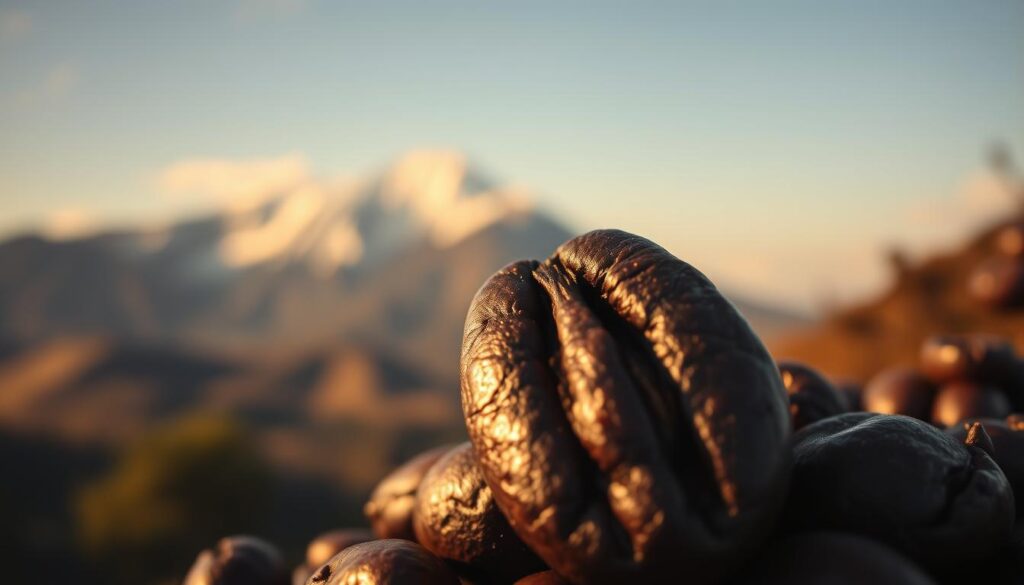
In summary, Huehuetenango’s volcanic soil is crucial for its coffee’s taste. Its nutrient-rich soil and the area’s microclimate together create coffee known for its quality and complexity.
Sustainable Farming Practices in Huehuetenango
In Huehuetenango, sustainable farming is changing the game for specialty coffee. At high altitudes, coffee farms do more than just grow beans. They also work hard to keep the environment in balance.
Shade-Grown Techniques
Farmers in Huehuetenango use shade-grown coffee methods. This means growing coffee under trees, which helps keep biodiversity alive. It also stops soil erosion and keeps the ecosystem healthy.
Shade-grown coffee tastes better and helps the planet. It lets coffee grow like it would in a forest, blending with nature.
Organic Certifications and Benefits
Many farms in Huehuetenango also go organic. Organic farming means no synthetic fertilizers or pesticides. This makes the soil and water cleaner.
Organic certifications give farmers a market edge and show their farming is green.Organic farming is good for the environment and people’s health.
Coffee farmers in Huehuetenango are making better coffee and saving the area’s unique plants and animals. Shade-grown and organic farming are key at high altitudes, where nature is fragile.
These farming methods do a lot of good. They save water, prevent soil loss, and protect animals. They also help farmers earn more money and improve their lives. Plus, they make communities healthier and support local projects.
The Role of Cooperatives in Coffee Production
Cooperatives in Huehuetenango have changed the coffee game. They use community farming to improve coffee quality and help people socially.
The microclimate in Huehuetenango is perfect for coffee. High altitude and special seasons make it ideal. Cooperatives use green farming to keep the area healthy.
Community-Based Farming Models
At the core of Huehuetenango’s cooperatives are community farming models. These models mean farmers make decisions together and share resources. This leads to better farming and more chances to sell their coffee.
- Farmers learn from each other.
- Cooperatives help farmers get to markets.
- Together, farmers can get better prices.
Contribution to Social Development
Cooperatives do more than just grow coffee. They help the community grow too. They support farmers and their families, raising living standards and improving social welfare.
| Contribution | Impact |
|---|---|
| Education and Training | Enhanced farming techniques and business skills |
| Social Services | Improved healthcare and community facilities |
| Economic Support | Better prices for farmers, stimulating local economy |
In summary, cooperatives are key in Huehuetenango’s coffee world. They make coffee better and help the community socially and economically.
Fair Trade Initiatives in Huehuetenango
Fair Trade has changed the game for coffee farmers in Huehuetenango. It lets them sell their coffee at a fair price. This helps improve their community’s life.
This certification makes sure farmers get a fair price for their specialty coffee. The coffee’s complex flavor comes from its high-altitude growth.
Ensuring Fair Compensation
Fair Trade ensures farmers get a minimum price for their coffee. This protects them from price drops. It gives them a stable income to invest in their farms and communities.
The model promotes direct trade between farmers and buyers. This cuts out middlemen and puts more money in farmers’ pockets. It builds trust and encourages farming that lasts.
Enhancing Community Welfare
Fair Trade does more than just pay farmers fairly. It aims to better the community’s life. It supports projects like education and healthcare.
By investing in their communities, farmers can lift living standards. They can improve education and build better infrastructure. This helps the whole region grow.
The success of Fair Trade in Huehuetenango is clear. Farmers and their families are doing better. The region keeps producing top-notch specialty coffee from its high altitudes.
Environmental Protection and Coffee Farming
Coffee farming in Huehuetenango focuses on protecting the environment. Farmers use methods that save biodiversity and keep ecosystems balanced. This not only makes specialty coffee better but also helps keep local nature safe.
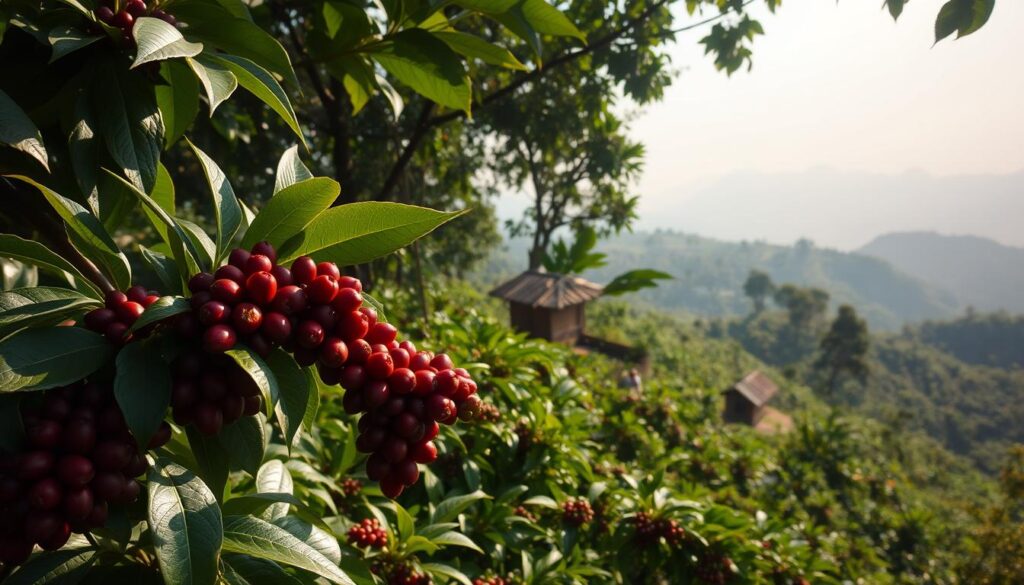
The area’s coffee farms are in places full of life. Shade-grown coffee is a key method. It creates a home for plants and animals and keeps the soil healthy. It also cuts down on the need for harmful chemicals.
Practices for Biodiversity Conservation
Farmers in Huehuetenango do many things to save biodiversity. They:
- Keep shade with native trees
- Use organic farming
- Make paths for wildlife
- Use compost and natural pest control
These actions help local wildlife and make coffee crops stronger against climate change. A farmer said, “Keeping nature balanced means we have a better crop and a brighter future.”
“Sustainability is not just about the environment; it’s also about the economic viability of our farms.”
Impact on Local Ecosystems
The efforts to protect the environment in Huehuetenango’s coffee farms are good for local ecosystems. By saving biodiversity, farmers help with pollination, soil health, and climate control. This makes coffee farming sustainable for the long term.
Also, keeping natural areas in coffee farms helps the whole ecosystem. So, Huehuetenango’s coffee farms become safe places for many plants and animals. This makes the area’s nature stronger.
In short, protecting the environment in coffee farming is key in Huehuetenango. It’s important for growing quality coffee and keeping the area’s unique nature safe.
Community Projects Supporting Farmers
The community projects in Huehuetenango have been key in helping local coffee farmers. These efforts have not only boosted farmers’ lives but also made coffee production more sustainable in the area.
Coffee in Huehuetenango benefits from its high altitude. This makes the coffee complex and of high quality. Community projects aim to use this advantage and improve farming methods.
Education and Training Programs
Education and training are vital in Huehuetenango. These programs teach farmers new skills. They learn how to farm better, manage their land, and handle environmental changes.
For example, training in sustainable farming practices helps farmers keep their coffee quality high. It also protects the environment. Workshops on farm management help farmers use their resources wisely and boost productivity.
Infrastructure Improvements
Improving infrastructure is another important part of community projects in Huehuetenango. Better roads, storage, and processing equipment make coffee production smoother. This saves farmers money and time.
Good infrastructure also improves farmers’ lives and the community’s. For instance, better roads make it easier to get coffee to markets. This also helps farmers get to important services.
By backing coffee farmers, Huehuetenango remains a top coffee spot. The mix of high altitude, quality farming, and community support ensures the coffee industry’s future success.
Comparing Huehuetenango with Other Coffee Regions
The world of specialty coffee is full of variety. Guatemala’s Huehuetenango region is a standout. It’s celebrated for its complex coffee flavors. Other regions like Antigua and Cobán also add to Guatemala’s coffee fame.
Antigua vs. Huehuetenango: A Flavor Battle
Antigua and Huehuetenango are two top coffee spots in Guatemala. Each has its own taste. Antigua coffee is known for its balanced acidity and rich, chocolatey flavors.
Its volcanic soil and moderate climate help create this taste. Huehuetenango coffee, on the other hand, has bright acidity and complex flavors. You might taste citrus, berries, and floral hints. Its high altitude and unique microclimate make its coffee taste special.
Flavor Profile Comparison:
| Region | Flavor Profile | Acidity |
|---|---|---|
| Antigua | Rich, chocolatey | Balanced |
| Huehuetenango | Citrus, berries, floral | Bright |
Cobán’s Unique Contributions to Coffee
Cobán is another key coffee region in Guatemala. It has a different taste than Antigua and Huehuetenango. Cobán’s coffee is mild and has lower acidity.
This is because of its high humidity and cloud forest setting. You might taste spice, nuts, and a smooth, full-bodied flavor. Cobán’s foggy and rainy climate slows down coffee cherry maturation. This adds to its unique taste.
In summary, Huehuetenango is known for its bright acidity and complex flavors. Antigua offers a balanced and chocolatey taste. Cobán provides a mild and smooth coffee experience.
The different microclimates in these regions are key to their unique flavors. This makes Guatemala a rich source of specialty coffee.
The Future of Coffee Farming in Huehuetenango
Huehuetenango is known for its complex coffee. But, its farmers face a tough future. The area’s high altitude and rich soil have helped it succeed in specialty coffee. Yet, climate change and economic issues threaten this success.
Challenges Facing Farmers Today
Coffee farmers in Huehuetenango deal with rising temperatures and unpredictable rain. These changes can reduce yields and lower coffee quality. This hurts farmers’ livelihoods.
Economic factors also affect farmers. Global coffee prices can change often. This makes it hard for farmers to keep a steady income. They must find new ways to earn money or change how they farm.
Innovations and Adaptations
Farmers and cooperatives in Huehuetenango are finding new ways to cope. They are using sustainable farming practices like shade-grown and organic coffee. These methods improve coffee quality and help the environment.
They are also using technology to better manage their crops. This includes data analytics to fight climate change. It helps keep coffee production going strong.
By trying these new approaches, Huehuetenango’s farmers can keep making top-notch specialty coffee. They are also securing their farms’ futures and helping the local economy grow.
Conclusion: The Legacy and Future of Huehuetenango Coffee
Huehuetenango is known for its top-notch coffee in Guatemala. Its unique microclimate and high altitude make it special. The rich soil, plenty of sunlight, and cool air add to the coffee’s complex taste.
The cultural heritage of Huehuetenango coffee is rich. Local farmers and cooperatives work hard to keep traditions alive. They also use sustainable methods, protecting the environment and improving their coffee’s quality.
Preserving Tradition and Innovation
It’s important to keep Huehuetenango’s coffee sustainable for the future. Supporting shade-grown coffee, organic farming, and fair trade is key. This helps farmers and the planet. The region’s high altitude is also crucial for its coffee’s quality, so it must be protected.
Looking Ahead
Huehuetenango is ready to stay at the top of the coffee game. It will keep blending tradition with new ideas and focus on sustainability. This way, it can keep making amazing coffee for many years.