
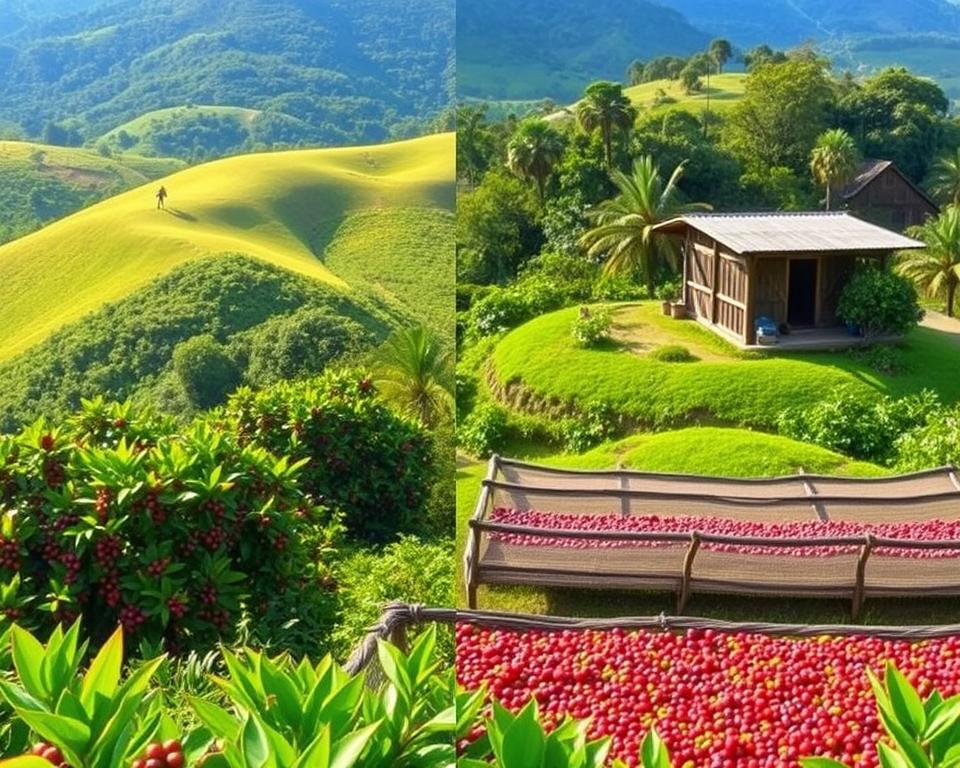
Guatemala is famous for its top-notch Arabica coffee beans. Small coffee farms are key to this success. They help the global coffee market and boost Guatemala’s economy.
These farms face big challenges like climate change and market ups and downs. But, the rise in demand for fair trade coffee offers hope. It means these communities can get fair pay for their quality coffee.
The coffee world is changing fast. It’s vital to see how small farms in Guatemala are shaping coffee’s future.
Understanding Guatemala’s Coffee Heritage
Guatemala’s coffee history is rich, thanks to smallholder farmers. They grow coffee in many different places. These areas have their own special weather, soil, and heights.
These factors make Guatemala’s coffee unique. Smallholder farmers are key to this heritage. They use old ways of farming and aim for top-quality coffee.
Guatemala’s varied landscapes let farmers grow many coffee types. You’ll find Bourbon, Caturra, Gesha, and Maragogype. The farmers’ careful work makes the coffee tasty and eco-friendly.
To truly get Guatemala’s coffee story, you need to understand its geography, weather, and farmers. Supporting these farmers helps keep this heritage alive for the future.
Identifying Challenges Facing Coffee-Producing Communities
Coffee-producing communities in Guatemala face many challenges. These include environmental damage and economic troubles. The way coffee is grown harms the environment, like deforestation and water pollution. This is mainly because of the use of harmful chemicals and cutting down forests for plantations.
Some of the key environmental challenges include:
- Deforestation and loss of biodiversity
- Soil degradation due to erosion and nutrient depletion
- Water pollution from agrochemical runoff
To help coffee growers, we need to focus on sustainable farming. This means growing coffee under shade, using fewer chemicals, and protecting the soil.
But there are also economic and social problems. Coffee prices can change a lot, making it hard for growers to make a living. They also struggle to get to markets and get the help they need.
Key socio-economic challenges include:
- Volatility in global coffee prices
- Limited access to credit and financial services
- Inadequate infrastructure and market access
Knowing these challenges helps us support coffee growers in Guatemala. We can help by promoting sustainable coffee and improving their economic and social situation.
Implementing Sustainable Coffee Production Practices
It’s crucial to use sustainable coffee production methods for the future of coffee farming. As more people drink coffee, we need to find ways to make it without harming the environment. Sustainable coffee helps keep nature intact, improves coffee quality, and supports farmers’ lives.
Creating effective composting systems is a key part of sustainable coffee production. By turning coffee cherry pulp and other waste into compost, we can lessen the environmental impact. This method also gives farmers a valuable fertilizer, cutting down on the need for harmful chemicals.
To compost well, mix “green” and “brown” materials, turn the pile often, and watch the moisture. This way, coffee farms can make the soil better, hold more water, and support more life.
Implementing Natural Pest Management Strategies
Using natural ways to fight pests is also important for sustainable coffee. Coffee farms can use Integrated Pest Management (IPM) to control pests and diseases. For instance, introducing helpful insects or organic pesticides can keep the ecosystem balanced.
| Sustainable Practice | Benefits |
|---|---|
| Composting | Reduces waste, improves soil health, increases water retention |
| Natural Pest Management | Maintains ecological balance, reduces chemical use |
| Shade-Grown Coffee | Preserves biodiversity, improves coffee quality |
For more info on sustainable coffee practices, check out the International Institute for Sustainable Development’s report on coffee and sustainability. By using these methods, coffee farmers can face climate change better, protect the environment, and build a sustainable future.
How Fair Trade Certification Empowers Smallholder Farmers
Smallholder coffee farmers gain a lot from Fair Trade certification. It ensures they get fair prices and direct access to global markets. This is key to empowering them, giving them the tools and support to better their lives and communities.
Fair Trade certification means farmers get a fair minimum price for their coffee. This protects them from market ups and downs. It also encourages sustainable farming, helping the environment and keeping ecosystems healthy.
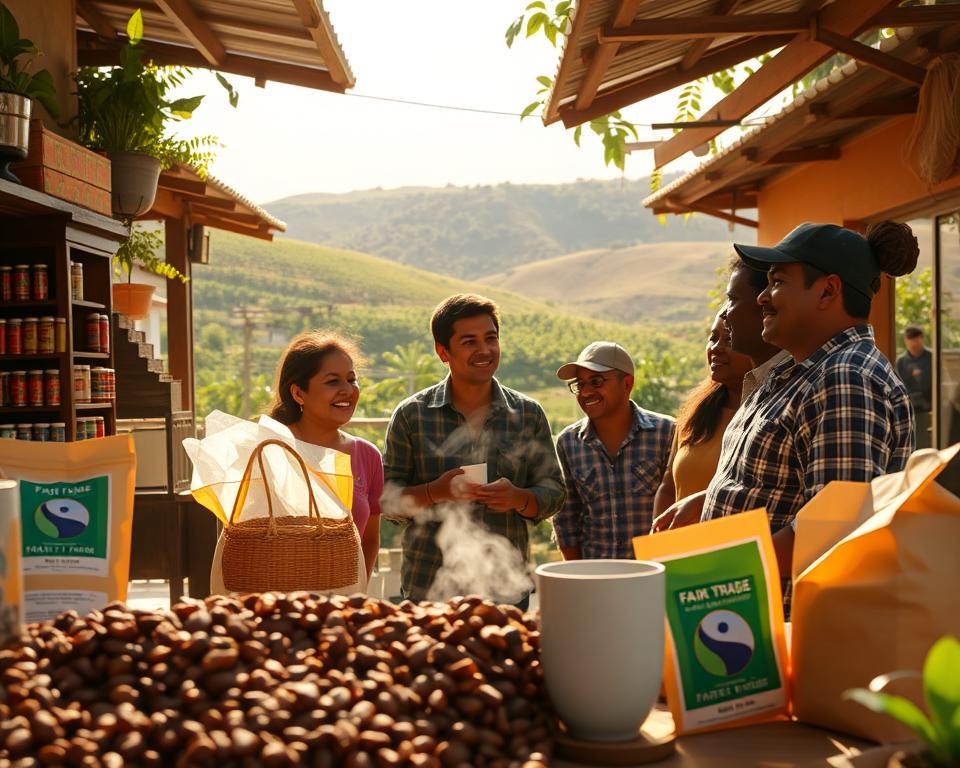
Also, Fair Trade lets farmers sell directly to international markets, cutting out middlemen. This means they get more of the profit. It builds strong bonds between farmers and buyers, making the coffee chain more open and trustworthy.
Supporting Fair Trade certification helps smallholder farmers a lot. It boosts their economic stability and improves their community’s well-being. It’s a way for consumers to make a big difference in the lives of these farmers.
Building Resilient Coffee-Producing Communities for the Future
Building resilience in coffee-producing communities is crucial for their future. It means finding ways to thrive despite challenges like climate change and market ups and downs. It also includes tackling social issues.
Diversifying income sources is a key strategy. Coffee communities can grow other crops, start eco-tourism, or add value to their products. This way, they’re not just relying on coffee and have a financial backup.
Improving how they farm is also important. Using shade-grown coffee, organic farming, and regenerative methods makes coffee better and helps the environment. These methods improve soil, biodiversity, and water use, making communities more resilient.
Getting the community involved is vital too. This can be done through training, community projects, and promoting unity. Fair prices and support are key, thanks to ethical sourcing practices.
| Strategy | Benefits | Impact |
|---|---|---|
| Diversifying Income Sources | Reduced financial risk, increased income | Enhanced community resilience |
| Improving Agricultural Practices | Better crop quality, environmental sustainability | Increased resilience to environmental challenges |
| Enhancing Community Engagement | Improved social cohesion, access to resources | Stronger, more resilient communities |
By using these strategies and focusing on ethical sourcing, coffee communities can become resilient. This benefits them and helps make the coffee industry more sustainable and fair.
Adopting Technological Innovations for Small-Scale Coffee Production
Technological advancements are changing the game for small coffee farmers in Guatemala. New tools like precision agriculture, mobile apps, and climate-smart methods are making farming better. They boost efficiency, productivity, and help farmers face challenges.
Precision agriculture uses drones, satellite images, and sensors to watch over coffee crops. This lets farmers spot problems like pests and nutrient gaps early. It cuts down on chemicals and boosts crop quality.
Mobile apps give farmers tips, weather updates, and market prices. This helps them make smart choices. Climate-smart farming, like shade-grown coffee, helps farmers deal with climate change.
These new technologies are key for coffee farming’s future in Guatemala. They help farmers earn better, grow coffee sustainably, and fight climate change.
Establishing Direct Trade Relationships with Global Markets
Guatemalan coffee producers are now directly connecting with global markets. This change ensures a fairer trade practice. It has helped provide better prices for coffee growers, improve quality, and promote fair trading.
Direct trade eliminates middlemen, letting coffee producers get more of the coffee sale revenue. This boosts their income and encourages them to grow better coffee.
Direct trade also means better quality control. Guatemalan coffee makers can get quick feedback from buyers. This helps them adjust to meet global quality standards.
| Benefits | Description | Impact |
|---|---|---|
| Better Prices | Elimination of intermediaries | Improved livelihoods for coffee growers |
| Improved Quality Control | Direct feedback from global buyers | Higher quality coffee production |
| Equitable Trading Practices | Fair trade practices and transparency | More sustainable coffee industry |
Supporting fair trade coffee and ethical sourcing helps. It promotes direct trade relationships. This way, consumers can help coffee growers in Guatemala.
How Consumers Can Support Guatemala’s Coffee-Producing Communities
Consumers can make a big difference by choosing wisely. One great way is to pick coffee that’s certified for fair trade. This helps the communities that grow it.
Look for Fair Trade certifications. They mean farmers get a fair price for their coffee. This helps them live better and invest in their homes.
- Buy Fair Trade certified coffee to ensure that farmers receive a fair price.
- Choose coffee with transparent sourcing practices to understand the origin of your coffee.
- Advocate for policies that support smallholder coffee farmers by contacting your representatives or signing relevant petitions.
- Support businesses that prioritize ethical sourcing and fair trade practices.
By doing these things, we help make the coffee world better. This supports Guatemala’s coffee farmers for the long run.
Conclusion: Cultivating a Sustainable Future for Guatemala’s Coffee Communities
Guatemala’s coffee communities are key to the country’s coffee success. It’s vital to support sustainable coffee production that cares for the environment and people.
By backing fair trade coffee and direct trade, we help farmers. This boosts their lives and builds strong communities. It makes the coffee industry fairer and greener.
We can make a difference by choosing our coffee wisely. Buying coffee that’s sustainably and fairly sourced helps Guatemala’s coffee farmers. It builds a better future for them.
Our actions shape Guatemala’s coffee future. Supporting sustainable and fair trade practices is crucial. Together, we can ensure these communities flourish for years to come.