
Guatemala is famous for its coffee culture and top-notch coffee beans. But, the soil’s pH level greatly impacts coffee plant productivity.
Studies reveal that the right soil pH levels help plants absorb nutrients better and grow more. The mix of nitrogen forms, like NH4-N and NO3-N, is key. It affects soil pH and, in turn, coffee plant growth.
This article will dive into why soil pH matters for coffee plants. We’ll look at how it influences their productivity, especially in Guatemala’s coffee areas.
The Science of Soil pH and Coffee Growth
Soil pH is key for coffee growth. It helps plants get the nutrients they need. The term “soil pH” shows how acidic or alkaline the soil is. This is important for coffee plants to get the nutrients they need.
What Makes Soil Acidic or Alkaline
Many things affect soil pH. Organic matter, the soil’s parent material, and rainfall are some of them. For example, lots of rain can make the soil more acidic by washing away important minerals.
- Organic matter decomposition releases acidic compounds.
- Parent material affects the initial pH of the soil.
- Rainfall influences soil pH through leaching.
The pH Range Explained for Coffee Farmers
Coffee plants do best in slightly acidic to neutral soil. This means a pH between 5.5 and 7.0. Keeping the soil pH in this range is crucial for the plant’s health and nutrient uptake.
Here are some tips for coffee farmers:
- Check the soil pH often.
- Change the soil pH if needed for nutrient availability.
- Make sure the soil is right for coffee plant growth.
By managing soil pH well, coffee farmers can improve soil fertility. This leads to healthier coffee plants and better yields.
The Unique Soil Conditions of Guatemala’s Coffee Regions
Guatemala’s coffee areas have different soil pH levels. This is because of the country’s varied landscape. This diversity helps grow many coffee types.
Managing soil well is key for better coffee. In Guatemala, farms are in places with special soils. These soils are shaped by the local geology and climate.
Highlands vs. Lowlands pH Differences
The highlands and lowlands in Guatemala have different soils. Highlands have more acidic soils. Lowlands have soils that are more neutral to alkaline.
| Region | Typical pH Range | Coffee Characteristics |
|---|---|---|
| Highlands | 5.5 – 6.5 | Bright acidity, complex flavor |
| Lowlands | 6.5 – 7.5 | Milder flavor, balanced acidity |
Famous Growing Regions and Their Soil Characteristics
Places like Antigua, Huehuetenango, and Atitlán are famous for their coffee. Each has unique soils that add to the coffee’s taste.
Knowing these differences is crucial. It helps improve coffee yield and meet growth needs. By using specific soil management, farmers can boost their coffee production.
Optimal pH Levels for Maximum Coffee Soil pH Productivity
Soil pH is key to coffee plant health and productivity. Coffee plants are very sensitive to soil pH. Their growth depends a lot on the soil’s acidity or alkalinity.
The best pH range for coffee is between 5.5 and 6.5, which is slightly acidic. In this range, coffee plants can take in nutrients well. This leads to healthy growth and high productivity.
Different pH levels have different effects on coffee plants. Soils too acidic (below 5.5) can be toxic, especially with aluminum and manganese. This can slow down plant growth. On the other hand, soils too alkaline (above 6.5) can lack nutrients. This makes it hard for plants to get what they need.
Key Factors Influenced by Soil pH
- Nutrient availability: Soil pH affects the availability of nutrients for coffee plants.
- Microbial activity: Optimal pH levels promote beneficial microbial activity in the soil.
- Root development: The pH level can influence the development of the root system.
To keep soil pH right for coffee, farmers can use a few methods. Regular soil tests are key to check pH levels and make changes if needed. Adding organic matter, like compost, can help keep pH stable and improve soil health.
| pH Range | Coffee Plant Response |
|---|---|
| Below 5.5 | Toxicity issues, potential for aluminum and manganese toxicity |
| 5.5 – 6.5 | Optimal range for nutrient uptake and plant growth |
| Above 6.5 | Nutrient deficiencies, reduced availability of certain nutrients |
By managing soil pH well, coffee farmers in Guatemala can boost soil fertility. This improves coffee quality and increases productivity.
How pH Influences Nutrient Availability in Coffee Plants
The pH level of the soil greatly affects how well coffee plants absorb nutrients. The best pH range helps coffee plants take in the nutrients they need.
Coffee plants need many nutrients to grow well and produce lots of coffee. The soil’s pH level plays a big role in how these nutrients are available.
Nitrogen, Phosphorus, and Potassium Availability
Nitrogen, phosphorus, and potassium are key for coffee plant growth. Nitrogen is most available at a pH between 6.0 and 7.0. Phosphorus is best at a pH of 6.0 to 6.5. Potassium is less affected by pH but is best at a pH of 6.0 to 7.0.
| Nutrient | Optimal pH Range |
|---|---|
| Nitrogen | 6.0-7.0 |
| Phosphorus | 6.0-6.5 |
| Potassium | 6.0-7.0 |
Calcium and Magnesium Uptake
Calcium and magnesium are important for coffee plant health. They help with cell growth and photosynthesis. They are best absorbed in soils with a pH of 6.0 to 7.0.
Iron, Zinc, and Boron Availability
Iron, zinc, and boron are crucial for coffee plants. Iron and zinc do best in acidic soils with a pH of 5.5 to 6.5. Boron is best at a pH of 6.0 to 7.0.
Aluminum Toxicity in Acidic Soils
In very acidic soils (pH below 5.5), aluminum can harm coffee plants. It can stop roots from growing and make it hard for plants to take in nutrients. Keeping the soil pH right is important to avoid this problem.
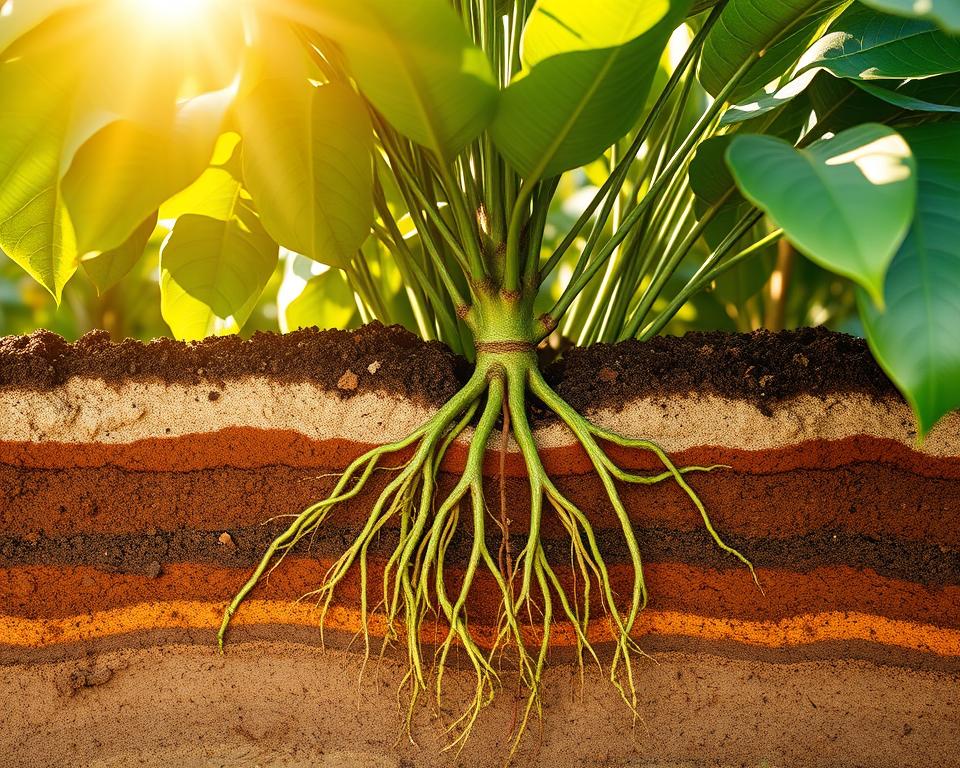
Knowing how pH affects nutrient availability is key for better coffee plant nutrition. By keeping the soil pH just right, farmers can help their plants get the nutrients they need. This can also prevent problems from too little or too much of certain nutrients.
Measuring and Monitoring Soil pH in Coffee Plantations
Measuring soil pH is key for managing coffee farms in Guatemala. It helps farmers make smart decisions about their soil. This is vital for getting the most out of their coffee crops.
Checking soil pH regularly helps farmers spot any issues. This is especially important in Guatemala. The country’s different regions have various soil types.
It’s smart to test soil pH at different times of the year. In Guatemala, testing during the dry and wet seasons is best. This way, farmers can see how changes in weather and fertilizer use affect the soil.
Record-Keeping Best Practices
Keeping accurate records of soil pH is crucial. It lets farmers track changes and make better choices. They should note the date, time, and location of each test, along with any actions taken.
| Best Practices | Description | Benefits |
|---|---|---|
| Regular Testing | Conduct soil pH testing at least twice a year | Helps identify seasonal variations |
| Accurate Record-Keeping | Maintain detailed records of soil pH measurements | Facilitates informed decision-making |
| Adjustments Based on Results | Take corrective actions based on soil pH test results | Optimizes soil conditions for coffee cultivation |
By using these best practices, coffee farmers in Guatemala can better manage their soil. This leads to higher coffee quality and better yields.
Techniques for Adjusting Soil pH in Coffee Farms
To get the best coffee yields, farmers need to adjust soil pH. Good soil management is key to keep the pH right for coffee plants to grow well.
There are many ways to change soil pH in coffee farms. Each method works differently based on whether the soil is too acidic or too alkaline.
Lime Application Rates and Techniques
When the soil is too acidic, adding lime is a common fix. How much lime to use depends on the soil’s pH, type, and the pH you want. It’s important to test the soil first to know how much lime is needed.
Organic Materials for pH Adjustment
Organic stuff can also change soil pH. For example, compost or manure can help balance the pH. But, their effect is slower than lime or sulfur.
Sulfur Applications and Considerations
To make the soil more acidic, you can use elemental sulfur or aluminum sulfate. The amount needed depends on the soil and how much pH change you want. It’s important to check the soil pH often to avoid making it too acidic.
Using Acidic Organic Matter
Adding acidic organic matter, like peat moss, can slowly lower the soil pH. This is good for coffee farms that like acidic soil.
By knowing and using these methods, coffee farmers can manage their soil pH well. This keeps the pH just right for growing coffee. Regular checks and tweaks are essential to keep the soil pH perfect for coffee plants.
The Impact of Improper pH on Coffee Quality and Yield
Coffee plants are very sensitive to soil pH. If the pH is not just right, it can hurt both the yield and quality. Keeping the soil pH in the best range is key for top coffee production.
Visual Symptoms in Leaves and Fruits
When soil pH is off, coffee plants show signs. Leaves might turn yellow or bronze, and fruits can look deformed or change color. These signs point to problems with nutrients or toxins from pH issues.
Soil pH also affects how coffee roots grow. If the pH is wrong, roots can’t grow well. This makes it hard for plants to get the nutrients and water they need, hurting the yield.
Acidity and Body Characteristics
Soil pH also changes how acidic and full-bodied coffee tastes. The right pH helps coffee taste balanced. But, the wrong pH can make coffee too acidic or too flat.
Flavor Notes Affected by Soil Conditions
Soil conditions, like pH, greatly influence coffee’s flavor. The right pH brings out good flavors. But, the wrong pH can make coffee taste bad.
To get better coffee yield and quality, it’s important to watch and adjust the soil pH. By keeping the pH just right, farmers can help plants absorb nutrients better. This leads to healthier plants and better-tasting coffee.
Sustainable Soil Management Practices for Long-term Productivity
Keeping coffee farms productive for years requires good soil management. This means using methods that improve soil health and make the farm more sustainable.
Cover Cropping and Mulching Strategies
Cover crops and mulching boost soil health. Cover crops fight erosion, add organic matter, and provide nutrients. Mulching keeps moisture in, controls weeds, and keeps soil temperature right.
Erosion Control in Guatemala’s Mountainous Terrain
In Guatemala’s mountains, stopping erosion is key. Terracing and contour planting help a lot. They keep the soil in place, preventing landslides and soil loss.
With changing weather, it’s important to adjust soil pH. Regularly check the soil’s pH and tweak it if needed. This ensures coffee plants grow well.
Building Resilient Soil Systems
Creating strong soil systems means boosting biodiversity, improving structure, and adding organic matter. Use organic fertilizers and no-till farming to do this.
| Practice | Benefits | Implementation |
|---|---|---|
| Cover Cropping | Reduces erosion, increases soil organic matter | Plant cover crops between coffee rows |
| Mulching | Retains moisture, suppresses weeds | Apply organic mulch around coffee plants |
| Terracing | Reduces soil erosion on slopes | Create terraces on sloping land |
Conclusion: Balancing Soil pH for Optimal Coffee Production
Soil pH balance is key for top-notch coffee. The best pH for coffee plants is between 5.5 and 6.5. This range helps them absorb nutrients well, boosting coffee soil ph productivity.
In Guatemala, coffee farmers can up their game by keeping soil pH just right. They need to check the soil often and tweak it when needed. Adding lime or organic matter can get the pH where it should be.
Knowing how soil pH affects coffee quality is vital. Farmers who manage their soil well can grow better coffee. This helps them financially and keeps Guatemala’s coffee culture thriving.