
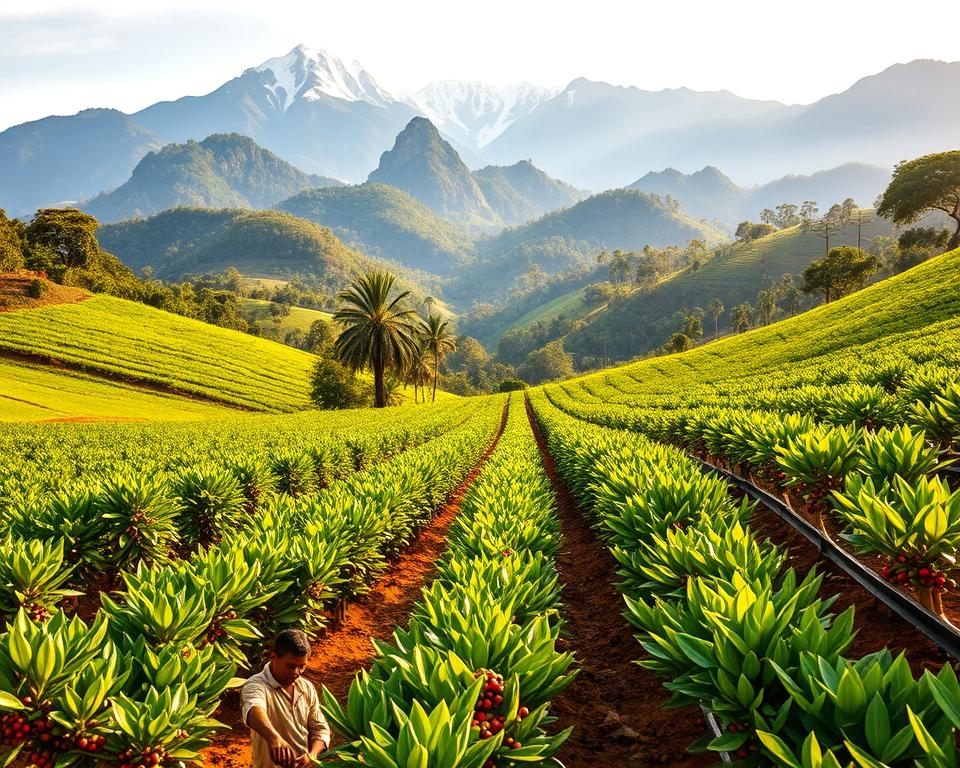
Guatemala is perfect for growing top-notch Arabica coffee. Its mountains offer the right mix of shade, soil, and weather. This creates the unique flavors found in Guatemalan coffee.
Places like Antigua, Huehuetenango, and Atitlán are famous for their coffee. This guide will show you how to grow Arabica coffee in these mountains. We’ll cover everything from planting to harvesting.
By following this guide, you’ll learn why Guatemalan coffee is loved around the world.
Understanding Guatemala’s Coffee Growing Regions
Guatemala’s varied landscapes make it perfect for growing coffee. The country has several coffee-growing regions, each with its own special features and climate.
Places like Antigua, Huehuetenango, and Atitlán are famous for their coffee. Antigua is known for its balanced coffee with a rich taste. This is thanks to its volcanic soil and moderate climate.
Huehuetenango, on the other hand, has coffee with bright acidity and complex flavors. This is because of its high altitude and dry climate.
Atitlán is special because of its lakes and mountains. This creates a unique microclimate that adds to the coffee’s flavor. The coffee from Atitlán is known for its balanced acidity and rich body.
| Region | Climate | Flavor Profile |
|---|---|---|
| Antigua | Moderate | Balanced, rich |
| Huehuetenango | High altitude, dry | Bright acidity, complex |
| Atitlán | Microclimate | Balanced acidity, rich body |
Knowing about these regions is key for coffee farming in Guatemala. The different conditions across the country add to the quality and complexity of Guatemalan coffee. This makes Guatemalan coffee a big part of the Guatemala coffee industry.
Selecting the Right Arabica Coffee Varieties for Guatemala
Choosing the right Arabica coffee variety is key for success in Guatemala. The country’s climate and soil are perfect for growing top-quality Arabica coffees.
Several Arabica coffee varieties are great for Guatemala’s coffee-growing areas. These include:
- Bourbon: Known for its balanced acidity and rich flavor, Bourbon is a favorite among Guatemalan farmers.
- Caturra: This variety is loved for its high yields and disease resistance, making it a smart choice for many growers.
- Gesha: Gesha is famous for its unique floral and citrus notes, offering a special flavor that fetches a high price.
When picking an Arabica variety, consider the climate, soil, and market demand. For example, Gesha does well in high altitudes and is often used for specialty coffee.
By knowing the traits of different Arabica coffee varieties, farmers in Guatemala can make better choices. Whether aiming for quality, yield, or market demand, the right variety can greatly impact a farm’s success.
Growing Arabica coffee in Guatemala needs careful planning and the right variety selection. By choosing varieties like Bourbon, Caturra, and Gesha, farmers can produce some of the best Arabica coffee in the region.
Preparing Your Land for Coffee Farming
The journey to a thriving coffee farm in Guatemala’s mountains starts with careful land preparation. This step is crucial for your Arabica coffee plants to grow healthy and productive.
Soil testing is the first step. It shows the pH level and nutrient content of your soil. You can then adjust it as needed. Arabica coffee likes a slightly acidic to neutral soil pH, between 5.5 and 7.
Land clearing is also key. It removes debris, weeds, or existing crops that might compete with your coffee plants. This process must be done carefully to avoid harming the soil.
Terracing is often needed in Guatemala’s mountains to make flat plots for coffee farming. It prevents soil erosion and makes farm management easier. Sustainable practices like terracing and soil conservation are essential for long-term success.
By focusing on these areas, you can create a perfect environment for your Arabica coffee plants. Proper land preparation is an investment in your coffee farm’s future. It ensures your farm stays productive and sustainable for years.
Sourcing and Preparing Coffee Seedlings
Finding top-notch coffee seedlings is key to a thriving coffee farm in Guatemala. The quality of these seedlings affects the yield and taste of guatemala coffee beans.
Coffee farmers in Guatemala need to pick seedlings that resist diseases and fit the local climate. They should choose Arabica varieties that do well in the mountains.
Managing the nursery is vital for seedling preparation. Farmers must place the nursery in a shaded area with plenty of water. They should also watch for diseases or pests in the seedlings.
Before planting, seedlings need to get used to outdoor conditions. This step helps them adjust better when moved to the field. It leads to healthier coffee plants.
By focusing on quality seedlings, Guatemalan farmers can increase their chances of making premium coffee. This coffee will meet high international standards.
Planting Techniques for Guatemalan Mountain Conditions
To grow Arabica coffee in Guatemala, knowing the local mountain conditions is key. Guatemala’s highlands are perfect for coffee, but farmers face challenges. They must address these to grow a healthy crop.
Digging the Hole
The first step is digging a hole the right size for the seedling. The hole should be twice as wide and as deep as the seedling’s roots. This helps the roots spread and grow well. For more info on Guatemala’s coffee-growing regions, visit Coffee Regions in Guatemala.
Seedling Placement
After preparing the hole, carefully remove the seedling from its container. Make sure not to harm the roots. Place the seedling in the hole so the root ball is level with the soil. The seedling should be straight and in the center.
Initial Care After Planting
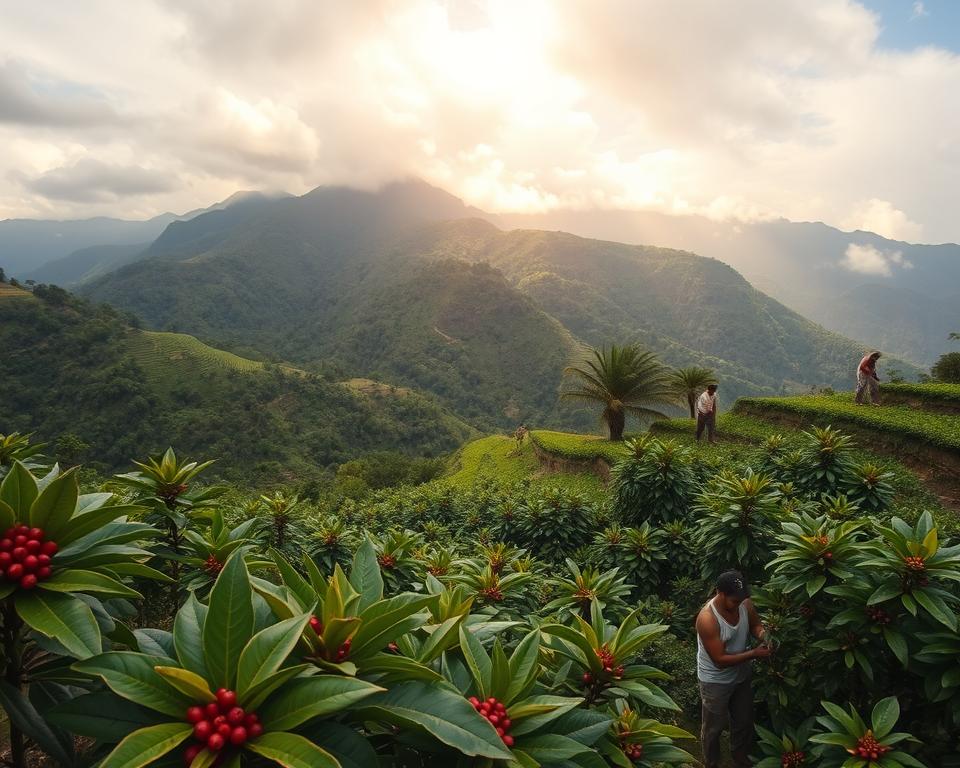
After planting, the seedling needs the right conditions to thrive. It needs enough water, mulch to keep moisture, and shade from direct sunlight. Proper care is vital for a strong root system and a successful coffee crop.
By using these planting techniques, farmers in Guatemala can increase their chances of a good harvest. Careful planting, proper care, and Guatemala’s mountain conditions can lead to high-quality Arabica coffee.
Arabica Coffee Cultivation in Guatemala: Year-Round Care
Year-round care is vital for Arabica coffee plants in Guatemala. It ensures the plants get the nutrients they need. It also protects them from pests and diseases and keeps them productive.
Fertilization is a key part of this care. Arabica coffee plants need a balanced fertilizer with nitrogen, phosphorus, and potassium. Fertilizer should be applied during the growing season.
Pruning is also crucial. It involves removing dead or diseased branches. This stops disease spread and encourages new growth. Pruning should happen every year, after the harvest.
Managing pests and diseases is essential. Problems like coffee berry borer and coffee leaf rust can harm Guatemalan Arabica coffee. Using integrated pest management techniques helps control these issues.
| Month | Care Activity | Objective |
|---|---|---|
| January | Fertilization | Promote new growth |
| June | Pruning | Maintain plant health |
| September | Pest Management | Prevent coffee berry borer |
Regular maintenance is key to high-quality Arabica coffee. By following these year-round care practices, Guatemalan coffee farmers can boost their yields. This helps the country’s coffee industry thrive.
Managing Pests and Diseases in Guatemalan Coffee Farms
Guatemala’s coffee-growing areas are rich in biodiversity. But, pests and diseases can harm coffee crops. It’s vital to manage these threats for sustainable coffee farming.
Coffee farms in Guatemala face many pests and diseases. Knowing and tackling these issues is crucial. It helps keep crops healthy and ensures top-quality Arabica coffee.
Coffee Berry Borer Management
The Coffee Berry Borer (CBB) is a major pest worldwide, including Guatemala. To manage it, farmers monitor CBB, remove infested berries, and use biological controls.
Leaf Miner Control
Leaf miners damage coffee plants by eating leaves. This reduces photosynthesis and lowers yields. Farmers control leaf miners with cultural practices, biological controls, and targeted pesticides.
Coffee Leaf Rust (CLR) is a fungal disease that harms coffee production. To prevent it, farmers plant resistant varieties, follow good agricultural practices, and use fungicides when needed.
Addressing Root Diseases
Root diseases can harm coffee plants, reducing yields and causing plant death. To manage this, farmers improve soil health, use resistant rootstocks, and practice good sanitation.
| Pest/Disease | Management Strategies | Prevention Methods |
|---|---|---|
| Coffee Berry Borer | Monitoring, removing infested berries, biological controls | Cultural practices, sanitation |
| Leaf Miner | Cultural practices, biological controls, targeted pesticides | Pruning, removing infested leaves |
| Coffee Leaf Rust | Resistant varieties, good agricultural practices, fungicides | Shade management, air circulation improvement |
| Root Diseases | Improving soil health, resistant rootstocks, good sanitation | Soil testing, avoiding waterlogging |
Guatemalan coffee farmers use integrated pest management (IPM) techniques. This approach reduces chemical use, keeps ecosystems balanced, and produces excellent Arabica coffee.
Harvesting Your Guatemalan Arabica Coffee
Guatemala’s Arabica coffee plantations need careful harvesting to get the best beans. Harvesting coffee is key because it affects the taste and quality of the coffee.
Finding the right time to harvest is the first step. Coffee farmers in Guatemala usually pick their coffee between December and March. This is when the coffee cherries are ripe and ready. They turn deep red, but some may also be yellow or orange.
The way you pick the coffee is also important. There are two main ways: strip picking and selective picking. Selective picking means picking each ripe cherry by hand. This is hard work but makes better coffee. Strip picking removes all cherries at once, which is faster but might include bad cherries.
It’s also key to handle the coffee cherries right after picking. They should be processed quickly to avoid spoilage. Here are some important steps:
- Sorting the coffee cherries to remove any unripe, overripe, or damaged cherries.
- Pulping the cherries to remove the outer skin and pulp.
- Allowing the coffee beans to ferment, which breaks down the mucilage.
- Rinsing the beans to remove any remaining pulp and mucilage.
By carefully managing the harvesting, farmers in Guatemala’s Arabica coffee plantations can make high-quality “guatemala coffee beans”. These beans are famous worldwide for their unique flavors.
Processing Methods for Premium Guatemalan Coffee
Premium Guatemalan coffee comes from careful processing techniques. These methods highlight the special traits of Arabica beans. The way coffee is processed greatly affects its taste.
Fermentation Techniques
Fermentation is key in coffee making. It breaks down the sticky substance on coffee beans. In Guatemala, different methods like washed, natural, and honey are used.
The washed method removes the skin and pulp before fermentation. This gives a clean, bright taste. The natural method dries the cherries whole, adding fruit notes and body.
The honey method keeps some mucilage on the bean. This makes the coffee sweeter and more complex. Guatemalan farmers try different times and methods to get unique tastes.
Washing and Sorting
After fermentation, washing and sorting are crucial. Washing gets rid of pulp and mucilage. Sorting separates beans by density and size.
In Guatemala, farms use both old and new methods for these steps. They use water tanks and mechanical sorters.
| Processing Method | Flavor Profile | Characteristics |
|---|---|---|
| Washed | Clean, bright, acidic | Enhanced acidity, clarity |
| Natural | Fruity, sweet, full-bodied | Enhanced fruit notes, body |
| Honey | Sweet, complex, balanced | Balanced acidity, sweetness |
The choice of method depends on many things. These include the coffee type, climate, and taste wanted. Guatemalan producers use these techniques to make top-notch coffee. They highlight the unique qualities of Arabica beans from the region.
Conclusion: Building a Sustainable Guatemalan Coffee Farm
Growing Arabica coffee in Guatemala’s mountains needs careful planning and a focus on sustainability. Farmers must know the best regions for coffee, choose the right varieties, and use effective growing methods. This way, they can make high-quality coffee while caring for the environment.
Arabica coffee farming in Guatemala is a long-term effort that requires dedication. Farmers must use sustainable methods to protect natural resources and biodiversity. This includes using shade trees, saving water, and reducing chemical use.
By doing this, Guatemalan coffee farmers can make top-notch Arabica coffee. This coffee meets global market needs and helps the country’s economy and environment. The success of Guatemalan Arabica coffee depends on farmers balancing economic, social, and environmental goals. This ensures a sustainable coffee industry for the future.