
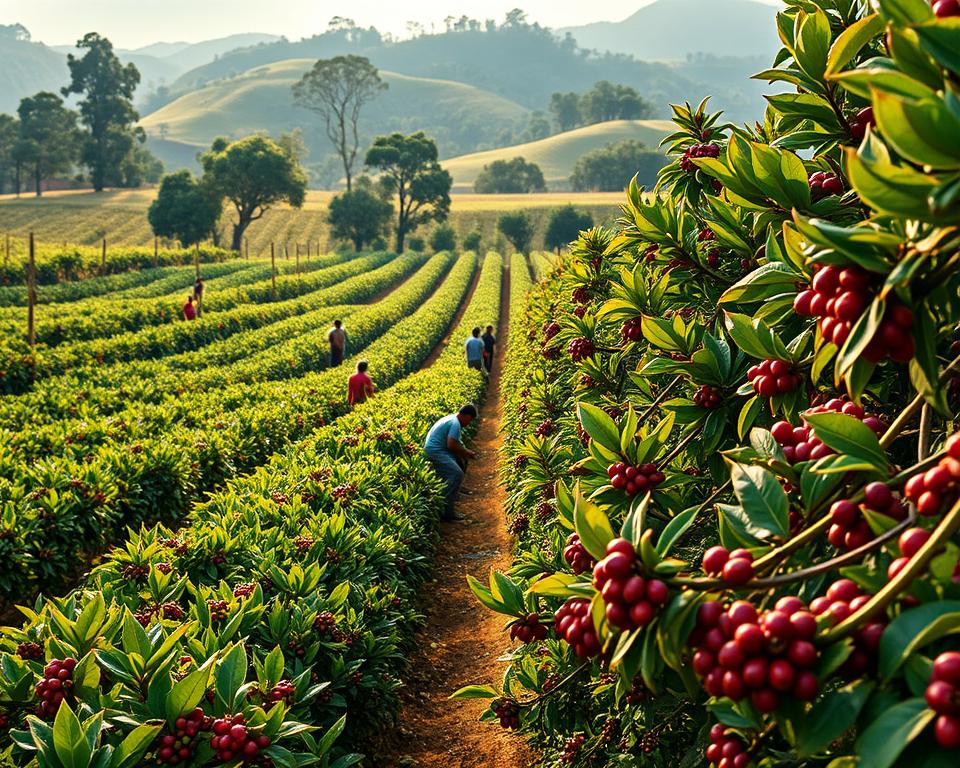
Ensuring coffee quality is key in the coffee industry, especially in Guatemala. This country is famous for its top-notch coffee. Effective training methods are vital to teach pickers the right skills.
Good training helps pickers know how to pick ripe coffee cherries. This directly affects the coffee’s quality. By investing in detailed training, producers can improve their coffee’s quality and consistency.
The Critical Role of Picker Training in Coffee Quality
Effective picker training is key to keeping Guatemala’s coffee quality high. Choosing the right coffee cherries at the right time is complex. It needs a deep understanding of what affects coffee quality.
Factors Affecting Coffee Quality
Coffee quality depends on several things. These include the coffee variety, altitude, soil, and how it’s harvested. Proper training helps pickers grasp these factors and make better choices.
The quality of coffee isn’t just about nature. It’s also about the harvesting techniques. Trained pickers can improve quality by picking ripe cherries and handling them carefully.
| Factor | Impact on Coffee Quality | Role of Picker Training |
|---|---|---|
| Coffee Variety | Affects flavor profile and quality | Understanding the specific variety to handle appropriately |
| Altitude | Influences flavor and quality due to temperature and oxygen levels | Recognizing how altitude affects the coffee cherries |
| Soil Conditions | Impacts the nutrient intake and overall health of the coffee plants | Knowledge of soil conditions to optimize harvesting techniques |
By focusing on best coffee picker training and coffee farm worker training, Guatemalan coffee farms can ensure high-quality coffee. This boosts the farm’s reputation and the quality of Guatemalan coffee worldwide.
Investing in training for coffee pickers is crucial for quality and consistency. As demand for quality coffee grows, the importance of well-trained pickers increases.
Understanding the Guatemalan Coffee Harvest Context
Coffee harvesting in Guatemala needs a deep understanding of old and new methods. The country’s different regions, each with its own terroir, make coffee production complex.
Guatemala is famous for its high-quality Arabica beans. This is thanks to its rich volcanic soil, enough rain, and special microclimates. But, harvesting coffee is hard work that needs skilled people.
Challenges in Guatemalan Coffee Harvesting
The Guatemalan coffee harvest has many challenges. Climate change changes the weather, and money issues affect how much labor is available and how much it costs.
| Challenge | Description | Impact |
|---|---|---|
| Climate Change | Alters temperature and rainfall patterns | Affects coffee yield and quality |
| Labor Shortages | Economic factors influence labor availability | Increases harvesting costs and reduces efficiency |
| Pest and Diseases | Climate change exacerbates pest and disease issues | Damages coffee crops and reduces quality |
To tackle these challenges, starting a coffee harvesting course in an agricultural training program is key. Such programs can make coffee pickers better, improve the quality of coffee, and make coffee farming in Guatemala more sustainable.
By understanding the Guatemalan coffee harvest and tackling its challenges through education and training, the coffee industry can aim for a more sustainable and productive future.
Developing Comprehensive Coffee Picker Training Programs
To improve coffee quality, training coffee pickers is key in Guatemala. The country is famous for its high-quality Arabica beans. Good training can boost yields and quality.
Online training for coffee pickers is flexible and easy to access. It covers topics like coffee plant health and picking techniques.
Curriculum Development for Coffee Pickers
Creating a good curriculum is vital for training. For coffee pickers in Guatemala, the curriculum should include:
- Coffee plant identification and health
- Optimal picking times and techniques
- Quality control measures
A well-structured curriculum helps pickers know how to make high-quality coffee.
| Curriculum Topic | Description | Importance Level |
|---|---|---|
| Coffee Plant Health | Understanding signs of disease and pests | High |
| Picking Techniques | Methods for optimal coffee cherry selection | High |
| Quality Control | Measures to ensure high-quality coffee beans | High |
Adding coffee plantation education to training helps pickers understand the coffee-making process. This improves their ability to produce high-quality coffee.
Good training not only raises coffee quality but also helps coffee plantations in Guatemala stay sustainable.
Essential Skills to Include in Your Training
Coffee picking is an art that needs specific skills. These skills can be improved with the right training. It’s key to teach pickers the best techniques and knowledge for top-quality coffee beans.
Skills for coffee picking fall into two categories: basic and advanced. Basic skills are a must for all pickers. Advanced skills help experienced pickers get even better at their craft.
Advanced Skills for Experienced Pickers
For those with more experience, there are advanced skills to master. These include:
- Identifying coffee cherries at the optimal stage of ripeness
- Using efficient picking techniques to minimize damage to the coffee plants
- Sorting coffee cherries effectively to ensure only the best cherries are selected
| Skill | Novice Pickers | Experienced Pickers |
|---|---|---|
| Coffee Cherry Identification | Basic understanding of ripe vs. unripe cherries | Advanced knowledge to identify subtleties in ripeness |
| Picking Technique | Learning proper picking methods | Refining technique for efficiency and quality |
| Sorting and Quality Control | Basic sorting skills | Advanced sorting to ensure highest quality |
By focusing on these key skills, training programs can greatly improve coffee quality. Training should keep going, giving pickers chances to get better.
Good training programs boost coffee pickers’ skills and help coffee production last longer. By investing in professional training, coffee makers can keep getting high-quality beans.
Hands-On Training Methods for Coffee Pickers
Hands-on training is key for coffee pickers to keep Guatemalan coffee quality high. It means learning by doing, right on the job. This way, pickers get the skills needed for top-notch coffee.
Simulation-based training is a top choice for this kind of learning. It sets up a fake environment that looks like real coffee picking.
Simulation-Based Training for Coffee Pickers
This training lets pickers practice in a safe, real-like setting. They can try picking coffee from mock trees and deal with different cherry types. It’s all about getting ready for real picking without the risks.
It boosts confidence, cuts down on mistakes, and makes pickers more efficient. Using this method, Guatemalan farms can make their coffee even better.
To show how different training works, here’s a table comparing classroom and hands-on training:
| Training Method | Effectiveness | Cost |
|---|---|---|
| Traditional Classroom Training | Moderate | Low |
| Hands-On Training | High | Moderate |
| Simulation-Based Training | Very High | High |
By choosing hands-on and simulation training, Guatemalan farms can really up their coffee game. This keeps them ahead in the global market.
The best training mixes these methods to fit each farm’s needs. It’s all about making sure pickers have the skills to make great coffee.
Implementing Quality Control Systems
Setting up quality control systems is key to keeping coffee quality high. It involves several important parts that work together. This ensures the coffee meets top standards.
Creating clear quality standards is a big part of this. These standards should follow industry best practices and include coffee industry certifications. Following these standards helps coffee makers compete globally.
Checking coffee quality is an ongoing task. It includes looking at the coffee at different stages. This includes checking the coffee cherries, the processing, and the final coffee quality. A good agricultural training program helps by teaching farmers and processors about quality control.
To check coffee quality well, producers can use a few methods. These include:
- Regular cupping sessions to check the coffee’s taste
- Physical checks of the coffee cherries and beans for defects
- Using technology, like moisture meters, for drying
Using these methods helps producers find and fix quality issues. This boosts their reputation and makes the coffee industry more sustainable and competitive.
Incentive Systems to Encourage Consistency
To keep coffee quality high, farms in Guatemala use new ways to motivate their pickers. These plans help pickers stay focused on quality. This makes the coffee better overall.
Teaching pickers isn’t just about knowing when to pick coffee. It’s also about keeping them motivated. A good reward system can make the coffee even better. This is because pickers work harder and pay more attention to their work.
Implementing Incentives for Quality
To start, farms must know what quality means to them. This could be picking the right number of cherries, keeping them clean, or how much each picker gets.
| Incentive Type | Description | Benefit |
|---|---|---|
| Monetary Bonuses | Direct financial rewards for meeting quality targets | Immediate motivation |
| Additional Benefits | Extra benefits such as meals, housing, or education assistance | Long-term loyalty |
| Recognition Programs | Awards or public recognition for outstanding performance | Boosts morale and teamwork |
Teaching pickers about quality is key. By showing them how their work affects the coffee, farms can build a dedicated team. This team is not just skilled but also eager to make great coffee.
In conclusion, incentives are crucial for training coffee pickers. With the right programs, Guatemalan farms can improve their coffee’s quality and consistency. This benefits both the farm and the pickers.
Measuring the Success of Your Coffee Picker Training
To ensure top-notch coffee, it’s key to measure the success of coffee picker training. This means checking if the training programs for coffee pickers are working well.
There are several important indicators to see if the training is successful. These include the quality of coffee beans, how efficient the picking is, and fewer defects or unripe beans.
Assessing the Impact on Coffee Quality
Measuring the quality of coffee is a main way to check if the training is working. This can be done by looking at cupping scores, which show how good the coffee is. Also, the amount of specialty coffee beans picked is a big sign.

A good coffee harvesting course should show clear improvements in these areas. By checking these metrics often, coffee makers can make their training better.
Having a strong way to evaluate helps producers make better choices. This leads to higher quality coffee.
Conclusion: Building a Sustainable Future Through Picker Excellence
Guatemala’s coffee industry depends a lot on its coffee pickers. Good coffee picker training is key to keeping the coffee quality high. With solid training, coffee producers can keep their harvests top-notch.
Sustaining Quality Through Continuous Training
Keeping the quality up is vital for Guatemala’s coffee. As the industry grows, pickers need to learn new ways and best practices. Coffee industry certification helps make sure pickers meet the standards.
By focusing on training and education, Guatemala’s coffee can stay known for its quality. This helps the industry grow strong and supports the people who work in it.