
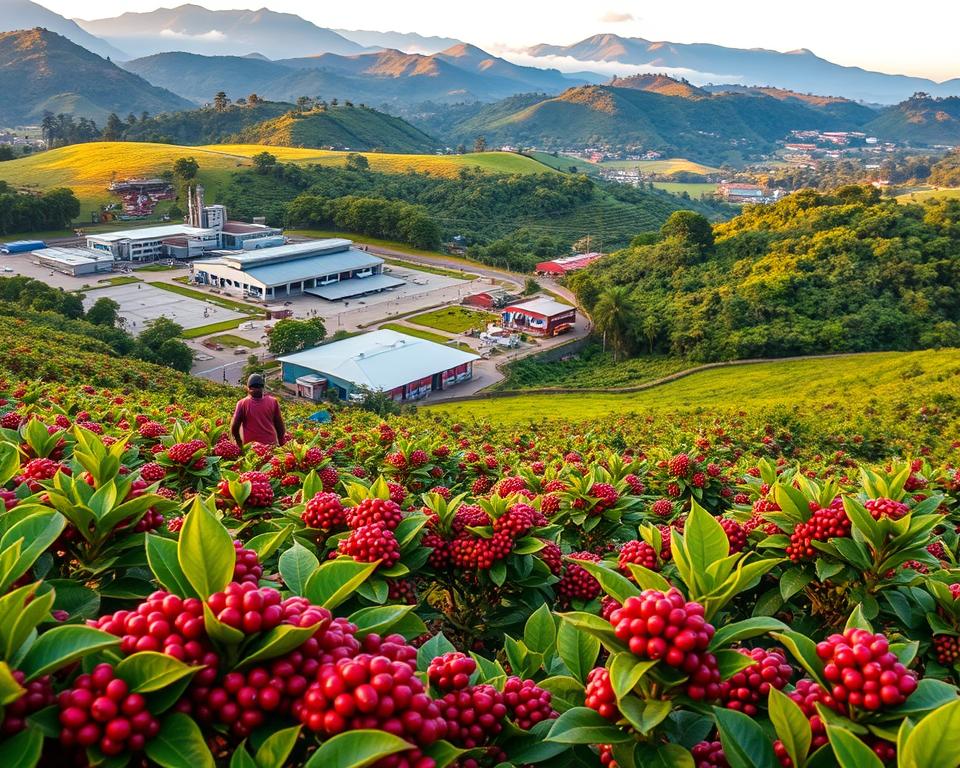
The Guatemalan coffee industry is a big part of the country’s economy. It has a rich history and offers many different flavors. As the global coffee market changes, it’s important to understand the economic outlook for Guatemalan coffee.
This article will dive deep into the Guatemalan coffee industry. We’ll look at its current state, history, and what’s ahead until 2030. We’ll talk about trends like changes in global demand, climate change, and market ups and downs.
By looking at these trends, we aim to give a full picture of the Guatemalan coffee industry’s economic prospects. This will help readers make smart choices about investments, trade, and how to be sustainable.
The Current State of Guatemala’s Coffee Industry
The coffee industry in Guatemala is known for its diverse regions and production levels. It’s famous for high-quality coffee, spread across different areas. Each region has its own taste and production capacity.
Production Volumes and Regional Distribution
Most of Guatemala’s coffee comes from places like Antigua, Atitlán, and Huehuetenango. These areas have the perfect weather for growing coffee. They play a big role in the country’s coffee production.
Guatemalan coffee is sorted into different quality levels, affecting its price. The quality depends on factors like altitude, how it’s processed, and its taste.
Employment Generation and Rural Development
The coffee industry is a big job creator in rural Guatemala. It supports thousands of families by providing jobs. It also helps improve rural areas through new infrastructure.
Foreign Exchange Contribution
Coffee exports are key for Guatemala’s foreign exchange. The industry brings in a lot of money each year. This money helps keep the country’s economy stable.
Historical Context: Guatemala’s Coffee Evolution
Guatemala’s coffee industry has a long history, starting in the 19th century. It has faced many challenges over the years. Knowing this history helps us understand the current state and future of the industry.
Price changes have greatly affected Guatemala’s coffee industry. Global coffee prices have swung wildly, hurting farmers’ earnings. This makes it hard for them to stay profitable. Market trends show that price swings are a big worry for coffee-making countries like Guatemala.
Pandemic Effects and Recovery
The COVID-19 pandemic hit Guatemala’s coffee industry hard. It messed up supply chains and cut into demand. But, the industry is bouncing back, adapting to new market needs. The pandemic showed the need for more variety and a stronger coffee chain.
Looking at Guatemala’s coffee history gives us clues about its current and future challenges. By grasping the effects of price changes and the pandemic, we can help make the coffee industry stronger and more stable.
Understanding the Guatemalan Coffee Economic Outlook 2030
The future of Guatemalan coffee until 2030 looks promising but complex. It involves production levels, price changes, and industry predictions. To grasp the sector’s future, we must look at these factors closely.
Production Volume Forecasts
Experts predict an increase in Guatemalan coffee production. This rise is thanks to better farming methods and technology. Efforts to boost crop yields and fight diseases will also help.
Price Trend Analysis
Global demand will keep pushing up Guatemalan coffee prices. Changes in world market prices, due to climate and economy, will affect earnings. These shifts are key to the industry’s financial health.
Studies show that sustainable farming and certifications are vital. They make Guatemalan coffee more competitive. These practices are crucial for the industry’s future.
Government and International Organization Projections
Government and international groups see a bright future for Guatemalan coffee exports. This optimism comes from trade deals and diversifying markets. They believe demand for top-notch coffee will keep growing.
| Indicator | 2023 | 2030 |
|---|---|---|
| Production Volume (tons) | 250,000 | 300,000 |
| Average Price ($/ton) | 2,500 | 3,000 |
| Export Value ($ million) | 625 | 900 |
The table shows expected growth in production, price, and export value by 2030. This growth points to a bright economic future for the industry.
Climate Change Impact on Guatemala Coffee Production Forecast
Rising temperatures and unpredictable rainfall are changing Guatemala’s coffee scene. The coffee industry, key to Guatemala’s economy, faces big challenges from climate change.
Temperature and Rainfall Pattern Changes
Temperature and rainfall changes are affecting coffee plants. Warmer weather can cause plants to ripen too fast. Changes in rain can lead to droughts or too much water, both bad for coffee.
Pest and Disease Proliferation
Climate change is making pests and diseases worse for coffee plants. Warmer weather helps diseases like coffee leaf rust spread.
Shade-grown cultivation is a way to fight climate change. It helps plants deal with heat and promotes biodiversity.
Drought-Resistant Varietals
There’s a push to grow drought-resistant coffee types. These plants are made to handle changing weather, helping coffee production stay strong.
The Guatemalan coffee industry needs to adapt to survive. By understanding climate change and using strategies like shade-grown and drought-resistant plants, it can aim for a sustainable future.
- Climate change affects coffee yields and quality.
- Shade-grown methods and drought-resistant varietals are potential mitigation strategies.
Navigating Market Demand Trends Through 2030
Looking ahead to 2030, it’s key to understand market demand trends for Guatemalan coffee. The industry must adjust to new consumer tastes and market chances to keep growing.
Traditional Market Evolution
Guatemalan coffee’s traditional markets in North America and Europe are changing. Today, people want better quality and sustainable coffee more than ever.
Emerging Market Opportunities
Asia’s growing markets offer big chances for Guatemalan coffee. Countries like China and India are becoming key for coffee sales.
Differentiation Strategies
To stay ahead, Guatemalan coffee makers need to focus on what makes their coffee special. This includes quality, taste, and eco-friendly certifications.
Value-Added Product Development
Creating unique coffee products can make Guatemalan coffee more profitable. This includes specialty coffees, blends, and other related items.
| Market Segment | Trend | Opportunity |
|---|---|---|
| Traditional Markets | Increasing demand for sustainable and high-quality coffee | Enhance sustainability certifications and quality control |
| Emerging Markets | Growing demand for coffee in Asia | Develop targeted marketing campaigns and establish distribution networks |
| Value-Added Products | Rising demand for specialty coffee products | Invest in product development and branding |
Technological Innovations Shaping Guatemala’s Coffee Future
Guatemala’s coffee future is being shaped by new technologies. These innovations tackle traditional challenges. The coffee industry in Guatemala is changing fast with these advanced technologies.
Farm Management Software
Farm management software is becoming more common. It helps farmers track yields and manage resources. This leads to better efficiency and quality in coffee production.
Precision Agriculture Applications
Precision agriculture uses drones and satellite imaging. Farmers can now monitor crop health and spot pests early. This approach reduces waste and environmental harm.
New fermentation processes are improving Guatemalan coffee’s taste and quality. Advanced techniques give farmers more control over the coffee’s final taste. This meets the growing demand for specialty coffee.
Energy-Efficient Drying Methods
New drying methods are being used to cut down on environmental impact. These methods save energy and improve the quality and consistency of coffee beans.
| Technological Innovation | Benefits |
|---|---|
| Farm Management Software | Improved efficiency, data-driven decisions |
| Precision Agriculture Applications | Early pest detection, reduced waste |
| Fermentation Innovations | Enhanced flavor profile, improved quality |
| Energy-Efficient Drying Methods | Reduced environmental impact, improved consistency |
Guatemala Coffee Export Growth Potential and Trade Relations
Guatemala is set to increase its coffee exports as global demand grows. The country’s coffee industry is thriving. This is thanks to good weather, rich soil, and a long history of quality coffee.
Guatemala’s trade relationships are key to its coffee export growth. The country is looking to expand its reach in various markets.
Asian Market Expansion
Guatemala is eyeing new trade chances in Asia, where coffee demand is rising. Entering the Asian market could greatly boost Guatemalan coffee exports. This move will not only help the economy but also spread Guatemalan coffee culture worldwide.
Direct Trade Relationships
Direct trade lets Guatemalan coffee makers sell directly to buyers abroad. This can lead to higher profits and clearer supply chains. It means better prices for farmers and better coffee for drinkers.
The Central American Free Trade Agreement (CAFTA-DR) helps Guatemalan coffee sellers. It gives them better access to the U.S. market, cutting tariffs and making trade easier. This agreement is vital for staying competitive globally.
European Union Partnership Opportunities
Guatemala is also working to strengthen its coffee trade with the European Union. It aims to use agreements that lower trade barriers and support sustainable coffee. A stronger partnership with the EU could highlight Guatemalan coffee’s quality and sustainability.
Financial Outlook for Guatemala Coffee Sector Analysis
Looking ahead to 2030, the financial future of Guatemala’s coffee sector looks bright. Several factors are driving this optimism. These include hedging strategies, diversification, microfinance programs, and international funding.
Hedging Strategies
Hedging is key for managing risks in the coffee market. Guatemalan producers use futures and options to guard against price changes.
Diversification Approaches
Diversification is another vital strategy. It helps make the coffee sector more resilient. This can mean entering new markets, creating specialty coffee, or starting eco-tourism projects.
| Strategy | Description | Potential Impact |
|---|---|---|
| Hedging | Using financial instruments to mitigate price risk | Reduced financial volatility |
| Diversification | Expanding into new markets and products | Increased revenue streams |
| Microfinance | Providing financial services to small-scale producers | Improved access to capital |
Microfinance programs are crucial for small-scale producers in Guatemala. They offer financial help, letting farmers invest in their farms and boost productivity.
International Development Funding
International funding is also boosting Guatemala’s coffee sector. This money supports efforts to improve coffee quality, make it more sustainable, and open up new markets.
Together, these financial strategies and support mechanisms are set to grow and stabilize Guatemala’s coffee industry by 2030.
Addressing Socioeconomic Factors in Coffee Industry Guatemala 2030
Socioeconomic factors are key to the Guatemalan coffee industry’s future. The industry’s success depends on managing these factors well. This ensures it stays strong for years to come.
Workforce Development Programs
Investing in training coffee workers is vital. These programs boost skills, productivity, and quality. This helps the industry stay competitive.
Mechanization Considerations
Mechanizing coffee production can change the industry’s social and economic scene. It may make things more efficient. But, it’s important to think about how it affects jobs. We need to find ways to protect workers.
Supporting gender equity in the coffee industry is crucial. It makes communities more diverse and strong. Programs that empower women can greatly benefit the industry’s sustainability.
Youth Retention Strategies
Keeping young people in rural areas is essential for the industry’s future. Offering education, training, and jobs can keep them involved in coffee.
| Socioeconomic Factor | Impact on Industry | Potential Strategies |
|---|---|---|
| Workforce Development | Improved productivity and quality | Training programs, skill enhancement |
| Mechanization | Increased efficiency, potential job displacement | Gradual implementation, retraining programs |
| Gender Equity | More diverse and resilient communities | Women’s empowerment initiatives, leadership training |
| Youth Retention | Future workforce sustainability | Education, training, employment opportunities |
Strategic Recommendations for Guatemalan Coffee Industry Stakeholders
To move forward, stakeholders in the Guatemalan coffee industry need to focus on sustainability and profit. The industry is ready to grow, but it needs a solid plan and the right strategies.
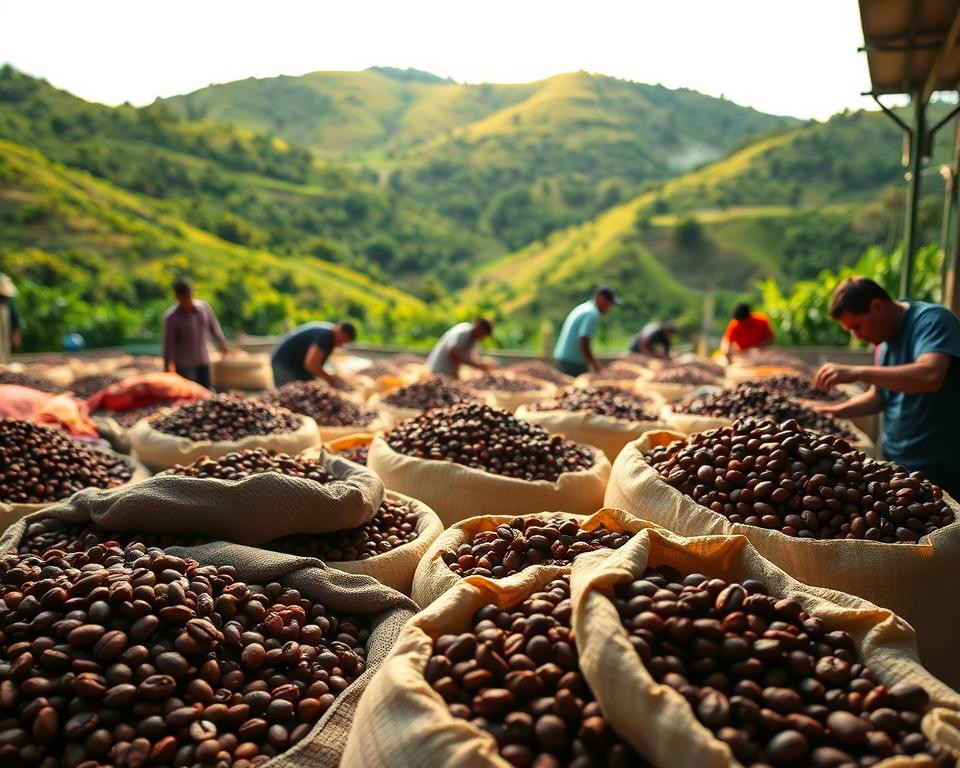
Improving coffee quality is key to staying competitive. This means strict quality checks from farm to export. For more on the coffee market, check out detailed coffee market analysis.
Collective Marketing Approaches
Guatemalan coffee producers can gain by working together. They can show the world their coffee is top-notch. This might include teaming up with other coffee makers to boost their global image.
Relationship Coffee Models
Building direct ties with coffee lovers is another smart move. This model is all about being open, fair, and green. It could lead to more loyal customers and higher prices.
Digital Traceability Implementation
Using digital systems to track coffee can build trust. It lets buyers see where their coffee comes from. This could make Guatemalan coffee stand out and fetch better prices.
Infrastructure Development Priorities
Improving the infrastructure is vital for better, cheaper coffee making and shipping. This means better roads, storage, and equipment.
Research and Extension Services
Boosting research and help for farmers is also important. It helps them grow more, use less, and do better. This teamwork between experts, government, and farmers gives farmers the edge they need.
Conclusion: Navigating the Future of Guatemalan Coffee
The Guatemalan coffee industry is set for big changes and challenges by 2030. Many things will shape its future, like climate change, market trends, and new tech.
It’s key for everyone involved to understand these factors well. This knowledge will help the industry grow. The outlook shows a chance for more exports, thanks to better trade and money investments.
To make the most of these chances, we need to tackle social and economic issues. By following smart plans, Guatemalan coffee can thrive and stay strong.
As we look ahead, keeping an eye on the economic outlook is vital. With good planning and teamwork, Guatemalan coffee can reach its highest potential. It will stay a big name in the world coffee scene.