
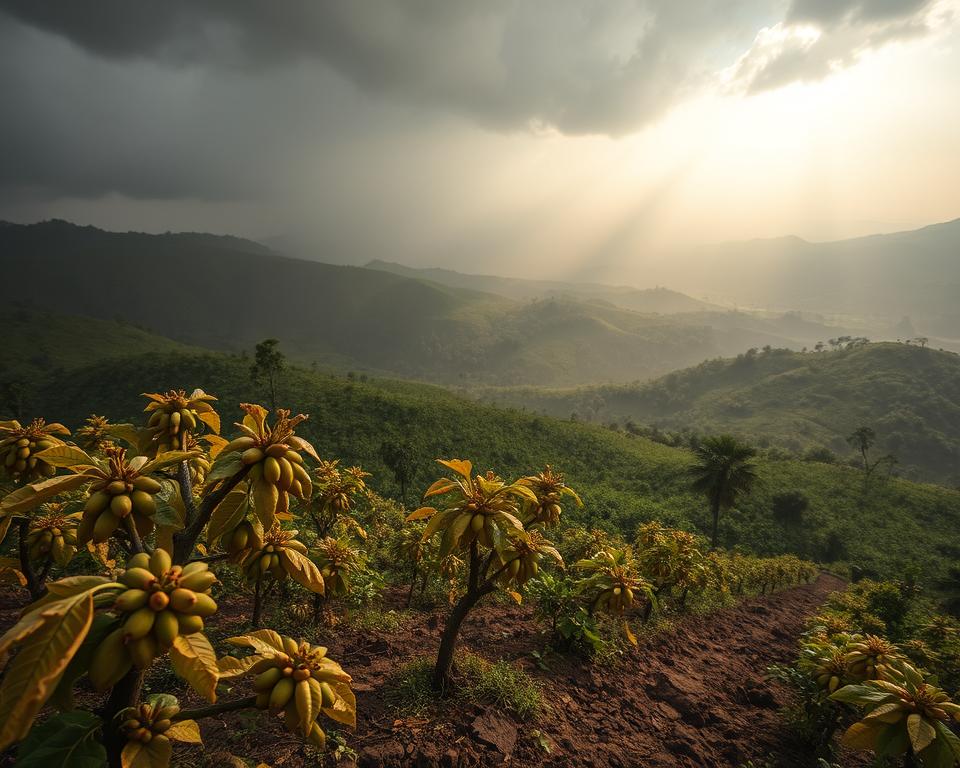
The coffee industry is facing a big threat from climate change. Countries like Guatemala, known for their high-quality coffee beans, are especially affected. It’s important to understand how rising temperatures impact coffee production.
Climate change is changing the conditions needed for coffee production. This includes temperature and precipitation patterns. It not only affects coffee yield and quality but also the livelihoods of farmers and their communities.
As global warming’s effects grow, it’s crucial to find ways for the coffee industry to adapt. This will help ensure the sustainability of this beloved beverage.
The Science Behind Global Warming and Coffee Production
Global warming’s impact on coffee production is complex and worrying. It changes the ecosystems where coffee plants grow. Rising temperatures and shifts in rain patterns harm these environments.
Coffee farming is very sensitive to changes in temperature and rain. Warmer weather brings more pests and diseases. It also means less water and changes in when coffee plants bloom and produce fruit.
For example, Arabica coffee grows best between 15°C and 20°C. If it’s too hot or cold, yields and quality drop a lot.
To fight global warming’s effects, sustainable coffee farming practices are key. Practices like shade-grown coffee, saving soil, and using water wisely help farms adjust. Studies show we need these strategies to keep coffee farming alive.
Knowing how global warming affects coffee helps everyone. Farmers, leaders, and buyers can join forces. Together, they can find ways to make coffee farming sustainable for the future.
Guatemala’s Coffee Industry: An Overview
Guatemala is famous for its rich volcanic soil and varied climates. This makes it a top coffee producer. The country’s coffee industry is big, focusing on high-quality Arabica beans.
Antigua Coffee Region, Huehuetenango Highland Coffee
Guatemala’s coffee comes from different areas, each with its own flavor. The Antigua region offers coffee with chocolate and spice notes. Meanwhile, Huehuetenango is known for its bright taste and fruit flavors.
| Coffee Region | Characteristics | Flavor Profile |
|---|---|---|
| Antigua | Volcanic soil, mild climate | Balanced, chocolate, spice |
| Huehuetenango | High altitude, dry climate | Bright acidity, fruit notes |
These areas are key to Guatemala’s coffee. Knowing their special traits helps in adapting to climate change. It also helps in making coffee production greener.
Climate Change Patterns in Guatemala’s Coffee Regions
Global warming is making a big impact on Guatemala’s coffee areas. The temperature and rain patterns are changing. This affects the coffee’s growth needs and the water needed for processing.
Guatemala’s coffee farms, located high up, are getting warmer. This can bring more pests and diseases, like coffee leaf rust. It harms the coffee’s quality and yield. Also, the climate change makes some lands less good for growing coffee.
Using renewable energy in coffee making can lessen the climate change effects. It cuts down the carbon footprint of coffee making. Organic coffee production also helps by making the soil and biodiversity better.
It’s key to know about these climate changes for Guatemala’s coffee to last long. By using practices like shade-grown coffee and better water use, farmers can adapt to the new climate.
Direct Impacts of Global Warming on Coffee Production
The coffee industry is facing big challenges because of climate change. Rising temperatures and changes in rain patterns are hurting coffee yields and quality. One major effect of global warming is the spread of pests and diseases that used to be kept in check by cooler weather.
Coffee Berry Borer Expansion, Fungal Diseases Beyond Rust
The Coffee Berry Borer (CBB) is a big pest that’s spreading because of warmer weather. CBB attacks can cause a lot of yield loss and lower coffee quality. Also, fungal diseases like Coffee Leaf Blight and Root Rot are becoming more common because of weather changes.
| Pest/Disease | Impact on Coffee | Effect of Global Warming |
|---|---|---|
| Coffee Berry Borer | Yield loss, quality reduction | Expanded range due to warmer temperatures |
| Coffee Leaf Blight | Defoliation, yield reduction | Increased prevalence due to changing weather patterns |
| Root Rot | Plant death, yield loss | More frequent due to increased rainfall variability |
To fight these effects, we need a plan that includes several steps. We should grow climate-resilient coffee varieties and improve how we manage pests and diseases. We also need to make coffee farms more resilient. By understanding how global warming affects coffee, farmers and others can work together to find solutions.
Coffee Leaf Rust: A Climate Change Accelerated Threat
Coffee Leaf Rust is a major fungal disease affecting coffee production. Climate change is making it worse. Rising temperatures and changing rain patterns create perfect conditions for the disease to spread. This threatens coffee crops and the livelihoods of farmers.
The disease is especially hard to control in areas with high humidity and temperatures between 20-25°C. These conditions are becoming more common because of climate change. Coffee Leaf Rust not only cuts down coffee yields but also lowers the quality of the beans. This leads to big economic losses for farmers.
Recovery Strategies After Rust Outbreaks
To fight Coffee Leaf Rust, farmers can use several strategies. These include:
- Implementing integrated pest management practices that combine cultural, chemical, and biological controls.
- Pruning infected plants to prevent the spread of the disease.
- Using fungicides as a last resort, ensuring they are applied safely and effectively.
- Adopting sustainable coffee farming practices that promote soil health and biodiversity, enhancing the resilience of coffee plants.
By understanding how climate change affects Coffee Leaf Rust and using proactive management, the coffee industry can fight this threat. This ensures a sustainable future for coffee production.
Water Management Strategies for Climate Resilience
Guatemala’s coffee industry can fight climate change with good water management. It’s key to protect coffee crops from droughts and floods. These issues are getting worse because of global warming.
Using mulching and cover cropping helps keep soil moist and stops erosion. Also, smart irrigation systems save water and give coffee plants the right amount at the right time.
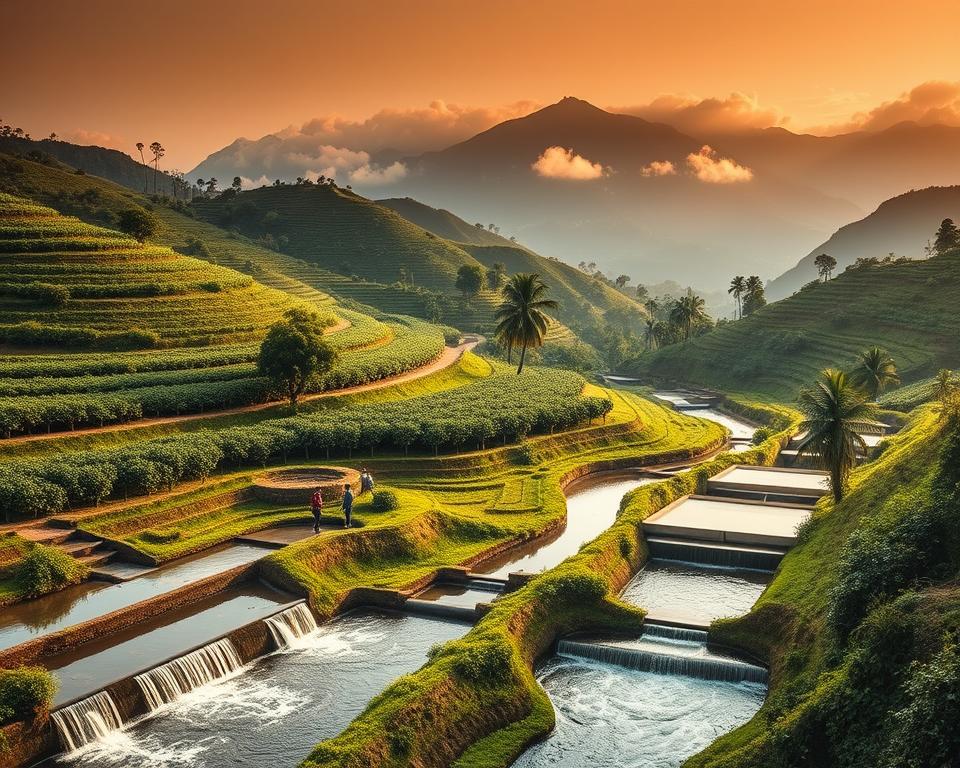
Rainwater harvesting is also crucial. It lets farms save rainwater for dry times. This cuts down on using outside water and keeps the soil healthy.
By using these water management methods, coffee farmers in Guatemala can make their crops more resilient to climate change. This helps make the coffee industry more sustainable.
Implementing Shade-Grown Coffee Practices
Shade-grown coffee is more than a trend; it’s a vital change for farmers dealing with global warming. By adding trees to coffee farms, farmers make their farms more durable and green.
When starting shade-grown coffee, spacing and density are key. Finding the right mix of coffee plants and trees is important. It helps farmers get the most from their land while keeping the benefits of shade.
Spacing and Density Considerations
It’s important to space coffee plants and trees right. This ensures both get enough sunlight and air. A good rule is to have 30-40% shade cover.
| Shade Tree Species | Spacing (meters) | Benefits |
|---|---|---|
| Inga spp. | 10-15 | Nitrogen fixation, erosion control |
| Gliricidia sepium | 8-12 | Pest control, soil enrichment |
| Alnus acuminata | 12-18 | Soil stabilization, timber production |
Keeping the right balance of shade and coffee is a continuous task. Farmers need to trim shade trees often. This keeps the shade just right and prevents too much shade, which can hurt coffee production.
Shade-grown coffee helps farmers adapt to climate change and supports a greener coffee industry. This method also fits with efforts to use renewable energy in coffee making. It helps lower the carbon footprint of coffee farming.
Selecting and Planting Climate-Resilient Coffee Varieties
To fight global warming in coffee farming, we need to pick and plant coffee types that can handle changing weather. These varieties are made to fight off diseases and pests better. They also do well in different temperatures and rain levels.
Farmers should look at a few things when choosing these varieties. They need to think about disease resistance, how much coffee they can grow, and if they can handle the local weather. For example, ‘Gesha’ and ‘Bourbon’ are good because they resist some diseases and can adjust to new climates.
It’s also key to keep the coffee’s taste good. Farmers should pick varieties that are both tough and taste great. This way, they can make coffee that Guatemalan coffee lovers want to drink.
To find this balance, farmers can do a few things:
- Choose varieties known for their quality and toughness.
- Use good farming methods, like pruning and adding fertilizer.
- Keep an eye on diseases and pests and manage them well.
By picking climate-resilient coffee varieties and keeping up with quality farming, Guatemalan coffee farmers can lessen the effects of climate change on their organic coffee.
Soil Management Strategies to Combat Global Warming Coffee Production
Soil management is key in fighting global warming’s effects on coffee in Guatemala. Good soil management helps keep water, prevents erosion, and boosts soil health. These are vital for coffee farms to stay productive.
Some important soil management strategies include:
- Implementing conservation tillage to reduce soil disturbance
- Using cover crops to protect and enrich the soil
- Applying organic amendments to improve soil fertility
- Employing terrace construction methods to prevent soil erosion on sloping lands
Terrace Construction Methods
Terracing is very helpful in Guatemala’s coffee areas, where slopes are steep. It makes flat or slightly sloping areas. This reduces erosion and helps manage water better.
It also keeps soil moist, which is key during dry times made worse by climate change.
Good terracing needs careful planning and doing. It includes building bunds and planting on risers to hold the soil. By using these strategies, farmers in Guatemala can make their farms more resilient to global warming. This ensures a sustainable coffee production.
Reducing Carbon Footprint in Processing and Transport
Global warming affects coffee crops a lot. We need to cut down carbon emissions from start to finish. This means from how we process to how we transport coffee. It’s key for the coffee industry to stay alive and thrive.
Using renewable energy is a big step in cutting down carbon. Solar power is especially good for small coffee farms.
Solar Power Applications for Small-Scale Producers
Solar power helps coffee farms use less fossil fuel. Small farms can use solar panels to power their equipment. This makes their carbon footprint smaller.
| Benefits of Solar Power | Impact on Coffee Production | Potential Challenges |
|---|---|---|
| Reduced energy costs | Increased profitability for producers | High initial investment costs |
| Lower carbon emissions | Enhanced sustainability of coffee production | Intermittent energy supply |
| Increased energy independence | Better control over production costs | Maintenance requirements |
Starting solar power needs good planning. But, it’s worth it for the savings and less pollution. It’s a big step towards greener coffee farming.
By going for solar and other green energy, coffee can fight global warming. This way, coffee farming can be more sustainable for the future.
Diversification and Economic Resilience Strategies
Diversification is key for Guatemalan coffee farmers to fight climate change risks. By using different farming methods, they can lessen their reliance on just one crop. This makes their farms more resilient financially.
One way to diversify is by growing other crops alongside coffee. This method spreads out the risk and gives farmers more ways to make money. For example, they can plant fruit trees or veggies that coffee plants don’t get sick from.
Carbon Credit Opportunities for Guatemalan Farmers
Guatemalan coffee farmers can also make money from carbon credits. By farming sustainably and cutting down on carbon emissions, they can earn credits. These credits can be sold, adding to their income.
| Strategy | Benefits | Implementation Steps |
|---|---|---|
| Diversification of Crops | Reduced dependence on a single crop, additional income streams | Identify suitable crops, integrate into existing farms |
| Carbon Credit Programs | Additional income through carbon credits | Adopt sustainable practices, measure carbon footprint, sell credits |
Guatemalan coffee farmers can make their farms more resilient to climate change by using these strategies. It’s important for governments and NGOs to help by offering training and financial support.
Conclusion: Building a Climate-Resilient Coffee Future in Guatemala
Guatemala’s coffee industry is at a critical point, facing global warming challenges. To keep this sector alive, adopting sustainable practices is key. These practices help fight climate change’s effects.
Renewable energy in coffee processing is a vital strategy. Switching to green energy cuts down carbon emissions. Organic farming and smart soil use also help fight climate change.
Combating global warming in coffee farming needs a broad approach. This includes choosing coffee varieties that can handle climate changes. Also, managing water well and diversifying income sources are crucial.
By teaming up on these strategies, Guatemala’s coffee industry can thrive. This effort will not only keep coffee quality high. It will also help farmers and communities that rely on coffee.